Theatre review: The Sound Inside
In this vivid performance of his excellent play, The Sound Inside, Adam Rapp asks intriguing and fundamental questions about what makes us tick.
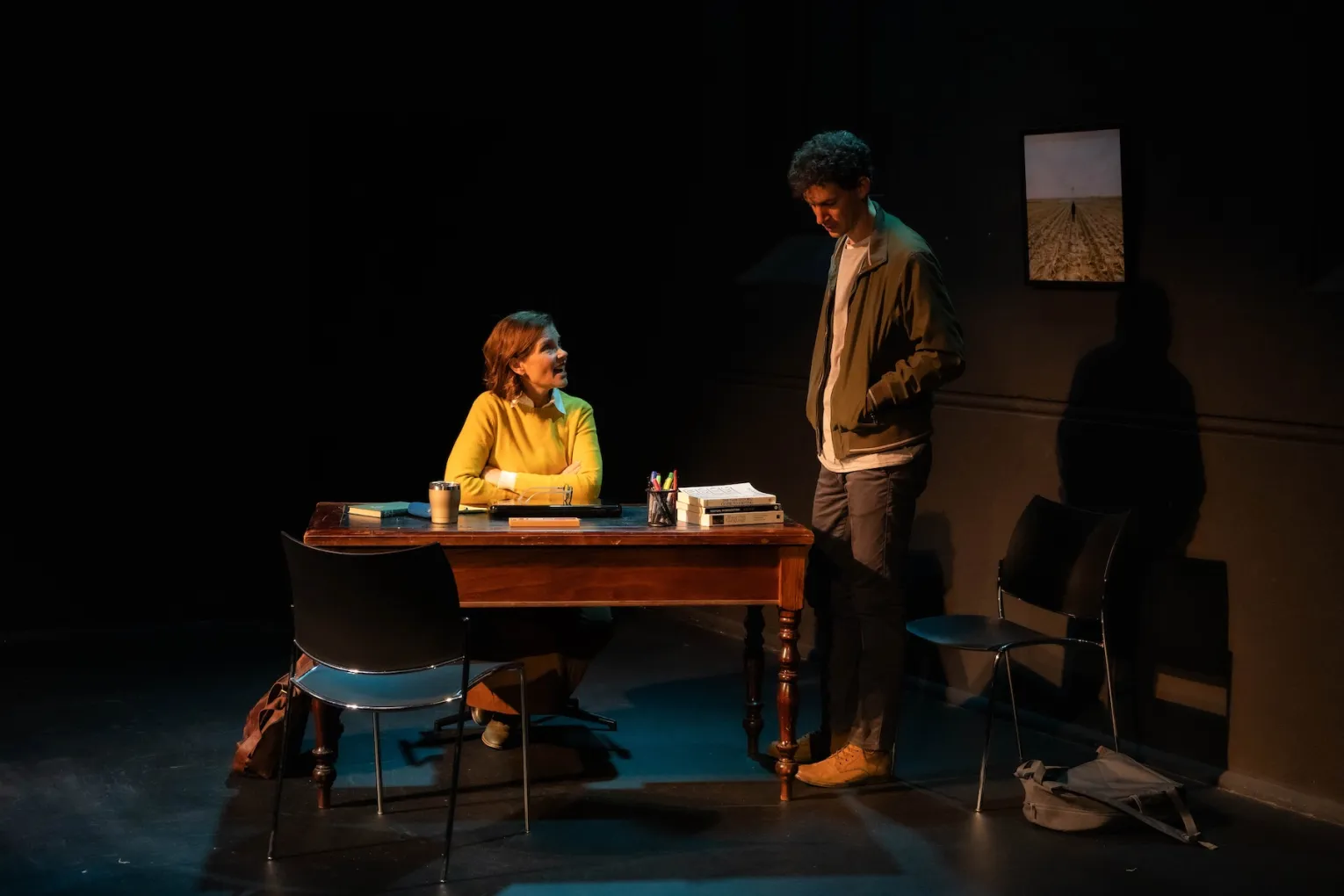
This splendidly assured two-hander uses a familiar framework: that of teacher and pupil, mentor and protégé, that mercurial relationship seen increasingly, both in life and art, as ethically fraught and psychologically problematic. It is Oleanna, it is Blackbird. It has also become a paranoid cliché. The Sound Inside is none of these.
Bella Baird is single, aged 53 and teaches Reading Fiction for Craft at Yale in New Haven. She is a published novelist whose career has stalled but her classes are inventive, lively and engaging – especially for Christopher Corbit Dunn, a serious young insect who is precociously well-read, and given to such mid 19th century affectations as letter writing with pen and ink or, more modernly, using a mid-20th century Corona ribbon typewriter.
That the first conversation between Bella and Christopher is a speculation about the mind and motivation of the young student Raskolnikov, the darkly charismatic anti-hero of Dostoevsky’s Crime and Punishment, only intensifies and propels our inclination to predict the tropes and follow the bloodhound scent to some kind of reckless emotional danger and subsequent shame.
Rapp lets loose the dogs of our curiosity, but they are what Alfred Hitchcock, in his plot puzzles, called MacGuffins. Hints and provocations but actually only diversions. The Sound Inside is a brilliantly fashioned literary mystery which takes twists and turns that are not just novel and unexpected, but bring depth and psychological complexity.
Needless to say ,I have no intention of trading in spoilers either by accident or design so the amount of plot description here is close to none at all. What can be noted, however, is that Bella has been diagnosed with what she calls a “constellation” of malignant stomach tumours and her prognosis is grave. And Christopher has secretly written a novella called To Lie Facedown in a Field Full of Snow about a young man, Shane, who befriends an unnamed student who later we learn is called Christopher.
You might like
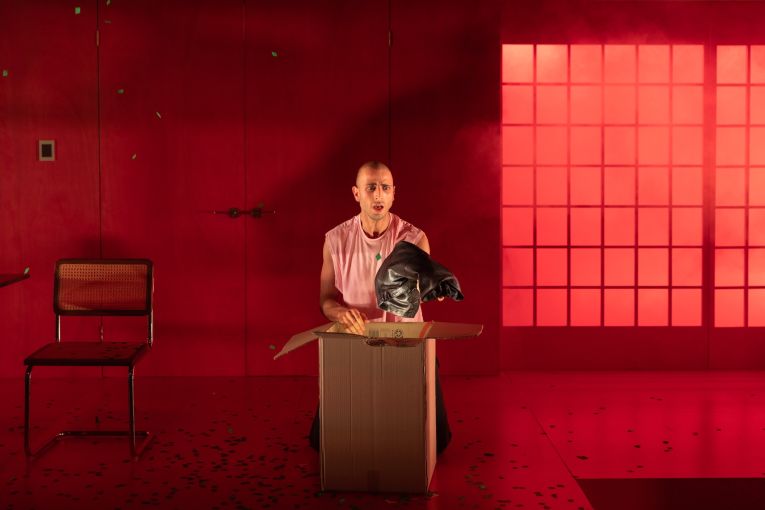
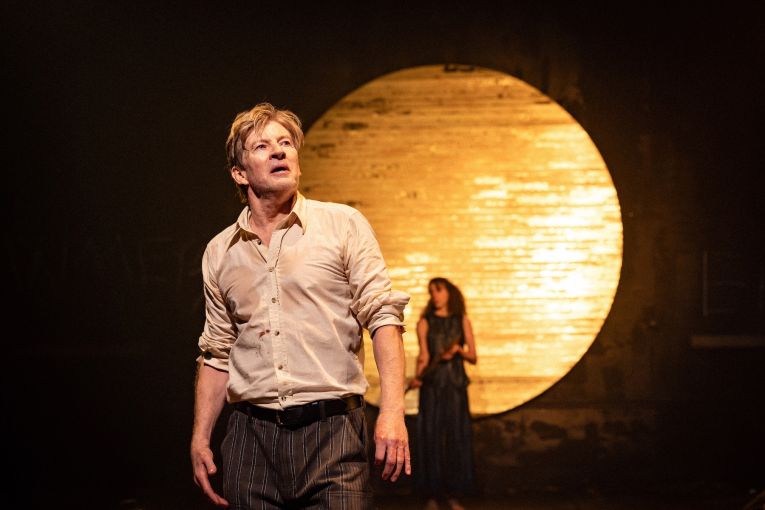
In this admirable production for Holden Street Theatres, Director in Residence Nick Fagan has followed up his previous success, Till the Stars Come Down, with a text of even greater intricacy and flair. Without pretension or highbrow display, Rapp relishes literary allusion, bookish conversation and namechecks most of the modernist and postmodern canon – including the roll call of suicides from Plath and Berryman to David Foster Wallace, Hunter S. Thomson, Hemingway, Mishima and John Kennedy Toole.
Fagan’s design, warmly lit by Martin Smith, is thrifty and functional. Centrestage is a streetlamp with a park bench, at the left of stage is a low couch with a side table and lamp, to the right an office desk with chairs for the sometimes fractious encounters between Bella and Christopher.
As Christopher, Benji Riggs captures the restless agitation of a young man out of step with the times and his peers. His disdain, often compensatory for bewilderment (and despair) shifts convincingly to the realisation that he has an affinity with Bella. Their commitment to writing, their curiosity, even wonderment, about the source and nature of creativity, is bonding. It could be said that Rapp is writing a paeon to literature itself.
Subscribe for updates
Riggs’ performance is memorable and his stage presence impressive but, especially in the opening scenes, while his Vermont accent is authentic, the speed of his diction (though accurate for his character’s demographic) is unsuited to Adam Rapp’s elegantly cadenced and detailed dialogue. To accommodate the wit and complexity of the literary musings the delivery needs to be clearer and slower.
Nick Fagan indicates as much in his program notes when he says “What I find most compelling about Adam Rapp’s beautiful writing is its stillness. It resists spectacle. Instead it asks an audience to lean in, to engage actively with language, imagination and ambiguity.” Certainly, in the second act, Riggs remedies this. His interaction with Bella in the final scenes is compelling. And this is just the beginning of a 14-performance run which will only gather more impact.
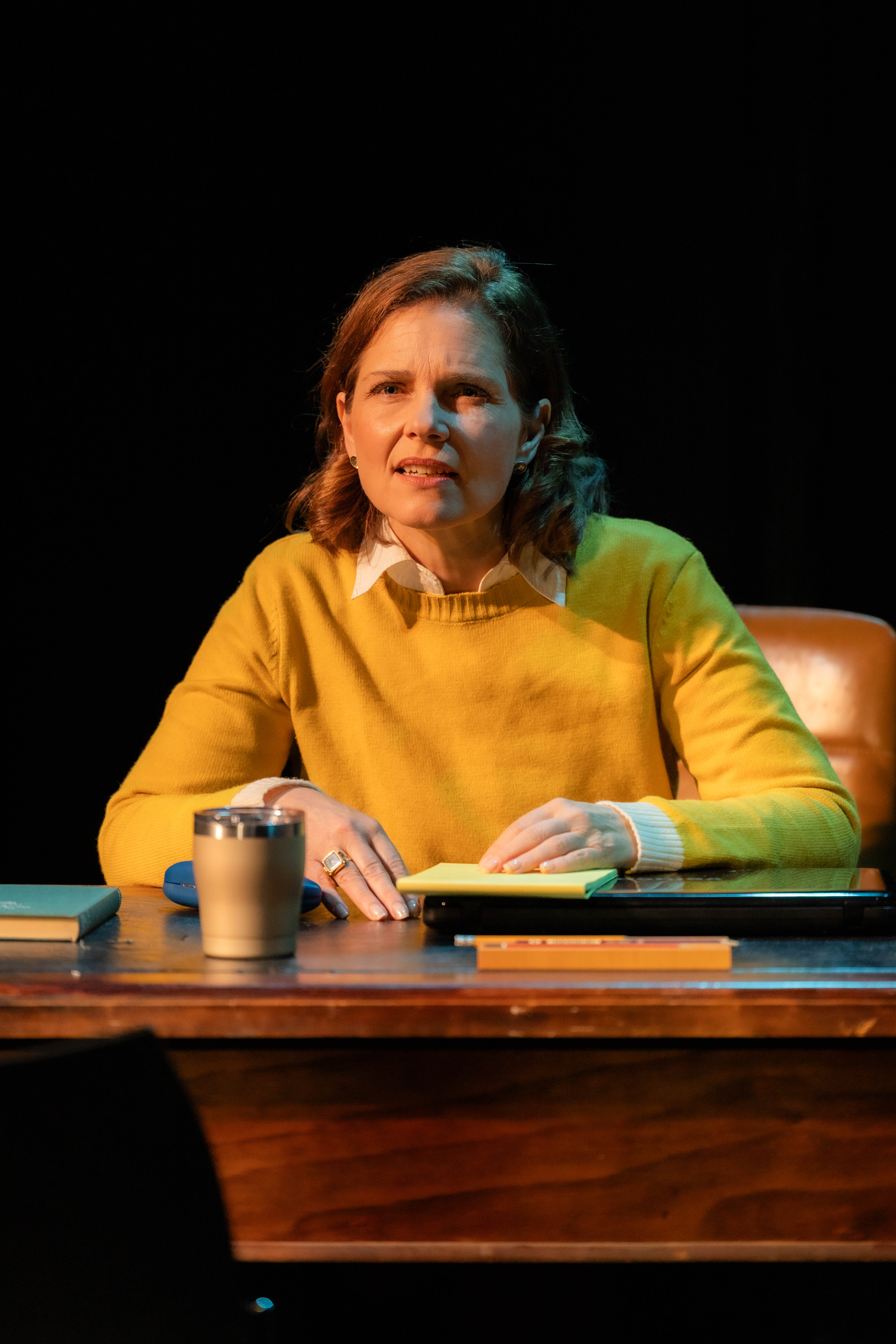
As Bella, Michelle Nightingale is ideally cast. She looks, sounds and inhabits this woman of talent, courage and generosity. From the opening monologue outlining herself in the third person – “A middle-aged professor of undergraduate Creative Writing stands before an audience of strangers. She can’t quite see them but they’re out there. She can feel them – they are as certain as old trees.“
Nightingale’s rendering certainly captured the attention of the old trees in the first night audience. “Is this audience friendly, she wonders? Merciful? Are they easily distracted? Or will they hear this woman out.” The answers to these questions are: yes, yes, no, and most definitely. Her role is central and she is more than a match for it.
The Sound Inside, the title which becomes an urgent mantra at a crucial point in the play, is well deserving of its international critical acclaim and audience success. The final 30 minutes is gripping in its skilful combination of unexpected narrative revelation and the emotional heft of fine performances and sparkling text.
This play does not conclude with an explanation of its subject, rather it opens another round of speculation and introspection. It is a do-it-yourself mystery which is richly engaging. You have 12 days left to check it out.
The Sound Inside runs from August 11 – 29 at Holden Street Theatres
Want to see more stories from InDaily SA in your Google search results?
- Click here to set InDaily SA as a preferred source.
- Tick the box next to "InDaily SA". That's it.
Free to share
This article may be shared online or in print under a Creative Commons licence