Theatre review: The Importance of Being Earnest
Cucumber sandwiches fly in State Theatre Company South Australia’s gloriously brash production that restores Wilde’s queerness to the centre of The Importance of Being Earnest.
Oscar Wilde’s The Importance of Being Earnest has always been a play about performance. His characters act out acceptable expressions of class and respectability, gender and desire. But underneath the razor-sharp witticisms and teacake lies a story about people constructing elaborate false identities in order to survive inside a rigid social order.
State Theatre Company South Australia’s riotous new production, directed with brassy flair by Petra Kalive, understands this completely. Rather than modernising Wilde, she excavates him. The result is a funny and gloriously excessive queer reclamation that reveals the subversion and coded messaging that was there all along, hidden beneath the starched collars and polite manners.
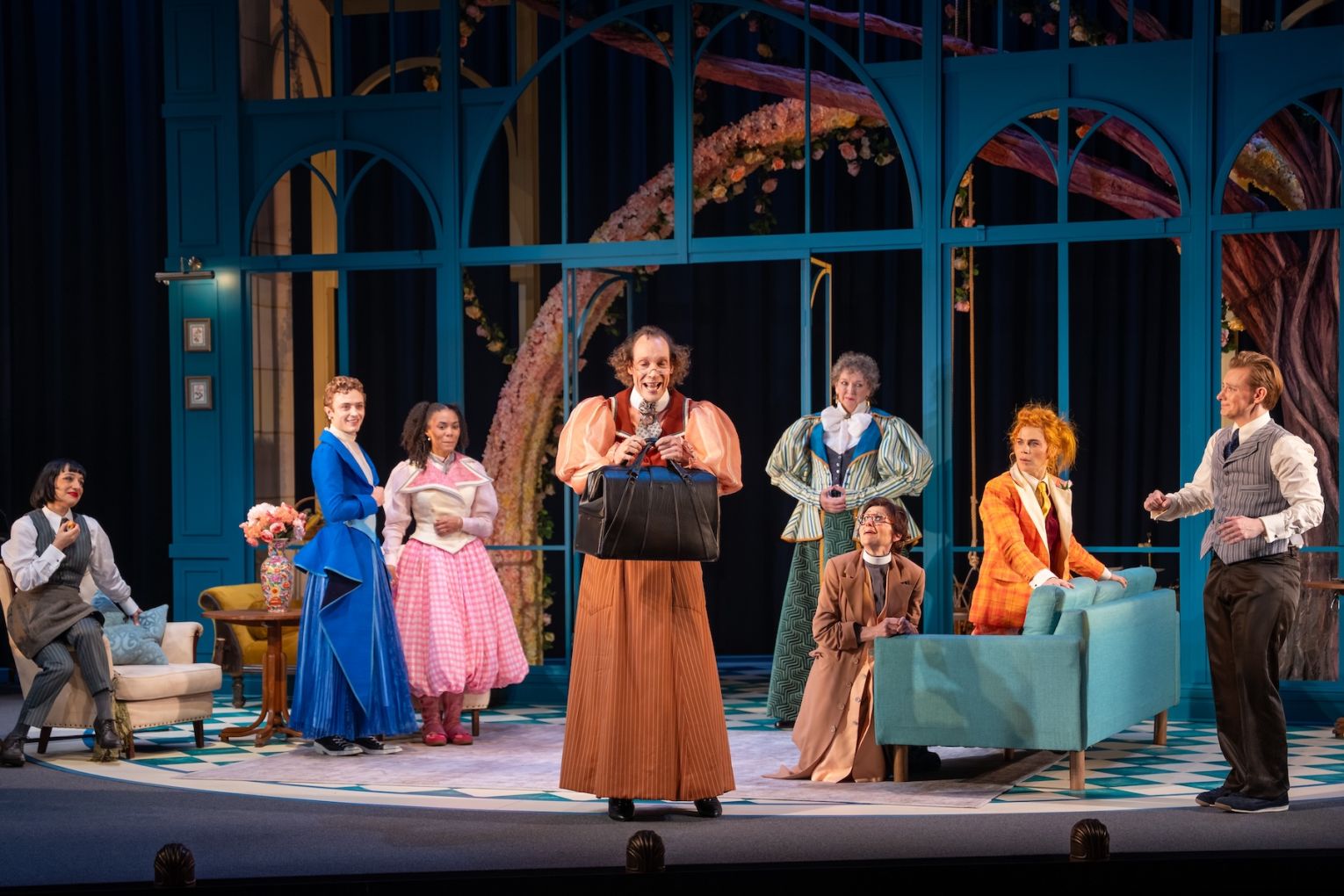
The play opens in a lavish Victorian drawing room designed by Kathryn Sproul: velvet lounges, overflowing florals and ferns and a music room visible behind French doors. Then comes the first surprise. Lane, the servant (Carla Lippis), enters with a tray of cucumber sandwiches and launches into an original cabaret number delivered from the perspective of the working class as they quietly observe – and judge – the absurd elite they serve.
Eyebrows raise. Is this a radical rewrite? But then Wilde’s original dialogue arrives intact with the entry of Algernon Moncrieff (played with brilliant flamboyance by Anna Lindner) and it’s immediately clear that this production is not reworking Wilde but amplifying him.

The opening exchange between Algernon and Jack Worthing (Teddy Dunn) crackles with pantomime energy as the pair reveal the elaborate lies underpinning their carefully managed lives. Jack has invented a troublesome brother “Ernest” to explain his time spent in the city, while Algernon escapes his family obligations through visiting an imaginary invalid friend named Bunbury. Wilde called it “Bunburying” for comic effect but the parallels with the double life he himself was forced to lead as a queer man in rigidly moral Victorian England is an aspect of the play that has often been papered over.
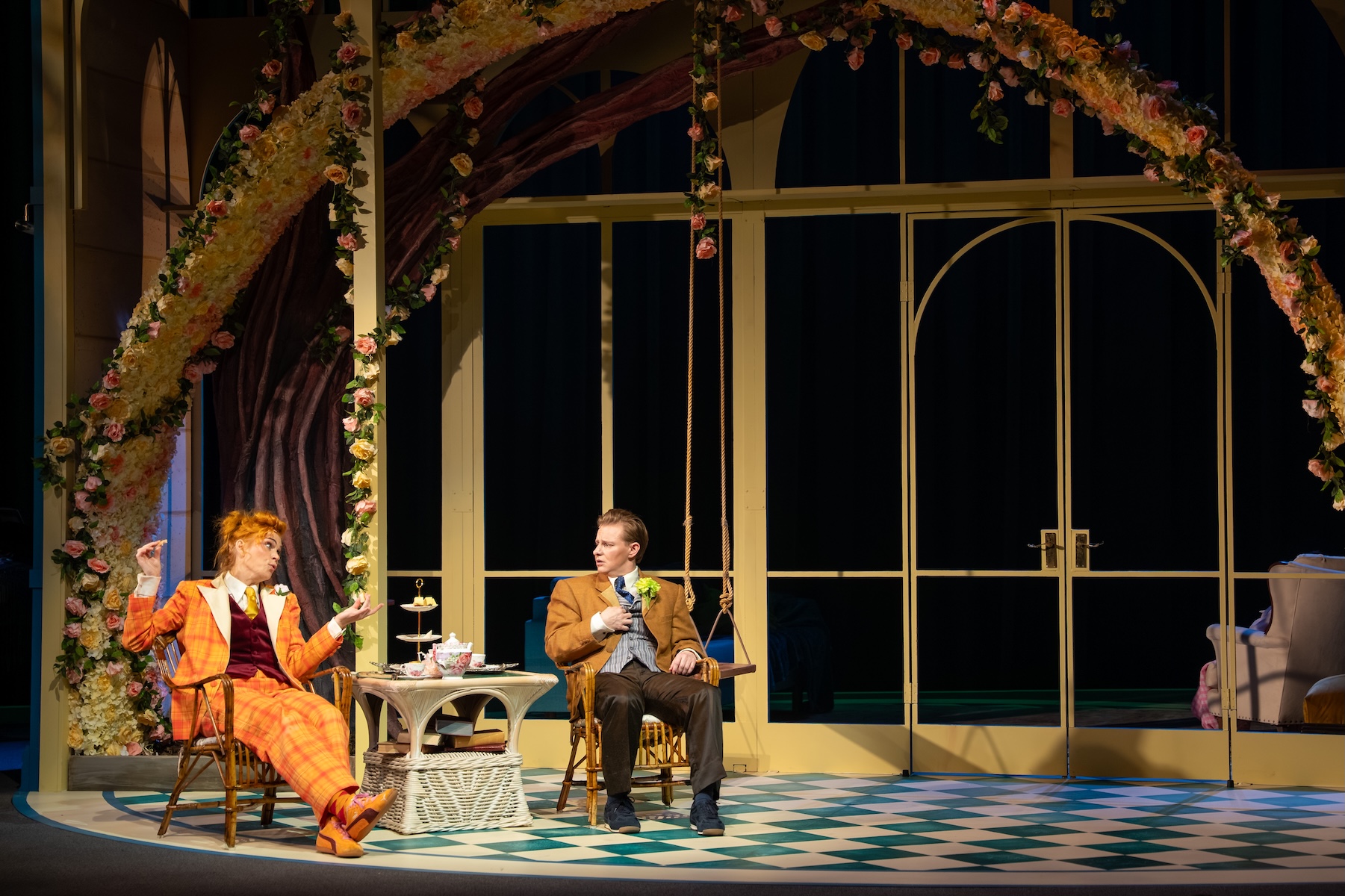
This production peels away that layer. Wilde’s obsession with aliases and coded identities no longer sits politely in the subtext – Kalive brings it centre stage.
The entrance of Glenda Linscott’s formidable Lady Augusta Bracknell drags the unwieldly machinery of Victorian social rigidity into view. Linscott delivers Aunt Augusta with icy authority and wickedly honed comic timing as she embodies the absurdity of a social class obsessed with wealth and lineage. Connor Pullinger’s Gwendolen Fairfax delights in matching physical gesture to Wilde’s language, Caroline Mignone’s Rev Chasuble desperately attempts to keep a lid on their desire, while Pia Gillings gives Cecily Cardew an increasingly unhinged energy that pushes the performance towards farce.
The chemistry between Lindner and Dunn is the show’s comic heartbeat. Their arguments tumble forward with impeccable rhythm as Algernon’s insatiable appetite and razor wit collide with Jack’s mounting exasperation. Cucumber sandwiches disappear at alarming speed. Muffins are weaponised. The audience roars in appreciation.
Subscribe for updates
Sproul’s clever set design enhances the production’s themes of deception and double lives. In Act Two the drawing room spins to reveal the garden of Jack’s country house – a visual reminder that everything in this play has another face or something hidden. Her costume design similarly blurs the lines between eras, pairing bright Victorian suits and dresses with contemporary touches such as matching sneakers.
Between the scenes, Lippis returns with original cabaret interludes that function almost like a Greek chorus, puncturing upper-class pretensions. Alongside Nathan O’Keefe’s deliciously prim Miss Prism, these moments reinforce that idea that the only honest people for Wilde are the servants who must watch the wealthy from the sidelines as they ‘perform’ morality.
What makes this production so boldly fascinating is its refusal to treat queerness as an added layer on a classic text. Instead, Kalive’s production argues with great persuasion that this play has always been queer. Wilde’s queer sensibility in his concern with invented identities, social policing and the performance of respectability now seems startling obvious.
This production of ‘Earnest’ is outrageous, excessively animated and deeply entertaining. But beneath the pantomime exuberance is the serious point that Wilde was ahead of his time in understanding identity as a performance and that survival sometimes depends on duplicity and invention. More than a century after its first performance, this production lets Wilde’s radicalism shine.
The Importance of Being Earnest is showing at the Dunstan Playhouse, Adelaide Festival Centre, until May 30
Want to see more stories from InDaily SA in your Google search results?
- Click here to set InDaily SA as a preferred source.
- Tick the box next to "InDaily SA". That's it.
Free to share
This article may be shared online or in print under a Creative Commons licence