‘You can hold the silences’: Wright & Grainger celebrate a decade of myth, music and storytelling
Wright&Grainger’s contemporary updates of ancient Greek myths have made them Adelaide Fringe mainstays. This year, they’re bidding farewell with their most ambitious productions yet.
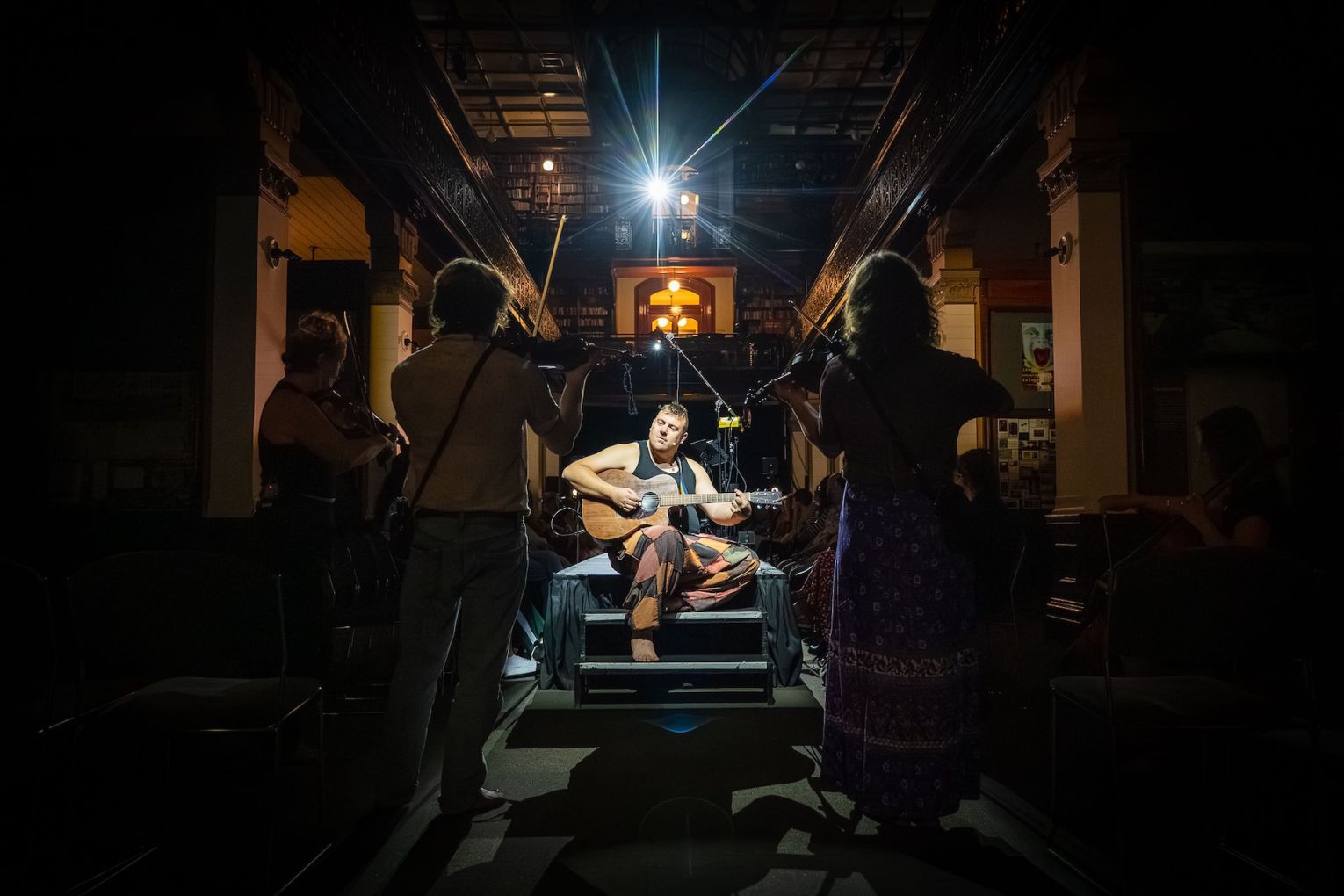
With hundreds of performances stretching back to before the pandemic, Alexander Wright and Phil Grainger are familiar figures at the Adelaide Fringe. Their updated versions of classic Greek myths are told through verse and song, and while “Al writes words and I write music,” Grainger says, “really, we’re both storytellers.”
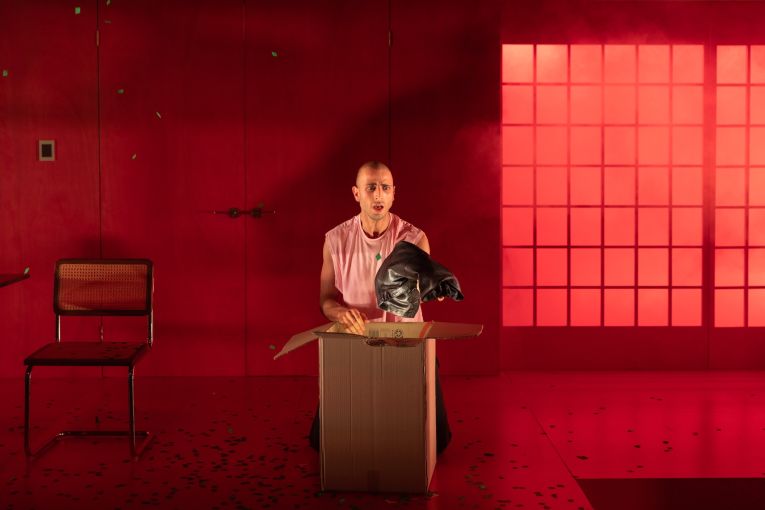
This year they are producing three separate shows. Both storytellers perform in Orpheus (their first ever production), while its companion piece Eurydice sees Wright replaced by Megan Shandley. The most recent addition, Selene, is a solo performance by Megan Drury and is the first show they have written specifically for another performer.
Each show takes elements of classic Greek mythology and reimagines them in a contemporary context with original songs. In their version of Orpheus, for example, the legendary musician becomes Dave, a sensitive soul with lager-swilling mates and a fondness for Bruce Springsteen.
Since it debuted a decade ago, it has been performed hundreds of times in breweries, churches, boats and bars. In Adelaide, it has skipped between the sunken courtyard at Holden Street Theatres, the Botanic Garden and the Courtyard of Curiosities. But this Fringe, it has landed in perhaps the grandest venue of its ten-year run: The Mortlock Chamber of the State Library.
“In the Holden Street garden, there were birds all around,” recalls Grainger. “And the Rose Garden in the Botanic Garden had gorgeous scenery, but you could still see the world around you. But in the Mortlock we’re able to control a lot more in terms of lighting and what the audience can look at. So when Alex is describing these worlds, people can watch him or let their imaginations go and it feels less like a small part of a larger landscape and more like its own world.”
You might like

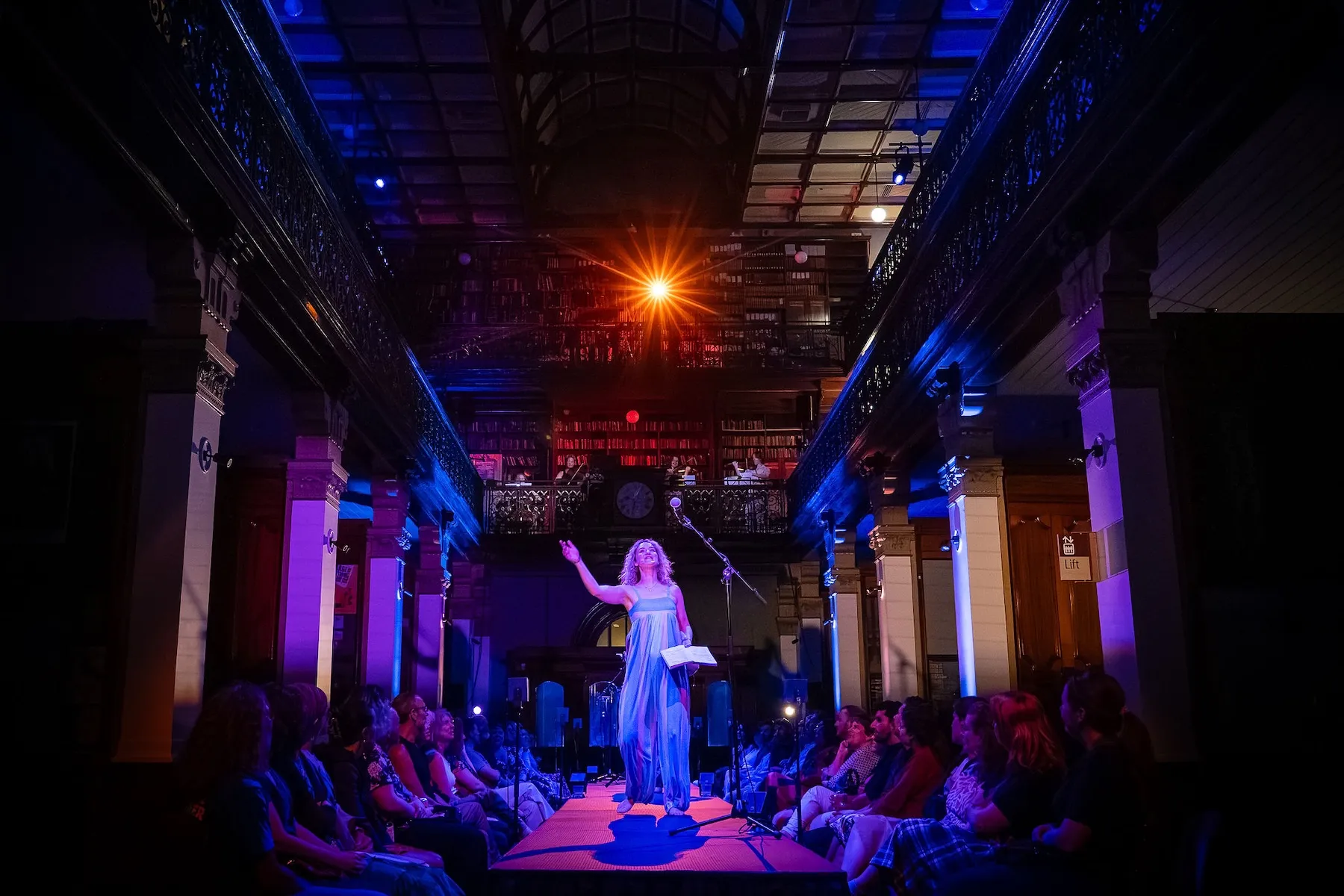
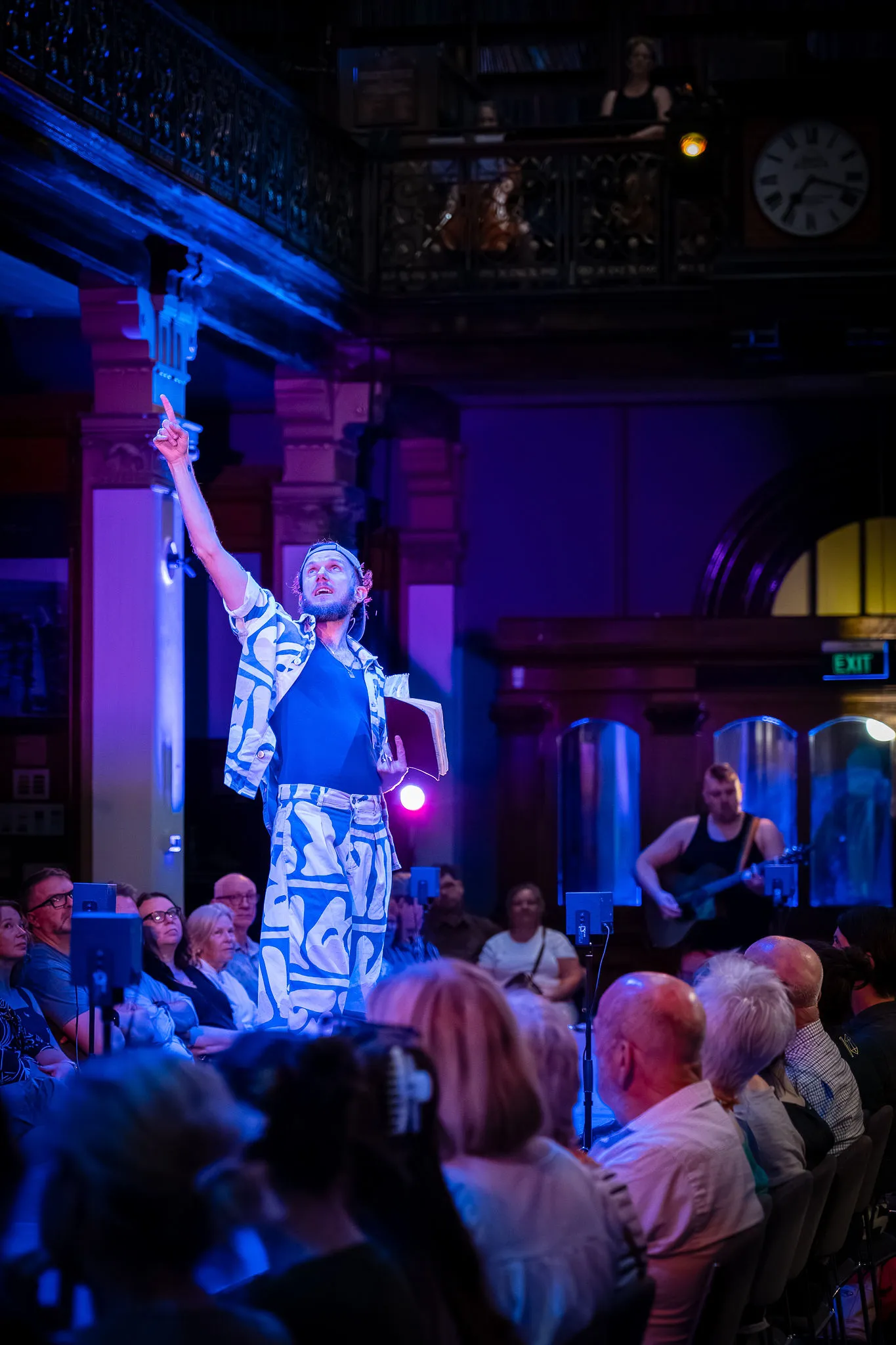
Inside the library (which is also the venue for Eurydice), the audience sits in traverse on either side of a long catwalk as the two barefoot performers roam up and down. The sinewy Wright’s performance in particular is notable for its physicality, his delivery building in intensity as he prowls the stage and accentuates each line with his arms. The setting, with rows of leather-bound tomes hidden behind wrought iron balconies, “adds this whole extra element. Obviously we can’t take the credit for that; it’s just a beautiful room that adds some gravitas and magic.”
Each performance begins with Wright reminding the audience that this is just a story, nothing more than a collection of words. “And then step by step, we ask people to come with us, until there are points where it feels magic and beautiful, or heartbreaking and bleak,” says Wright. “Sometimes you can hear a pin drop, and you can hold the silences for ages. But if you tried to start there, everyone would go, ‘that’s a bit much, not sure I’m there yet, lads’.”
"In most traditional plays, everyone is looking at the same set, but our audience is imagining their own version of everything we describe. It means the whole thing belongs to them; if 200 people are watching, there are 200 versions of the show."
Subscribe for updates
While the stories and settings have been updated significantly, the pair still hew to the oral storytelling traditions of the Ancient Greeks, describing the characters’ arcs rather than acting them out. “That’s why these shows really get under people’s skin,” suggests Wright. “All of it exists in your imagination, which I think is gorgeous. In most traditional plays, everyone is looking at the same set, but our audience is imagining their own version of everything we describe. It means the whole thing belongs to them; if 200 people are watching, there are 200 versions of the show.”
Throughout the performance, Wright clutches a notebook with the long-since-memorised script as a reminder that this is just a story. “It’s just us standing there,” says Grainger. “No tricks.”
“Apart from a string quartet,” Wright adds with a laugh. “That’s a pretty good trick!” To celebrate the show’s tenth anniversary, the pair commissioned a score for a live string quartet that adds texture Grainger’s songs and enhances the dramatic setting.
While Grainger performs with an acoustic guitar for Orpheus, Eurydice adds electronic elements and “a bigger, more epic sound for the bigger, more epic landscape of the narrative.” But rather than two separate shows, he prefers to see them as two acts with an interval in between. “A lot of people have said that it must be a slog doing two shows every night, but they’re used to hour-long Fringe shows. We’re used to two-hour shows so it’s just a normal night’s work. The slog is then going out all night and having meetings in the day!”
It’s part of the reason the pair has announced that they won’t return to the Adelaide Fringe next year. “We’re still going to be doing a lot of touring,” Grainger insists. “But we spend up to four months a year at Fringe festivals.” A lot of that time is spent marketing and drumming up ticket sales, “but we’ve also done international Festivals where all we have to do is perform a great show, which is what we want to be doing.
“We want to be booked for the Adelaide Festival one day,” he grins. “But that will never happen if we’re always at the Fringe.”
Wright&Grainger’s Orpheus will be performed until March 22 in The Mortlock Library at The Courtyard of Curiosities at the State Library. Wright&Grainger’s Eurydice will be performed until March 22 in The Mortlock Library at The Courtyard of Curiosities at the State Library. Wright&Grainger’s Selene will be performed until March 22 in The Yurt at The Courtyard of Curiosities at the Migration Museum.
This story is part of a series of articles being produced by InReview with the support of Adelaide Fringe

Want to see more stories from InDaily SA in your Google search results?
- Click here to set InDaily SA as a preferred source.
- Tick the box next to "InDaily SA". That's it.
Free to share
This article may be shared online or in print under a Creative Commons licence