Theatre review: Rotpunkt – No Exit
Independent theatre collective Rotpunkt find room for invention in a grassroots take on one of the most important philosophical plays of our time, Jean-Paul Sartre’s No Exit. The result is literally Hell.
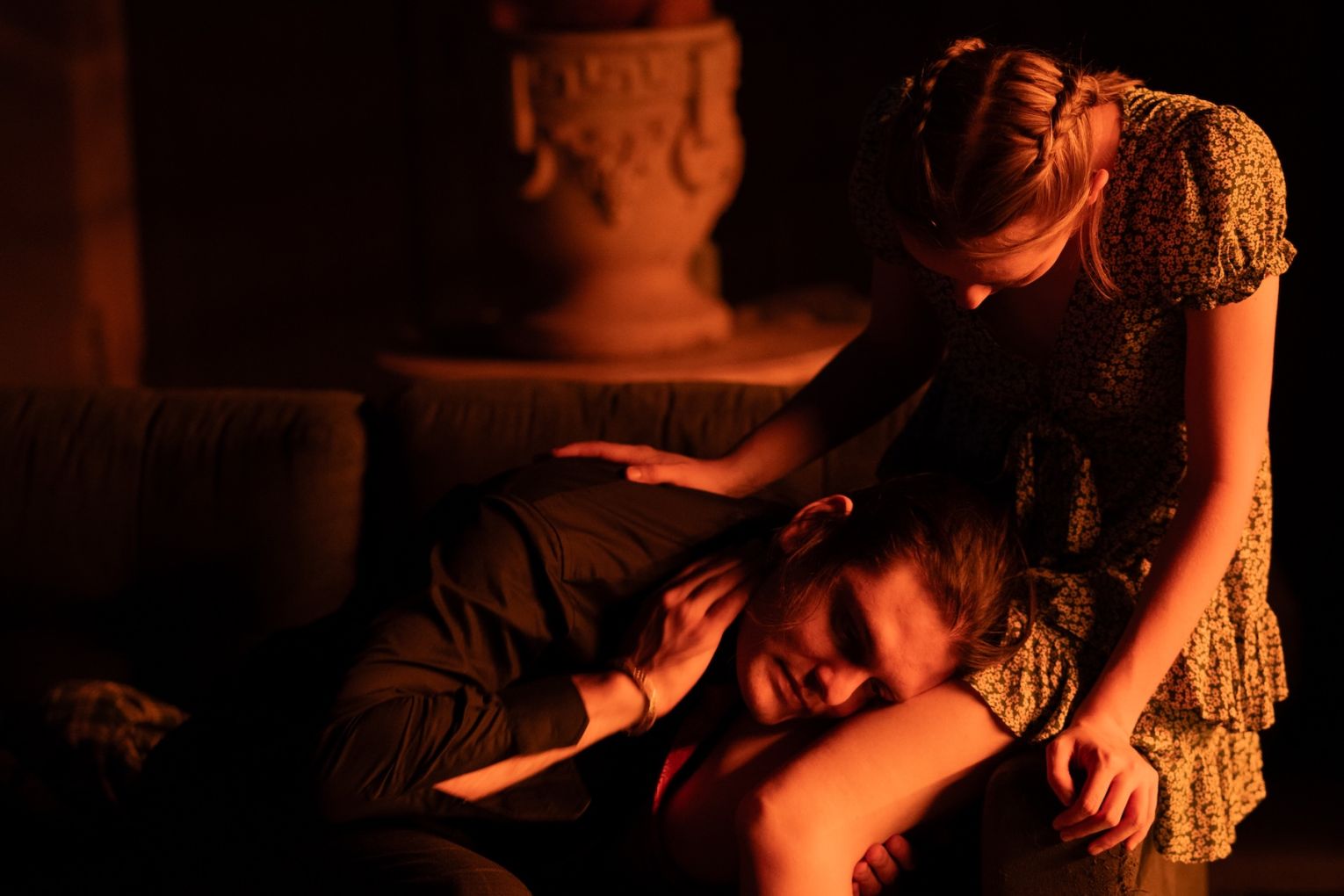
What’s your idea of Hell? It’s easy to conjure up head-high flames and a devil with a pitchfork because it’s so clichéd that it begs little further thought, and truly, who wants to think about an eternity of suffering? But if Hell did exist, and you were headed there, what would it look like? In Jean-Paul Sartre’s quintessential existentialist play No Exit, it looks like a fairly small room with a nice statue, a random letter opener, a bell that doesn’t ring, and three people who sit in the three seats that are the only real furniture in the room. And the doors are locked, forever.
Three strangers – Vincent Cradeau, Inèz Serrano and Estelle Rigault – have died and are under no illusions as to why they’ve landed themselves in Hell. Their crimes are cowardice, infidelity and murder, and for that, they’re looking down the barrel of an infinite and maddening love triangle and a suffocating air of animosity. What’s worse – and this is where existentialism really sharpens its claws – while living they were able to believe what they wanted about themselves. When they began each day by looking in the mirror, they saw the person they wanted to see, but in Sartre’s Hell, there are no mirrors. In this Hell, the characters can only see themselves as others do. They’ll never win, because as Sartre famously penned in the voice of Cradeau, ‘Hell is other people.’
A second production by the young South Australian theatre collective Rotpunkt – made up of Shant Becker, Franca Lafosse, Lauren Jones and Luke Furlan – the famous minimalist play is a perfect choice for the former Flinders University students whose aim is to make theatre inviting and accessible to younger people their age. This means lower ticket costs, yes, but also tapping into unconventional venues like the courtyard of Stepney’s Ern Malley bar, which not only drips of an arty, avant-garde vibe but remains open for drinks after the final curtain call, fostering a culturally social community. Low-budget productions like No Exit work in this space as there’s no need for big lighting and sound or lavish set design. With this philosophical play, it’s really 50% concept and 50% dialogue, both of which are splendidly delivered.
You might like
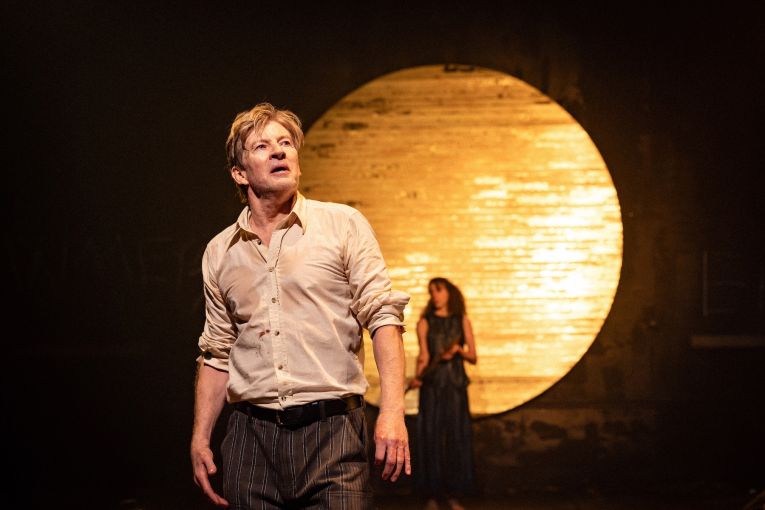
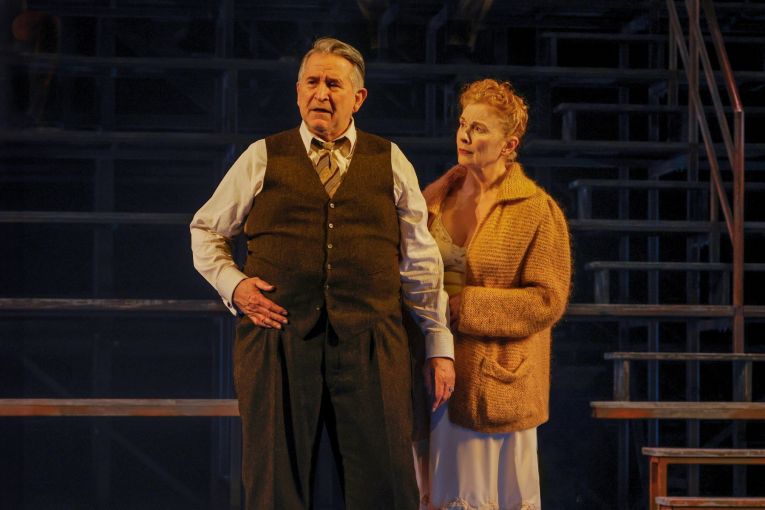
The group put their stamp on this timeless one-act drama, ensuring there most certainly was a front-and-centre mirror (as the face of the statue) as well as an everywhere-now mirror (as the actual floor) despite the characters bemoaning an eternity without mirrors. The lack of mirrors in the original is symbolism at its finest: if someone can’t see themselves in a mirror, they’ll never be able to see the reflection of who they think they are and must therefore depend on others to reflect themselves back to them, which just might be the sad and awful truth. By adding in this seminal prop, the troupe might be suggesting something existentially new: what even is the point of trying to see ourselves if it’s never going to work?
An equally interesting decision was to use the name Vincent Cradeau rather than Joseph Garcin, the former being a strange translation when the play was brought to America, whereas the latter was the male character’s name as Sartre intended. I can’t help but wonder if their choice had something to do with the current political atmosphere in the US. First staged in 1944 occupied France, No Exit questioned how one might live an authentic, meaningful life despite the irrationality of something as damaging as Hitler’s World War II. Fast forward more than 80 years, maybe we’re meant to make a connection.
No Exit presented by Rotpunkt continues at Ern Malley until June 8
Want to see more stories from InDaily SA in your Google search results?
- Click here to set InDaily SA as a preferred source.
- Tick the box next to "InDaily SA". That's it.
Free to share
This article may be shared online or in print under a Creative Commons licence