Music review: Adelaide Symphony Orchestra – Completely Unfinished
What happens when composers change their mind or just give up? The ASO showed that some symphonies are masterpieces even if they are left unfinished.
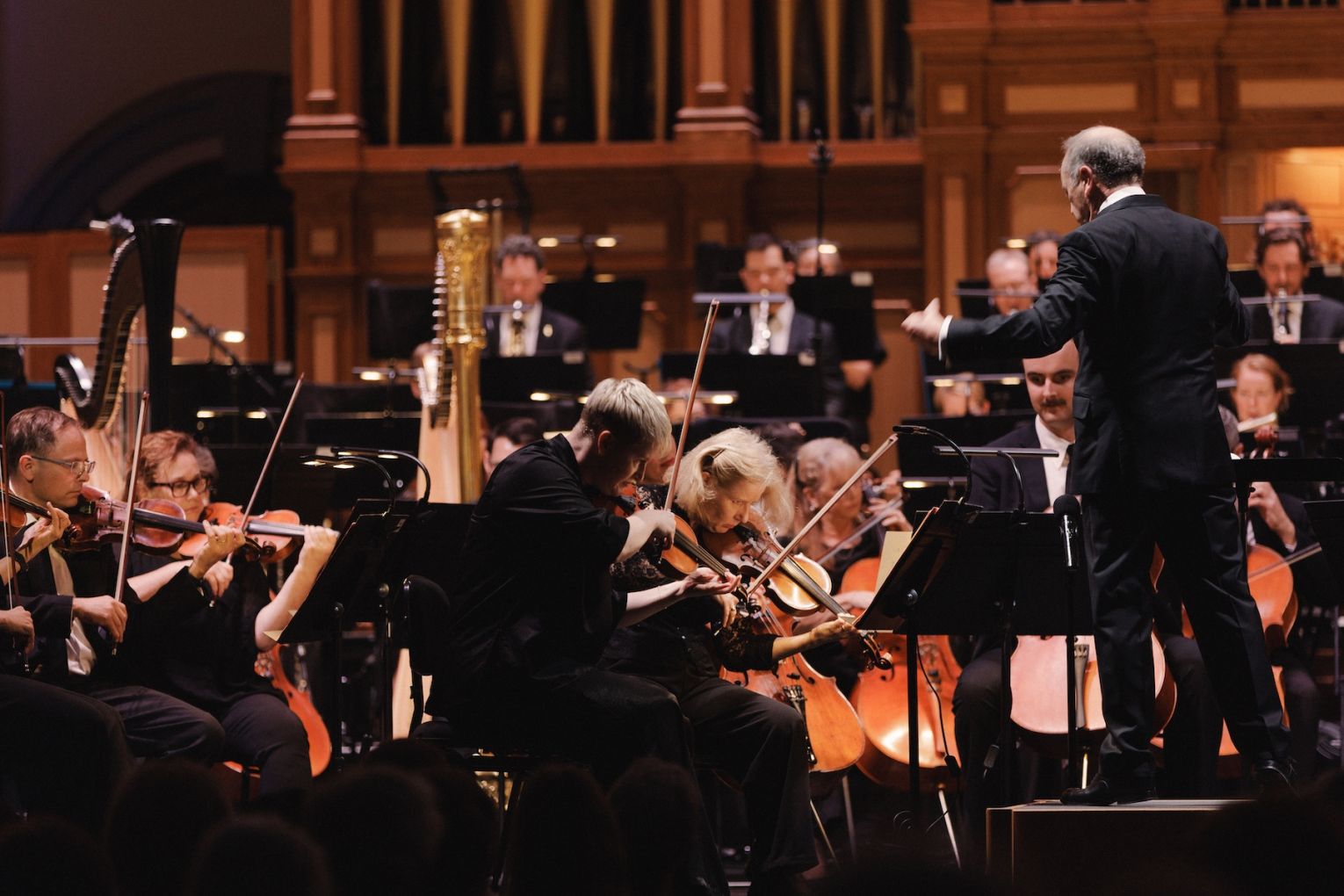
This was hands down one of the most interesting concerts the ASO has done in recent years. In the canon of orchestral masterpieces, a small handful of works survive only in an unfinished state, and the question is why. With its two opening movements, Schubert’s Symphony No. 8 comes straight to mind, and one wonders why this most fecund of composers was unable to finish it. Contracting syphilis in his 27th year is the reason usually cited, but it ignores the fact that he went on to compose his eclipsing Ninth Symphony two years later.
Less well known is how one of Schubert’s final creative acts was to sketch out 14 pages of a ‘Tenth Symphony’ before succumbing to typhoid fever – but that’s another story.
Then there’s Mahler. Any composer who dared to go beyond a ninth symphony was doomed to die, so Arnold Schoenberg famously wrote. This was in a 1912 essay on his compatriot, and look what happened: having sketched out a Symphony No. 10 between July and September of 1910, Mahler died eight months later. His sketches lay in a pile of pages until 50 years later when Deryck Cooke set about piecing the five movements together and filling in the gaps to create a “practical performing version”.
What a clever idea it was for the ASO, then, to pair up these unfinished works in the same concert. Both raise so many questions.
The performances under conductor Mark Wigglesworth were pleasingly unvarnished, honest and interpretatively right down the middle. As to be expected from its enormity and complexity, most preparation appeared to have gone into the Mahler. But this did leave an impression that the Schubert was left rather too much to its own devices. There could have been more to uncover in this gem of a work.
You might like

Mystery lurks in the dark-hued cello and double bass opening of its first movement, and grace abounds in the Ländler-like themes that follow. The same could be said of the second movement. Likewise constructed in triple meter (a feature that curiously connects both movements), its poignant sweetness would have been intensified with more lilt and lightness.
However, one thing this performance certainly did not lack was dramatic shape. Impressively, Wigglesworth conducted it all from memory, and these two movements flowed with resolute flowing cohesion.
Schubert actually did sketch out 20 or 30 bars of a third movement Scherzo, and sometimes this is performed in Brian Newbould’s ‘completion’ of this symphony – he included incidental music from Schubert’s Rosamunde to serve as a finale. However, one felt immensely glad that the ASO did not go down this route. The Eighth feels perfect in its incompleteness with just the first two movements.
Then came the Mahler. Hearing his Symphony No. 10 was like starring into the abyss. Rarely attempted in concert, the ASO excluded it in their eight-year Mahler Symphony Cycle from 2006 to 2013 under Arvo Volmer. Not only do the huge forces and stamina required count against it but the opening Adagio movement is all Mahler finished. He left the rest of this symphony in drafted form or only partly scored, and this is where Deryck Cooke comes in. Without claiming to have finished it, he filled out all the missing bits to make it playable.
Subscribe for updates
Hearing the Tenth, even in hypothetical form, is like traversing Mahler’s soul. It is tortured to begin with: an agonisingly forlorn viola line is so dissonant that it sounds a whisker away from Alban Berg. Angular harmonies soon rise up and we are drenched in some of the composer’s most intense and passionate music.
A little disappointingly, the Scherzo movement that comes next is blocky in orchestration, lacking Mahler’s usual twists and tangents, but thereafter Cooke’s version of the Tenth plunges into ever deeper emotion. In ‘Purgatorio’, the third movement, harmonies are strained to their fullest, and blows on the bass drum shatter the quiet when we get to the Finale. The force with which they were delivered was so seismic that many in the audience visibly jumped.
Clearly this is not ‘funeral music’ as often described but rather a virtual cry from the dead. With its emotional trajectory, the Tenth is a much more personal creation than one might have known, and it in effect charts a real-life story. Having been distraught at discovering his wife Alma’s infidelity, and losing his young daughter to smallpox, he was himself now ill with an irrecoverable heart condition. “Have mercy!” he scrawled across one of the pages.
Wigglesworth earns all praise for having revealed its full force, and so too the ASO players for their unflagging spirit and dedication. The Tenth is a monumental struggle against mortality and the cruelty of fate, and it felt every bit this. Its five movements enclose an arch form which takes us right back to the beginning, with the horns mirroring the main theme but now resigned.
This concert was thought-provoking in multiple ways. It’s a great idea that one feels could certainly be explored further. Mozart’s Requiem comes to mind with its speculative endings by Süssmayr and Eybler et alia. Bruckner’s three-movement Ninth Symphony is another. Let’s see what the ASO can do.
ASO Completely Unfinished was performed at Adelaide Town Hall on 22 November
Want to see more stories from InDaily SA in your Google search results?
- Click here to set InDaily SA as a preferred source.
- Tick the box next to "InDaily SA". That's it.
Free to share
This article may be shared online or in print under a Creative Commons licence