Music review: Australian Chamber Orchestra – Beethoven’s Pastoral
With a profusion of fresh ideas and colour, this was to hear Beethoven at its most inspired.
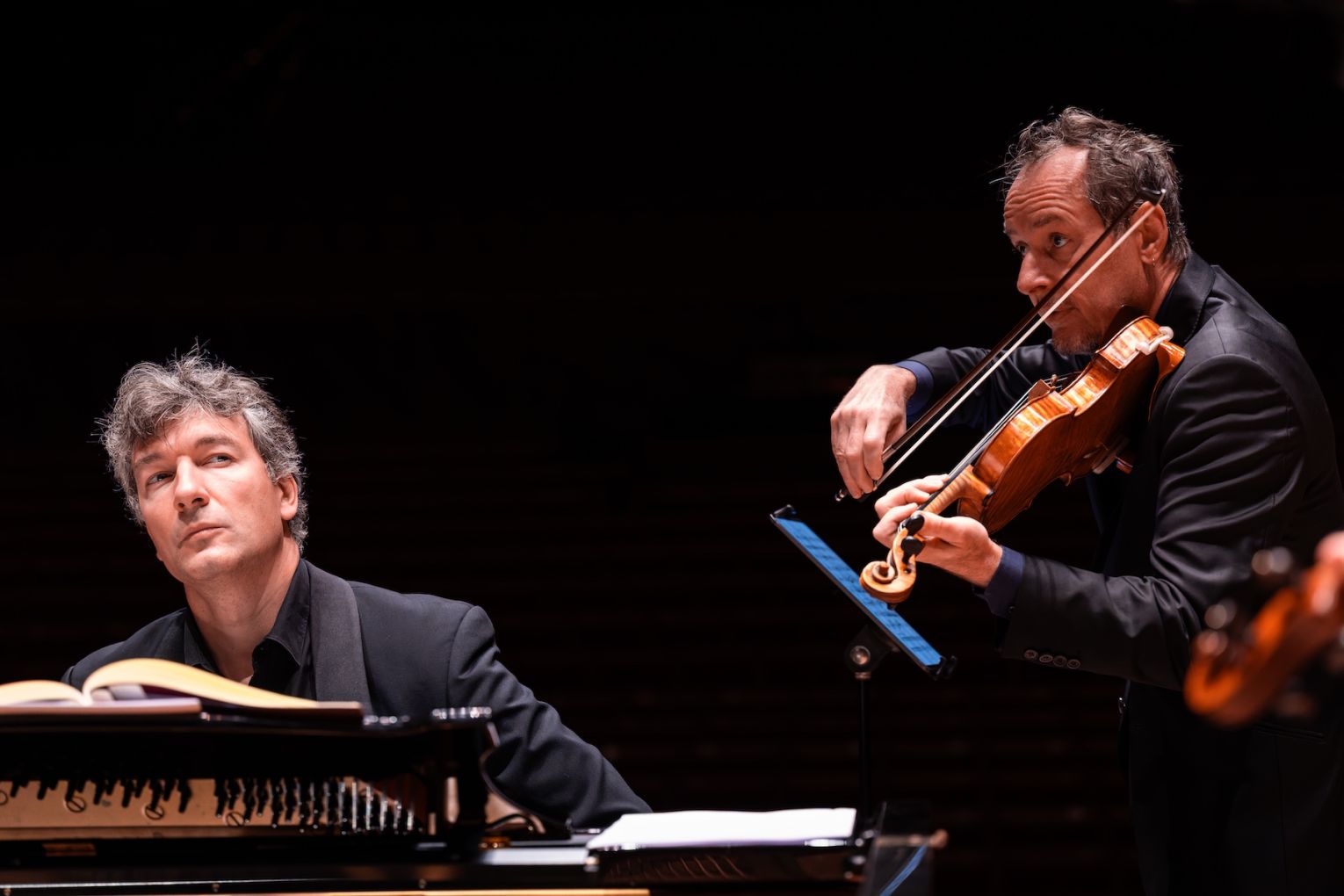
Richard Tognetti always does Beethoven well. It is not just that he makes his music energetic and invigorating. He captures so well its elation and immediate sensory beauty. Under the charismatic ACO leader, Beethoven’s symphonies and concertos suddenly become young persons’ music – but of course for anyone young of heart.
Listening to this all-Beethoven concert made one think: besides being a bit of a maverick himself, how does Tognetti see Beethoven? As a force of change, a rebel, or a lover of beauty? The answer seemed to be a yes on all fronts in the pieces that he had chosen: the Coriolan Overture (Op. 62), the Triple Concerto for Violin, Cello and Piano in C major (Op. 56), and that perennially loved of the symphonies, the Pastoral, No. 6 in F major.
We might note in passing that Beethoven was in his early to mid-30s when he wrote all three works, as it just might remind us that here was (in today’s standards) a young man brimming with ideas and wanting to share them with the world.
The point about Tognetti is that the well-worn, reverential path to interpreting the great masterworks is not for him. Inherited understanding invariably gets chucked out in the search for discovering more about the music’s essential idea. In the Coriolan Overture, this turned out to be the self-destruction of a rampant ego. In the Triple Concerto, it was the conviviality one shares amongst friends. In the Pastoral Symphony, it was the sublimity one experiences of being in nature.
Each performance was improvisationally fresh and mood was everything. Tognetti’s intensity in the overture said it all. One could see it in his face, as he martialled his players into action and stared down any member of the audience who dared to cough.
You might like
This Coriolan Overture was winched up to highest tension. Its steely unison strings and fierce whiplash chords put a gulp in one’s throat. Rarely does Beethoven sound this angry, but it is because the subject demands it: inspired by Shakespeare’s tragedy ‘Coriolanus’, Beethoven depicts a rabidly ambitious Roman general who turns traitor to his own people.
This performance was unusual for its inclusion of piano. Konstantin Shamray was at the keyboard doubling the bassline and filling out chords ahead of his appearance in the concerto. Why? Look in the autograph score and it has no piano part. But the fascinating fact which Tognetti has evidently picked up on is that during the concert at which the Coriolan Overture was first performed, at the Lobkowicz palace in Vienna in 1807, the composer himself was at the piano. Here was Shamray joining in and adding colour just as Beethoven probably would have done.
Colour was indeed the byword in this concert. For it, Tognetti had assembled a top international team of period wind and brass players, and their contribution was fascinating. This was especially so in the Pastoral. Pairs of raspy clarinets, woody oboes and wispy flutes sounded wonderful, at times like a noisy barnyard, but as rhythmically disciplined as a mini-regiment – what a marvellously characterful lot they were.
Next though, it was the Triple Concerto. Traditionally dismissed as one of Beethoven’s weaker works, it proved anything but. There’s not one bar of pathos in it, yet affection is everywhere; and when it is played with the free-flowing exuberance that Shamray, Tognetti and ACO principal cellist Timo-Veikko Valve gave it, the result is totally infectious.
Subscribe for updates
This performance abounded in joy. Tempos often seemed recklessly cranked up, but everything was held it in check. Valve, one of Tognetti’s closest collaborators, was inscrutably on the button and playing his best. So too was Shamray. He slotted in so cleanly and confidently that he drove the performance with equal authority as Tognetti himself. Of the trio, Tognetti allowed himself most creative headroom and was the most wilfully creative, especially in his whippy, fast-edged bowing. But all combined like a winning team of athletes, bouncing off each another in energy.
Swelling to 41 players, the ACO’s Pastoral Symphony was simply miraculous, and in it one could understand more closely what Tognetti does with Beethoven. It works exceedingly well. He maintains strictest tempos, building momentum up strongly. In addition, he has the keenest ear as to linear shape, sometimes releasing melodies into the air as if setting them free. The way he did this was special.
Other insights came out of this performance. Of course, the Pastoral’s rustic touches and nature-painting immediately set it apart from Beethoven’s other symphonies. But there seems to be more than this. Intriguingly, the ‘Pastoral Symphony, or Recollections of Country Life’ (to repeat its full title) sounded artfully unsophisticated in this performance. Tognetti emphasised its repetitive, plateau-like structures, and its glimpses into village life were charmingly artless but refined at the same time. All this symphony’s amusement, joy and beauty were in full view.
This Pastoral was also highly impressive in the level of skill the ACO brought to it. This little orchestra is really in a league by itself when it comes to playing with rhythmic incision and speedy finesse. Regular symphony orchestras can sound positively slothful by comparison. This difference was most pronounced in the fifth movement, ‘Storm’. Its thunderclaps and torrent of driving rain had one reaching for one’s raincoat.
The only mishap was a busted gut string on Helena Rathbone’s violin in ‘Scene by the Brook’. However, this robbed nothing from what followed, as Aiko Goto stepped in seamlessly to lead the second violins.
Yes, Tognetti and the ACO have an inspired way with Beethoven. It really felt like Ludwig had composed this music especially for them.
The Australian Chamber Orchestra performed Beethoven’s Pastoral at Adelaide Town Hall on November 24
Want to see more stories from InDaily SA in your Google search results?
- Click here to set InDaily SA as a preferred source.
- Tick the box next to "InDaily SA". That's it.
Free to share
This article may be shared online or in print under a Creative Commons licence