Music review: The Lost Art of Listening
Hilary Kleinig’s The Lost Art of Listening pushes technological and classical boundaries in an Illuminate Adelaide premiere that finds a new use for audience’s smartphones.
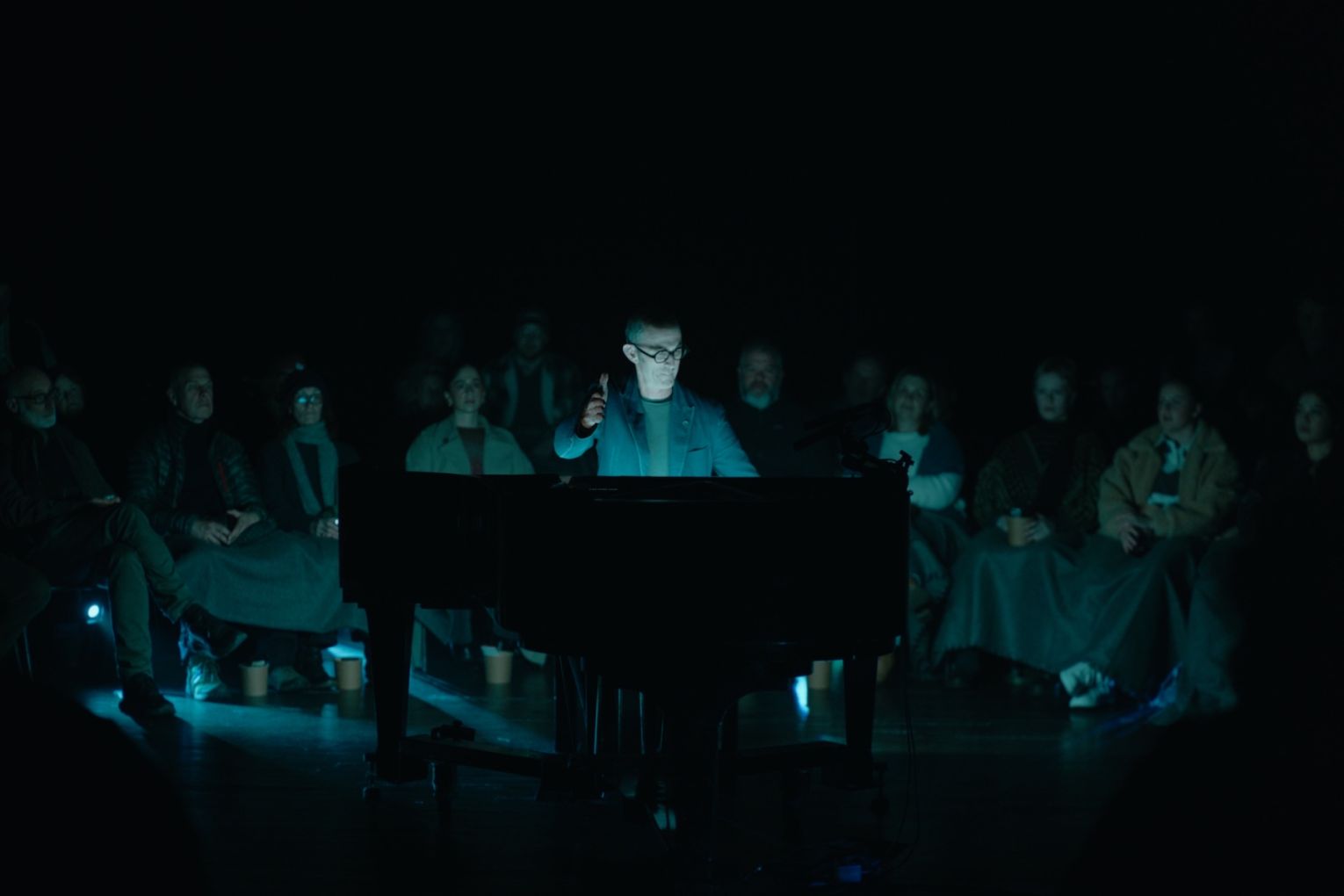
Before The Lost Art of Listening begins, the audience is given a QR code, where they can download an app tailored for the performance. Once everyone’s hooked in, with their seat location set and their phone placed in paper cup to encourage vibration, the lights dim to a strange sepia, and there’s an ongoing buzzing coming from our phones. With different frequencies and surround sound, it’s not so much like a swarm of mosquitos, but maybe a swarm of mosquitos trapped in a muted bug zapper.
A musician enters, takes a bow and, in the small theatre-in-the-round space, sits at his piano. He plays a sweet composition with a few intentionally pitchy notes, that lands in stark contrast to the sound our phones are making – which seem at times like a dying blender, and at others one of those ubiquitous high-pitches made by wind and wire. The kind of sound, perhaps, that make a person ask, ‘What is that noise?’

It’s compelling, but also unsettling. Not surprising, however, as we all assumed we’d be in for something entirely different when, two days out from the performance, we received an email encouraging us to contact the team at Vitalstatistix if we have sensory and/or neurological issues, and we’d then receive information that might help. More than a warning that there might be discomfort, it’s also proof that we’re moving forward as a more inclusive society, and it needs to be recognised not so much as groundbreaking, but as community-making and common courtesy. The disturbance eventually settles, as spectators – who are also participants – fall into the polyphonic sounds of an aeroplane landing, a semitruck a quarter of a mile away, cars beeping, all in collaboration with the light touch of the piano. To say that every song has a different vibe led by different sound environments is to imply that there is a beginning and an end to each singular composition, which is false, because the phones keep producing sound while the pianist rests, waiting for his cue. It is, truly, a symphony of controlled cacophony.
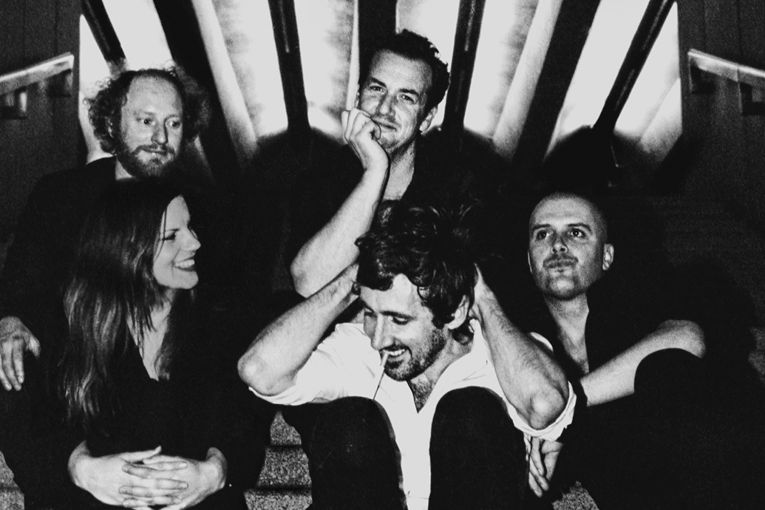
Produced by Michaela Coventry of Sage Arts, The Lost Art of Listening is conceptual and experimental, exactly what we want from cross-disciplinary art. And the creative squad each have a penchant for collaboration and convergence, so inviting the audience to share in the result suits their usual individual practices.
You might like
At the helm is Adelaide-based lead artist Hilary Kleinig, the former artistic director and cellist of Zephyr Quartet, a genre-busting string quartet that spent over two decades mixing classical music with modern innovation. Behind the piano is Erik Griswold, an American-born, Brisbane-based composer who has performed amid the grandeur of the Sydney Opera House and Carnegie Hall – proof, perhaps, that those of us filling the small space of the heritage-listed Waterside Workers Hall are lucky enough to witness up-close the oddity of his execution. Standing over the piano to pluck, floss, and drop various props on its strings, he shows us how unconventional the instrument can be. Steve Berrick is the show’s creative coder and app developer, who ensures the audience is even luckier to be a part of the night’s concert. At one point, lighting designer Geoff Cobham uses disco balls and mirrors to make the piano appear to be the source, rather than the object, of illumination. But that isn’t the only way the baby grand has been tampered with.
Interpreting sound through prepared piano – in this case rubber dampeners threaded between the strings, screws messing with the pitch of them, and a series of thin, loose strings that do, obviously, something cool – is essential to The Lost Art of Listening and reminiscent of the late, great avant garde composer John Cage, who would have been fascinated by the possibility of today’s technology and Berrick’s app. Cage’s questions always come back to the confluence and conundrum of music and noise, which is why the spectators’ excitement as their phones grow loud at crucial moments is something that’s at stake across the overall creation and outcome. But there are complications with that thrill, too, and they can’t be ignored: might the future hold an interdependency between phone user and phone? With information-gathering, some would say we’re already there. And when we settle into the contained chaos / chorus of the phones, are we readily accepting environmental noise pollution because we already know how to?
The Lost Art of Listening is a fascinating slice of art where the concept matters as much or more than the work itself – but no one can doubt the level of creative thought and sheer intelligence put into the production, nor how entertaining our vulnerability to sound dissonance can be.
The Lost Art of Listening ran from July 9 – 11 as part of Illuminate Adelaide.
Want to see more stories from InDaily SA in your Google search results?
- Click here to set InDaily SA as a preferred source.
- Tick the box next to "InDaily SA". That's it.
Free to share
This article may be shared online or in print under a Creative Commons licence