Music review: Adelaide Symphony Orchestra takes on Wagner’s The Ring
Aside from concerns over the Town Hall’s acoustics for a huge program like this, the ASO’s performance of the 15-hour epic – truncated to just over an hour by Dutch composer Henk De Vlieger – was an ecstatic triumph.
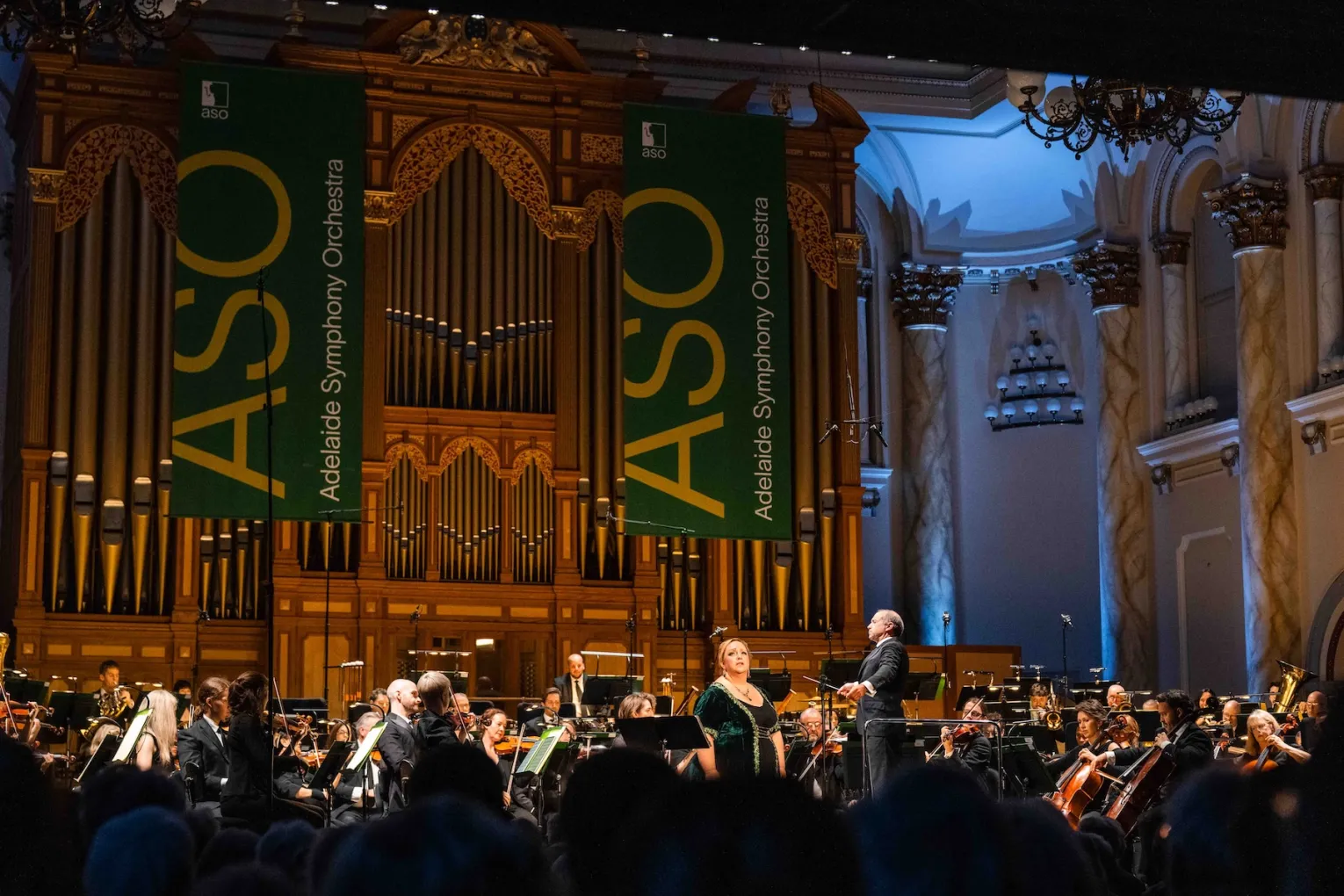
One feels sure Wagner would have fiercely resisted the idea, but the ASO’s ‘orchestral adventure’ through The Ring turned out to be the next best thing to having his operatic epic staged here again in Adelaide.
The title itself raised suspicions: was this special event, marking the orchestra’s 90th birthday, to be some kind of cook’s tour through these four operas? As it happens this ‘orchestral adventure’, devised by Dutch composer Henk De Vlieger, is a well-tried concept and has been recorded multiple times. Basically, it retains most of the key orchestral moments but eliminates all singing.
In short, it turns The Ring into a symphonic work.
But let’s not get ahead of ourselves because this celebratory concert did include some fine singing, and that was courtesy of Melbourne-born soprano Helena Dix in Richard Strauss’s Four Last Songs. In no other concert could his final musical utterance (composed at the age of 84) conceivably appear first, except for the eclipsing egoistic power of Wagner.
The stage was set for him. Numbering 94 players, the ASO was right on target to wrestle with The Ring’s massive score.
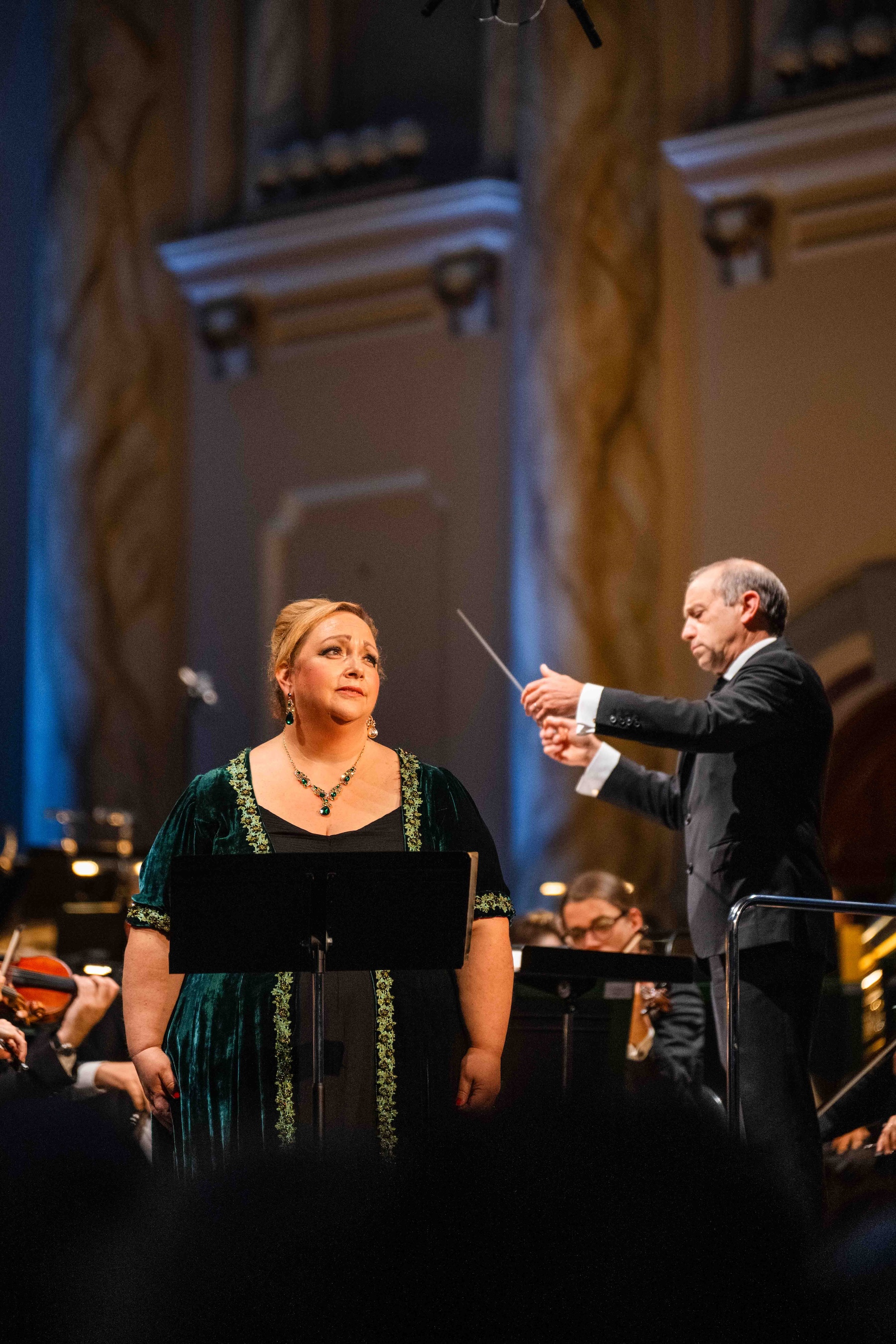
But first it was these incomparably wonderful Four Last Songs of Strauss. One immediately felt the forces assembled for this concert were rather too large for these intimate songs. Lushly orchestrated though they are, the singer should not be overpowered. Yet that’s unfortunately what happened. When Dix entered, whisperingly low with the words “In dämmrigen Grüften träumte ich lang” (‘I dreamed for a long time in dim crypts,’ to words by Hermann Hesse), she was unfortunately nearly drowned out.
The orchestra’s role in Strauss is more about caressing the voice and lifting it heavenward rather than pursuing an independent path. One wished there had been more feeling of partnership.
You might like

Without doubt though, Dix has the voice for Strauss. Her expressive determination increased in each song; and by the third one, ‘Beim Schlafengehen’ (Falling Asleep), she conveyed the full rapture of Hesse’s poetry. Lovely solo violin playing from Kate Suthers also made this a gem of a performance.
Alas, tempos flagged in the fourth song, ‘Im Abendrot’ (At Sunset), losing flow and reaching a difficult, protracted halt.
The Town Hall’s acoustics were little help. Often the ASO’s solution when taking on larger works of the repertoire in this venue is to expand the stage yet further into the seating area. On this occasion, virtually half the hall’s floor area was swallowed up by the orchestra. Balance problems persisted whereby Dix periodically disappeared into inaudibility. Holding back on the orchestra’s volume would have solved this.
But it was now onto the concert’s main assignment, and chief conductor Mark Wigglesworth looked ripe for taking on Wagner.
This The Ring: An Orchestral Adventure sure did look curious. How 15 hours of music can be condensed to just over one hour and starved of its vocal lifeblood was the intriguing question with De Vlieger’s The Ring: An Orchestral Adventure, which he wrote for the Netherlands Radio Philharmonic in 1991.
Prima facie it flies against everything Wagner stood for – most particularly in Der Ring des Nibelungen, which was the ultimate expression of his total artwork idea. Music and drama are supposed to form one indissoluble whole, and the audience is immersed in a mesmeric ‘other world’.
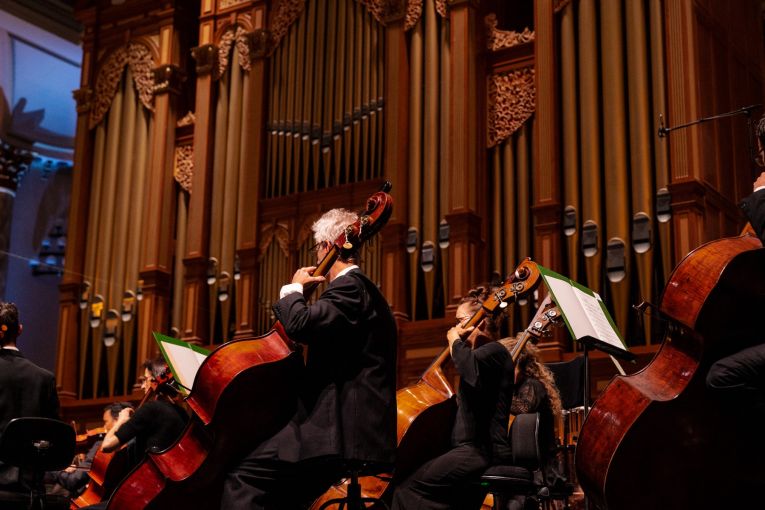
De Vlieger does remarkably well. First, you hear the gigantically extended crescendo that is the prelude to Das Rheingold, building from a pianissimo in the lowest reaches of double basses to the first moment of ecstasy when Woglinde, the first of the Rhinemaidens, issues her first cry, ‘Weia! Waga!’, thereby ushering in their mystical underwater realm.
Subscribe for updates
Bemusingly, this vocal entry is given over to flutes, to almost embarrassing effect. Here was when Dix was needed back on stage, and even more when the warrior-maiden Brunnhilde enters to redeem the world through love.
Soon though, the strengths of De Vlieger’s arrangement became apparent. He mainly settles on the orchestral episodes in all four operas and welds them together extremely well, making it as if Wagner had conceived a tone poem.
One could forget all the mythological complexity of Alberich’s clash with the Rhinemaidens, Wotan’s pact with the giants, his uncontrollable rage towards Brunnhilde, and Siegfried’s slaying of a dragon to save humanity. That whole dramatic edifice was gone, leaving the orchestra to be heard in abstraction in an uninterrupted flow from lyrical expanse to tension-filled climax.
Some transitions sounded abrupt, but the illusion was almost complete: here was the great symphonic work that Wagner could have composed but never did.
The other good news was the faithful, honest and uncontrived performance that the ASO delivered under chief conductor Mark Wigglesworth. The British conductor followed Wagner’s natural flow of line, giving it time to breathe and allowing all its beauty to gather.
For those who can remember the 2004 Ring, Ascher Fisch conducted that landmark cycle (Australia’s first home-grown staging) with taut power and zeal. By contrast, Wigglesworth was more open to its undulating moods and feeling of length. In the Town Hall’s overloaded acoustics, this was only a good thing, and by no means was this performance lacking in excitement either. The famous Ride of the Valkyries, Siegfried’s Funeral March, and Brunnhilde’s Immolation scene in Götterdämmerung possessed brute cataclysmic force.
Armed with a full set of Wagner tubas (compact little instruments that the composer invented to add further warmth) on the back row, the horn section was gloriously full-throated, and one of the singular joys of this performance was seeing them answering back and forth with the trumpets and trombones on the opposite side of the orchestra. Normally of course, these interactions are invisible in the pit.
Wagner needs a particular zeal to sound right, and it partly comes from ironclad confidence. Fine, accurate playing from the ASO did full justice to the majestic sweep of this music, although more familiarity with the composer’s intense aesthetic would have allowed them to abandon care and go for pure ambition.
Other plusses were all present. Everything was in its rightful place, and the scale of sound was ecstatic.
This was the third time Adelaide has been the nation’s ‘Ring City’, and on the strength of this fascinating The Ring: An Orchestral Adventure, one hopes another full production will happen one day.
The Adelaide Symphony Orchestra performed The Ring Adelaide Town Hall on Friday May 29
Want to see more stories from InDaily SA in your Google search results?
- Click here to set InDaily SA as a preferred source.
- Tick the box next to "InDaily SA". That's it.
Free to share
This article may be shared online or in print under a Creative Commons licence