Music review: Adelaide Symphony Orchestra’s Jupiter
Konstantin Shamray was back in Adelaide for the ASO’s Symphony Series, playing with a maturity and conviction that were a step above what we have seen before from this greatly admired pianist.
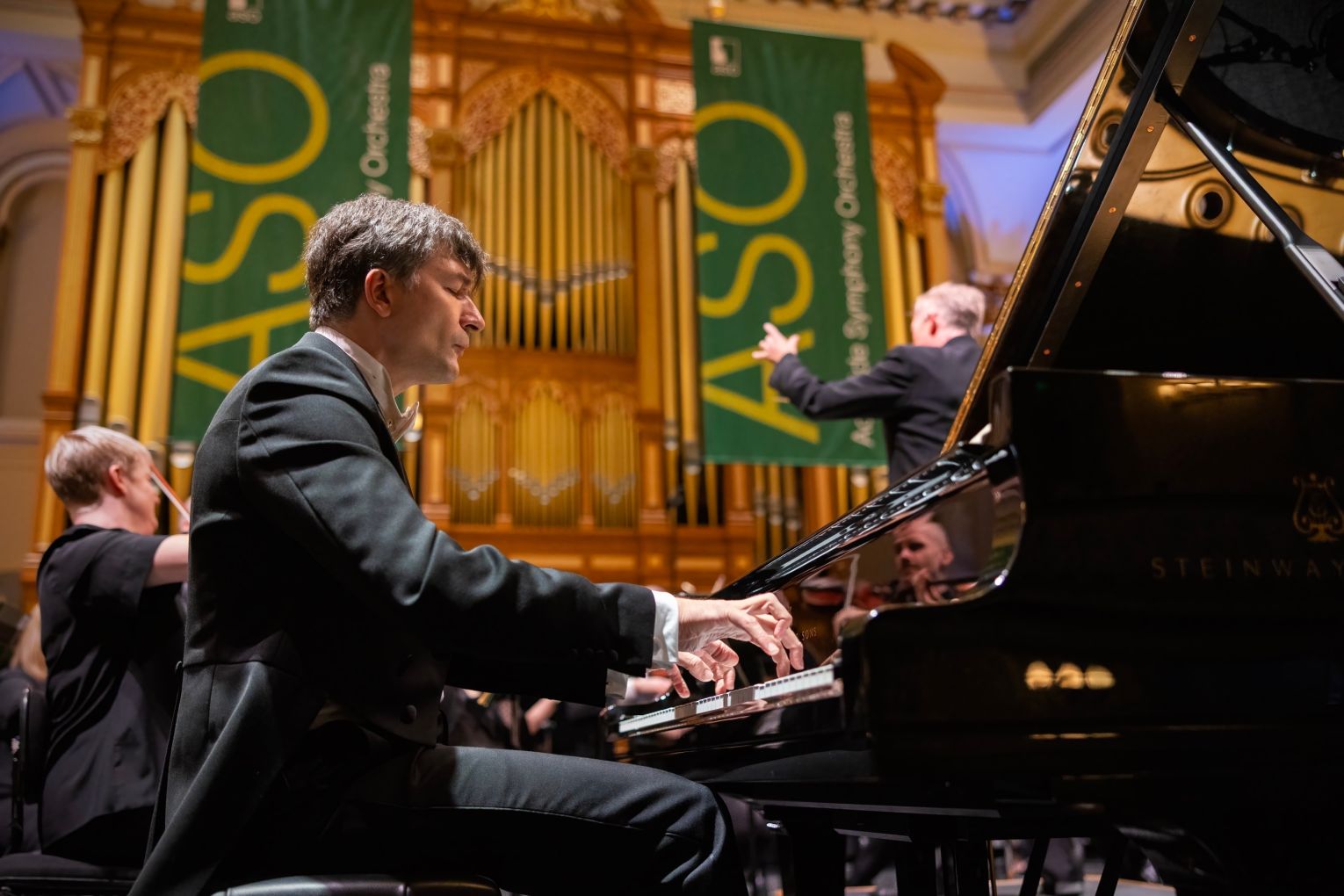
Konstantin Shamray has performed Rachmaninov’s Piano Concerto No. 2 numerous times before, but not in Adelaide. Way back in 2021, before he moved to Melbourne, he played Rachmaninov’s Third Piano Concerto with the ASO in a performance that brimmed with youthful vigour and discipline.
Expectations were high on this return visit. We know from previous experience how exemplary Shamray is with the Russians. Prokofiev, Scriabin, Shostakovich, Medtner, Schnitkke – he plays them all. But Rach 2 rates as one of the biggest piano works. Its uplifting melodies and high virtuosity, having emphatically ended the composer’s severe depression and won back public approval, continues to be a favourite to this day.
Shamray has moved on as a pianist. That was immediately obvious in is account of Piano Concerto No. 2. It took on different perspectives that reached deep into the work and evidenced much personal thought. Frequently, performers feel the need to meet this concerto with all-conquering force, but here was a performance of great conviction and maturity.
Dazzling and showy it can certainly be, but as Shamray took hold of its first movement, one realised how much more can be discovered through the containment and compressive strength he supplied to it. His conception of that turbulent movement was far-sighted. One marvelled at how he played its solo chords with accumulating weight and power to propel it forwards.
The surprise was to find Shamray pulling back dynamically when the orchestra joined him. Rachmaninov’s trademark swirling arpeggios are something that pianists usually revel in, but not on this occasion. One was struck instead by the understated polished evenness of his playing while the orchestra roared alongside him in the main theme.
The reason became apparent soon enough. When the piano has its own moment in the sun once again, it was something to savour yet more. We were witnessing a true partnership between soloist and orchestra. They each had their turn.
You might like

Douglas Boyd, returning to conduct the ASO after its wonderful Beethoven Symphonies series in 2022, proved a most willing and complicit partner. With equal conviction, he lifted the orchestra right above any accompanying role. It bounded forward in rapturously full voice.
The moment to wait for in this concerto is of course that famous languid melody in the second movement. It was sublime for the equality they achieved. First the flute briefly introduces it, then the clarinet gives it in full form. Basically the piano sits out at this point, just offering the sparest arpeggios. Shamray gave these woodwind solos all the space they needed.
When it was his turn, the effect was poetic, by way of answer. So beautiful.
Shamray has a technique that enables him to take any interpretative decision, but it was the depth of his insight that impressed right through this performance. When textures mount up, he gave them precision. When melody ascends, he gave it a clean eloquence. And when the bravura stuff happens, he gave it effortlessness. Everything felt proportioned.
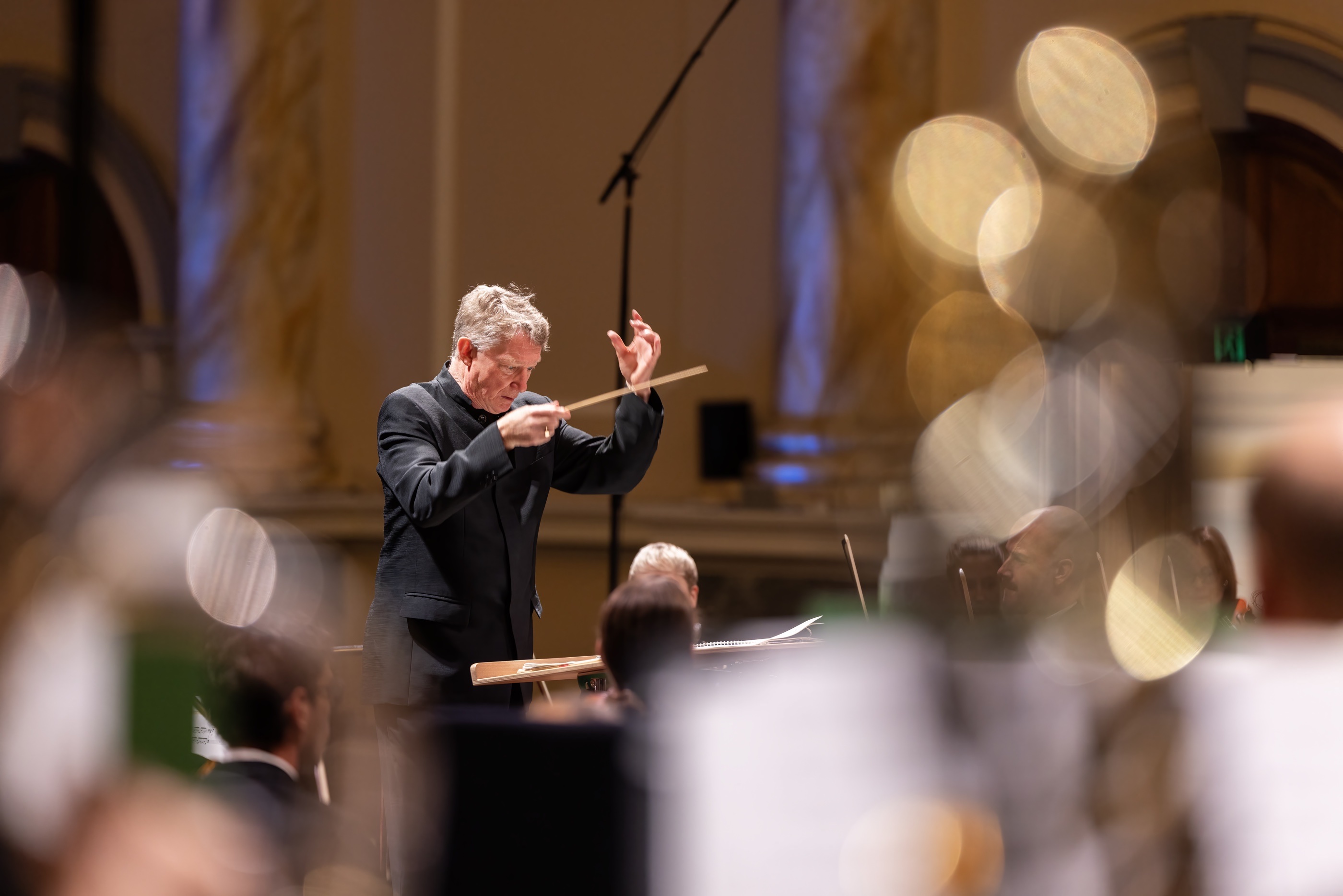
We are seeing greatness in Shamray’s playing now. The only downside was that sometimes the orchestra outpowered him. Boyd gave the score magnificent symphonic amplitude, but in the Town Hall that can lead to too much of a good thing.
Subscribe for updates
Also on this program were a new work by British composer Mark-Anthony Turnage, Caroline Shaw’s frequently performed Entr’acte, and Mozart’s Symphony No.41 in C, K. 551, ‘Jupiter’.
Turnage’s jazz-influenced Go for It, here given its Australian premiere, is a likeable excursion into pure zany fun. With its humorous touches, there’s always room in a concert for lighter items like this.
Ever since Shaw wrote it in 2011, Entr’acte has become one of the most successful new classical works of recent times. Sometimes though, its pulsating main theme can sound overly repetitive, unless the intervening textural episodes are given the attention they deserve. Boyd crafted all this piece’s inner detail with considerable care so that you could hear all its whispery string effects, bow-tapping and pizzicato. It all had wonderful flow and coherence as well.
A clever touch was to then segue seamlessly into Mozart’s last symphony. How right it felt. Shaw seems to invite a link with the past with the retrospective character of her piece and the way the cello disappears away at the end.
Other clever touches in the Mozart clearly owed to Boyd’s interest in period performance practice. A leanness and clarity in the strings were one thing. Playing with less vibrato really does help open up the textures. Natural horns and hard sticks on the timpani helped too with colour and rhythmic articulation.
Most distinctive, though, was Boyd’s gliding sense of pulse. He really is good at this. He creates a forward motion and coherence that brings everything into focus. In the ‘Jupiter’, this helps avoid a start-stop effect in the first movement’s dramatic architecture and the finale’s extraordinary contrapuntal complexity.
One also loved the way Boyd shaped this symphony’s lyrical phrases. He gave them air, flight and flourish. Goodbye to mechanical Mozart when done this way. The tempo was ferociously quick in the last movement, and this did raise a question about whether the ASO could keep up with it.
But they did. They’re a fine, talented orchestra. Bless them.
The Adelaide Symphony Orchestra performed Jupiter on February 14 at Adelaide Town Hall
Konstantin Shamray will perform with violinist Sergej Krylov at UKARIA on March 14-15 as part of Adelaide Festival
The Adelaide Symphony Orchestra will perform with Erin Heylard on March 19-20 at St Peter’s Cathedral
Want to see more stories from InDaily SA in your Google search results?
- Click here to set InDaily SA as a preferred source.
- Tick the box next to "InDaily SA". That's it.
Free to share
This article may be shared online or in print under a Creative Commons licence