My Brilliant Career review: Gorgeous modernisation of a radical classic
Netflix’s sumptuous new My Brilliant Career, filmed in South Australia, sands some of the rough edges from Miles Franklin’s difficult young heroine in this warm, sexy and artfully modern adaptation.
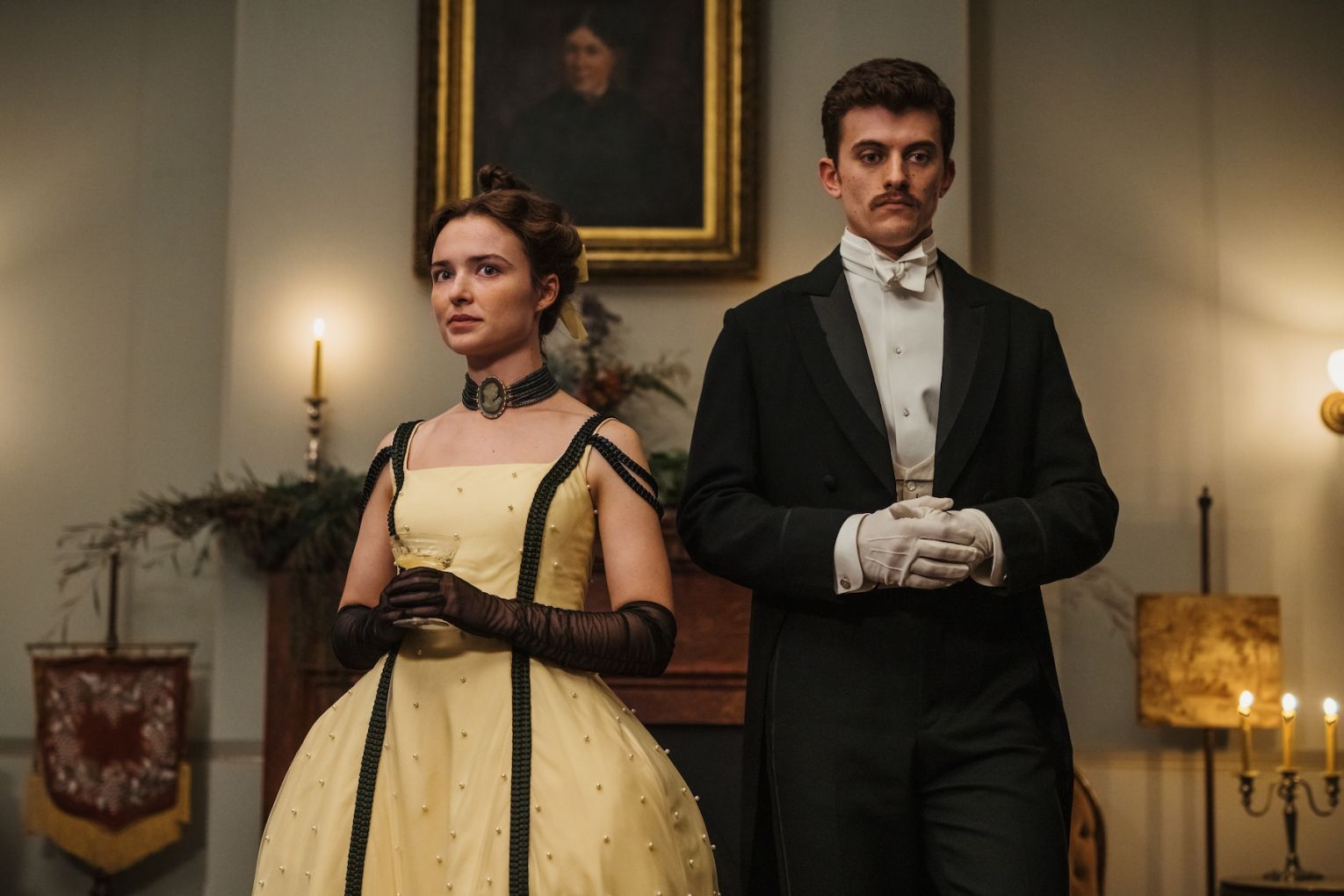
I came to Netflix’s new six-part adaptation of My Brilliant Career carrying more baggage than was probably fair. I first read Miles Franklin’s 1901 novel decades ago and reread it in the last few weeks, along with rewatching Gillian Armstrong’s 1979 film starring Judy Davis and Sam Neill. Both versions had become so firmly lodged in my imagination that as I watched the first episode I found myself keeping a mental tally of everything that strayed from the original novel and its first screen adaptation.
The Netflix version begins on the Melvyn dairy farm in Possum Gully, a site of grinding poverty in Franklin’s novel, now rendered as financially precarious but otherwise idyllic. When the rebellious Sybylla is sent to her wealthy grandmother’s estate, Caddagat, instead of the move being a welcome escape from destitution, this adaptation reconfigures it as a strategy to marry her into money and alleviate her family’s debt. Showrunner and writer Liz Doran and writers Sarinah Masukor and Rachael Turk give the story an almost My Fair Lady twist – the feral country girl is to be dressed and polished, ready for marriage.
The marriage plot has also evolved between adaptations. Franklin surrounded Sybylla with female characters whose lives revealed how perilous marriage could be for women on the cusp of the twentieth century. Her mother’s life had been at the mercy of her husband’s disastrous choices with money and alcohol. Aunt Helen had married for love and was forced to live with the social shame of being deserted. Even Sybylla’s wealthy widowed grandmother lived in a world where property ownership and economic power completely resided with men. The novel and film both revealed marriage to be no guarantee of stability or security and it was little wonder that Sybylla was determined to flout her family’s matchmaking plans.
The Netflix Sybylla, played with gorgeous vitality by Phillipa Northeast, is a character a of vastly different energy to those who preceded her. She is thirsty for experience, independence, sex, art and above all, the opportunity to write. Despite her adamant opposition to marriage, the handsome and wealthy Harry Beecham (Christopher Chung) with his sodden shirts and washboard abdominals immediately catches her eye.
As Sybylla is combed and primped into marriage-readiness by her grandmother (Anna Chancellor) and long-suffering Aunt Helen (Genevieve O’Reilly), her career aspirations are being similarly taken in hand. Family friend Aunt Augusta (Kate Mulvany), a suffragist and bohemian, becomes Sybylla’s literary mentor, encouraging her talent and offering connections to The Bulletin. A stay at neighbouring Five Bob Downs begins to resemble the world’s most picturesque writing residency, and Sybylla’s craft develops as she begins to consider literature as a possible career and financially viable alternative to marriage.
You might like
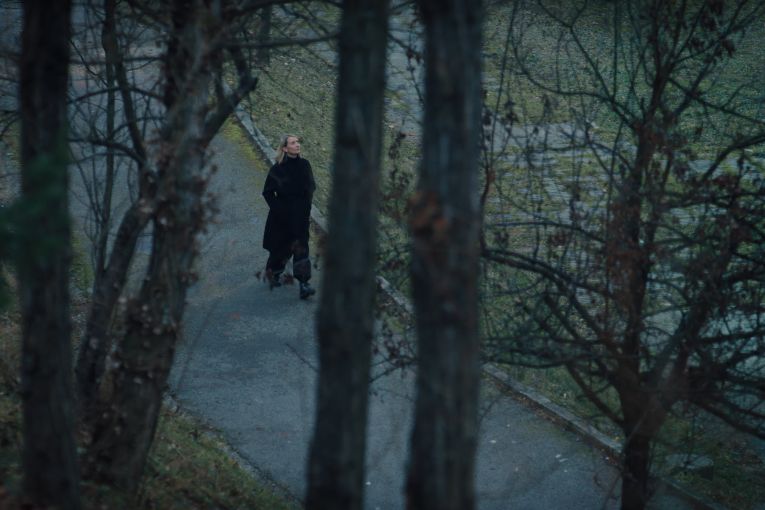
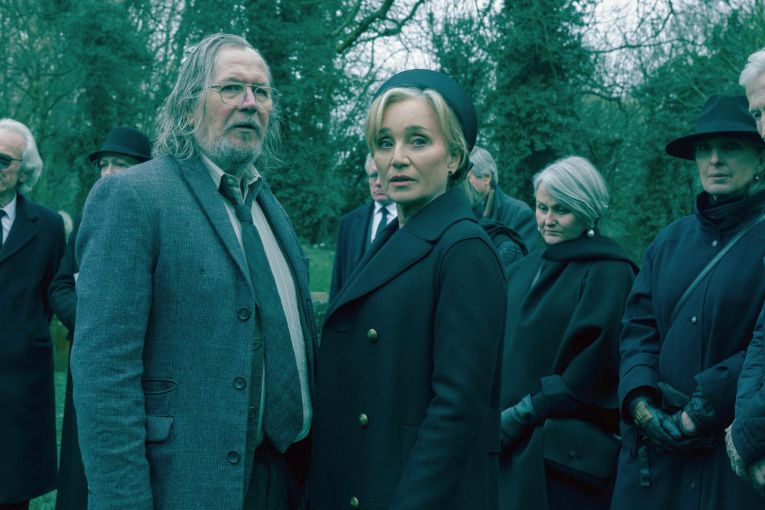
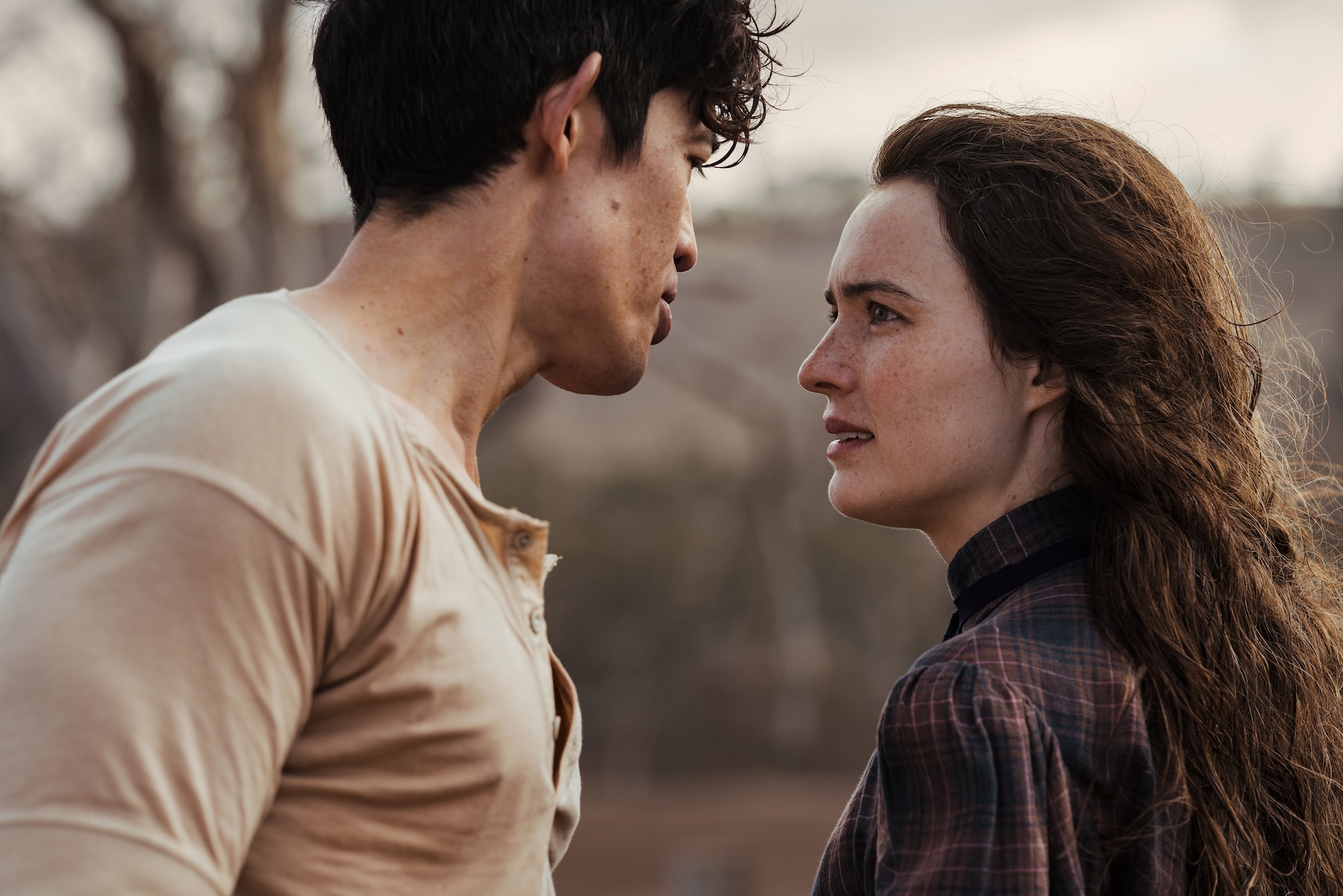
Somewhere between episode two and three, my resistance to the liberties the writers were taking with this story completely evaporated. I was hooked. This version makes little attempt to disguise its modernity. Contemporary songs are arranged in period style. The racial landscape of Franklin’s world is expanded through wonderful new characters including Nell (Sherry-Lee Watson), a First Nations stockwoman battling racism and sexism, and Christopher Chung’s Harry Beecham, who is given Chinese ancestry. Queerness, women’s pleasure, suffrage and colonialism all enter the story to sit alongside Franklin’s original preoccupations with marriage, money and class.
This approach to period drama reminded me increasingly of Dickinson, the television series starring Hailee Steinfeld as the poet Emily Dickinson, with a generous dash of the romance and sexual tension of the regency-era series Bridgerton. In Dickinson, Bridgerton and My Brilliant Career, historical settings become places in which contemporary questions can explored, accompanied by gorgeous costumes and locations, sexual tension, modern lyrics and a cast that reflects a broader and more inclusive idea of who belongs in historical narratives.
My Brilliant Career is simply gorgeous. The production values are exceptional, from the costumes and interiors to the South Australian landscapes. Five Bob Downs is jaw-dropping with its chinoiserie and bohemian opulence. This visual sumptuousness of this adaptation perfectly suits its Sybylla: a young woman ravenous to experience all the beauty and sensuousness the world contains.
Subscribe for updates
Northeast is the lynchpin of this production’s success. Franklin’s Sybylla was vain, insecure, melodramatic, at times unkind and, to be honest, often intensely annoying. Davis embodied much of that prickliness in Armstrong’s film. Northeast’s Sybylla is warmer and more engaging, while still retaining the restless intelligence that drives her character. Her chemistry with Chung’s Beecham – almost unrecognisable from his narcissistic Roddy in Slow Horses – gives their romance genuine heat.
The supporting cast is exceptional. Anna Chancellor is formidable as Mrs Bossier, Genevieve O’Reilly charming as the elegantly empathetic Aunt Helen and Sherry-Lee Watson is mesmerising as Nell, while Jake Dunn as Frank Hawden and Alexander England as Uncle Julius lend delightful warmth to their roles.
Expanding the format into six episodes gives the narrative room for subplots involving sexuality, race, ambition and class, sometimes with the dial turned up to an enthusiastic eleven. Yet beneath these subplots, the series remains tethered to Franklin. Major characters and narrative destinations all appear – family debt, Harry’s financial issues, Sybylla’s stint with the McSwats – and the writers repeatedly return the story to the harsh realities of the original novel.
The McSwat episode also crystallises the most revealing difference between Doran’s and Franklin’s Sybylla. Franklin allows her Sybylla to fail. She behaves badly, makes mistakes, and often feels humiliated and out of her depth. The Netflix Sybylla is more resilient. She learns, adapts and, when tested at the McSwats, earns respect and uses her intelligence to great effect. While I love this new incarnation of Sybylla, I couldn’t shake the feeling that some of her complexity had been lost in in sanding away of these rough edges. We understood the power of the forces controlling Sybylla’s destiny when Franklin’s heroine was not always successful in transforming adversity into growth, and there is something very contemporary in our desire to give this version of Sybylla more competence and ultimately more power to control her own fate.
Perhaps each iteration of Sybylla is what its audience needs. Franklin (an adolescent herself) gave us a prickly young woman staring at the lives available to women and finding them all wanting. Armstrong’s 1979 film created a fiery icon of feminist independence. This 2026 adaptation imagines her first and foremost as an artist coming of age as she negotiates sexuality, class, race, money and love all while trying to claim her own life.
By the end, I was completely won over, having long stopped counting storyline deviations. My Brilliant Career is exuberant, romantic, visually exquisite and deeply engaging. Its Sybylla has travelled some distance from Franklin’s original, but 125 years later, she still has the same hunger for that brilliant thing – a career of her own making.
My Brilliant Career is now streaming on Netflix
Want to see more stories from InDaily SA in your Google search results?
- Click here to set InDaily SA as a preferred source.
- Tick the box next to "InDaily SA". That's it.
Free to share
This article may be shared online or in print under a Creative Commons licence