
Artist profile: Jack Langford, First Nations Award 2025 recipient
Emerging filmmaker Jack Langford is elevating his career after receiving the inaugural Helpmann Academy First Nations Award. Introduced this year, the award aims to support First Nations creatives as they launch their careers, thanks to the generous support of SA Power Networks.
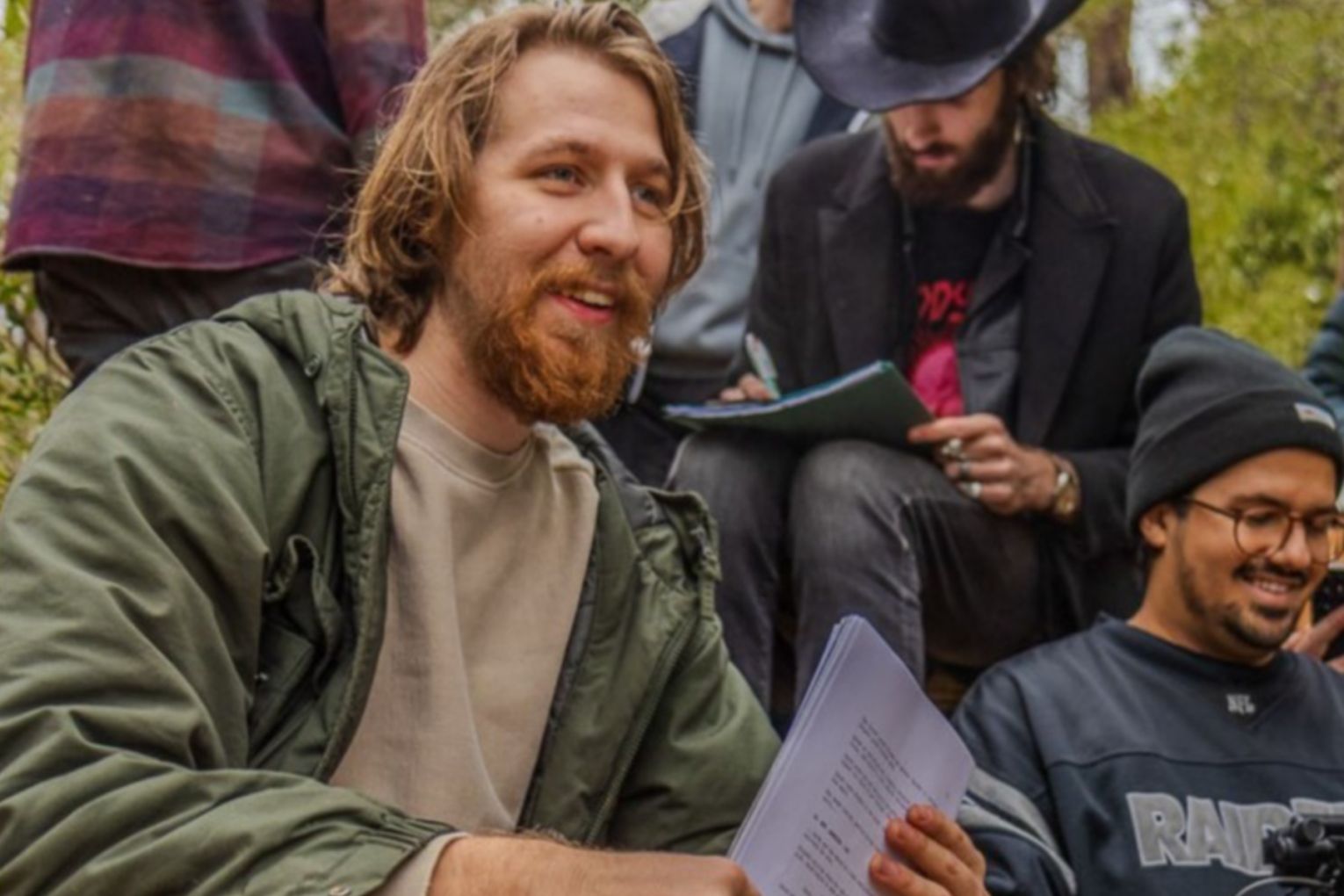
Born and raised in Tasmania, Langford moved to the mainland in 2011 to study at Flinders University. A recent graduate, he is using the $5000 award to fund the post-production of his first documentary, Beyond Borders.
“The award is so important to me in continuing my practice as a developing filmmaker,” he says. “Being able to have the resources to honour the story I want to tell is critical.”
From a young age, Langford developed a strong interest in storytelling and was exposed to various forms of media and different types of stories. However, it was film as a medium that he felt had the capacity for controlling the narrative that truly captivated him.
“I remember going to Blockbuster when it was still around and renting movies,” he recalls. “I’ve always been drawn to film, particularly as a medium for storytelling.”
Langford’s late grandmother has been particularly influential in his life. She was a Yorta Yorta woman who moved to Tasmania and played a role in establishing the Tasmanian Aboriginal Centre. “My late grandmother instilled in me many First Nations stories from a young age,” he shares.
Beyond Borders was filmed at the 10th World Archaeology Congress, held every four years in Darwin. The event allowed Langford to interview archaeologists from around the world about the relationship between archaeology and Indigenous peoples. By speaking with more than 20 individuals, many focusing on Indigenous archaeology, Langford found that “a lot of these stories were close to home and similar to my grandmother’s upbringing”.
Before receiving the Helpmann Academy Award, Langford and his team had already filmed more than 20 hours of interviews with archaeologists. The award helped them to realise their vision for how they wanted the footage to be presented.
“It’s a good feeling to be closer to fulfilling the promise of what we knew this could be,” he says. “Without Helpmann’s support, the story of global archaeology and its importance in protecting people’s identities wouldn’t have been resourced in the way it needs to be.”
The documentary explores how history can shape identity and examines how archaeology is being used to protect that identity. It looks at how aspects of archaeology have been shaped by colonisation, especially in terms of Indigenous histories. Langford is interested in how Indigenous peoples are becoming actively involved in the communication of information about their cultures.
Although the documentary doesn’t focus on Langford’s own community, the project has provided Langford with the opportunity to explore his First Nations heritage further. “It’s a nice way to reconnect with that part of myself, and it’s something I’d like to engage with more,” he says.
While Langford has enjoyed exploring his heritage and expanding his repertoire to include documentary filmmaking, he is looking forward to returning to his passion for horror films. “It’s less traditional horror and more psychological, character-driven,” he says. “I’m trying to create horror that’s more personal to me.”
Langford is particularly interested in exploring topics such as the housing crisis and being a young person trying to find a house.
Whether it’s through documentary or feature films, Langford uses the medium of film to tell stories. Drawing on his First Nations background, he is enjoying experimenting with the horror genre and placing these stories in new contexts. “I’m trying to combine ideas and themes of First Nation stories and put them in places you don’t expect to see them, like horror.”
The Helpmann Academy First Nations Award is proudly supported by SA Power Networks, a major partner of the Helpmann Academy. Jack Langford studied a Bachelor of Creative Arts (Screen) Honours at Flinders University.
Want to see more stories from InDaily SA in your Google search results?
- Click here to set InDaily SA as a preferred source.
- Tick the box next to "InDaily SA". That's it.
Free to share
This article may be shared online or in print under a Creative Commons licence