Rising to the challenge: Navigating the pains of love
The Hurt is an intriguing narrative that is a beguiling mix of memoir and parable, infused with remarkable characters, humour, pathos and Parisian light.

The Hurt, Catherine de Saint Phalle’s latest work, is part-autobiographical account, part-autofiction.
The word autofiction was coined in 1977 by Serge Doubrovsky. How a writer can capture the truth when it comes to recall his life in an autofiction was certainly at the centre of concerns, as in 1975 Philippe Lejeune had already defined “the autobiographical pact”, stating that the author of an autobiography enters into a pact or contract with his reader by committing to tell the truth regarding his life experiences, including their pitiable aspects.
Opting for autofiction is a risky choice, however, since it requires honesty and audacity from the author. Saint Phalle’s work rises to the challenge.
Born in London, the author grew up between Alexandre, her father, and Poum, her mother, a bohemian couple already portrayed in Poum and Alexandre, Saint Phalle’s memoir shortlisted for the Stella Prize in 2017.
English is her mother tongue. When the family moved to Paris, Saint Phalle adopted French. Her debut novel N’écartez pas la brume! was awarded the Prix du Premier Roman in 1994 by the Chambéry Festival, where many promising writers were discovered, including Michel Houellebecq.
Six books followed written in French before Saint Phalle came back to English. Juggling two languages is a fascinating exercise for a writer but for us, readers, understanding that Saint Phalle has been nurtured by two different harmonies during her formative years reveals something else of her true spirit brought into being in another culture and another country.
The Hurt is set in Paris, yet the French capital isn’t the pretty backdrop of the city of love. Saint Phalle’s Paris is not romanticised. It is rather the large town where she grew up, went to school in an institution run by nuns, enrolled in high school and later in the Ecole Préparatoire at the Lycée Victor Duruy, a future strictly planned by her father.
You might like

In the new school, fellow-student Julien comes into play. He quickly notices the lonely young woman who has known for a long time that she is maladjusted to this life and would have to bear the painful awareness of her difference.
 In a perfectly structured narrative, Saint Phalle analyses the progress of her relationship with Julien through the lens of a different approach. Even if the narration takes place when she was living in Paris, and even if she was then 18, she deliberately shuffles different stages of her life stating: “This story is about one time of despair, but it’s also about all the times in my life.”
Thus, the love story between Catherine and Julien at the heart of the book operates as a primal archetype or a presage of the hurts endured later in life by the author. As we will slowly discover, Catherine and Julien are in a toxic relationship. Yet the author’s tactic to capture her feelings is so subtle that The Hurt is unlike any book I have read on the matter.
When it comes to toxic relationships, a clear and distinct idea springs to mind. One of the two partners exerts a hold over his or her victim. Yet far from being cruel or violent, the hold is often concealed by kindness. Moreover, the victim isn’t aware of her or his state of victimhood.
Each time Julien wheedles her, Catherine is aware of the slow mutations of her lovelorn young heart, yet if she notices a few warning and ominous signs, she doesn’t listen to her “passing-thoughts”.
In truth, falling in love with Julien, an epitome of narcissism, is a doomed adventure because Julien happens to be an imposter. Everything about him is a lie, from his words that mimic the language of love to his faked personality. Like in The Odyssey, the song of the sirens is too powerful, and the sailors aren’t rowing fast enough to ward off this male siren.
The slow annihilation of Catherine’s discernment and the besieging of her will are rendered with a striking veracity. From being solid and perceptible, the reality becomes fleeting and treacherous. By their naked sincerity, autobiographical accounts help us to capture the truth, our truth.
If the author sticks to the pact of authenticity, something takes place when the written words make us recapture and recognise our own emotions. Indeed, while reading The Hurt I had to pause every so often, remembering with mixed feelings the time when I, like Saint Phalle, was led astray from what I wanted to do in order to accept what someone else wanted for me. I remembered being gently steered away, never brutalised, never coerced, simply pulled in a direction where I didn’t want to go.
Subscribe for updates
Although The Hurt recalls an ill-fated love story, the author’s offbeat humour counterbalances the whole tragedy
Is it true that when we seek to be loved, we would do anything, even forget who we are? Is it inherent to women to be fooled in this way? Or are we all made of the same malleable substance, men, and women? Love, indeed, shatters all rules. The gut feeling tells us that we are on a dangerous path, but we keep walking.
Although The Hurt recalls an ill-fated love story, the author’s offbeat humour counterbalances the whole tragedy. It seems that the eye of an astute child examines the charade of the world swirling around her, takes stock of it, laughs and walks away.
When I asked Saint Phalle if she had been influenced by any author, she said: “I’ve never felt influence, not because of Bloom’s ‘anxiety of influence’ but because writing is like the lines in one’s palm or fingerprints. It comes out like petrol from our earth, and we can only produce that kind of petrol. The books I’ve read are more like humus. I feel that the more one reads the more one’s earth is rich.”
Indeed, while reading The Hurt, any reader will feel how much the adequacy between the author and her text produces a unique style born from the unique soil of an avid reader. Moreover, the vitality of the book is to be found in its subtle composition.
It works as a quadrille where two couples dance in turn: Catherine and Julien, Poum and Alexandre. All around spins a carousel of fascinating characters starting with Malone, Catherine’s best confidant, the nuns, the malevolent aunts who keep a close eye on Alexandre and Poum, Pilar, the faithful Spanish friend, Bonnie, Alexandre’s companion from the days when he was in the Resistance. They appear, disappear, flowing gently around the central couples.
Reading The Hurt made me ponder on one thing: a love story involves more than two people because we do not walk alone in a relationship. We carry the past of our past, often trapped in generational traumas.
Saint Phalle had already realised as a child that “fear was our lot”. Even though she often heard her father recalling Napoleon’s feats, admitting nevertheless that “only people who conquer their fear are courageous”, courage is a territory we conquer by ourselves.
Unlike Julien who needs his “besties” to be admired, courage is a solitary conquest. No one else can take this journey for us, and Saint Phalle proves that even the most hesitant steps can lead from fear to freedom.
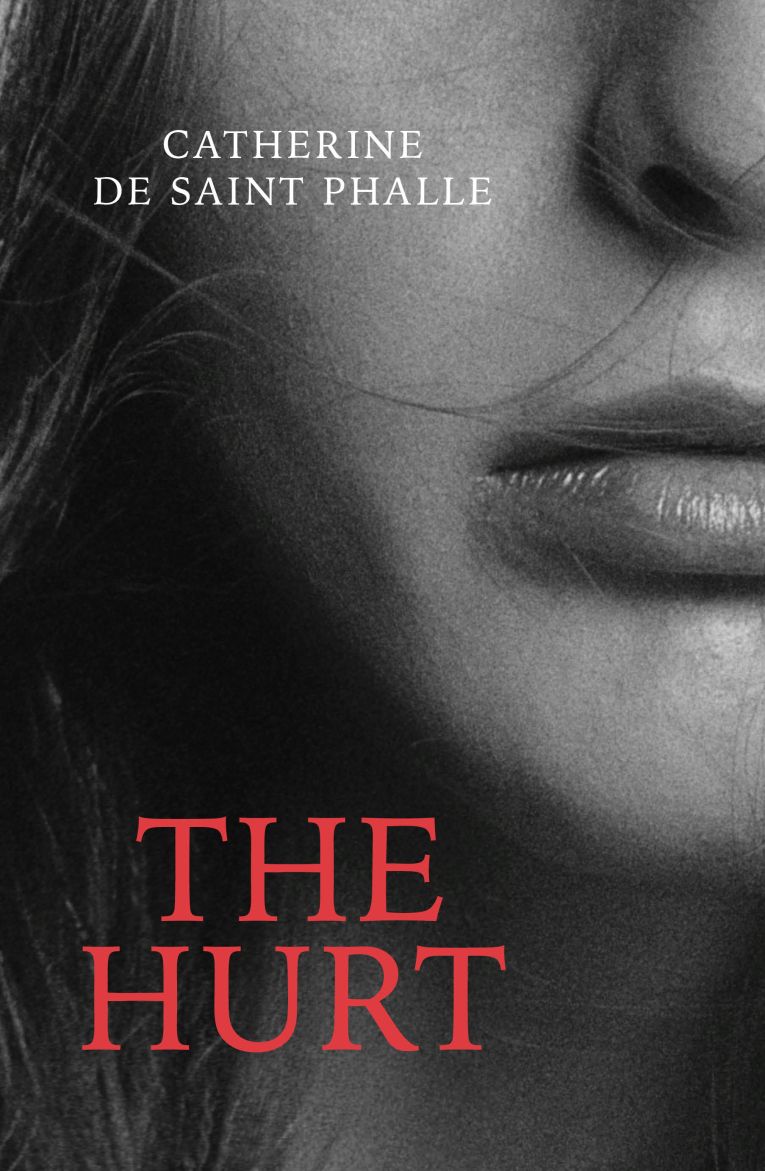
The Hurt by Catherine de Saint Phalle, Transit Lounge, $32.99.
Want to see more stories from InDaily SA in your Google search results?
- Click here to set InDaily SA as a preferred source.
- Tick the box next to "InDaily SA". That's it.
Free to share
This article may be shared online or in print under a Creative Commons licence