Murder hits a high note in thriller even Hitchcock didn’t see coming
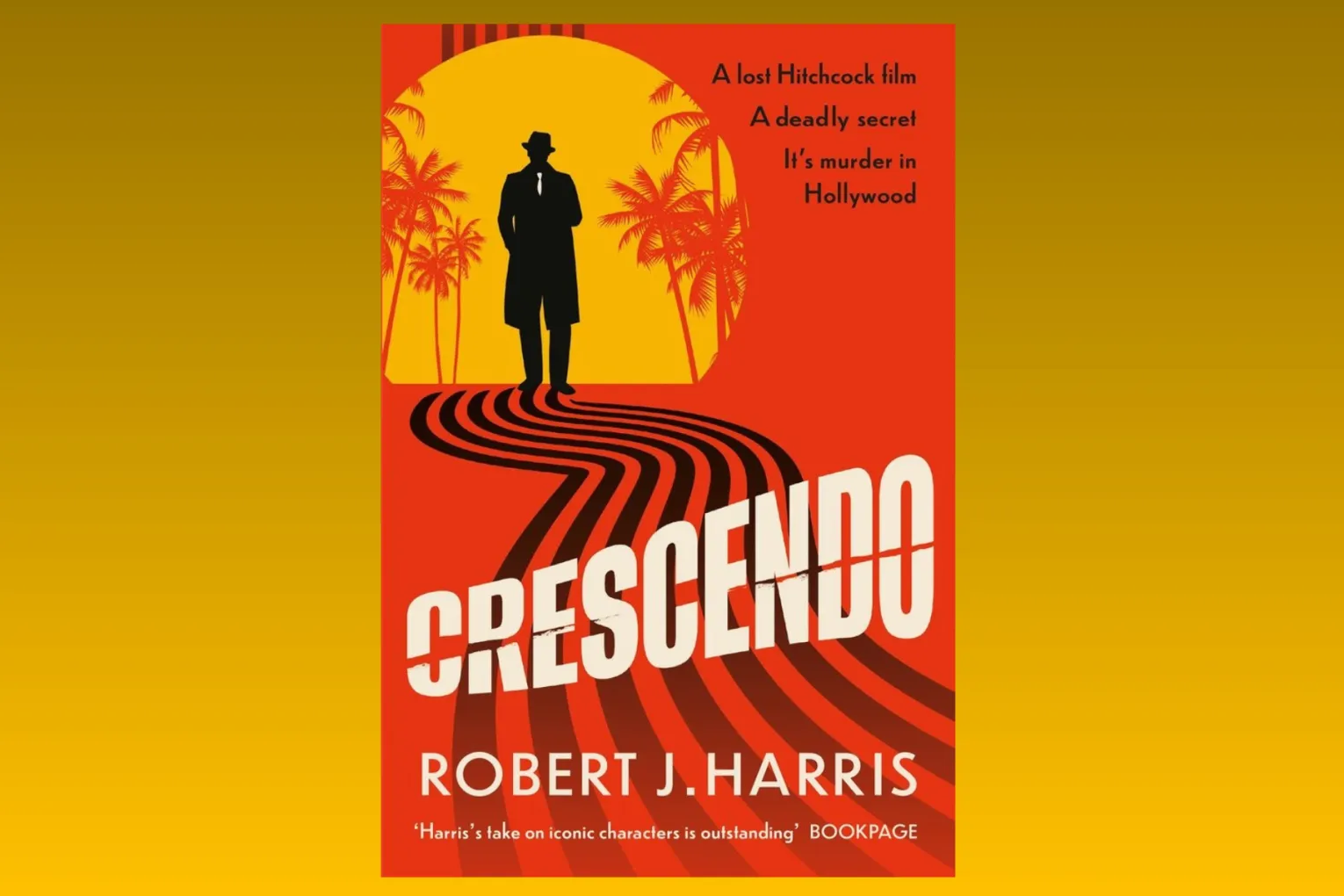
Scotsman Robert J. Harris created the famous fantasy board game Talisman before trying his hand at crime thrillers and historical pastiches, like his latest novel, a Hollywood noir thriller in which a struggling mystery writer hired by Alfred Hitchcock gets pulled into a real-life web of murder and sabotage.
There is something tantalising about the unmade films of a great director. After all, hypothetically such projects could have turned out to be the greatest movie ever made.
Josef von Sternberg’s I, Claudius, Jodorowsky’s Dune, George Miller’s Justice League, Stanley Kubrick’s Napoleon, David Lean’s Nostromo … they are truly evocative “what-ifs”.
Alfred Hitchcock planned, but did not make, numerous movies throughout his 50 year-plus career, the prospect of which has tantalised film buffs ever since. Among the most notable are Greenmantle, Titanic, No Bail for the Judge, The Blind Man, Kaleidoscope and The Short Night. Possibly these films would have been terrible – don’t forget, Hitchcock made plenty of turkeys (Under Capricorn) – but the fact is, one doesn’t know. They could have been amazing.
One turning point in Hitchcock’s career was him deciding not to make Kaleidoscope in the mid-1960s. This was a story about a serial-killing bodybuilder and it was going to be full of graphic nudity, sex and violence, using the latest European filmmaking techniques. However, Hitchcock’s home studio at the time, Universal, did not want to make it and the director caved in, electing to make the more conventional Topaz, instead. It was, arguably, the moment when Hitchcock sold out as an artist. Although, as mentioned, Kaleidoscope might have been terrible – and the director repurposed some of the material in 1972’s Frenzy.
You might like
When I heard there was a novel about an unmade Hitchcock film, I assumed it would concern Kaleidoscope. However, Crescendo, by Robert J. Harris, is about a fictitious unmade film.
Harris is best-known for creating the famous fantasy board game, Talisman, but the Scotsman is also an author who likes to tell stories about real-life people – Leonardo da Vinci, Arthur Conan Doyle, Will Shakespeare – and/or public domain fictional characters such as Richard Hannay and Sherlock Holmes. He is not to be confused with the better-known British novelist Robert Dennis Harris (Fatherland).
Crescendo is set in Hollywood in 1959, the period when Hitchcock was riding high on the huge success of North by Northwest and his television show Alfred Hitchcock Presents. In real life, Hitchcock intended to follow North by Northwest with No Bail for the Judge, a thriller starring Audrey Hepburn, Laurence Harvey and John Williams, but had to abandon that project when Hepburn became unavailable, or didn’t want to do it (accounts differ). This led to Hitchcock deciding to make something cheap in black-and-white on the backlot with his television crew, Psycho, which made him a fortune.
… a mystery involving abduction, heiresses, amnesia, starlets, playwrights, wisecracking female reporters and gangsters
Subscribe for updates
In Crescendo, Hitchcock isn’t working on No Bail for the Judge but, rather, an adaptation of an obscure (fictitious) crime novel called Close to the Edge. Hitchcock is a key character in Crescendo but the actual lead is writer Bobby Burgoyne, who is hired to work on the script. Burgoyne is also fictitious although he is based in part on Evan Hunter, the novelist who wrote The Birds for Hitchcock. Harris draws on Hunter’s memoir of that collaboration, Me and Hitch, in Crescendo.
Burgoyne might seem to be a rather obscure writer to be working on a Hitchcock film, but the director was actually prone to hiring lesser-known scribes, especially from the 1950s onwards – they were cheaper and more malleable than more established writers.
Aside from Evan Hunter, other examples over the years included John Michael Hayes, Joseph Stefano, Jay Presson Allen, Samuel Taylor and Australia’s own Alec Coppel. The great director was highly literate and, although not a writer himself, he had a knack for getting the most out of his scribes. Hitchcock was greatly aided by his wife Alma and gun assistants Peggy Robertson and Joan Harrison.
In Crescendo, someone tries to stop Close to the Edge from being made, and Burgoyne investigates. This leads to a mystery involving abduction, heiresses, amnesia, starlets, playwrights, wisecracking female reporters and gangsters.
It’s all quite entertaining and well done with a real feel for 1959 Hollywood – well, how I imagine it to be, anyway. Harris clearly has a great deal of affection for this period and that comes across. I would have liked a few more cameos from real-life figures apart from Hitchcock, but that’s by the by.
It’s not really a spoiler to reveal by the end of the novel that Close to the Edge doesn’t get made and Hitchcock goes on to Psycho, instead. Nonetheless, Crescendo’s made-up adventure is an entertaining what-if, and Harris can tell a good story. Even Hitchcock probably would have liked it.
Crescendo by Robert J. Harris, NewSouth Books, $22.99 (paperback).
Want to see more stories from InDaily SA in your Google search results?
- Click here to set InDaily SA as a preferred source.
- Tick the box next to "InDaily SA". That's it.
Free to share
This article may be shared online or in print under a Creative Commons licence