Revisiting the little thrills and slippery storytelling of Moya Costello
Holly Gramazio reflects on life and writing of the late Moya Costello, and the ‘incredibly specific’ evocations of late 90s Adelaide found in her 2000 novel The Office as a Boat, reissued this month.
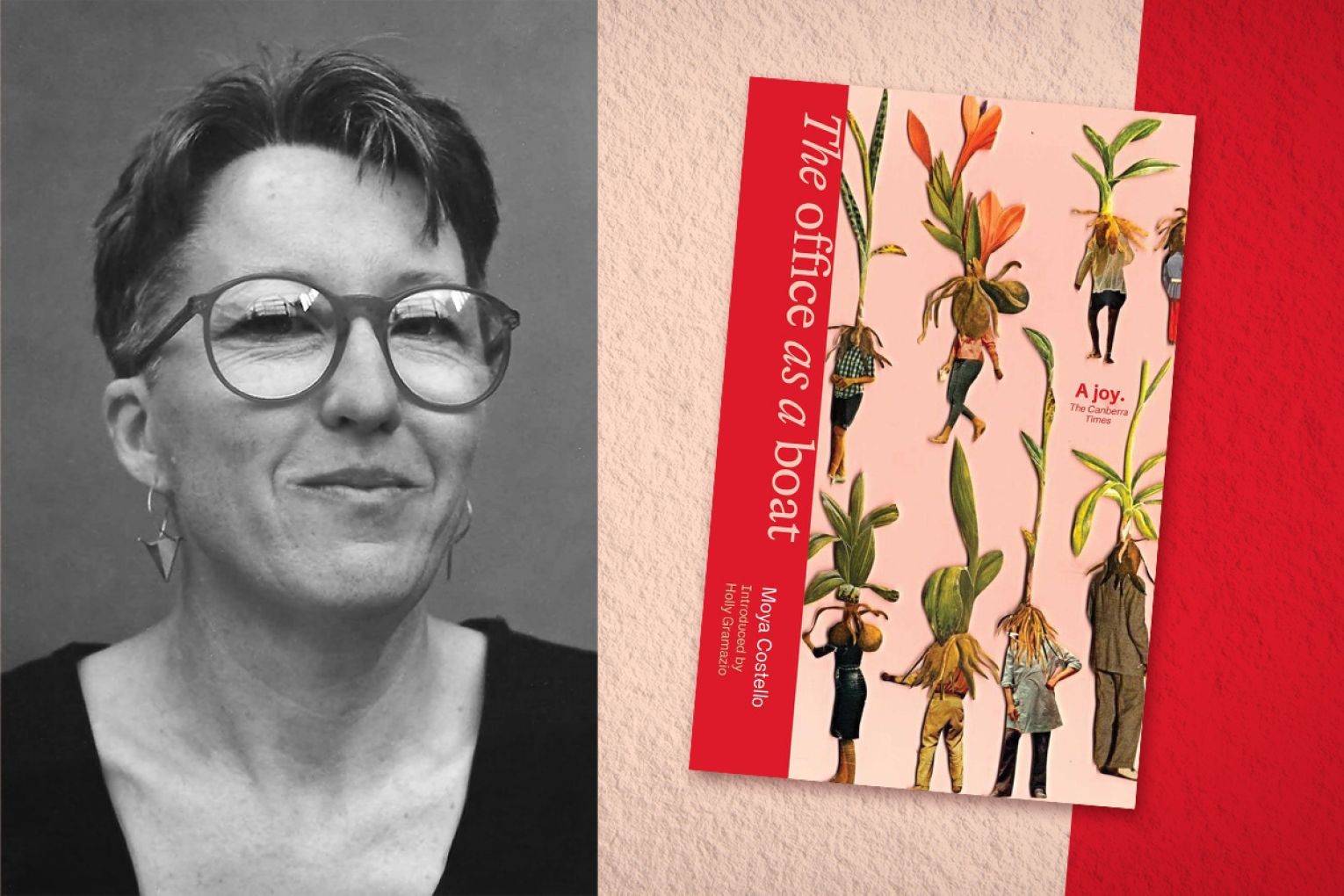
I met Moya Costello I was a student at Adelaide University. She was teaching, and I was vague – as I think students often are – on her exact role at the university, and on her work more widely. My impression of her as a person was pretty vague as well, to be honest: she seemed kind, she seemed to have many small enthusiasms, she seemed unusually good at taking her students’ writing on its own terms. She often seemed to be a little distracted, but then sometimes she would notice something – a joke, an ambition, a feeling – with an acuteness that those of us in our early twenties didn’t really expect from kind-seeming middle-aged women with small enthusiasms. (This is of course weird to think about now that I am myself a kind-seeming middle-aged woman with small enthusiasms.)
The English department had a case in the hall that was filled with books published by members of the faculty. Sometimes I’d be a little early to a tute and I’d look through the glass at the covers, but it never occurred to me to read any of them. Again, I don’t think this was unusually incurious, from a student; very, very few of the other students in my classes read anything by any of the people who taught us. The tutors and lecturers were there to look at our writing, not the other way around. Reading their books would have seemed a little favour-currying, a little nosy, and besides, we were in Adelaide, and most of us assumed that the important and interesting books were being written elsewhere.
"If Moya had done half as many things her career would probably have been more comprehensible to the casual observer, although it would also, of course, have been much less interesting."
So it was only after Moya and I had both left Adelaide that I actually started reading her work; when I was missing home, and realising with frustration how few of the books published in Australia make it over to London bookshops. I’d follow links from her online, and read a poem, an essay, a piece of writing I couldn’t quite define.
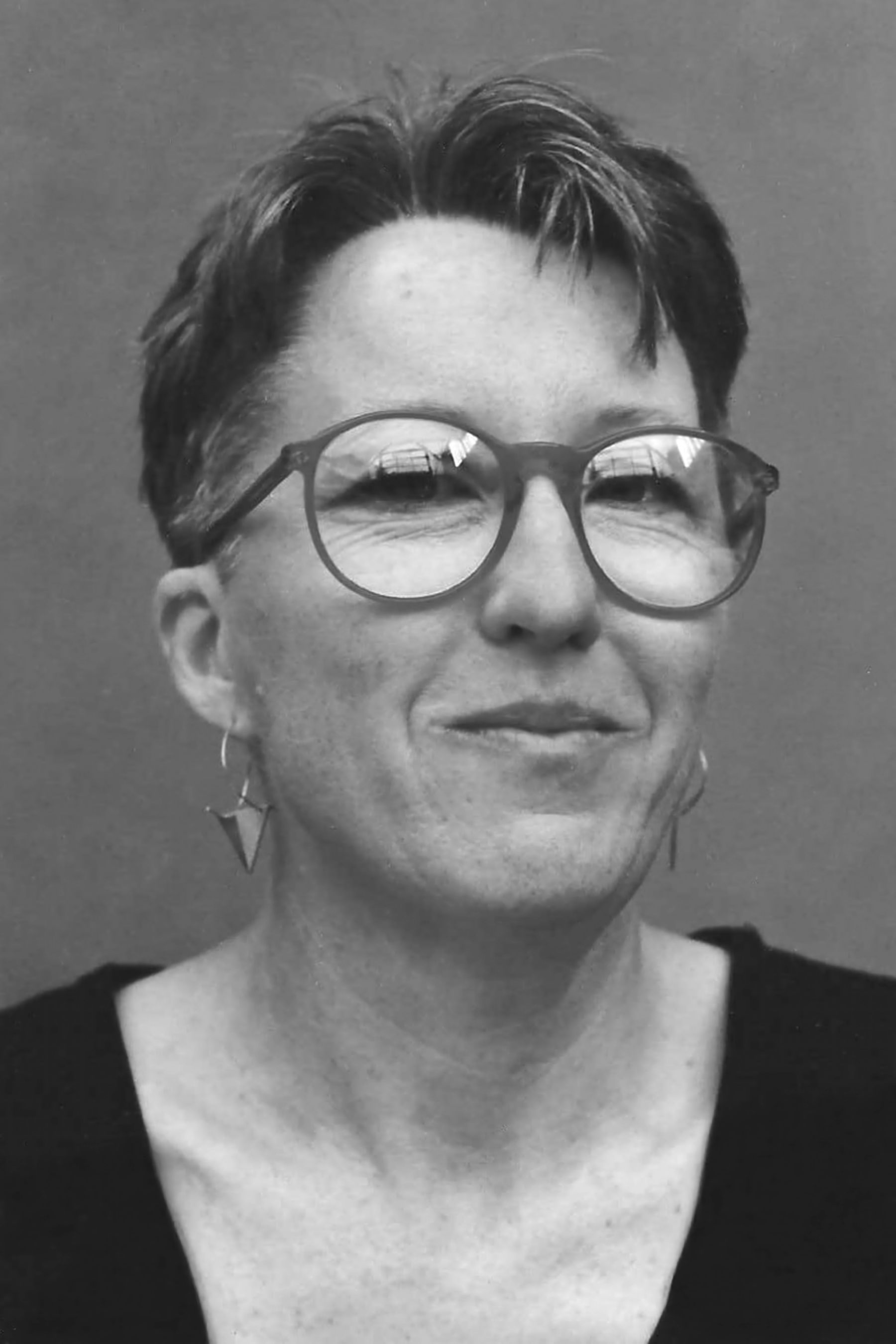
Even with all this casual reading, it wasn’t until 2024, when she published a short memoir of her writing life in Sūdō Journal, that I consciously put together all the little things I knew about her work. The part she’d played in so much of Australia’s experimental writing scene over the decades: her poems in feminist magazines of the 1970s, her reviews, her workshops, her activism, everything from a deep involvement in independent presses from the early ’80s to her time producing a radio program on Australian writing, all before she even started teaching. When someone does so much, so many different things, I think it can be harder to make sense of who they are and the shape of their work; if Moya had done half as many things her career would probably have been more comprehensible to the casual observer, although it would also, of course, have been much less interesting.
Her books are short and strange and invent their own genres as they go, but a simple way to look at them is to say that they comprise two collections of creative non-fiction, a collection of prose poems, and two short novels. The Office as a Boat was the first of those novels, begun in 1994 and published in 2000, and it covers the lives of a group of women working together in an office over the course of a hot summer (all Adelaide’s summers are hot, of course).
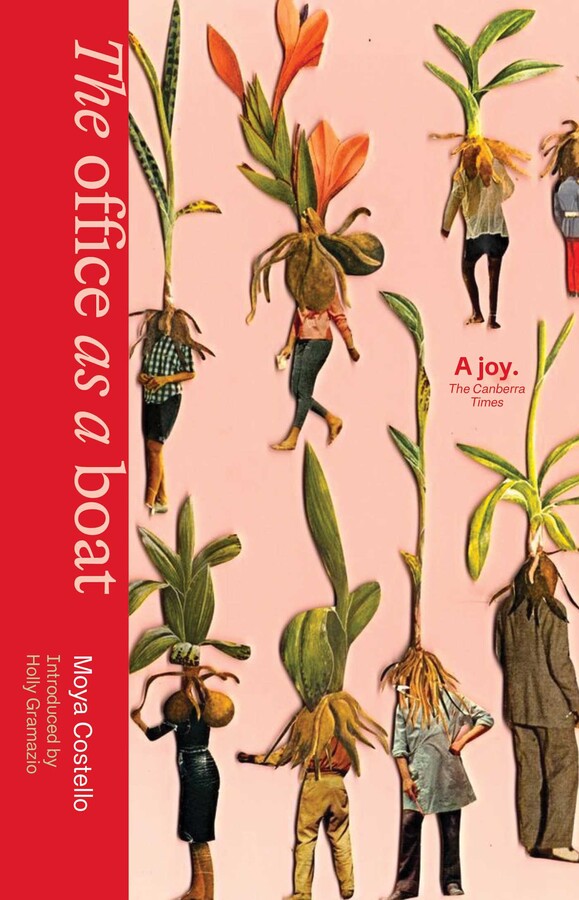
The women are, usually, we, their story a collective one, the group coming together and individuating and then joining back together. The narrator is always there but only occasionally gives us the treat of her explicit presence, a little thrill when she says my instead of our, I instead of we. She, and they, inhabit a working world that has just started to be transformed by email and home offices: “Due to the speed of change, we’ll become increasingly experienced in surprises.” They execute their commutes; they deal with the heat; they have hobbies and pets and partners, although these are all kept carefully in their place.
Subscribe for updates
It’s a slippery book to read, sliding between present and future, between realism and moments of unlikeliness or impossibility, between incredibly specific evocations of the Adelaide of the late ’90s and unlikely reimaginings. It resists attempts to orient yourself within it. You just have to float along and accept its moments as they pass you by.
"It’s a slippery book to read, sliding between present and future, between realism and moments of unlikeliness or impossibility, between incredibly specific evocations of the Adelaide of the late ’90s and unlikely reimaginings."
At the end of Moya’s memoir of her writing life – published about a year before she died – she talks about words as thistle seeds, blowing away, aiming to take root. The Office as a Boat feels exactly like this to me: so airy and delicate while you’re reading, but it snags and sticks in the head, finds crevices to attach to. What a wonderful thing that it’s back in the world, heading out to new readers and finding new places to take root.
This essay appears as the foreword to a new edition of The Office as a Boat, published by Pink Shorts Press on September 1 2026
Moya Costello wrote five books – two of short creative prose (Kites in Jakarta and Small Ecstasies), two short novels (The Office as a Boat and Harriet Chandler) and one collection of prose poems (pressed specimens) – and many, many pieces, published in journals, anthologies, newspapers and catalogues. Moya was a Sydney girl but also sampled life in Melbourne, Adelaide, Northern Rivers and Tasmania. She died in 2025.
Holly Gramazio is a game designer, curator and writer, originally from Adelaide and currently based in London. Her first novel, The Husbands, was an international bestseller and is being adapted into a series by Apple TV.
Holly Gramazio Headshot: Diana Preston / Supplied
Want to see more stories from InDaily SA in your Google search results?
- Click here to set InDaily SA as a preferred source.
- Tick the box next to "InDaily SA". That's it.