Book review: I Love the Whole World!
Victoria Hannan’s I Love the Whole World! is a playful and unexpected midlife coming-of-age story that makes a compelling case for curiosity, earnestness and remaining open to wonder.
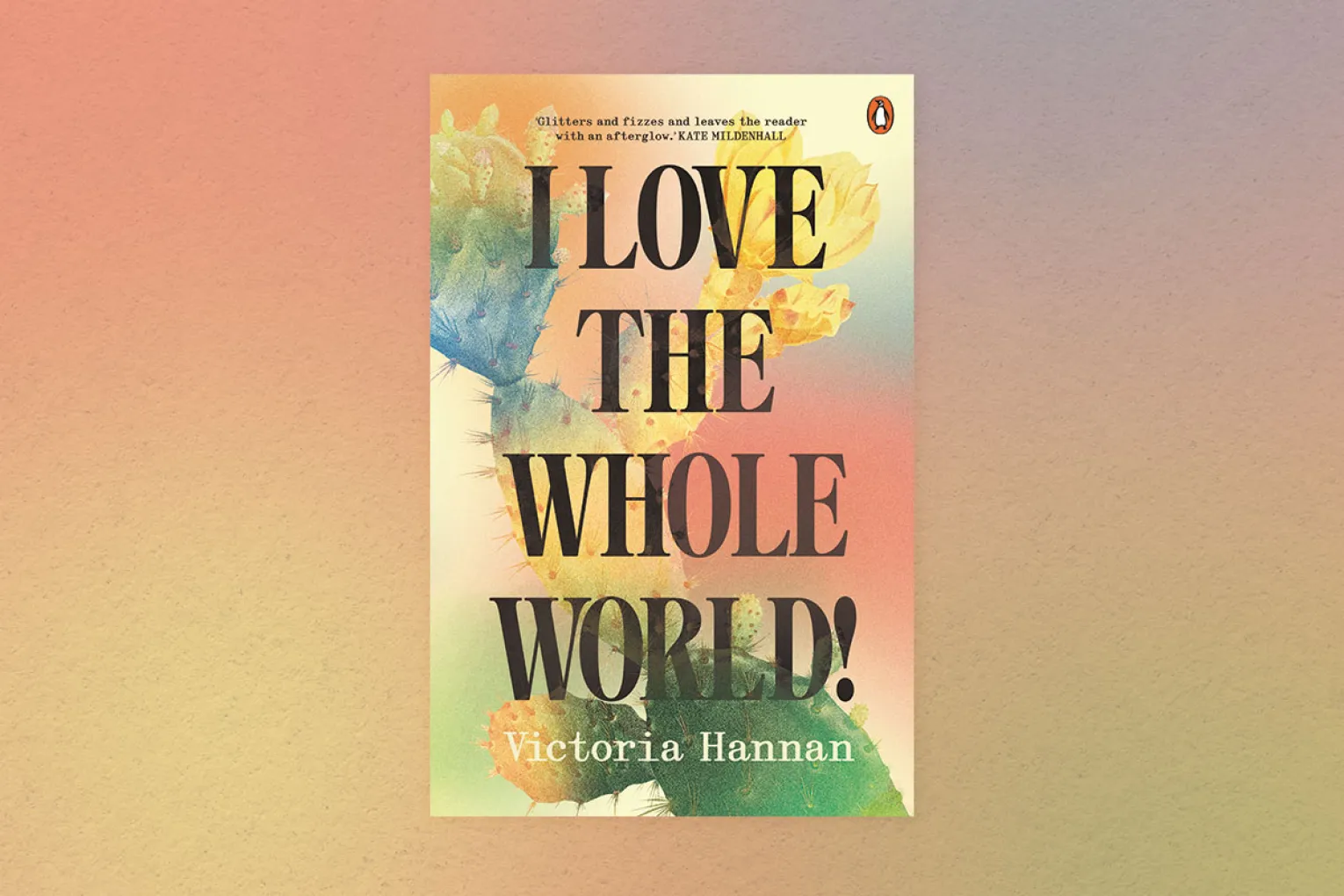
To be honest, I picked up I Love the Whole World! with a touch of trepidation. Years of writing workshops warning against over-enthusiasm and the brightness of tone epitomised by the exclamation point had left their mark. And here was a title that exemplified everything writers of literary fiction are taught to shun. But somewhere on her flight between Australia and Las Vegas, Hannan’s protagonist won me over, and I realised the author was doing something delightfully unexpected – asking if wonder and curiosity, rather than disillusionment and cynicism, might be the more subversive way of moving through the world.
Hannan’s previous novels, Kokomo and Marshmallow, occupy more familiar territory within contemporary literary fiction in their exploration of grief, alienation and the complexities of modern relationships. I Love the Whole World! begins in a similar space. Leslie McDonald is in her early forties, newly divorced, navigating a strained relationship with her adult daughter and confronting the unsettling question of who she is after more than 20 years of allowing her husband to define her.
The marriage hasn’t ended in fireworks. It’s simply worn away. When her husband – an ergonomics specialist – leaves her for his Alexander Technique instructor, Leslie is less heartbroken than surprised at how much easier it is to get divorced than married. This absence of grief or rage feels deliberate. Rather than the drama of divorce, Hannan is interested in exploring what happens when the identity Leslie has surrender is given the freedom to grow back.
Over the years, Leslie has accepted her husband’s version of herself: she isn’t funny, her posture reveals all her anxieties, her art history degree is impractical, and art itself isn’t important. Gradually, she’s stopped trusting her own instincts about who she is.

The catalyst for change arrives in a delightfully surprising form: Leslie starts entering competitions. A competition for a trip to Peru makes her realise she’s never considered the possibility of one day setting foot there. She doesn’t even know exactly where it is. This recognition of how truncated her imagination and curiosity have become cracks something open within her. Then she wins an all-expenses-paid trip to Las Vegas – the sort of destination everyone, including Leslie herself, assumes she will hate. When her best friend cancels at the last minute, Leslie decides to become “the kind of Leslie who goes”.
It’s a clever premise that Hannan uses to frustrate our expectations. Las Vegas is one of literature’s favourite settings for satire and cynicism, a place that epitomises artifice and capitalist excess. Instead, Hannan gives us a protagonist determined to remain open to wonder. Leslie notices the relentless noise of the poker machines and the weary people feeding them, yet still allows herself to be astonished by this neon phenomenon in the desert.
The novel’s emotional turning point arrives beyond the lights of the city. For Leslie, the Grand Canyon isn’t just something to tick off an itinerary – it is a revelation. Confronted with an embodiment of geological time, scale and colour, she experiences full-bodied, genuine awe.
One of the novel’s finest scenes, however, takes place at a breakfast buffet. Where another writer might use the countless tables of food as shorthand for American excess, Leslie sees something entirely different. The jaw-dropping variety leaves her delighted by how much of the world she is yet to encounter. She has never thought about what Mexican people eat for breakfast. She’s never heard of a Denver omelette and, when she thinks about it, has no idea where Denver is. In Leslie’s eyes, the excess of the buffet transforms into possibility. She’s not embarrassed by the limits of her knowledge – she’s exhilarated by them.
Subscribe for updates
Despite my initial misgivings, one of the delights of this novel is its defence of earnestness. Contemporary literary fiction often treats sincerity with suspicion, rewarding characters who equate realism with immunity to awe. Hannan does the opposite. At a lavish Seigfried-and-Roy-style magic show, Leslie doesn’t congratulate herself on recognising the illusion. She remembers a younger version of herself who would’ve dismissed the performance as embarrassingly dorky, too concerned with appearing sophisticated to experience the delight. This version of Leslie gives herself permission to be enchanted.
Crucially, though, Hannan never mistakes this openness for slavish optimism. Leslie isn’t a Pollyanna determined to find silver-linings everywhere. Arriving in Las Vegas, she is struck by the extraordinary number of dialysis clinics. Learning they reflect the prevalence of late-stage diabetes, she recognises the human cost sitting alongside the city’s spectacle of abundance. Curiosity and openness to awe, Hannan suggests, require paying close attention to the whole world – not just the aspects that are beautiful. What she celebrates isn’t optimism so much as attention. Leslie sees the darkness but refuses to let it colour all the world contains.
Hannan extends this idea through Leslie’s rediscovery of art. Reconnecting with an old friend introduces her to the extraordinary landscapes beyond the Las Vegas Strip including Michael Heizer’s monumental land art. Once again, the novel refuses easy binaries. Las Vegas and the Valley of Fire State Park are not opposites but neighbours in a desert where spectacle and natural beauty coexist. Leslie rediscovers art not as an indulgence, but as another way of paying close attention to the world.
In an era when fiction often signals seriousness and intelligence through irony and carefully articulated unhappiness, I Love the Whole World! feels like a buoyant inversion of literary expectations. By the final page, Hannan has made a persuasive case for remaining open to wonder as a radical act – and earned her exuberant title.
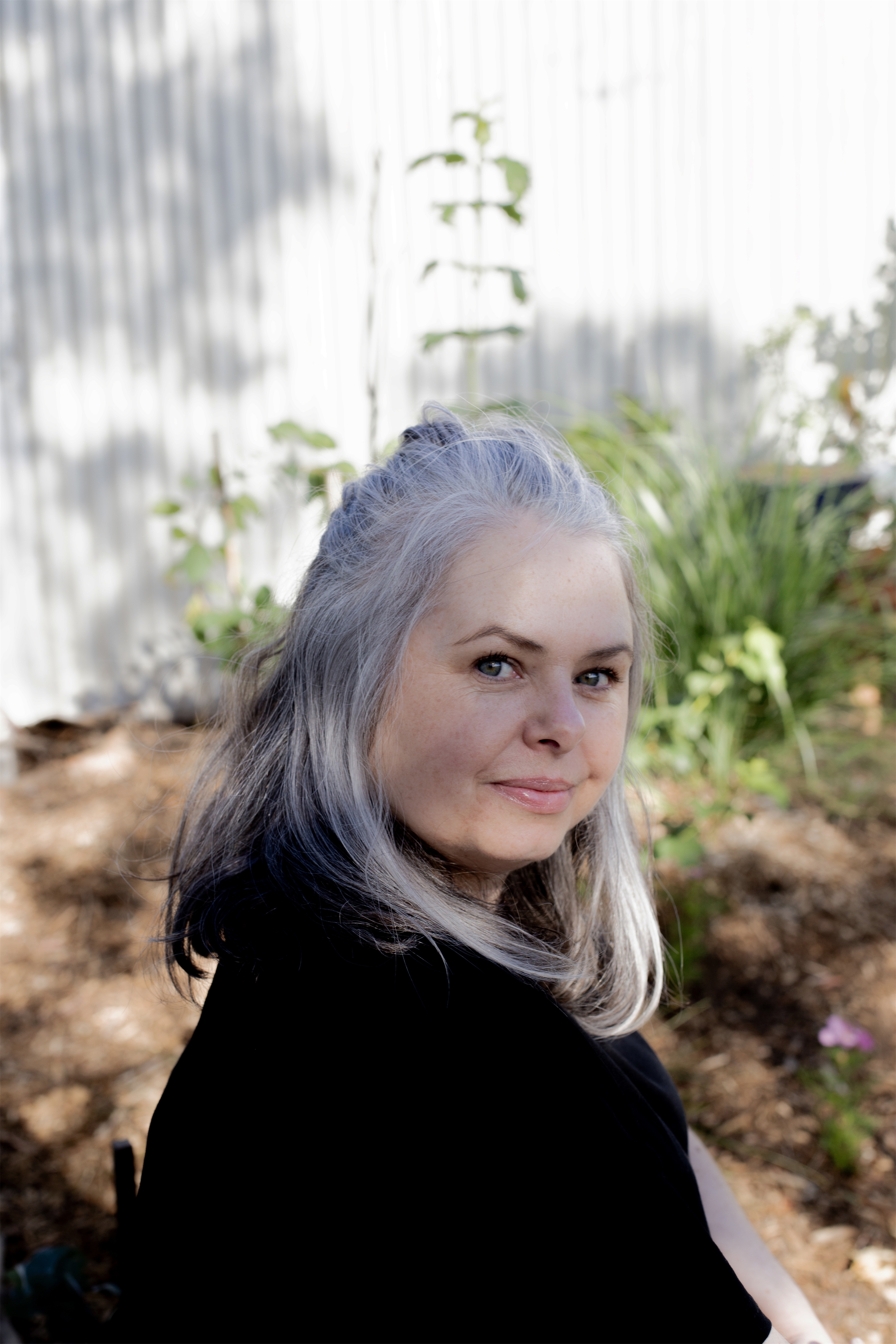
I Love the Whole World! (Penguin) is out now. Victoria Hannan will appear in conversation at Matilda Bookshop in Stirling on Thursday August 27, and at Brisbane Writers’ Festival in October.
Want to see more stories from InDaily SA in your Google search results?
- Click here to set InDaily SA as a preferred source.
- Tick the box next to "InDaily SA". That's it.
Free to share
This article may be shared online or in print under a Creative Commons licence