Now, voyager: Immerse yourself in that wine-dark sea …
Christopher Nolan’s new film The Odyssey has inspired renewed interest in Homer’s epic about a hero trying to make his way home during the Late Bronze Age.
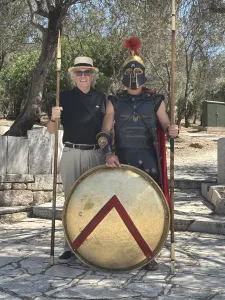
I’m not sure that the Late Bronze Age was that much fun but that’s where I find myself right now. In fact I’ve been dwelling there – some time between 1500-1200 BC – imaginatively speaking, for a while now.
Having been to Greece twice in the past 18 months, and catching the ancient history bug, I decided to embark upon my own voyage on the wine-dark sea, if you’ll pardon the Homerism. Reading The Odyssey has been central to this obsession and now that I have seen Christopher Nolan’s magnificent film, I am even more engaged. (Greek tourism is, by the way, expecting a big boost from the film)
The film is an incredibly ambitious retelling of Homer’s epic about the Greek hero Odysseus’s long journey home to Ithaca after the Trojan War. The Iliad, Homer’s other major epic, deals with the war itself, or some episodes in that war. The Odyssey continues on from there after the sacking of the city of Troy, which was duped into letting the Greeks in unknowingly, secreted in that wooden horse. The wooden horse episode is dealt with quite brilliantly by Nolan.
Matt Damon is fabulous as Odysseus in the movie, which is showing in cinemas now and seems to have captured the public’s imagination. We went to see it last Sunday morning and the cinema was pretty packed. It’s great to see such interest in a film that is based on this foundational epic of Western literature.
The main episodes of The Odyssey are featured in the movie. My favourite bits are probably when Circe the sorceress turns Odysseus’s crew into swine. Then there’s that escapade with the Cyclops, which is just amazing filmmaking. It’s hard, though, watching Cyclops chomping on some of Odysseus’s crew. Yikes.
You might like
-
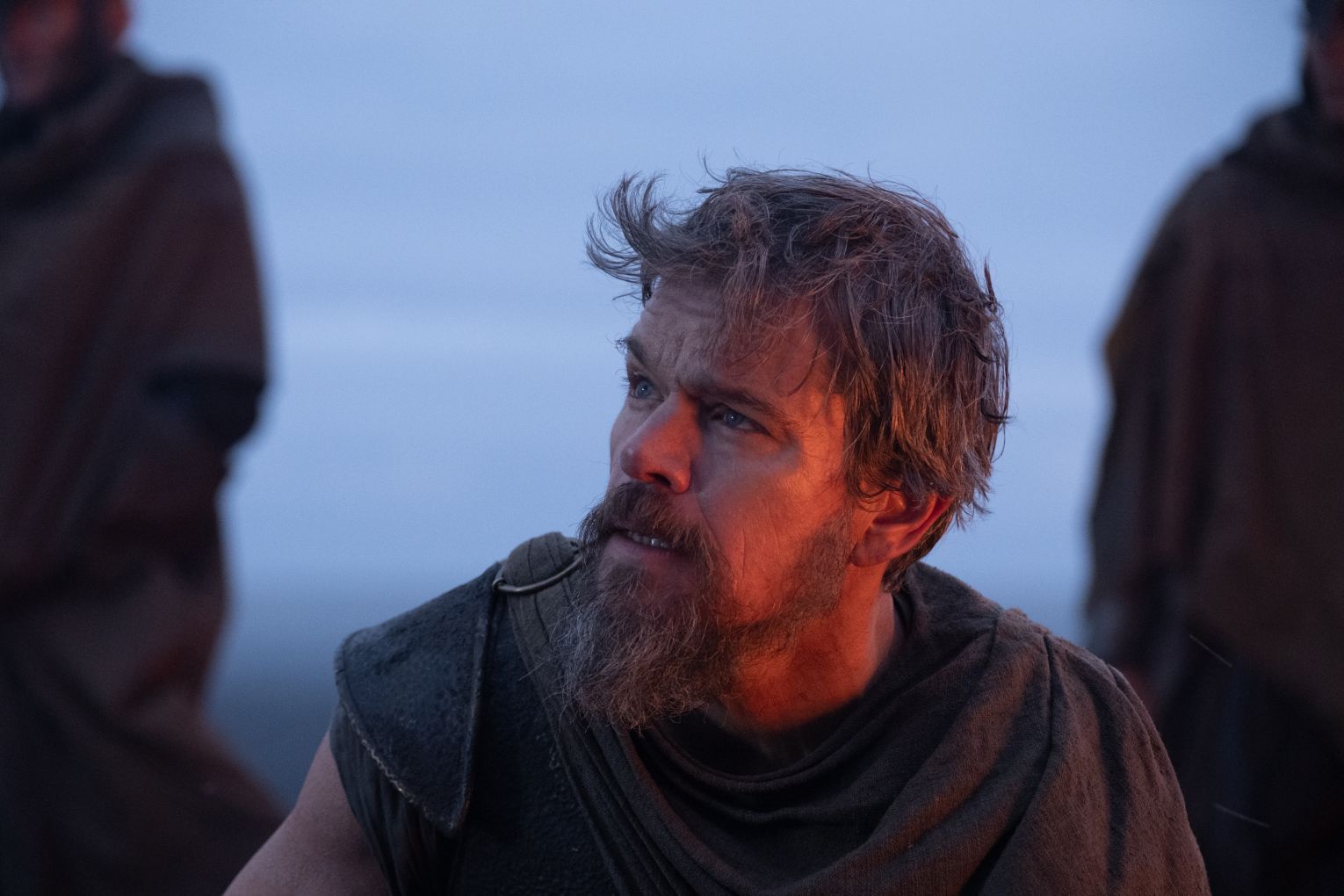
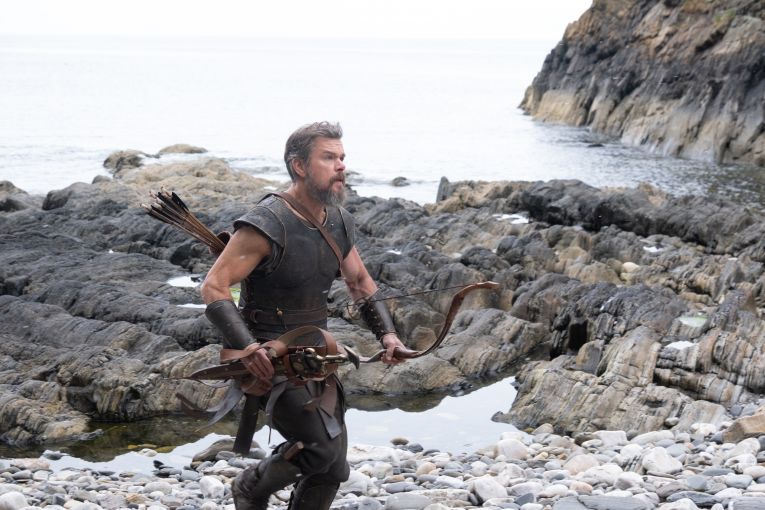 Matt Damon plays Odysseus in Christopher Nolan’s The Odyssey, based on Homer’s epic about the Greek hero’s long journey home to Ithaca after the Trojan War. Photo: Courtesy Universal Pictures
-
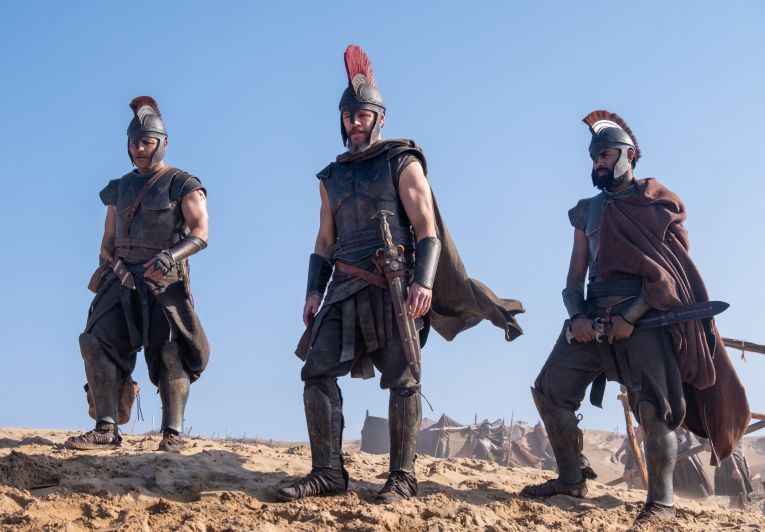 Jimmy Gonzales is Cepheus, Matt Damon is Odysseus and Himesh Patel is Eurylochus in The Odyssey. Photo: Courtesy Universal Pictures
-
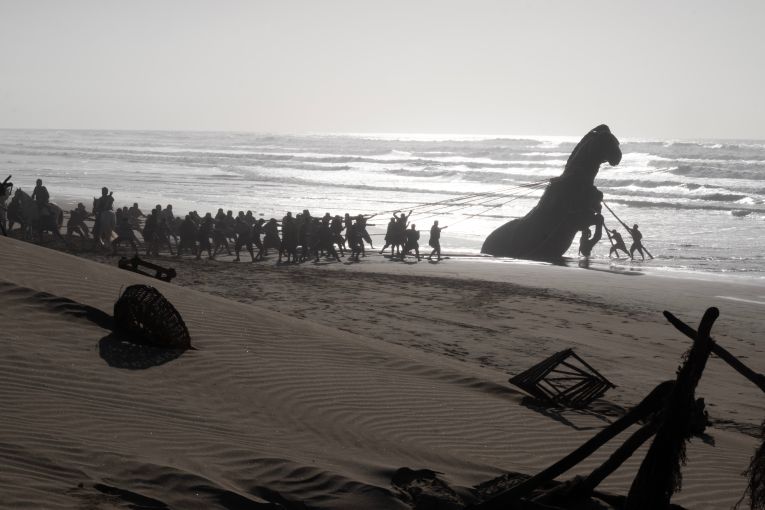 The wooden horse episode is dealt with brilliantly by Christopher Nolan in his film epic, The Odyssey. Photo: Courtesy Universal Pictures
Nolan has taken some liberties, but not too many. I was intrigued that he has the characters foreseeing the fall of the Mycenean world at the hands of the Sea People. Attacks by these mysterious ocean-going marauders brought down Bronze Age civilization around the Mediterranean.
I’m hoping the film will whet the appetite of people and inspire them to read The Odyssey, if they haven’t. I have been reading and re-reading it for some time now. I started this recent jag with a handy prose version in a translation by Samuel Butler.
But I first came across the story as a boy when my parents gave me a book titled Tales of the Greeks and Trojans, a beautifully illustrated, definitive 1968 book by Oxford scholar Roger Lancelyn Green. It seamlessly unites Homer’s epic tales covering the origins of the Trojan War, the fall of the city, and the heroes’ perilous journeys home.
This book featured the most stunning artwork created by the twin illustrators Janet and Anne Grahame Johnstone. That’s when my love affair with this Bronze Age world began. Not sure how available that book is nowadays, but it‘s a wonderful primer for a young person.
If you want to start your own journey into the Homeric world of The Odyssey, I suggest starting off with the prose version I mentioned. My son gave me The Folio Society edition for Christmas, which is in verse form. This is the Robert Fagles translation with an expansive introduction and notes by Bernard Knox.
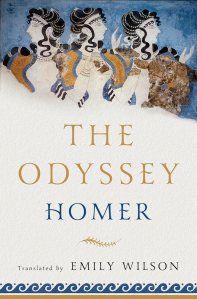
I also have Emily Wilson’s acclaimed 2017 translation of The Odyssey, the first English translation by a woman. It is famous for its precise line-for-line match with the original Greek and for being written in a natural, driving iambic pentameter. She has also translated The Iliad in a similar fashion.
Subscribe for updates
It’s important to read it in verse form at some stage, but it’s not cheating if you want to opt for prose.
For my sins I have also got myself a copy of The Oxford Critical Guide to Homer’s Odyssey, edited by Joel P. Christensen, and also The World of Odysseus by M.I. Finley. As you can see, I’ve got it bad. I should also mention Stephen Fry’s Odyssey which is a witty, erudite retelling of the epic in Fry’s inimitable style.
I’ve also been listening to some podcasts about all this. Hosted by Tristan Hughes and produced by History Hit, you can listen to a multi-part special series exploring Homer’s Odyssey. Joined by classicist Dr Emily Hauser, these episodes dive deep into the legendary epic. Hughes is actually touring Australia soon, taking his ancient history podcasting on the road.
Nolan’s film has inspired a rash of podcasts and revived interest in Homer’s epic. I recently went into Avid Reader bookshop in West End and found they had a little section of Odyssey-related books. including the renowned Emily Wilson version. It’s nice to see this.
And before we saw the film on the weekend, we noticed that SBS was promoting The Return (2024), directed by Uberto Pasolini, an adaptation of the second half of Homer’s Odyssey. It stars Ralph Fiennes as Odysseus and Juliette Binoche as Penelope. They are both excellent. The film focusses on the psychological trauma of war, returning to a ruined Ithaca and the brutal reclamation of the kingdom when Odysseus slaughters the suitors.
It’s terrific. We watched that on SBS On Demand the night before we went to the cinema to see the Christopher Nolan film.
So, we are saturated in The Odyssey at the moment. It’s endlessly fascinating. I’ll soon be going back to The Iliad, too, and then I want to read Virgil’s The Aeneid, the Latin epic poem following Aeneas, a Trojan prince destined to travel to Italy and lay the foundations for the Roman Empire.
That one is also sitting on my growing pile of books about the ancient world. The interesting thing is that in Book II of The Aeneid, Aeneas recounts to Queen Dido how the Greeks built the massive horse, hid warriors inside and tricked the Trojans into bringing it into their city, which ultimately led to the fall of Troy. Interesting.
Meanwhile, I think it’s time for a second viewing of the Nolan film. Be warned, though, as it’s almost three hours long although, frankly, time flies when you’re having fun.
The Odyssey is in cinemas now.
Want to see more stories from InDaily SA in your Google search results?
- Click here to set InDaily SA as a preferred source.
- Tick the box next to "InDaily SA". That's it.
Free to share
This article may be shared online or in print under a Creative Commons licence