The people-pleasing trap: The truth about niceness
Amy Remeikis should shake things up at this year’s Byron Writers Festival with her new book that lifts the lid on the cost of always trying to be nice.

Does Amy Remeikis have to be so contrary? Well, actually, she does, if you consider telling it like it is and cutting through the hypocrisy of civility politics being contrary, that is.
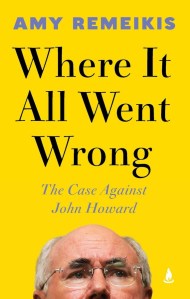
Canberra-based Remeikis is the chief political analyst at The Australia Institute and a contributing editor for The New Daily. She’s a former political reporter for The Guardian Australia and is the author of On Reckoning (2022) and Where it Went Wrong: The Case Against John Howard (released in February) and she has another new book, Screw Nice (Hachette Australia, $34.99) which will be released on July 28.
Remeikis is one of the guests at this year’s Byron Writers Festival, where she will be making several appearances. She is known for her insightful political commentary.
This year’s 30th anniversary edition of everyone’s favourite writers festival brings together more than 150 writers, thinkers, poets and storytellers from Australia and around the world for three days of ideas, stories and conversation on Bundjalung Country, Byron Bay, from August 14 to 16.
Presented at a moment of great global change, the festival embraces its theme of “sanctuary”, creating a place of solace and connection among some of the finest minds. With a new home in the heart of Byron Bay, and more free programming than ever before, along with activities including ocean bathing and beach yoga, this year’s program brings the community together and creates new rituals of shared connection.

Leading the program, acclaimed journalist and human rights activist Antoinette Lattouf joins Louise Adler to discuss Women Who Win, Lattouf’s book about the women who refuse to play by the rules.
You might like

Joining them is Richard Flanagan, the only author to have won both the Booker Prize and the Baillie Gifford Prize, to present his new work, Heresies, a dazzling collection of essays and speeches spanning two decades of subversive, humane and politically urgent writing.
Australia’s number one bestselling author Trent Dalton will be in-conversation with Richard Glover and there are plenty more reasons to sign up for this year’s festival, including Geetanjali Shree, Indian author and 2022 International Booker Prize winner, and Roman Krznaric, the acclaimed British philosopher discussing History For Tomorrow.
Several of the festival’s most anticipated sessions celebrate new releases making their first festival appearance. George Megalogenis brings Three Shocks, his forensic account of the demographic, gender and geopolitical forces that have reshaped Australian politics.
Meg Mason, whose Sorrow and Bliss became a global phenomenon, returns with Sophie, Standing There, a tender and darkly funny novel about heartbreak, isolation and the redemptive power of books.
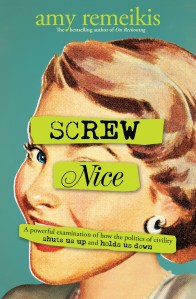
Then there’s Amy Remeikis with Screw Nice, a sharp dismantling of the politics of civility and how demands for politeness are used to silence marginalised voices.
Remeikis says she’s looking forward to Byron and loves writers’ festivals for a very good reason.
“They are one of the last bastions of open conversation,” says Remeikis when I catch up with her on the eve of the release of her new book.
“It’s a contest of ideas. People can come and agree or disagree and there’s a sense of community. You look into the audience and see people happy they have found their own people.”
Screw Nice is a powerful examination of how the politics of civility attempts to shut down debate. The imbalance between those in power and those who oppose injustice is growing. And yet, to stifle argument, those who hold all the power use demands for civility as weapons, to control discussion and negate the legitimacy of differing opinions.
Subscribe for updates
We are told we have to “keep things nice”, “be polite” and “keep our voices down”. Using the wrong language? You’re too volatile to be heard. Angry over inequities? You’re too emotional, too immature. Blowing a whistle to protest? You are dangerous. Marching in the street? You are incendiary. Daring to not smile sweetly? You are childish. And worse, say the wrong thing and you can be targeted through financial, legal and reputational consequences that can affect your livelihood and personal safety.
‘We have all been conned by civility politics. We’re taught that being a good person means not making waves’
Remeikis says that to be heard, you must be polite and follow the rules. But those rules are different, depending on your income, religion, social status or gender.
“We have all been conned by civility politics,” Remeikis says. “We’re taught that being a good person means not making waves.” That means we are encouraged to be “nice”.
“But you can be nice and also horrible and damaging,” says Remeikis, who adds that being nice doesn’t always get the results we want, either, so maybe it’s time to forget about society’s idea of niceness and reassess social mores in light of the challenges ahead of us.

Screw Nice is bracing and blunt. Remeikis is something of an iconoclast when it comes to social mores, such as not speaking ill of the dead. Not that she speaks ill of the dead, but she does reserve the right to honestly assess their place in politics and history. With that in mind, she delivers a blunt assessment of the late Charlie Kirk, the American right-wing activist. That will rile ultra-conservatives.
She mines history and politics to expound on her thesis about niceness and its dangers and she even rethinks some of the teachings of Jesus, which is surprising but rather intriguing.
“When people use Jesus’s Sermon on the Mount and his instruction is given in Matthew 5:39 to “turn the other cheek”, it wasn’t an instruction to ignore, abuse or remain passive in the face of it”.
She goes on to say that: “… in turning the other cheek, and offering your left cheek, you are facing down the injustice and daring your attacker to repeat their action. This isn’t tolerance; it’s violent non-resistance. It’s telling your aggressor to face you like an equal or back down. Instead, we teach it as a lesson to stay silent in the face of abuse.”
It’s an interesting take and there’s plenty more where that came from in Screw Nice. Growing up on the Gold Coast, Remeikis was a bit of a rebel at school and the first dedication in her book gives you some idea where she gets that from. Her grandmother:
“For my Oma, the most gloriously difficult human I have ever known. I miss you every day. May we all strive to live as long as possible to spite our enemies.”
Amen to that.
byronwritersfestival.com/festival/writers/amy-remeikis
Byron Writers Festival, Byron Bay, August 14-16. For full program go to: byronwritersfestival.com
Want to see more stories from InDaily SA in your Google search results?
- Click here to set InDaily SA as a preferred source.
- Tick the box next to "InDaily SA". That's it.
Free to share
This article may be shared online or in print under a Creative Commons licence