Who do we think we are? The genesis of Johnno
As a young book editor Craig Munro was instrumental in helping get David Malouf’s classic novel Johnno into print.
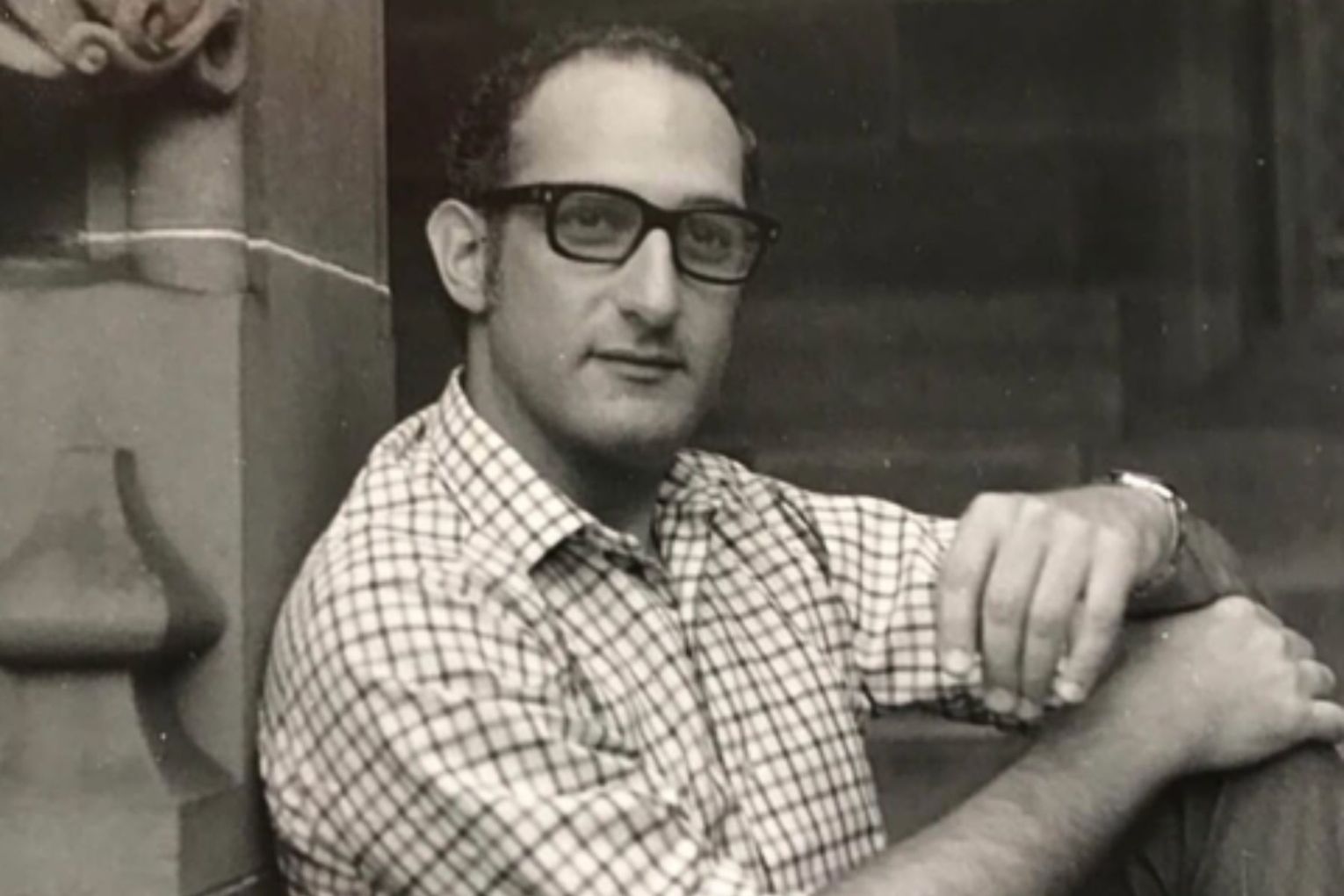
A book’s history often contains surprises not revealed for many decades – and David Malouf’s first novel had quite a past.
He’d been planning an autobiographical work since the early 1960s, one containing “a certain amount of ambiguous sexuality”. The event that inspired it was the death, apparently by drowning, of an old school friend. This had occurred in 1962, and within a couple of years the novel was in draft form, only to be abandoned a few months later.
 After his father’s death in late 1964, David took up the manuscript again, adding a new opening paragraph to the prologue: “My father was one of the fittest men I have ever known. A great sportsman in his day, boxer, swimmer, amateur footballer, he was still bull shouldered and hard even at sixty. He didn’t drink. Two weeks before his death he had been examined for a new insurance policy. When the report arrived, on the morning of his funeral, it declared him to be A1 in every respect.”
Putting the manuscript aside for several more years, David re-read it in 1968 and found it “better than I thought”. He was now referring to it as “my prose-piece about Brisbane” and told his friend and fellow poet Judith Rodriguez that it was “more or less promised” to the University of Queensland Press.
It was not until he was away on a six-month university sabbatical in Florence in 1972 that he completed the final version of the manuscript. He was staying in an apartment next door to where Dostoevsky a century before had written The Idiot: “If Dostoevsky could imagine so darkly the snowbound avenues of St Petersburg,” David later commented, “surely I could look in the same direction and catch a view of Brisbane, my weatherboard, subtropical hometown, with its mangrove-choked river.”
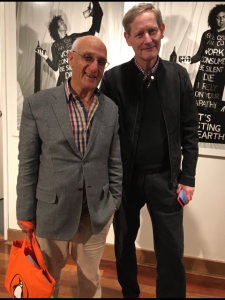
In 1974, UQP general manager Frank Thompson handed me the as yet untitled manuscript to edit. Some weeks later I met David in my office, and we went across the road to the university staff club. Though not tall, he had the heavy build of a boxer and was wearing a full-length black leather overcoat. It felt like I was about to enter the editorial ring with one of the assassins in Bertolucci’s Il Conformista.
I knew that David had already published a couple of slim volumes of poetry, but in no way did he conform to my mental image of a poet. Maybe he didn’t know what to make of me either, 16 years his junior.
Reclining uneasily in the staff club’s vinyl armchairs, with the stack of pages between us on a low coffee table, we talked about the background of his story. That manuscript was so autobiographical he had not even changed his characters’ real names.
Subscribe for updates
David confirmed that not only was the central character named for his old schoolfriend from Brisbane Grammar, but that Johnny Milliner’s uncle had been a federal senator. As the afternoon wore on, in the almost deserted staff club, with its panoramic vista across the lake, David and I bounced my editorial anxieties ever so gently back and forth from one squeaky armchair to the other.
The personal memoir was not then the popular genre it has since become, so we agreed that David’s story must fly under fictional colours. I was also concerned to know whether John Milliner’s parents were still alive. “His mother is, yes,” David responded. “So maybe we should change the name …”
(Johnno’s) beautifully fluent prose had required almost no editorial intervention
With a plan of action, we spent what remained of the afternoon searching for a suitably fictional name – or names – for Johnny and discussing possible titles for the novel.
I suggested the nickname “Johnno” for him, which was more archetypally Australian than “Johnny”. Elaborating on this idea, I said we could move further away from the real person by deriving “Johnno” from his surname, which would now become Johnson. David laughed and readily agreed to this suggestion, adding with relish the Christian names “Edward” and “Athol” – for the central Queensland coal-mining town of Blair Athol.
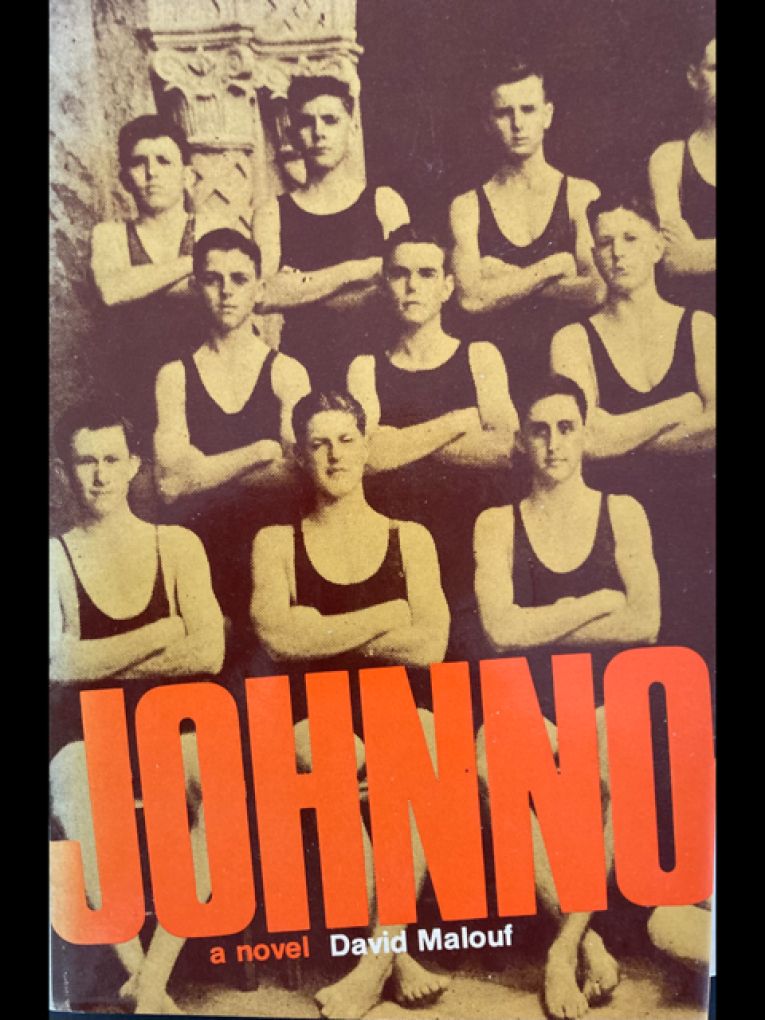
At long last David’s novel had its title – Johnno. For the jacket design, I searched the university library for school magazines from the 1940s and eventually found the photograph I was looking for – a school swimming team, with folded arms, standing in front of an ornately columned entranceway.
More than 50 years after its publication by UQP, David Malouf’s first novel has become the quintessential Brisbane novel. It is also celebrated throughout the country and regularly set as a school text. This is even more remarkable given the ribald nature of Johnno and Dante’s sexual adventures in Brisbane and Paris.
Johnno was one of the first novels I worked on as a young editor at UQP, although its beautifully fluent prose had required almost no editorial intervention. Just that title – which turned out to be perfect.
Craig Munro is the author of several works of memoir, biography and book history including Under Cover, Literary Lion Tamers and Wild Man of Letters.
Want to see more stories from InDaily SA in your Google search results?
- Click here to set InDaily SA as a preferred source.
- Tick the box next to "InDaily SA". That's it.
Free to share
This article may be shared online or in print under a Creative Commons licence