SA’s next generation winemakers
Raised between the rows, South Australia’s next-generation wine families are tending their legacies one vintage at a time.
Distilling a family legacy
Angove Family Winemakers
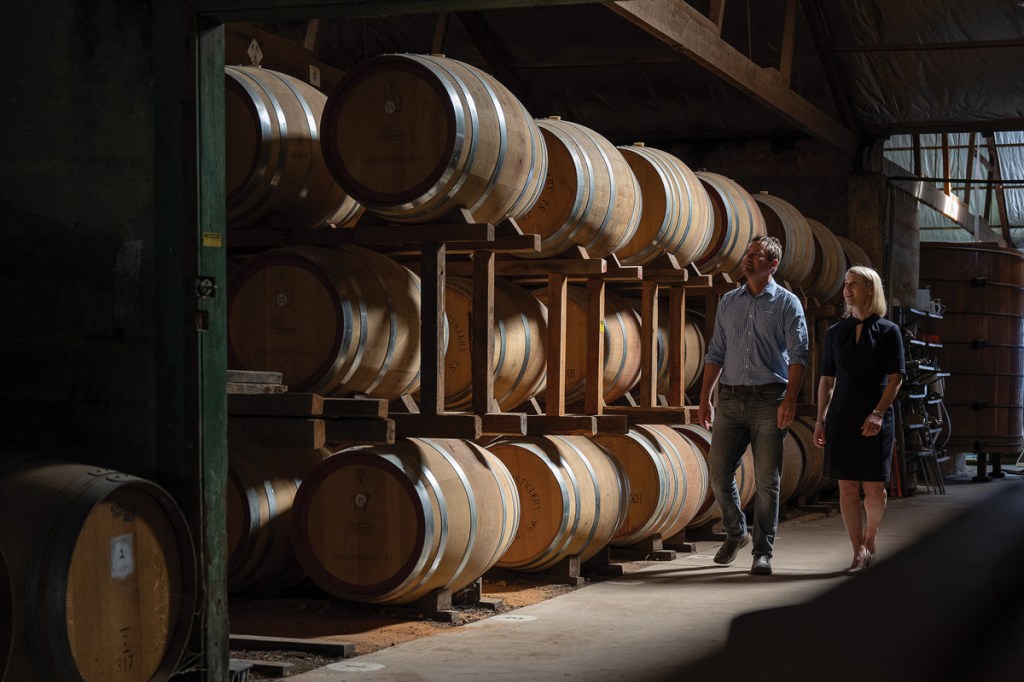
On a cold winter’s night in 1956, the largest flood in Renmark’s history breached a levee at St Agnes Distillery – one of Australia’s largest brandy makers. That night saw winemaker Tom Angove, the inventor of the wine cask, toil in bitterly cold waters to plug a gap in a sandbag wall, saving the Angove family’s winery and distillery in the process.
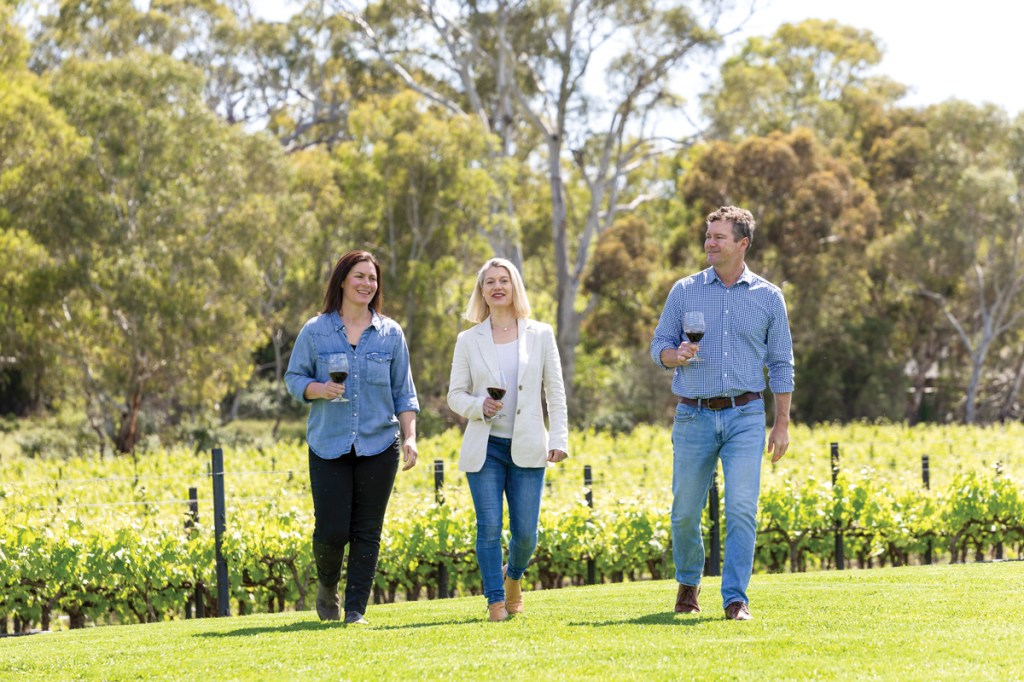
The infamous Riverland flood is just one of many ups and downs, triumphs and tragedies weathered by multiple generations of the Angove family over 140 years. And it’s the current chapter that is proving most transformative, overseen by fifth-generation Angoves: Victoria, Richard and Sophie.
Richard and Victoria are joint managing directors while Sophie works in viticulture, championing the producer’s leading organic and sustainability practices.
In 2025, the St Agnes brand marked its centenary with the release of premium aged spirits. It is a milestone for the only family-owned company that still makes its own brandy in Australia.
Richard was seven when he made his first wine, overseen by his father John Angove. Richard’s first jobs included cleaning out the old brandy stills. “I studied winemaking and worked a vintage at Angoves in 2001, and then did my first overseas vintage in Napa Valley,” Richard says.
“I worked vintages in the northern and southern hemispheres over several years, before coming back to the family business in sales and marketing.”
As a young child, Victoria watched with fascination as her father would return from sales trips. “I remember Dad would come home, and I thought business was all about carrying a briefcase around,” Victoria says. “Once I was older, I learned that wine is a very challenging but exciting industry to be in.”
Over the past 25 years, Victoria has put her stamp on the export, sales, marketing and public relations side of things. “Each of us had very different career pathways. We were never pushed to follow in Dad’s footsteps, but I was always interested,” Victoria says. “Dad encouraged us to learn from other mentors within the business, which has been a gift.”
Youngest sibling Sophie worked as a teacher before studying environmental science, and then winemaking and viticulture. Since joining the business in 2017, she has helped Angove Family Winemakers become an industry leader in certified organic
wine production.
“I love that I can combine viticulture with a natural, environmental approach,” Sophie says.
“Healthy soils make strong vines that are more resistant to disease pressure. The organic vineyards have a resilience that carries them through challenging years of heat stress and drought.”
As the industry has evolved, the Angoves have been at the forefront. “We’ve dramatically evolved our offering over time thanks to the amazing team around us and the great mentors we’ve had along the way,” Victoria says.
You might like
They also credit the continuity of chief winemaker Tony Ingle and head of sales and marketing Tim Boydell who have been with the company for more than 20 years.
With the business in its 140th year, the Angoves are working on the next chapter, and particularly the growth of St Agnes’ premium brandies. Victoria believes Australian brandy is on the cusp of a renaissance.
“The challenge for us is to re-engage with new consumers and show them how extraordinary brandy is as a beautiful, aged spirit,” she says. “Knowing it is made here is something all South Australians can be proud of.”
Fresh start for 150-year legacy
Corryton Burge
Growing up alongside their family’s winery provided many fond childhood memories for siblings Amelia Burge, Trent Burge and stepbrother Toby Mifflin. But Burge family matriarch Helen wasn’t overly impressed when her husband Grant would take the youngsters up on the lofty scaffolds above the fermenting tanks.
“Running along the catwalks up on top of the tanks was great fun but something that just about gave Mum a heart attack,” Amelia laughs.
At the time, the Burges were among the largest private vineyard owners in the Barossa, so there was plenty to explore. For Grant and Helen, it was important to give their children a taste of the industry that they were so passionate about.
Toby dove straight into the business, learning all aspects of viticulture from the ground up. Trent chased a career playing professional cricket in England and Amelia forged her own in marketing. But the wine industry eventually called them back.
In 2015, Grant and Helen sold Grant Burge wines – a label that produced 750,000 dozen bottles a year. In 2018, Amelia and Trent co-founded the family’s new Corryton Burge label: a fresh start for the family’s 150-year-old legacy.
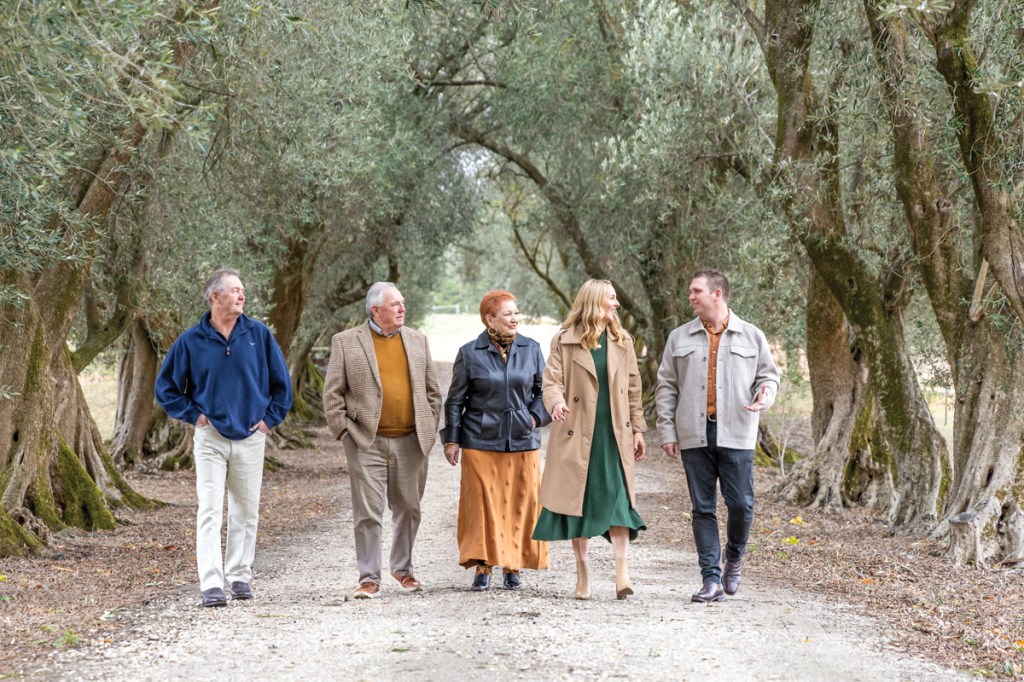
Trent is the CEO, Amelia is the business manager, and Toby is the vineyard manager, with the family operating about 400 hectares of South Australian vineyards. They last year opened the Corryton Burge cellar door, across the road from the Burge family home in the Barossa.
“Being a multi-generational business gives us tried and trusted information from Mum and Dad, but then we’ve got youth, exuberance and willingness to grow and build,” Trent says. “We’ve got the best of both worlds.”
Corryton Burge takes its name from a unique 175-year-old homestead named Corryton Park, located in the nearby hills of Eden Valley. Grant first fell in love with the property when he was a youngster.
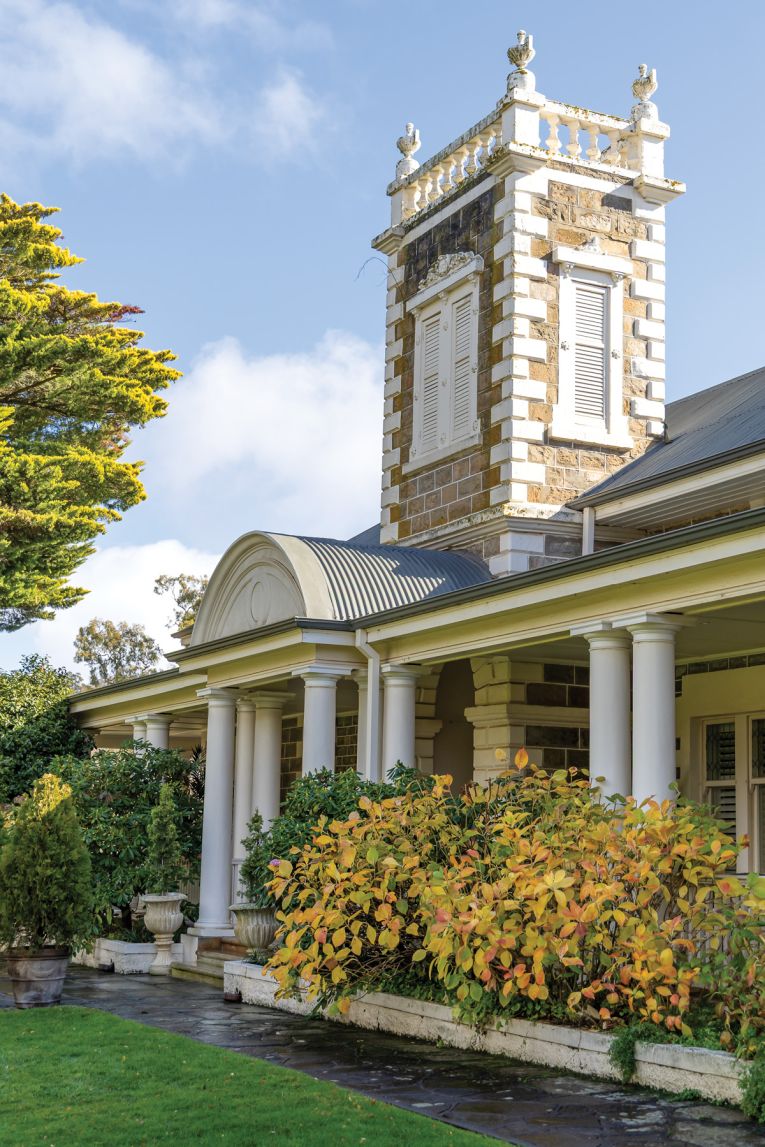
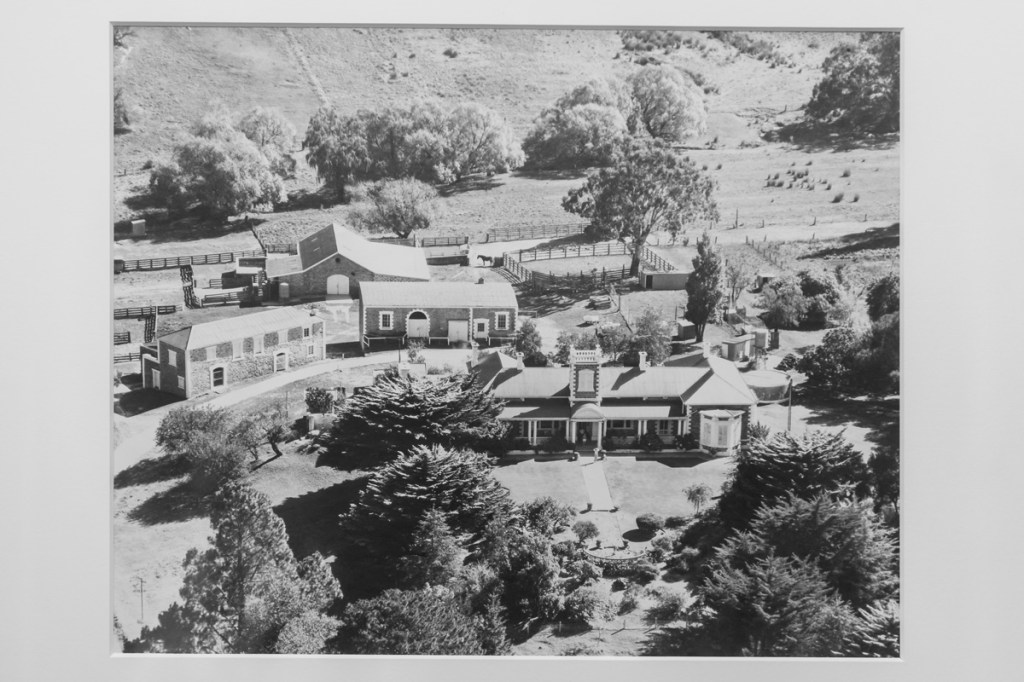
“I first went up there as a five-year-old when my parents took me to a fete at the homestead,” he says. “I’d run around the property exploring. I fell in love … it was a hidden gem.
“When I was a bit older, I’d ride my horse up that way. Later, Helen and I would drive past and I’d say, ‘I’m going to buy that property for you one day’. It must have taken years to build because they had to dig up thousands of tonnes of stone and transport it by horse and dray.”
Grant knew the estate at Corryton Park would be prime for growing grapes. “It has a similar climate to the Coonawarra,” he explains. “I love cabernet and I thought this would be a great location to plant Bordeaux varieties. In 1995, we bought it to do exactly that.
“My vision was to plant vineyards around this beautiful mansion. It’s the ideal location for an Australian equivalent of a French chateau. The homestead is surrounded by beautiful, undulating country and a cooler climate.”
Renovating the homestead has been Helen’s passion and now, it is the home of the family’s Corryton Burge label, championed by Amelia, Trent and Toby.
While their cellar door is open to the public, Corryton Park is reserved for special occasions. Trent explains: “We want to get people up here to experience it. It excites us that we can help preserve such great history and heritage.”
Subscribe for updates
During his career, Grant made some key decisions that went against the grain – from pursuing table wines to studying European winemaking. Like his father, Trent has his finger on the pulse of the wine industry and is bringing his own fresh perspective.
“Our Corryton Park vineyard is our show piece,” Trent says. “We’ve planted some great varieties up there, and varieties that haven’t necessarily had a focus here in the Barossa before.
“The Barossa has a big name for shiraz but grenache is having a revival and the land in front of our cellar door is perfect for it. We’re getting smarter about where and how we plant things, and what we do as a region.
“We’re lucky to have the legacy of six generations, but as a new brand we also have the flexibility to become whatever we want it to be.”
From Italy to South Australia
Curtis Family Vineyards
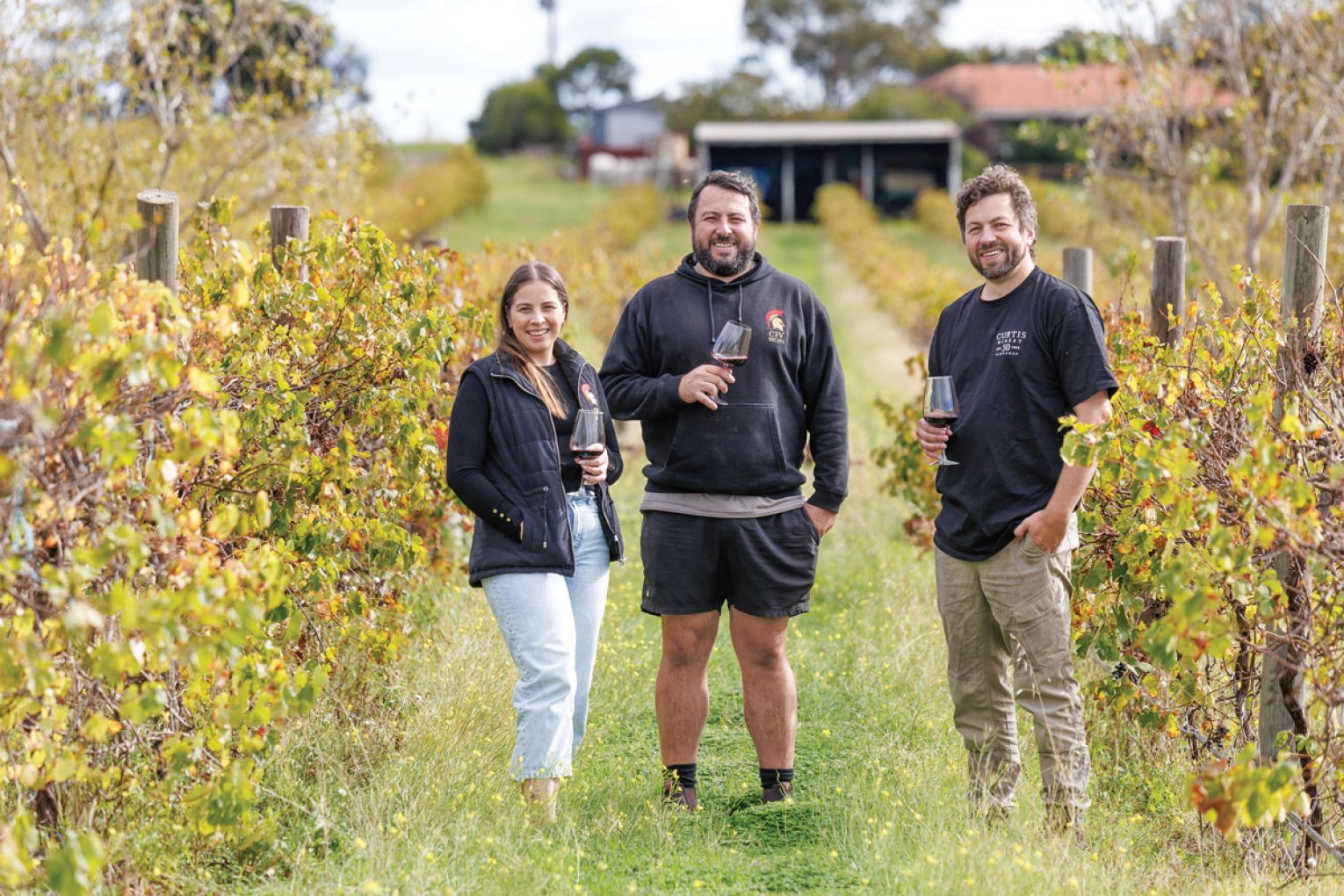
Siblings Jenna, Tom and Mark Curtis could barely walk when their parents introduced them to planting vines and picking grapes. Raised on their family’s McLaren Vale property, they were deeply entrenched in everything from dairy farming to grape growing.
Jenna fondly recalls spending school holidays picking grapes with her brothers and cousins. “Everyone else from school would be going to the movies, and we’d be replacing drippers,” she says. “It felt like we were working towards something, and we were all part of it. Our dinner table was our boardroom.”
For the Curtis clan, this family tradition transcends time, centuries and hemispheres. The family’s viticultural roots go back to the 1400s when their ancestors planted vineyards and olive groves in central Italy.
Over centuries, the Curtis family’s ancestors became major wine producers, up until WWII when some of the fiercest fighting in Italy came to their hometown, forcing family members to flee abroad.
“Our grandparents endured great hardship,” Jenna explains. “Even today, their cooking is very rustic because food was so scarce when they were growing up. They gave up everything to start over in Australia.”
Tom says their grandparents chose McLaren Vale because it resembled their hometown. “Our father Claudio and our mother Evelina grew the business from humble beginnings,” he adds. They had their first vintage in 1973.”
Eldest brother Mark was the first to be given more responsibility. “For us, it was an adventure more than anything,” he says. “There was always something fun to do, from driving tractors to feeding calves in the morning. It gave us a great base and taught us the value of hard work.”
Curtis Vineyards grew to become McLaren Vale’s largest grape producer. But the global financial crisis saw them lose everything overnight. Within a couple of weeks, the family had to move out of their home.
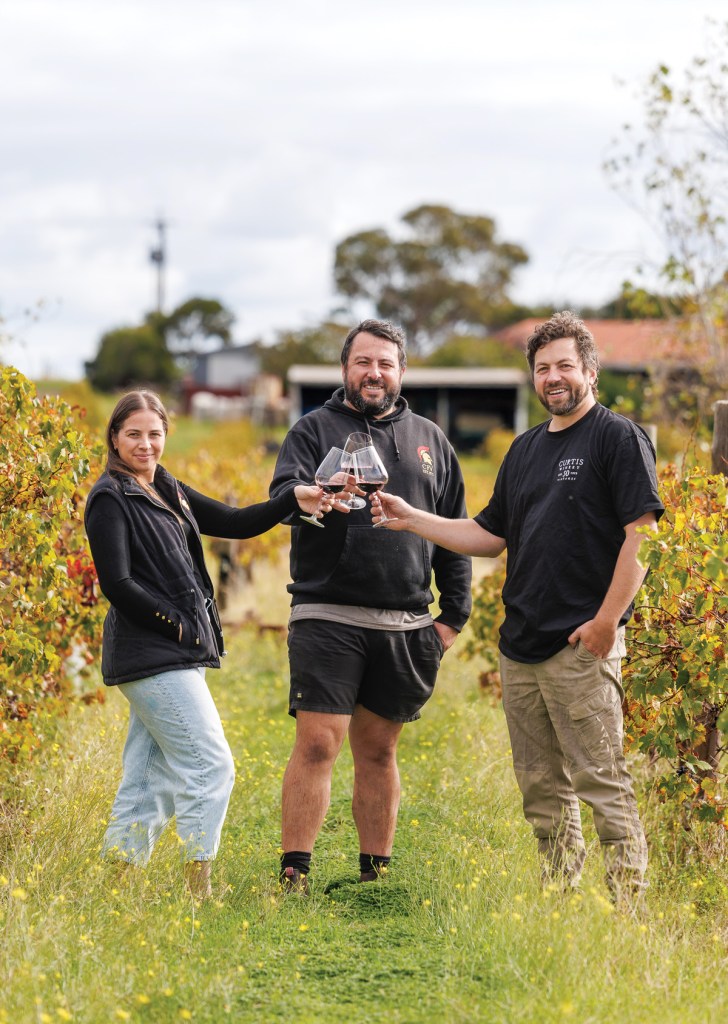
“The GFC happened and we lost everything. It was 60-odd years of hard, hard work – blood sweat and tears – gone,” Tom says.
“It was devastating to go through that as a family. But we had the drive to move forward. Although we had to shut the door on that business, it was the birth of what Curtis Vineyards is today.”
Ingrained with a strong work ethic from a young age, Mark, Tom and Jenna were ready to roll up their sleeves.
“Just like our grandparents were forced to start a new life, we had to start from nothing,” Tom says. “But the enthusiasm was still there, and we had many friends who helped us out.”
Mark agrees: “The pain gives you a lot of determination to rebuild. We knew the game, we had the experience, and you can’t buy that.”
Starting from a blank slate, the Curtis siblings created what is now a fast-growing wine brand. Last year, at the esteemed Vienna Wine Show, Curtis Family Vineyards won multiple trophies including Australian Producer of the Year, particularly thanks to their 2021 Curtis Gladiator MV Shiraz.
“To think we would (one day) be sitting here with a business such as we have today is hard to believe,” Jenna says. “It was a lot of hard work to get to this point and I’m proud of the recognition that Mark and Tom are now receiving for it.”
The siblings each have their own young children, who are now getting a taste of the vineyard lifestyle – although not quite as hands-on as their own upbringing on the farm.
“They love stomping grapes and they’re very interested in the diggers, tractors and harvesters,” Jenna says. “They love to be around the hype of it all, and that’s where it begins.”
This article first appeared in the June 2026 print issue of SALIFE Magazine.
Want to see more stories from InDaily SA in your Google search results?
- Click here to set InDaily SA as a preferred source.
- Tick the box next to "InDaily SA". That's it.