Hanging Monet to Matisse: Behind the scenes at AGSA
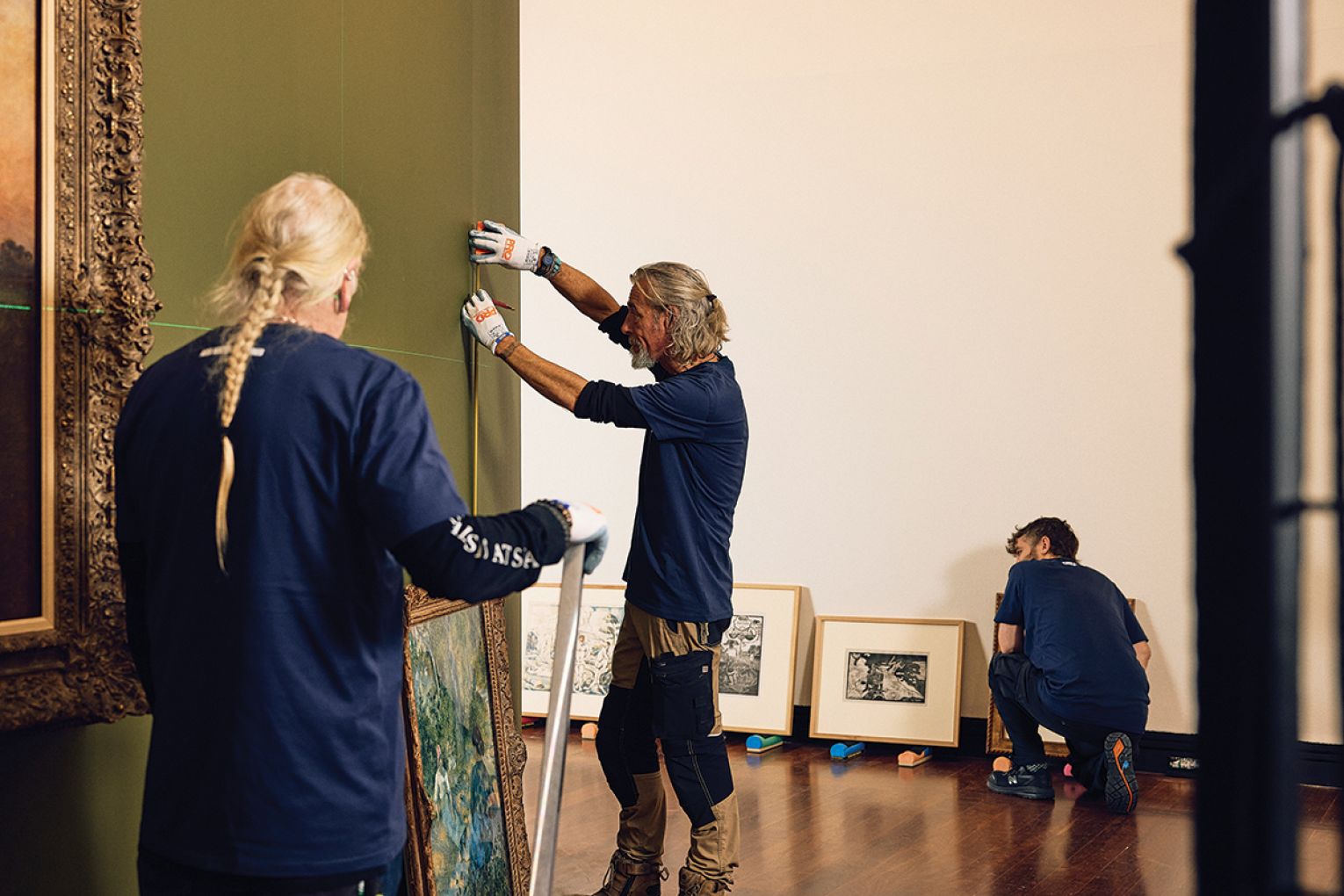
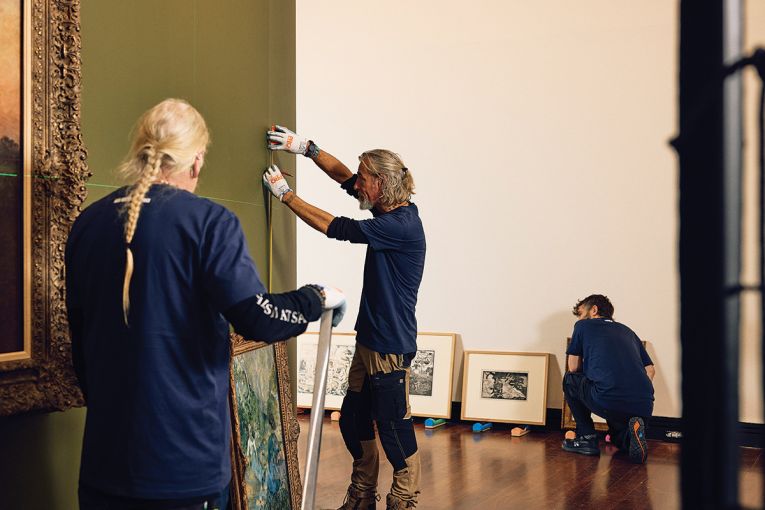
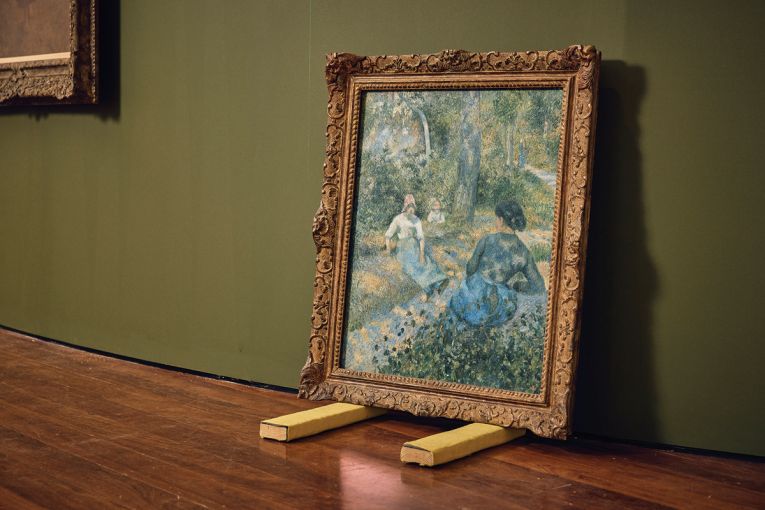
As we enter the final weeks of Monet to Matisse: Defying Tradition, wind back to the days before the exhibition opened as the team were hanging the masterpieces.
As the much-anticipated Monet to Matisse: Defying Tradition comes together at the Art Gallery of South Australia, the install team make the one and only painting swap, as directed by the exhibition’s curator, Tansy Curtin.
And then, the focus turns to the final touches – the lighting and painting descriptions. It’s among the hustle and bustle before the exhibition opens that Tansy races around, as she chats about the project that has been in the planning for three years.
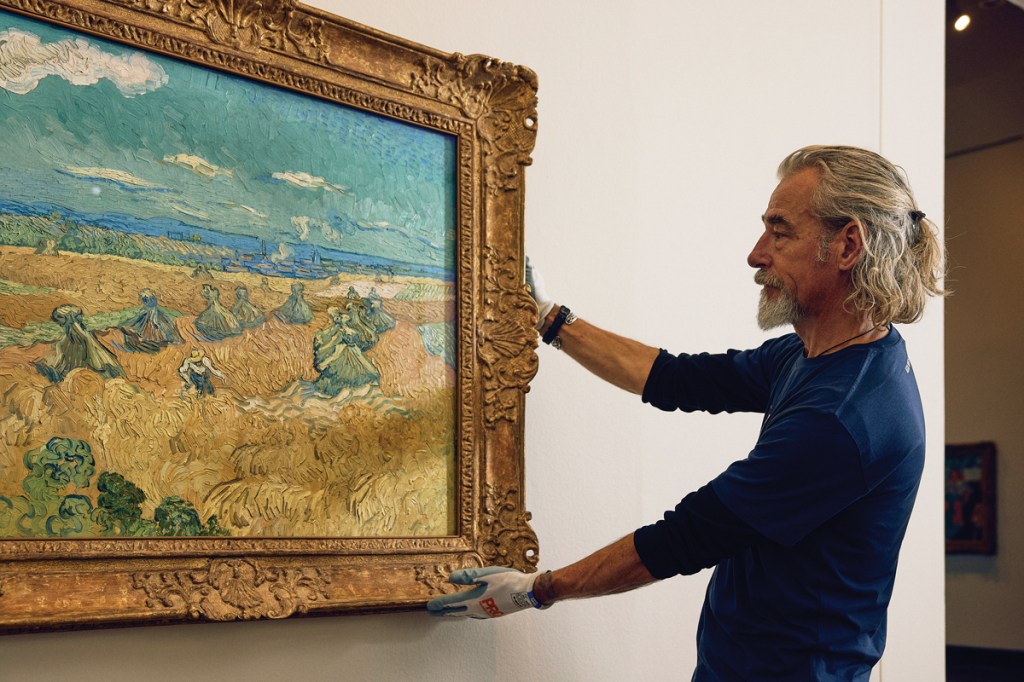
She stops at Vincent van Gogh’s Wheat Fields with Reaper, Auvers and points out a miniscule detail.
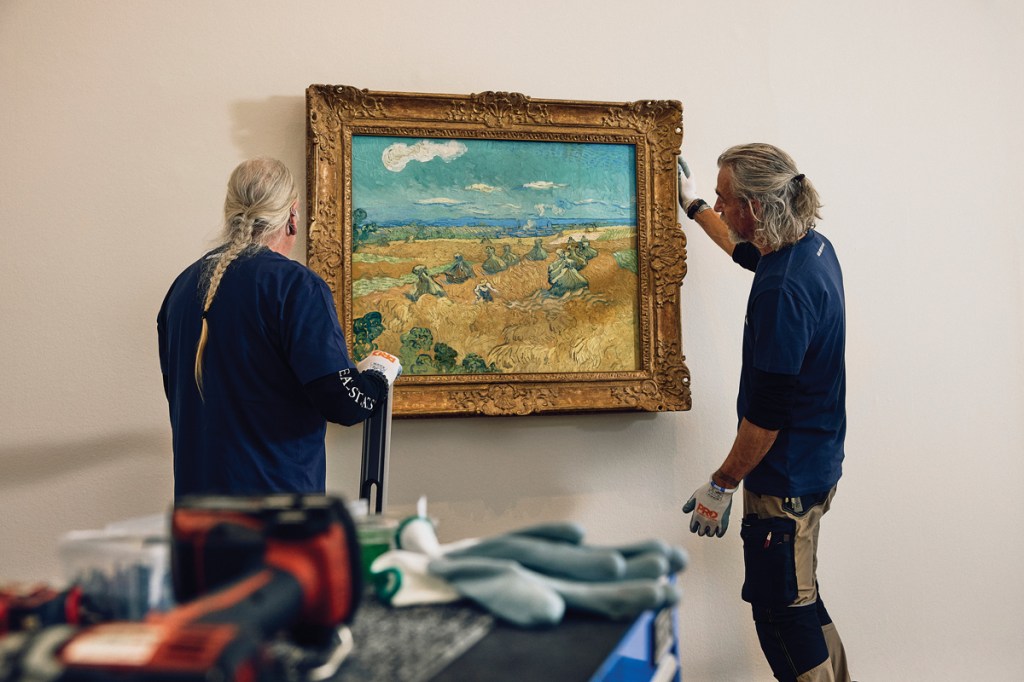
“When it was lent to the Van Gogh Museum in Amsterdam, they discovered there are tiny bug footprints through the paint,” Tansy says.
“It makes you think that at one point, it was a wet painting in Van Gogh’s studio and a bug walked on it.”
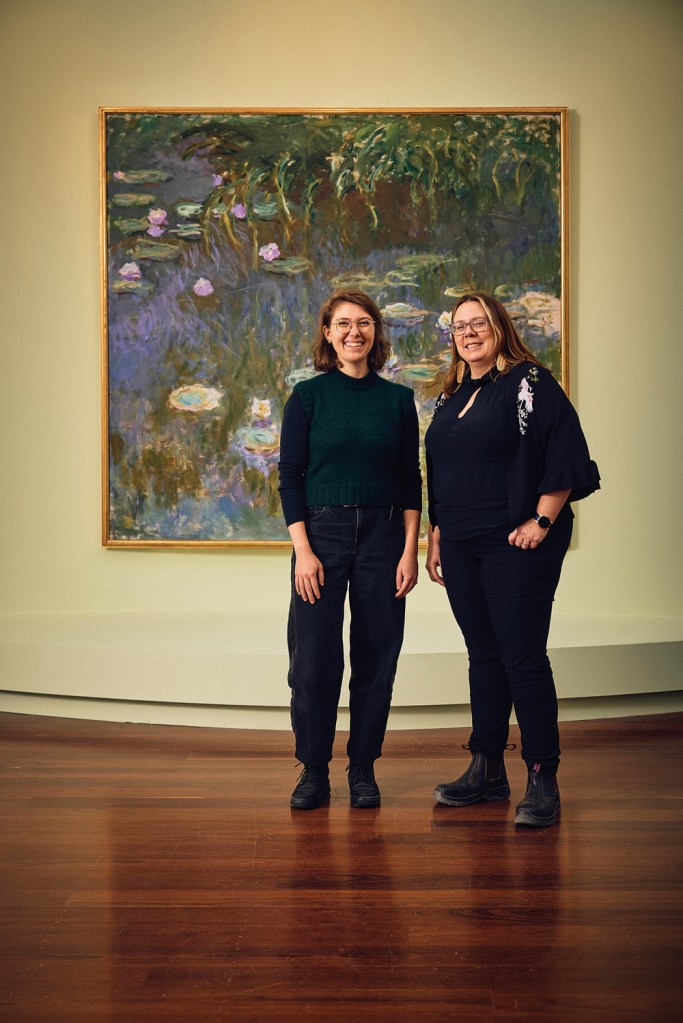
And then, she turns to face Claude Monet’s Water Lilies.
“It was a bit of a worry for us to get it on the wall. We had the ply backing made so it fitted perfectly.
You might like

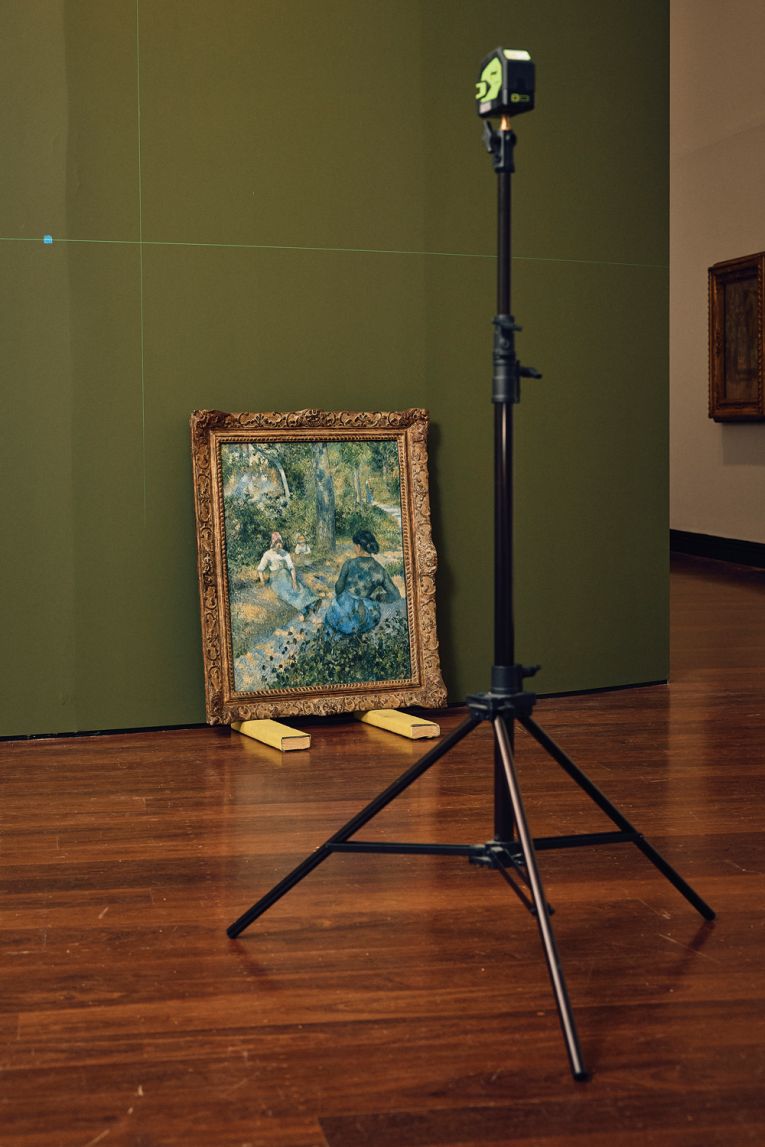
“But it was a moment and there were deep breaths. It’s not glazed, so we need to take extra special care of the surface. We got it up there and it was perfect.
“I don’t think you ever get used to having a two metre square Monet in the gallery.
“It was lovely to have a conversation with the conservators about what he’s done – he’s used a dry brush and that’s how you get that chalkiness. The colours – he’s used bright purples through to lavenders, to deep khaki greens, acidic yellow and the red; the red is such a surprise.
“I love that there’s no horizon at all, you’re just looking down into the water lilies, but you’ve got such a sense of depth nonetheless.
“And then there are just areas of raw, primed canvas where he’s not put anything. He knew that was enough.”
During transit, one of the paintings slipped in its frame slightly, so the team from Toledo and AGSA’s conservators worked together to fix it. “It was an easy fix, but it causes me anxiety,” Tansy says.
“But there’s something wonderful about getting to see the bits of a painting that no one else gets to see – the labels on the back. You do feel like you’re getting a special part of that story.”
One of the pieces Tansy gravitates to is the colourful, abstract Mondrian, painted in 1922 – the same year as the Monet in the other room.
Subscribe for updates
“It does really highlight how the artists are working in so many different ways in this period.”
When Tansy had seen the piece displayed in Auckland, it was just in a Perspex box, but she didn’t think it gave it enough gravitas.
So, she worked with Grieve Gillet Architects – who have brought to life so many of the technical aspects of the exhibition – to create a black frame that somehow makes it feels as though the Perspex recedes.
Grieve Gillet Architects have helped to create a space, both inside the exhibition and outside in a bar area, that draws inspiration from the Paris art scene and Bauhaus architecture.
“Through the considered use of colour, materiality and spatial composition, the design creates a contemporary setting that complements the collection, while allowing the artworks to remain the focus,” says GGA’s India Allan.
“Each gallery has been carefully designed to support the exhibition’s narrative, creating an atmosphere that encourages visitors to engage with the works in new and meaningful ways. Rather than acting as a backdrop, the exhibition architecture becomes part of the experience, framing the collection and reinforcing the dialogue between art, design and architecture.”
The exhibition, which is the first event in AGSA’s new Winter Art Series, is a moment of growth, according to Tansy, who is the gallery’s assistant director.
“It’s an exciting moment for us to grow and be ambitious and try different things,” she says.
“Each work has something different to offer you. There are artists you know and love and you covet in your life, and there are others you meet for the first time.”
The exhibition features 57 paintings from the Toledo Museum of Art, along with 39 paintings and works on paper from AGSA’s own collection.
This article first appeared in the August 2026 issue of SALIFE magazine.
Want to see more stories from InDaily SA in your Google search results?
- Click here to set InDaily SA as a preferred source.
- Tick the box next to "InDaily SA". That's it.