Gardening in shiraz heartland
Third-generation horticulturist Aleisha Lynch reveals how she transformed an inhospitable Barossa paddock into a remarkable drought-tolerant garden in less than a decade, all while becoming an educator and self-published author.
In South Australia’s shiraz heartland, it’s the tough, dry and low-nutrient soils that force the vines to work harder and yield famously powerful and concentrated fruit.
A dream for viticulturists but a headache for gardeners, it’s this harsh landscape that has moulded garden designer Aleisha Lynch into a brilliant horticulturist.
Aleisha has the region’s soil in her DNA. In 1951, her grandparents Eric and Audrey founded Barossa Nursery, where Aleisha spent her youth exploring the nursery’s labyrinthine rows of plants.
Aleisha’s mother Dianne worked in the nursery while her father Rodney created countless Barossa Valley gardens during his career as a landscaper.
“I grew up around nurseries and landscaping jobs, and our family trips were often to open gardens or nurseries – so horticulture has always been a big part of my life,” Aleisha says.
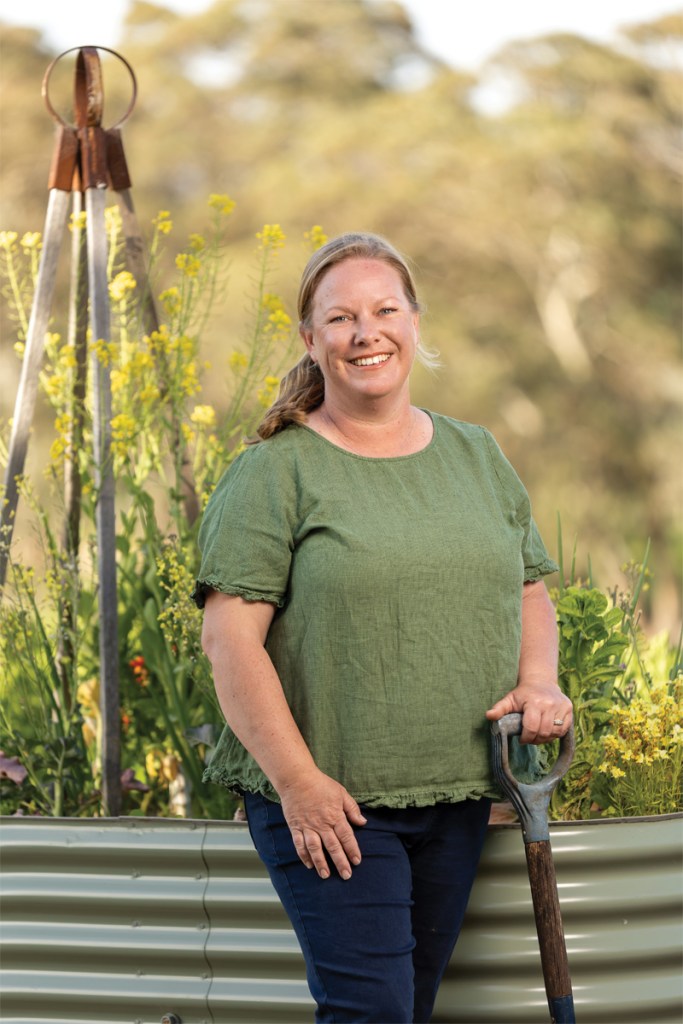
After studying garden design, Aleisha ran her own business and was then appointed head gardener at Barossa Valley Estate where she worked with renowned garden designer Paul Bengay.
“The estate’s garden was in the very early stages, so I was working with Paul to refine some of the plant choices to better suit the dry climate. It was great to collaborate with him on that project,” says Aleisha.
“I worked there for seven years, and now I’m at St Jakobi, which is a local primary school here in Lyndoch. I’m the gardener, I run the kitchen garden program and educate kids in the garden.”
Aleisha designed the school’s green spaces with biodiversity and permaculture principles in mind, while also creating an engaging education program to inspire the next generation. “It’s about exposing the students to growing their own food and the concept of sustainability,” she says.
You might like
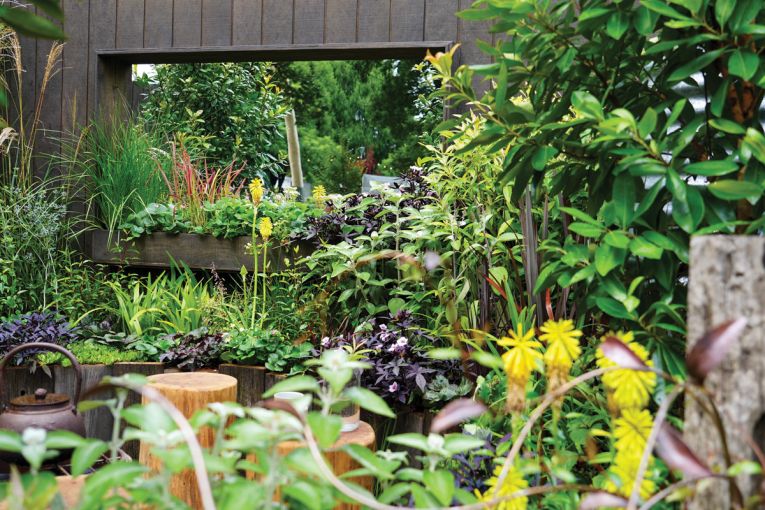
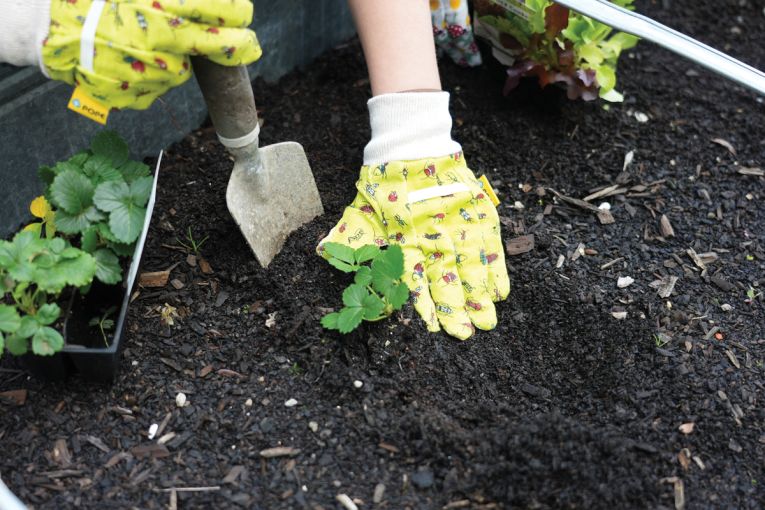
“The students nurture their own little garden patch and grow the produce, cook the recipes and share a meal as a class. It’s a great community activity – they’ll set the tables, pick some flowers and then sit down to share the meal together.”
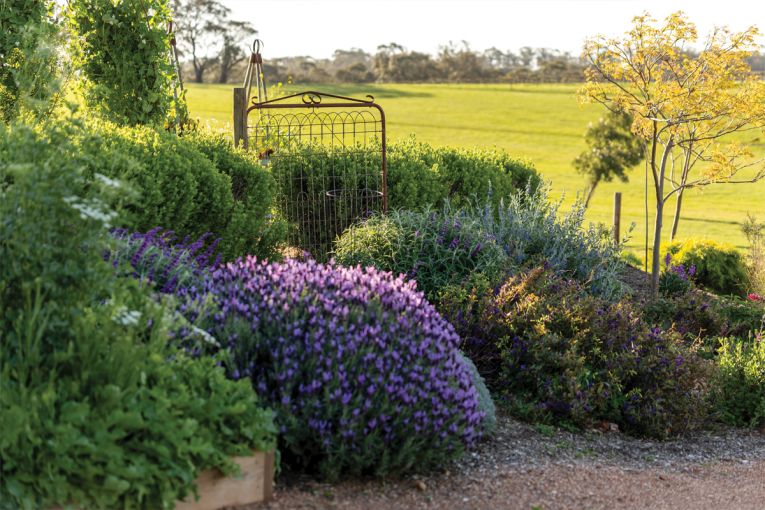
But it’s Aleisha’s own garden, Orcombe Farm, that SALIFE is visiting today. The property is 16 hectares with 4000 square metres (one acre) dedicated to her garden. This inspiring drought-tolerant oasis is nothing like it was when Aleisha and her husband Scott purchased the property eight years ago.
“We knocked on the door of the elderly lady who lived here and asked if she had any plans to sell, and – luckily for us – she said yes.”
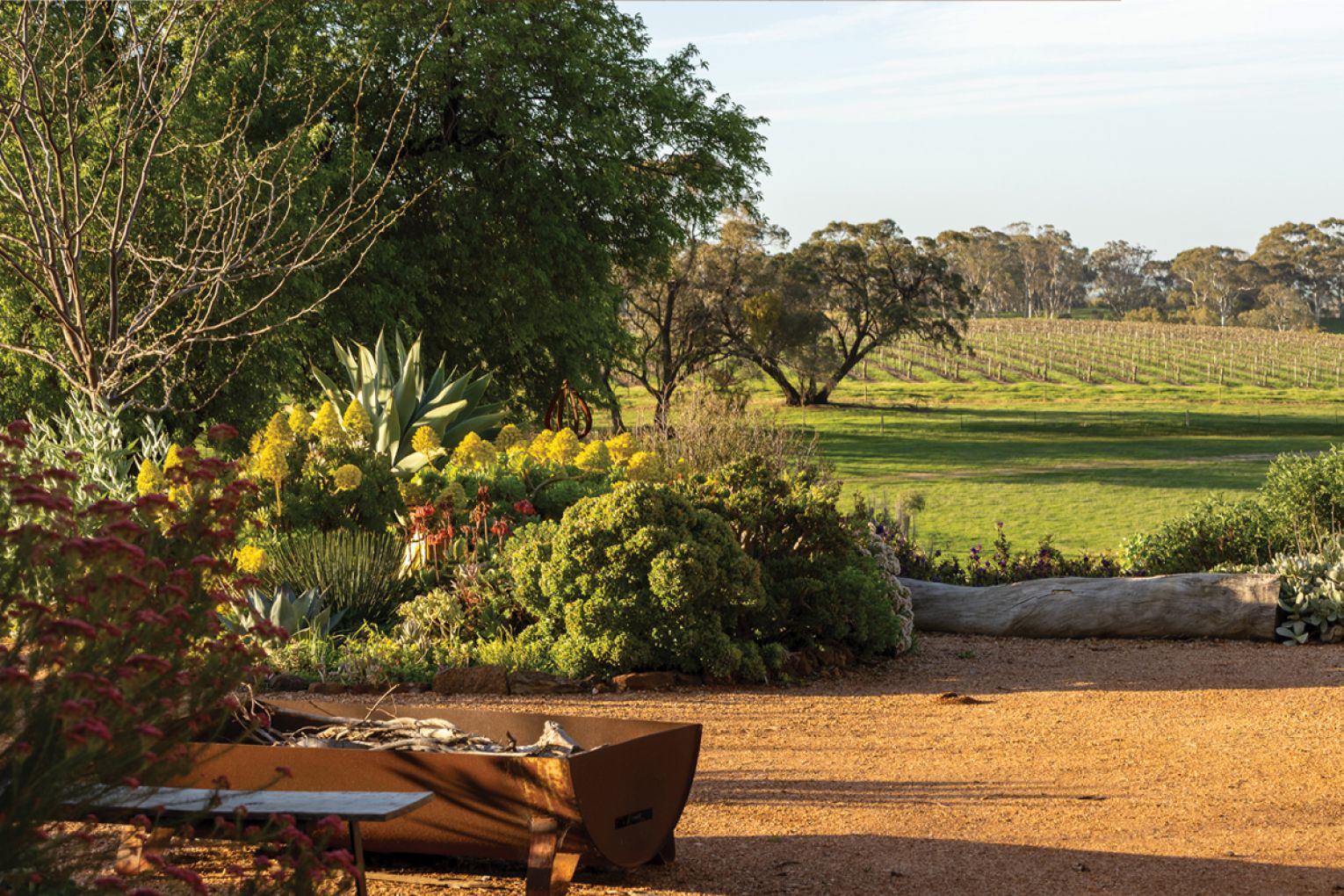
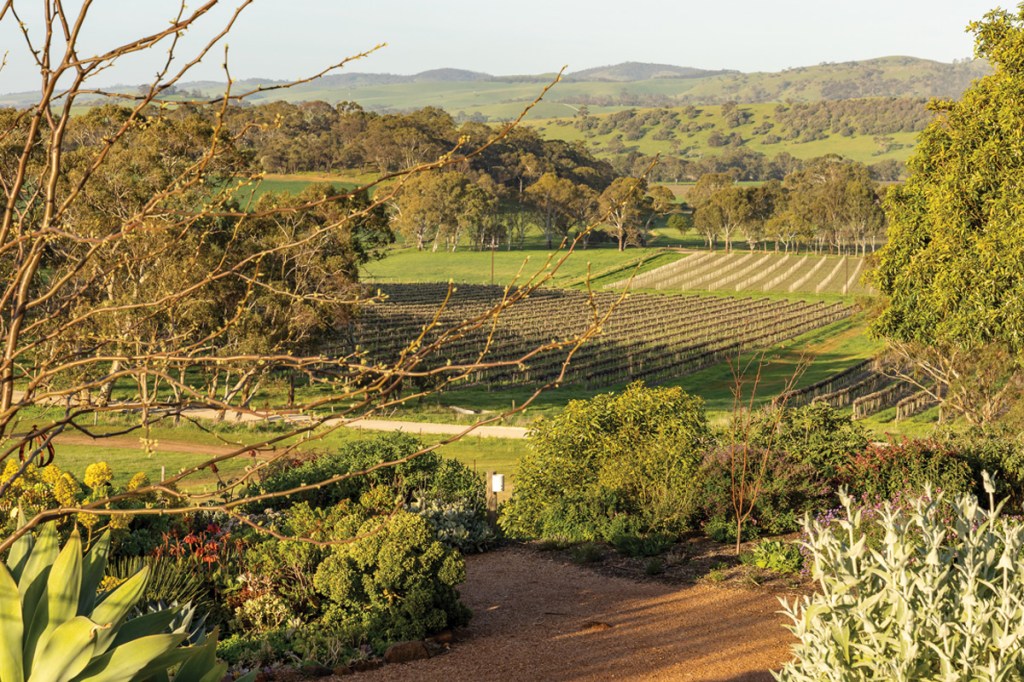
“The view is everything. It’s a simple house on the hill, but the view overlooks the neighbouring vineyards and the Barossa ranges in the distance. People are always taken aback. A nice feature of the property is that you can view our entire garden from our deck.”
A section of native blue gums and grassy woodland was neglected and overrun with wild olive trees, which Aleisha and Scott removed in 2018 to reveal many ground-dwelling native flowers such as chocolate lilies, garland lilies and twiggy bush-pea, as well as native grasses.
“There was very little planted on the property. In front of the house was a bare paddock with an old almond tree. So, I had a blank canvas and started designing and creating the garden from scratch.”
Aleisha underestimated how challenging the exposed paddock would be for growing things, especially when the hot dry winds of summer dehydrate the soil. Rainwater is the property’s only water source, so much of the garden is watered only by rain. “I had no microclimate to work with, newly-planted trees were too small and the soil was too exposed,” she says.
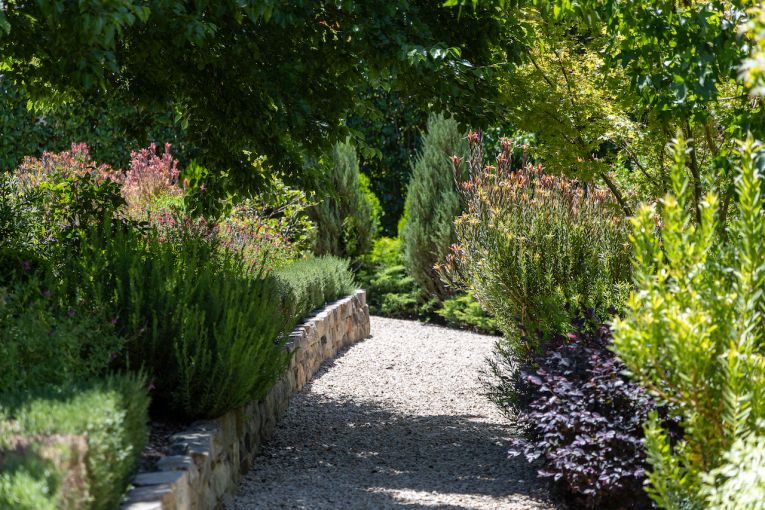
Struggling to get new plants to establish, Aleisha planted mature nursery plants as protection for the slower-growing varieties she was trying to nurture. Many layers of cow manure, pea straw and mulch were used to improve the soil and the garden beds were densely planted to provide shade over root zones.
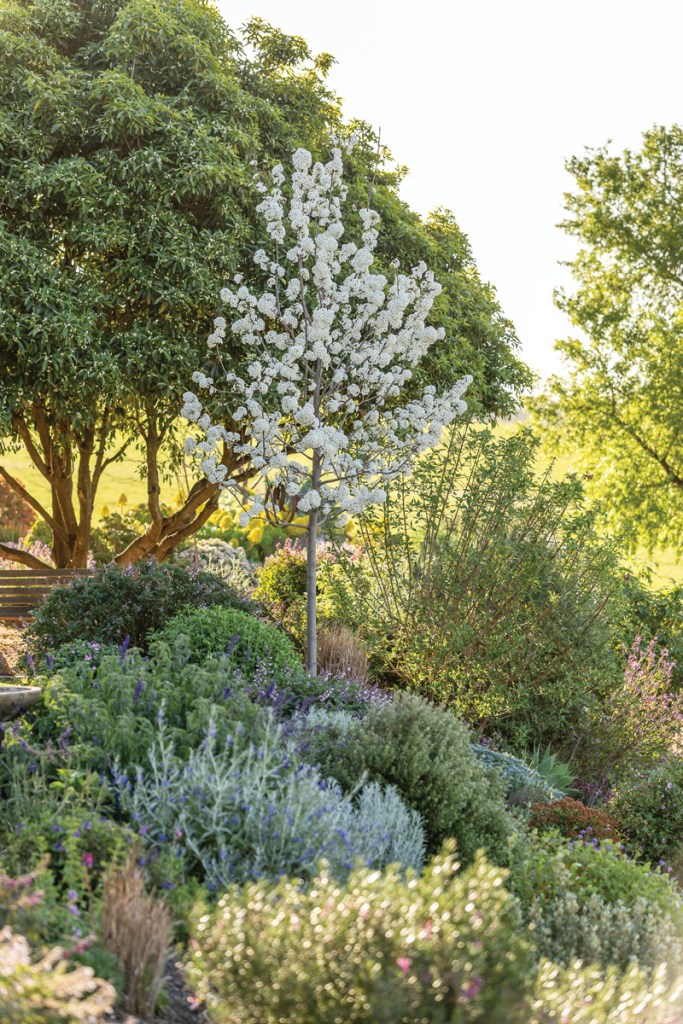
“I was forced to source drought-tolerant Mediterranean, South African, and Australian plants. My husband and my dad have helped out with the hard landscaping, while the garden is all me,” she says.
Aleisha has focused on one section of the garden each year and the result is an amazing garden created from scratch and in less than a decade. “You can’t just start planting in a paddock, you’ve got to try and convert it one step at a time,” she says.
Subscribe for updates
Each section of the garden tells its own story, and every plant is chosen for compatibility with its neighbours.
“The main area around the house has a small lawn and a perennial garden. As the garden expands out from that, it becomes more drought tolerant and more climate compatible.”
To the property’s eastern side, Aleisha has created her gum tree garden, which is designed around an established blue gum. In a paddock in front of the house there is an Australian native garden, which receives no watering.
“That’s a bit of experiment as to what will survive in those conditions without any water at all,” says Aleisha.
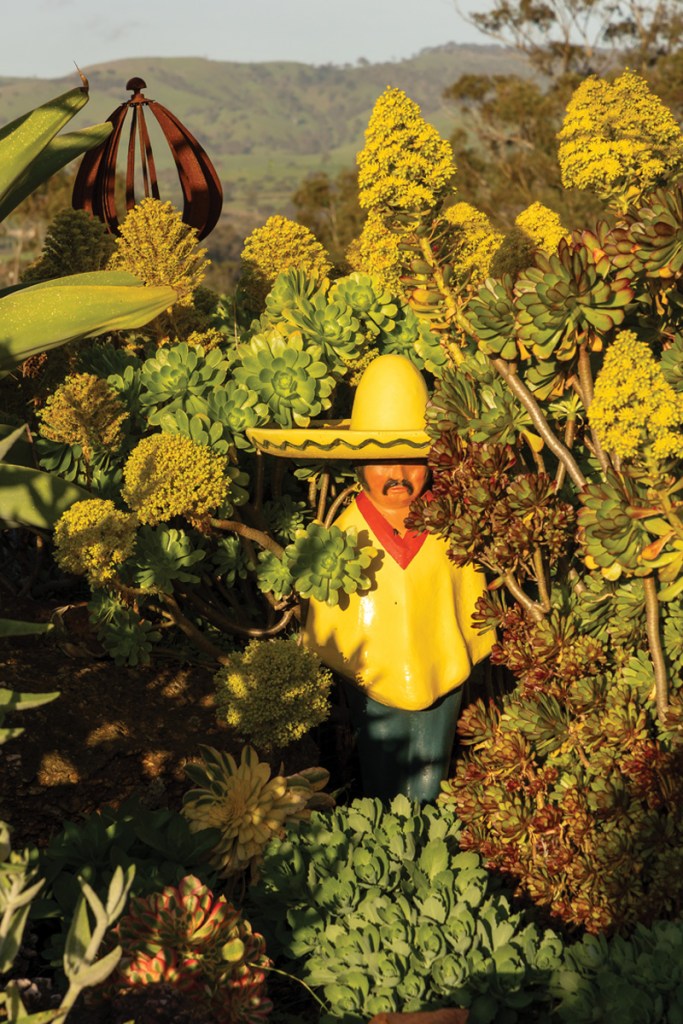
To the west is Aleisha’s productive garden with wicking beds, citrus trees and a cut flower garden, while a gravel garden provides an area to sit and enjoy the space. Up the top of the western garden is the “hot garden”, planted with succulents and heat-tolerant plants that create a warm palette with bold textures.
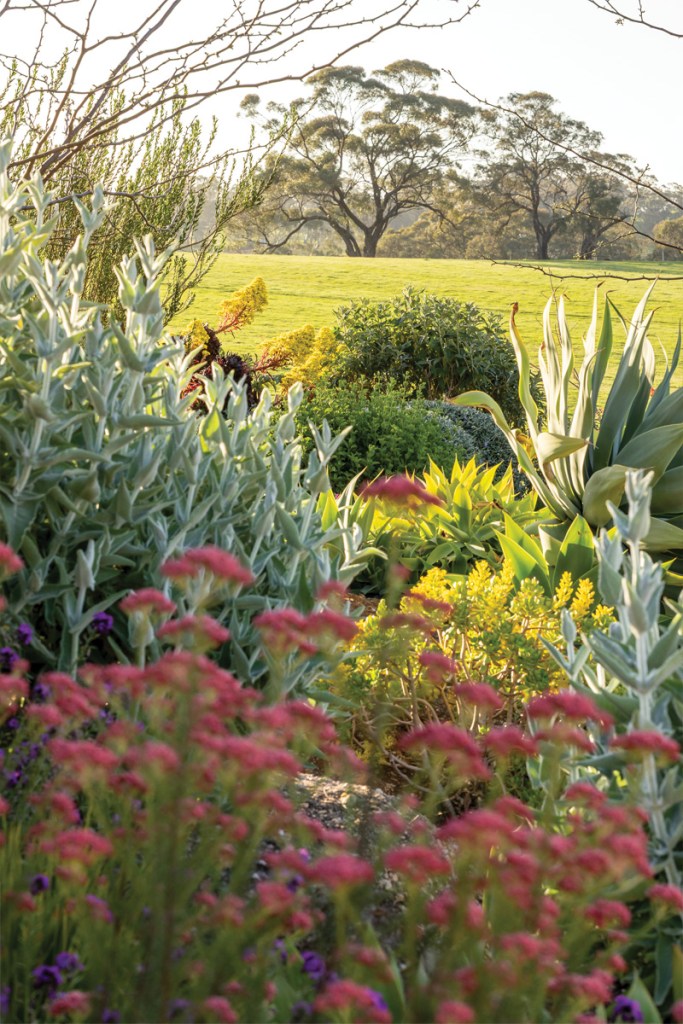
Visitors are often fascinated by the garden’s unique mix of Australian natives with plants from around the world. “I’m passionate about the way the colours, textures and forms of plants work together, and I think visitors find that quite inspiring. The plants complement and contrast with each other to create a visually pleasing experience,” says Aleisha.
In recent years, Aleisha became inspired to jot down the things she’s learnt, which led to her publishing a book: The Complete Patch: Growing Healthy Ecosystems, Produce, and Minds.
“It’s only been in the past few years that I’ve realised the knowledge and experiences I’ve gained from my parents and grandparents – plus the study and practical experience I’ve had – is quite special,” she says.
“I get great enjoyment from having my own garden full of biodiversity, with the ladybugs, butterflies and the native bees. I thought maybe I need to share this with other people. I didn’t set out to write a book, I just started writing down my ideas and experiences, and they started forming into chapters.
“All of a sudden, it was really coming along. I was writing almost every night after work and I couldn’t type fast enough to keep up with my thoughts.
“I was just documenting my experiences and my learnings, and I wanted to share it with people. It’s all about using nature to support itself through biodiversity.”
Aleisha’s book will be on sale at her open garden event on November 15 and 16, when visitors will have the opportunity to explore her expanded Australian native section.
Visitors will also get a glimpse of a paddock under transformation into garden space.
“The new space won’t be planted yet, it’ll still be in the process of preparing the soil, laying the mulch, controlling the weeds, and all those things that happen before the plants go in.”
For Aleisha, the sales of her books are secondary to the satisfaction of inspiring others to discover the joys of gardening, something that drives her in all aspects of her life.
“A garden can look nice but more importantly, it’s about how it makes you feel. Different plants and colours can evoke different feelings – whether it’s energetic and alive, or calming and soothing. When you harvest vegetables that you’ve grown, it releases dopamine in your brain, which makes you feel good.
“I love opening my garden so that other people can connect with nature. You can tell that people feel good in the space, because they tend to linger for a long time, and I hope it inspires even more people this time around.”
Orcombe Farm will be open to the public on November 15 and 16, concurrently with the nearby garden at Barossa Garden HomeStay. For more information, visit opengardensa.org.au
This article first appeared in the November 2025 issue of SALIFE magazine.
Want to see more stories from InDaily SA in your Google search results?
- Click here to set InDaily SA as a preferred source.
- Tick the box next to "InDaily SA". That's it.