What a surgeon hopes the royal commission asks about AI
South Australia’s royal commission into AI will be as good as its questions. A surgeon suggests where to start.
On Monday 10 August, South Australia announced Australia’s first royal commission into artificial intelligence. Three commissioners, terms of reference within weeks, a final report by July 2027. The Opposition called it a three-million-dollar headline.
Any surgeon will tell you that before you operate, you take a history and you examine the patient. You do not reach for the scalpel because the technology is impressive, or because everyone else is operating. Done properly, that is what a royal commission is: the state sitting down to take a full history before deciding what to do. Its value will depend on the quality of its questions. Here are the ones I hope the commissioners ask.
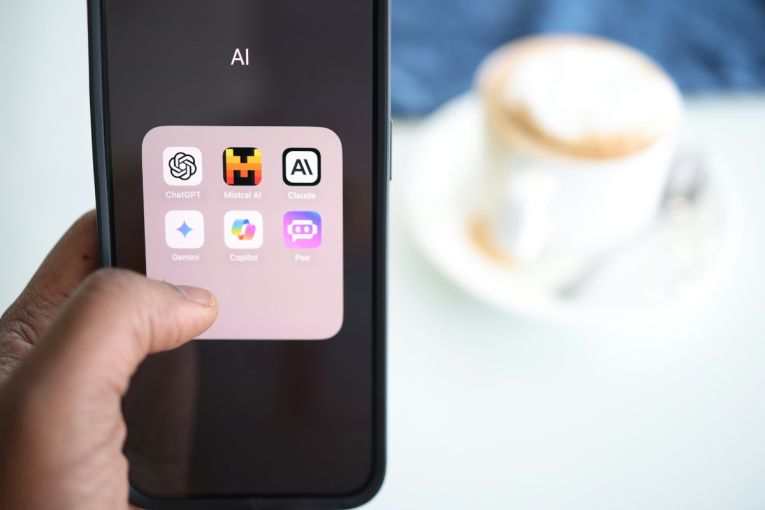
Start in the consulting room. My patients already arrive having asked AI about their symptoms. I am not against it, and it is already happening whether any of us approve or not. Some arrive better informed than they would have been. In the United States, one company’s health chatbot was answering 300 million health questions a week by July. These tools will reach Australia, and the delay is our window to set rules before they arrive rather than after.

So the first question is not whether South Australians will ask AI about their health. They already do. The question is what is behind the AI they are asking. The fine print says these tools are not intended to diagnose or treat any health condition, and that careful wording keeps them outside medical device regulation. Australia strictly limits commercial influence over health advice. A drug company cannot fly me to a resort to influence what I prescribe. Yet an algorithm can steer millions of health decisions at once, shaped by commercial interests the patient never sees, and no regulator can look inside it.
You might like
Then ask who has the most to gain. When experts and beginners both start using AI, the research keeps finding the same pattern: the experts gain little, and the beginners gain a lot. In one study of consultants, everyone using AI improved, but the lowest performers improved most, by 43 per cent. I am a surgeon, and in my own field AI has added very little, because I was already good at the thing it was helping me with. The people with the most to gain are the people furthest from this conversation, and the gap is widest exactly where you would expect: by age, by education, by income. If the commission hears only from the people already using AI, it will be examining the wrong patient.
That leads to the barrier nobody budgets for: fear. More than a third of people do not use these tools at all, and around half of those say they do not know how. Nobody has shown them. It is far easier to frighten someone about AI than to show them what it can do for them, and the people most ruled by that fear are the same people with the most to gain. A commission established to examine dangers will hear plenty of fear. I hope it also asks what the fear itself is costing us.
Ask the creative question without pretending it is simple. The commission’s scope will include the creative industries, and I hold two seats in that debate. I am a published author. I am also, in a sense, a trained model: I spent fourteen years learning surgery from the published work of everyone who came before me, and nobody traced my skill back to its sources. Whether a machine learning from published work is education or theft is still before courts on several continents, and the answer becomes less obvious the more you think it through. The commission’s report will be more useful if it says so.
Finally, ask who is in the room. The commission will hear from business, unions, technology developers and academics, and it should. But the people who will live with its findings are patients, workers, parents and students, most of whom have never been asked what they want from this technology. In medicine we say a good history is half the diagnosis. South Australia is about to take its own. It should start with the people already living with the condition.
Dr Samantha Pillay OAM is an Adelaide urological surgeon, author and filmmaker. She was the first female urologist in South Australia. She writes on AI, health and equity at samanthapillay.com.
Want to see more stories from InDaily SA in your Google search results?
- Click here to set InDaily SA as a preferred source.
- Tick the box next to "InDaily SA". That's it.