Big spend on new fund as debt balloons in SA budget
A $500 million cost-of-living package and a big spend on a fund designed to embolden businesses are key planks in Treasurer Tom Koutsantonis’ State Budget.
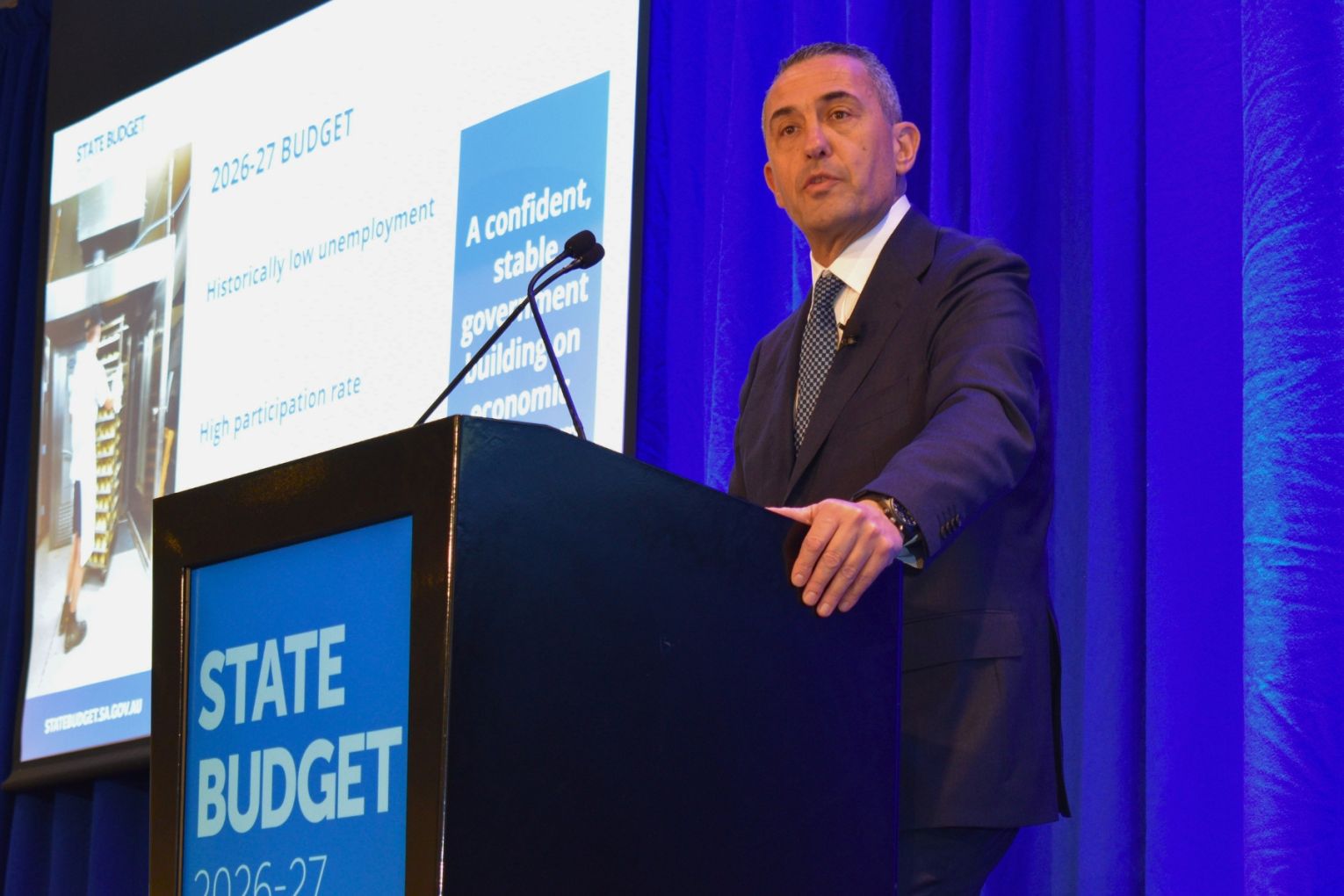
State debt is forecast to hit almost $54 billion by 2030, Treasurer Tom Koutsantonis revealed today, while handing down a State Budget focused on cost-of-living, support for regions, and a new productivity fund to build complexity into the state’s economy.
By slowing spending on the public service through the freezing of hiring new staff, Koutsantonis hoped to encourage businesses to spend more, especially those working on the megaprojects to blame for the ballooning debt figure like the North South Corridor and the new Women’s and Children’s Hospital.
“There is plenty of work in the private sector, now is the time for us to be nimble, now is the time for us at this moment to make sure we are as efficient as possible,” Koutsantonis said.
“Competing in the private sector for labour just pushes up wages and creates inefficiency. I’m sure we can do more with less, and AI is something that is pushing the barriers of white-collar work.”
Complementary to this was a new $50 million Research and Development Productivity Fund that would be legislated to support research programs aligned with the state’s strategic priorities.
Premier Peter Malinauskas said there were “zero votes in it”, but hoped the fund would go some way toward addressing Australia’s “major productivity problem”.
“We are a high-wage nation with very low levels of economic complexity,” Malinauskas said.
You might like

“We are great at growing things, and we are great at taking things out of the ground… but beyond that, we’ve got a problem, and we should be talking about it every single day if we actually care about our kids or our grandkids’ capacity to have decent living standards.
“We are serious about setting up the economy in a way that’s sustainable and long-term, because if we don’t do this right, we’re all going to regret it.”
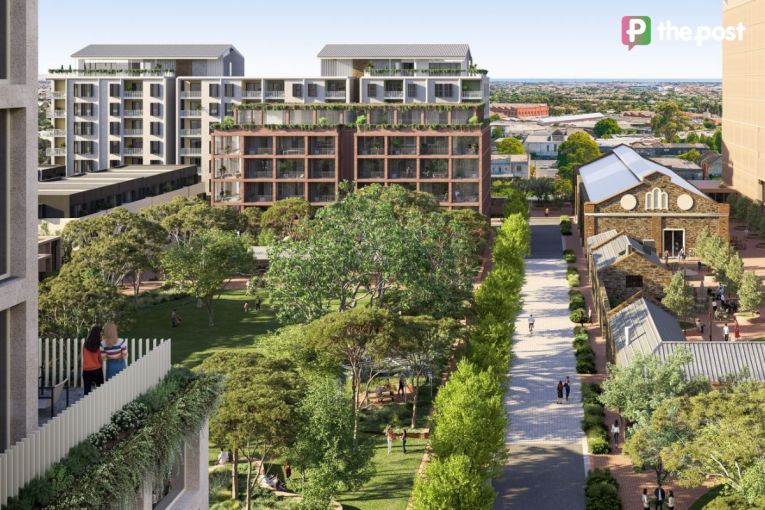
There were few surprises in the budget papers, with most of the new spending already announced by the state government ahead of the state election earlier this year. This included initiatives like $174 million for free public school and the $500 million fund to fast-track apartment construction in the Adelaide CBD.
The main beneficiaries of the budget were likely to be the regions and SA families.
More than $500 million was announced in cost-of-living relief measures – the largest package of its kind in history – the Treasurer saying the average family would save $2300 as a result. And the housing package totalled $2.5 billion, including $110 million over the forward estimates for Housing Trust builds.
The package of spending for the state’s regions was extensive too, totalling $1.2 billion in new spending, including a $200 million loan scheme to support drought-affected grain and livestock farmers.
But there were no specific spending measures tackling the myriad problems faced by the under-pressure wine industry, the Treasurer saying he would come up with solutions for the struggling sector after the budget.
“I’m worried about the entire wine industry across South Australia,” Koutsantonis said.
Stay informed, daily
“What we’re going to do is go away and talk to them and get a proper solution.
“It needs a holistic response. I’m up for a holistic response. If the wine industry in Australia catches a cold, it’s pneumonia in South Australia.”
Red flags remain, however. The Women’s and Children’s Hospital build still has a $3.2 billion price tag, despite skyrocketing prices for key construction materials and labour costs, the Treasurer saying he was “holding people’s feet to the fire on this”.
“We’ve allocated $3.2 billion, and we’re not ashamed to say this project is having difficulties. But I’m not going to raise the white flag. I refuse.
“We are working through it, and we want to see improvements.
“We are not going to become Victoria where there is no problem that money can’t fix.”
State debt would grow from $40.2 billion this budget to $53.6 billion in FY29/30, more than $3 billion more than expected, the Treasurer adamant it would be serviceable and “sustainable”.
Surpluses would continue over the coming four years, $1.4 billion in operating surpluses forecasted, including $189 for the current financial year and $327 million by 2029/30.
Plus the debt-to-revenue ratio, which tracks the government’s ability to service the debt, was lower over the coming four years than projected in last year’s budget when Stephen Mullighan was Treasurer.
“[The debt] is sustainable,” the Treasurer said.
“The debt-to-revenue numbers have dropped from the previous budget. That’s the sign of a strong economy and debt that is management.”
Want to see more stories from InDaily SA in your Google search results?
- Click here to set InDaily SA as a preferred source.
- Tick the box next to "InDaily SA". That's it.