Regions left waiting as algal bloom ravaged state, report claims
SA parliament’s algal bloom committee has handed down its final report, with one coastal region claiming it was left in the lurch during the critical early stages.
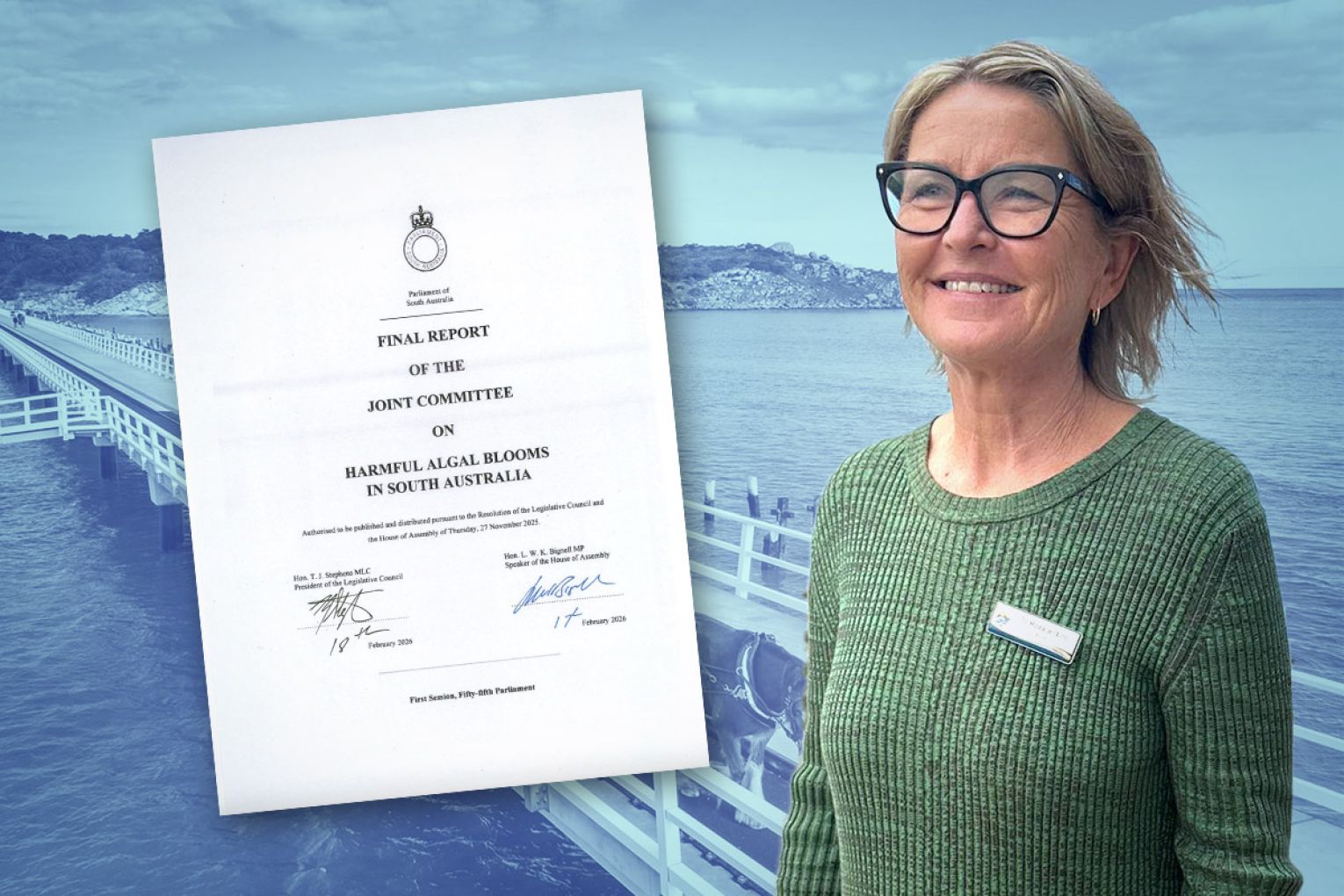
South Australian Parliament’s Joint Committee on Harmful Algal Blooms in South Australia yesterday handed down its 38-page report, making 11 recommendations, including that the state government reaffirm its commitment to net zero emissions by 2050.
Among the submitters to the committee, the City of Victor Harbor claimed that coastal councils were left in the lurch during the early stages of the algal bloom.
Victor Harbor Council said in its submission that it was “left to manage community concerns, health enquiries, and reputational risks with minimal coordination or communication from relevant authorities”.
“This delay hampered the ability of councils and local businesses to respond effectively and has highlighted a need for earlier engagement, clearer communication channels, and more inclusive crisis management frameworks that recognise the full extent of environmental, economic, and social impacts on regional communities,” it said.
Meanwhile, in her submission, EcoProTem principal ecologist Faith Coleman called on an investment of about half a billion dollars over a decade to “restore shellfish reefs and seagrass, both of which suppress early stages of hazardous dinoflagellate blooms”.
Coleman previously gave evidence to the committee that government staff were told not to investigate the cause of the algal bloom until after the state election, claims disputed by senior public servants.
You might like

Some submitters also raised concerns about the impact of dredging and coastal development practices on algal blooms, as well as “witnessing first-hand marine animals washed up on shore, including species of fish, rays and sharks”.
SARDI executive director Professor Mike Steer previously dismissed concerns about the impact of dredging, telling InDaily that “it’s more around those large ecosystem drivers rather than any point bits of activity along the coast”.
Other concerns raised by submitters included the impact of the algal bloom on Aboriginal communities, a downturn in tourism in affected areas, mental and physical health impacts, and the claimed “uncoordinated and fragmented” response across government agencies and “delay in response” from the state and federal governments.
Among the 11 recommendations from the committee, it has called on the government to “consider introducing a fishery licence buy-scheme for impacted fisheries” and to “consider providing additional funding for impacted businesses to access mental health and financial counselling assistance”.
In response to the recommendations, Shadow Primary Industries Minister Dr Nicola Centofanti called on Labor “to acknowledge the true findings and implement the recommendations properly”.
“The Labor Government’s default position is always ‘nothing to see here’ when it comes to the toxic algal bloom. South Australians are fed up with it,” she claimed.
Stay informed, daily
“The fact that multiple dissenting reports were needed shows Labor didn’t want criticism or accountability”.
Committee chair Robert Simms MLC said that “it seems that many of the state government’s existing processes and procedures weren’t set up to manage an ecological disaster of this magnitude”.
Simms said he was concerned that there was no majority support for the findings.
“This is a serious oversight given the weight of evidence presented to the committee suggests that the state government was too slow to respond to the algal bloom and there were significant gaps in data collection and communication with key stakeholders,” he said.
A state government spokesperson said it “is making unprecedented efforts to detect, monitor and research the bloom as well as supporting communities and small businesses affected by it”.
“We are investing more than $160 million in science, the environment and supporting coastal communities and businesses to recover from this unprecedented event,” he said.
The spokesperson said the state government would consider the recommendations, adding that the government was already implementing measures.
This included long-term ecological assessment covering more than 200 sites, staffing the newly-established Office for Algal Bloom Research, additional mental health support and a “clear commitment towards Net Zero”, the spokesperson said.
“While our opponents spread conspiracy theories and play political games, we are getting on with making our environment more resilient, backing the science and ensuring our state is best placed to manage the bloom’s impact,” he said.
Want to see more stories from InDaily SA in your Google search results?
- Click here to set InDaily SA as a preferred source.
- Tick the box next to "InDaily SA". That's it.