Minister looks interstate after SA’s long failure to produce proton therapy
The Federal Health Minister is canvassing other states about providing a lifesaving proton therapy that SA was supposed to lead. One mother, who said it was “the worst experience of her life” taking her sick child overseas for the therapy, has lost faith in SA.
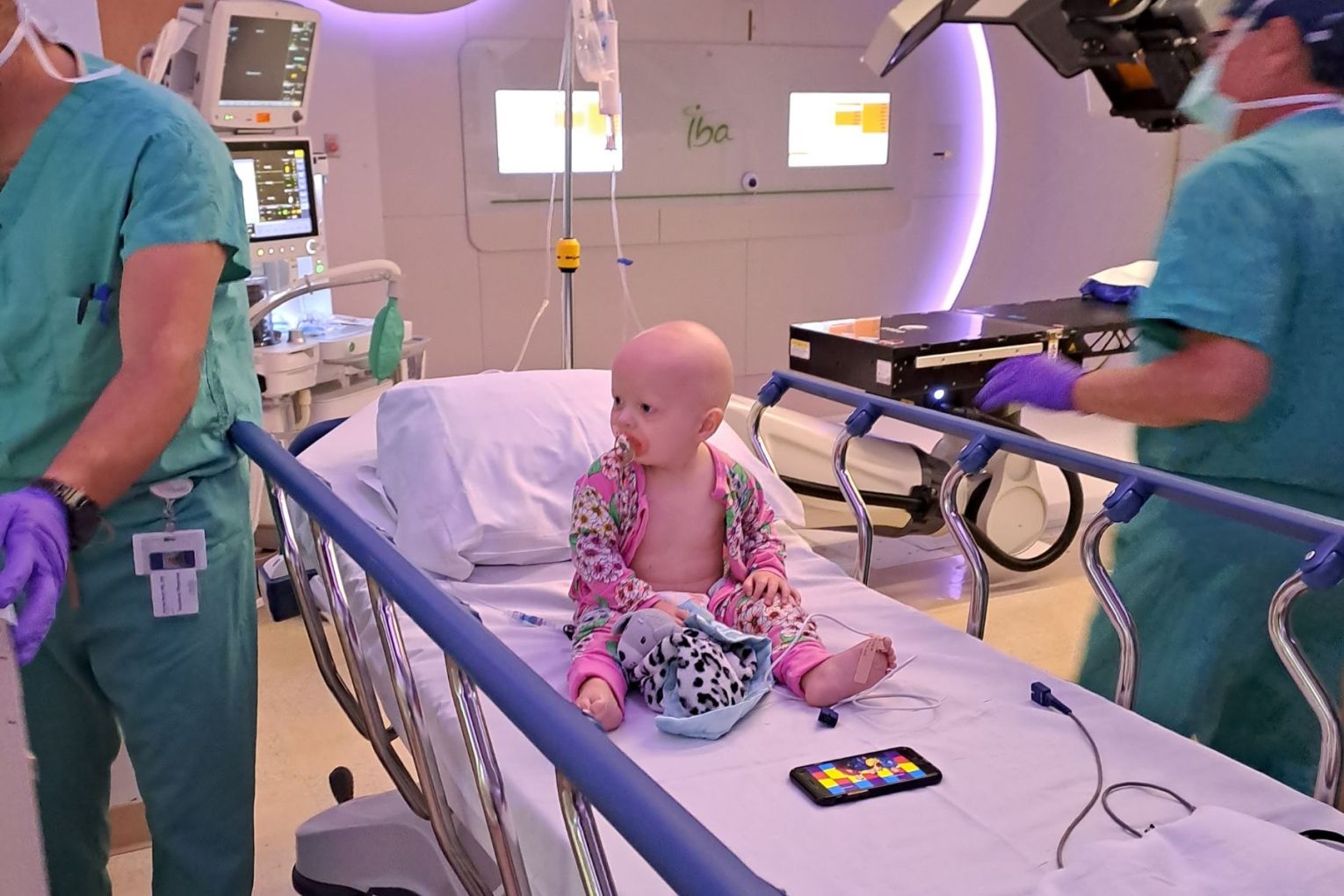
Federal Health Minister Mark Butler has been canvassing other states to deliver proton therapy – an advanced, non-invasive type of radiation therapy to treat cancer – after a years-long failure of an SA facility to be able to deliver the therapy in SA, a government spokesperson confirmed.
The federal government canvassed interest from New South Wales, Queensland and Victoria in December, federal senate estimates revealed last week, but was yet to formally hear back from these jurisdictions.
Liberal federal shadow health spokesperson and SA Senator Anne Ruston said this made it “abundantly clear that the federal government has lost confidence in the South Australian Labor Government’s ability to deliver this critical project which would treat 2000 Australian cancer patients every year”.
“As a result of Labor’s mismanagement, Australian families are being forced to travel overseas for treatment that could save their child’s life – costing them tens of thousands of dollars and serious emotional toll from being so far away from support networks,” Ruston said.
“This must be fixed and it must be fixed urgently. Cancer patients and their families deserve certainty, not more letters and excuses.”
The Victorian government previously invested $2 million to plan a national proton therapy centre with the University of Melbourne and the Peter Mac Cancer Centre, but currently, there are no operational proton therapy facilities in Australia.
Ruston’s calls come after a court outcome this week that saw South Australian Health and Medical Research Institute (SAHMRI) win $35 million in damages from US firm ProTom International over plans for the therapy equipment in the Bragg Centre, where this therapy would be administered. The centre was scheduled to be completed in 2023, with patient treatment anticipated to begin by 2025.
An auditor-general’s report in 2025 showed the crucial decision of the state’s health and medical research institute to buy the $68m unit from ProTom, a deal that was first signed in 2018, led to a years-long failure to have the project completed.
You might like
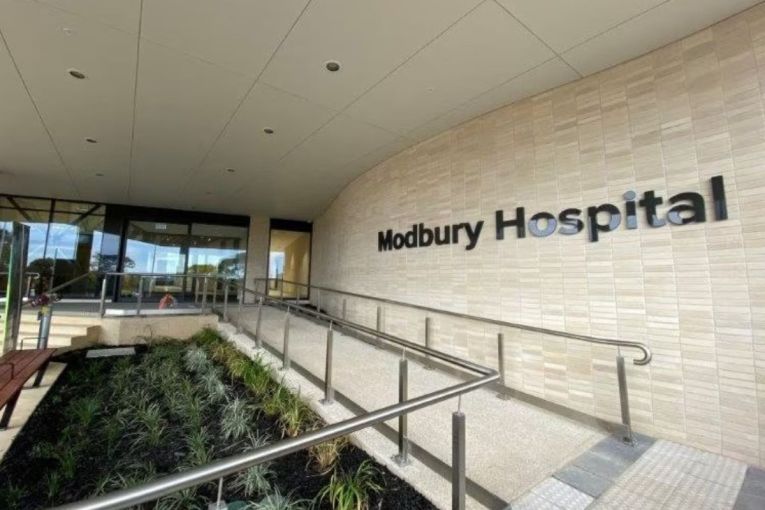
A state government spokesperson said that “the court outcome this week is obviously welcome for SAHMRI and underlines the reality that ProTom International failed to deliver on the contract signed by the former Liberal Government”.
“The South Australian Government continues to work with the Commonwealth on proton therapy,” he said.
“As we have said many times previously, we believe that SA is the best location for a national proton therapy service as we have a purpose-built proton therapy facility, the Australian Bragg Centre, already constructed. We will continue to work with the Commonwealth Government on options to deliver this important cancer treatment.”
But Mother Billie Tuckerman, who had to take her one-year-old overseas for the lifesaving treatment, said she had lost faith that the SA facility would come online.
“Whatever’s happened civilly with ProTom is in the past and debating over what issues have or haven’t happened there is not going to help our families get a treatment centre,” Tuckerman said.
Tuckerman travelled overseas in 2022 to have her daughter Evelyn, who suffers from Ewing sarcoma, to have the treatment and said “it was the worst experience of my life”.
“It is the most stressful time taking your immunocompromised child in a plane with everyone else going on their holidays,” she said.
“I honestly didn’t know if I was going to be bringing her home alive or in a coffin. It’s horrible.
“To have to remove yourself to go to the other side of the world, even when you are going to an English-speaking country, like it was a whole other language, to learn the way that Americans do their health system and the way that their doctors, pharmacists, all that work.”
She said Evelyn is “amazing, sassy little child who brings so much joy to us”.
Stay informed, daily
Evelyn is now four years old and wears a pinless halo to support her spine – the site of her cancer. She is continuously monitored to look after her spine and ensure her cancer does not return.
“She loves dancing, from the fact that she was paralysed when she was seven months old, to the fact that I can say that she’s done three years solid of dance, is just amazing,” Tuckerman said.
Tuckerman has gathered about 22,500 signatures, which she intends to table with the federal parliament in the next sitting week in March, to ensure that other families do not have to experience the same.
Tuckerman said after 15 months of writing letters to the state and federal government, it was “tiring” to receive the occasional letter that said politicians were “doing their best”.
“It’s not the children or our family’s fault that this centre is not where it is today,” she said.
Her petition is calling for the government to confirm its bipartisan commitment to proton therapy as core cancer infrastructure, deliver a facility that meets clinical needs and support Adelaide’s Bragg Centre as the first operational site.
It also calls for progress on plans at the University of Melbourne and Peter Mac Cancer Centre in Victoria, which Tuckerman said is “a positive step for adults” but should be done in a way that does not leave child patients behind.
Importantly, she wants to see the government publish clear national timelines with accountability for delivering the vital therapy.
When asked if she wanted to see the issue discussed in South Australia’s current state election, Tuckerman said: “I don’t want it to become an election issue”.
“It needs to be a federal and state health issue that just gets addressed regardless of when the election regardless of when the election cycle is,” she said.
A federal government spokesperson responded to questions for Health Minister Mark Butler saying: “The Albanese Government continues to work closely with the SA Government on the future of the project, including work undertaken by the SA Government to investigate potential alternative technology vendors who may be able to deliver a Proton Beam Therapy (PBT) system using the existing infrastructure.
“While PBT is not yet available in Australia, individuals who would benefit from proton therapy treatment, over and above conventional radiotherapy treatments, remain eligible for assessment under the Medical Treatment Overseas Program (MTOP).
“Australian patients wishing to access PBT can make an application to the Government through MTOP which funds the costs of overseas travel and treatment for eligible patients.
“The Government has made changes to the MTOP application process to better support patient access to PBT.”
Want to see more stories from InDaily SA in your Google search results?
- Click here to set InDaily SA as a preferred source.
- Tick the box next to "InDaily SA". That's it.