Fines issued after illegal campfire sparks blaze
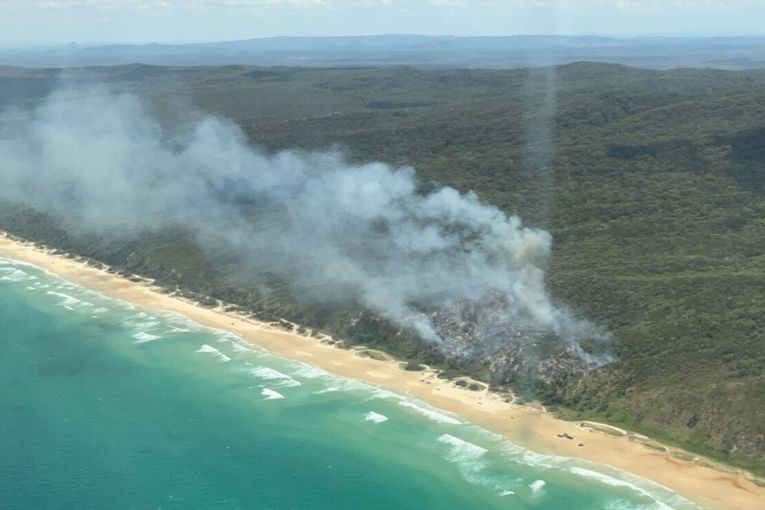
Three Sunshine Coast men have been handed a significant fine after an unattended fire in Teewah escalated into a bushfire that spread seven hectares.
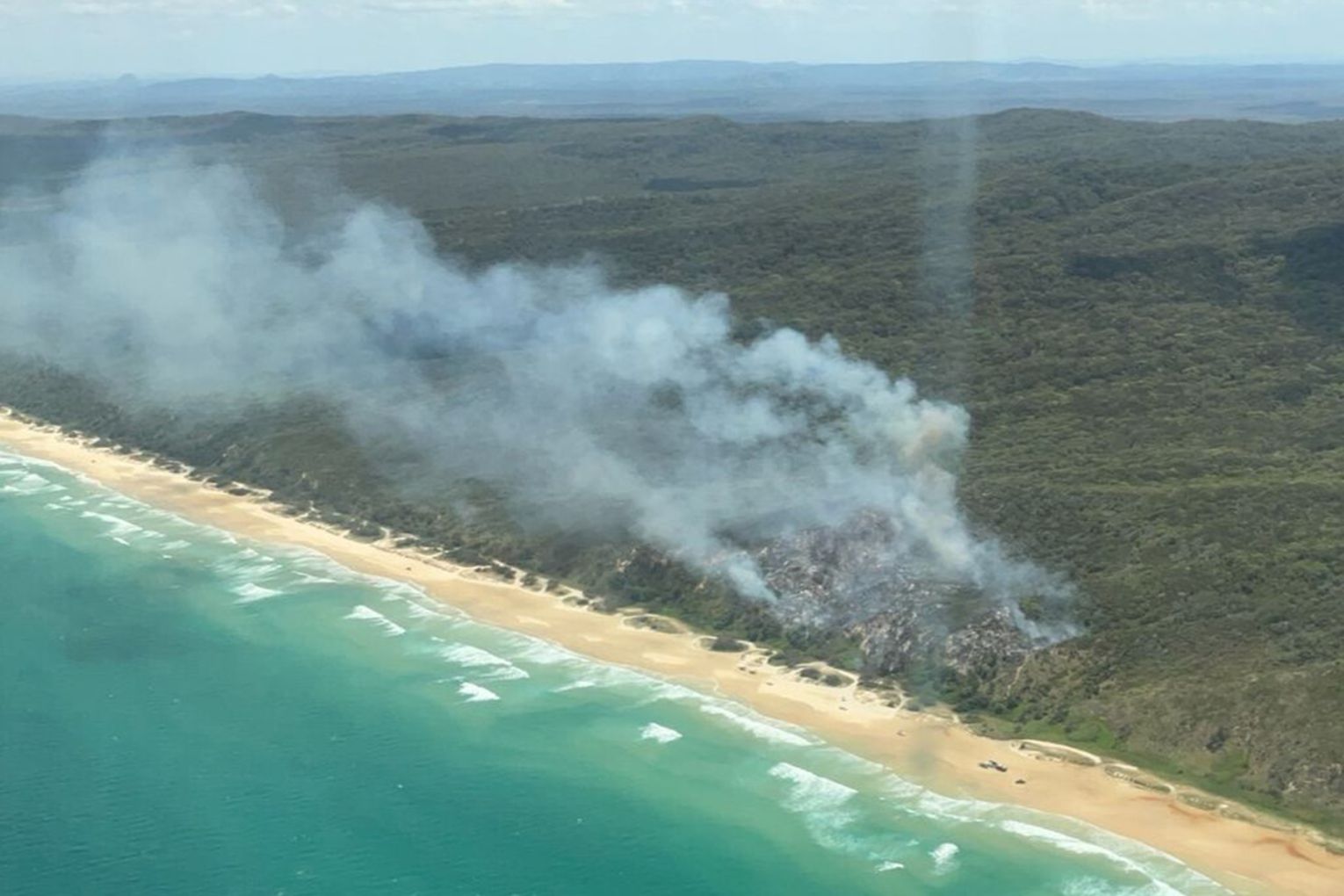
Three men have been fined more than $5000 for lighting an illegal campfire on Sunday, October 26, amid total fire bans in the Cooloola section of Great Sandy National Park, which they then left unattended.
The fire was first discovered by nearby campers who spotted rising smoke in the area. They travelled 500 metres down the beach and found an empty campsite with the scattered remains of a still burning campfire.
Teewah Beach is under a five-year fire ban, which was implemented in 2020 after fires burned for weeks across Fraser Island.
The bushfire required an emergency management response from Queensland Parks and Wildlife Service (QPWS) rangers and support from the Rural Fire Service Queensland.

Once campers were evacuated, water-bombing aircraft and helicopters were used to contain the fire and protect nearby camping areas.
An investigation found three Sunshine Coast men were responsible for the bushfire, after using plants from a Recreation Area to unlawfully light a fire and leaving it unattended. They were fined more than $5000 and issued eight Penalty Infringement Notices (PINs).
Principle ranger Danielle Mansfield said the Cooloola Recreation area is under a permanent fire prohibition for safety and environmental reasons.
“The permanent fire prohibition was introduced in 2020 to help prevent incidents like this,” Mansfield said.
Mansfield said campfires were not compatible with Teewah’s coastal environment, because they could quickly escape into the dunes and bushland.
Stay informed, daily
QWPS issued a permanent fire ban in the Cooloola Recreation Area to protect critical habitats of native wildlife and reduce bushfire risk.
The fire ban stipulates that fires cannot be lit anywhere in the Teewah Beach camping zones, except at Poverty Point camping area. Violation of this rule can result in an on-the-spot fine of $806.
The Teewah camping area reopened in the days after the incident as the fire was quickly controlled.
A spokesperson from the Department of Environment, Tourism, Science and Innovation said Australia’s fire-adapted landscape means that regrowth is likely occurring in the Teewah area already.