AI is going to take your job away – and other myths unpacked at the Flinders Business School AI Summit
Artificial Intelligence (AI) is often presented as either the technology that will replace us or the tool that will make us dramatically more productive. With so much conflicting commentary, it’s difficult to know what to believe.
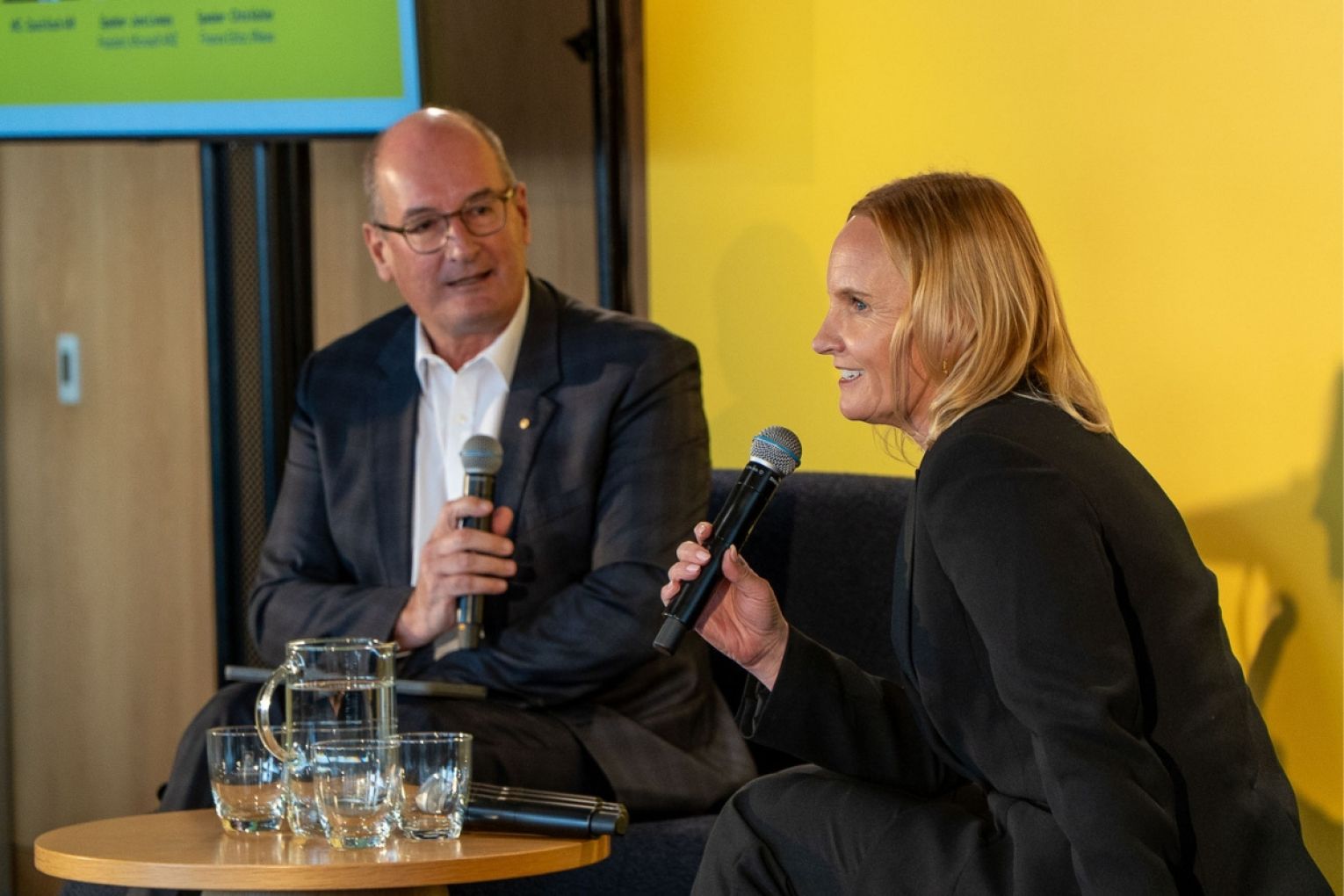
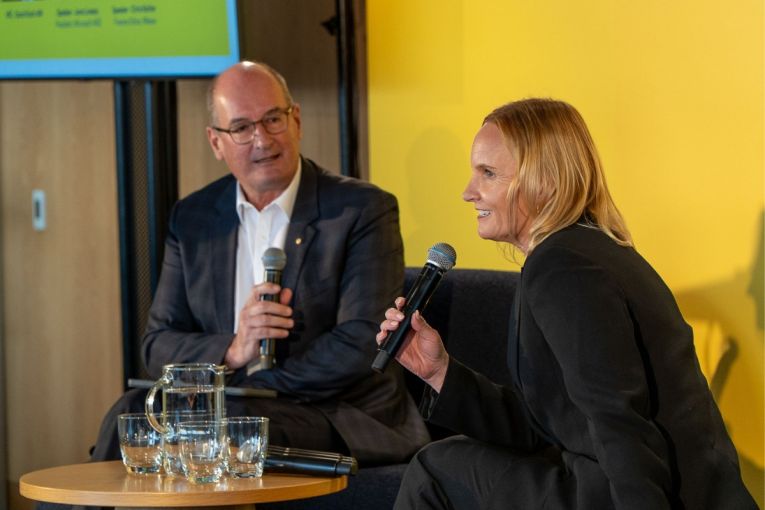
The Flinders Business School AI Business Summit set out to cut through the noise, bringing together some of the biggest names in business, including David Koch, Chris Kohler, Channel 9’s finance editor and Jane Livesey, president of Microsoft Australia and New Zealand.
I attended wearing two hats: as a marketing professional working in the education sector, and as an MBA student at Flinders University. In each role, I use AI very differently. At work it’s a tool for planning and big picture thinking. At university it helps me understand complex concepts and apply them to real-world scenarios. I was keen to hear how leaders are approaching AI in practice.
Flinders University vice chancellor Professor Colin Stirling opened the event by announcing Australia’s first MBA with a specialisation in AI. The industry-focused degree prepares students to lead AI-driven business strategy and transformation across organisations, gaining practical experience through placements while building skills and networks to accelerate and future-proof their career.
Kohler captured the audience’s attention with a series of thought-provoking data sets, including Australia’s record-low levels of optimism. Confronting but, as he put it, “It doesn’t do anyone any favours to skate over the gloom”. Rather than avoiding difficult conversations, he argued that understanding the challenges is essential if we want AI to benefit society.
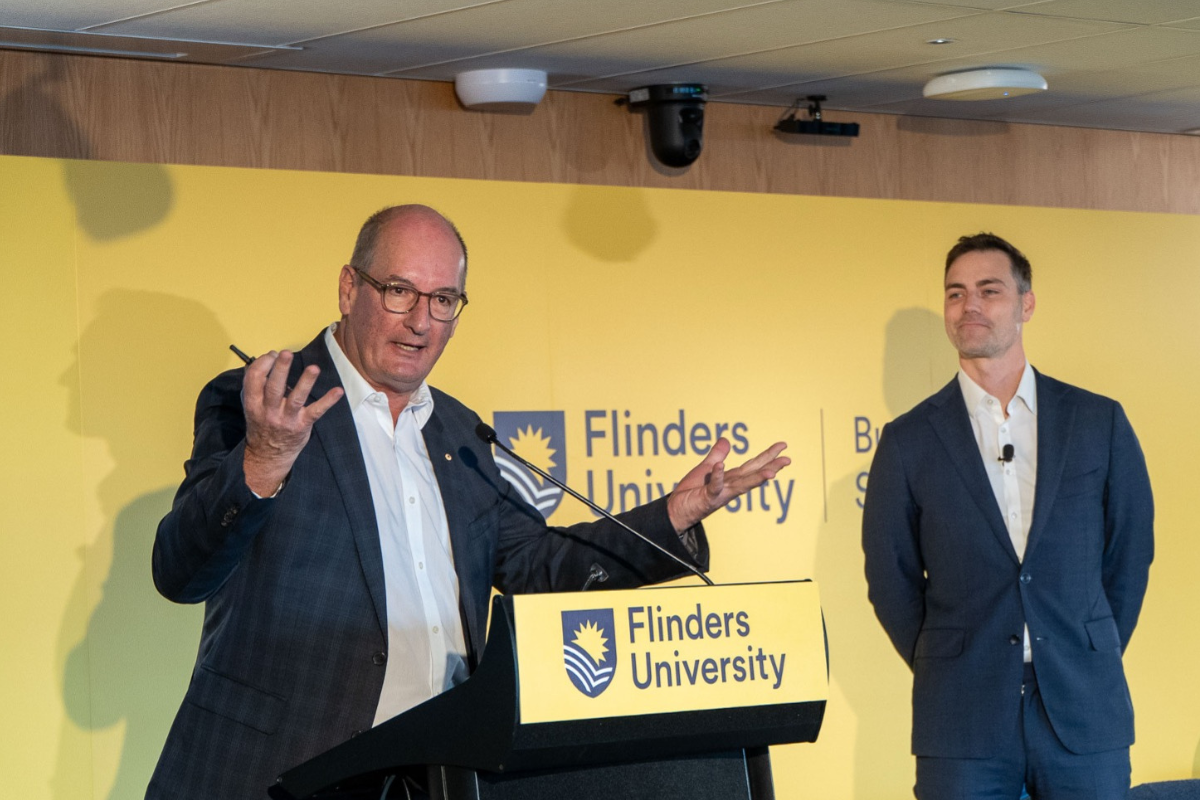
Kohler then revisited the well-worn story of Kodak. While the company is often used as a warning against ignoring new technology, Kohler reminded us that Kodak remained a multi-billion-dollar business for decades after inventing the digital camera. His point wasn’t that change isn’t coming, but that businesses often have more time than they think to adapt, provided they choose to act.


In her conversation with Koch, Livesey explored how, as AI becomes more capable, the skills that matter most are critical thinking, problem solving, adaptability and leadership. Technical capability alone won’t differentiate future leaders.
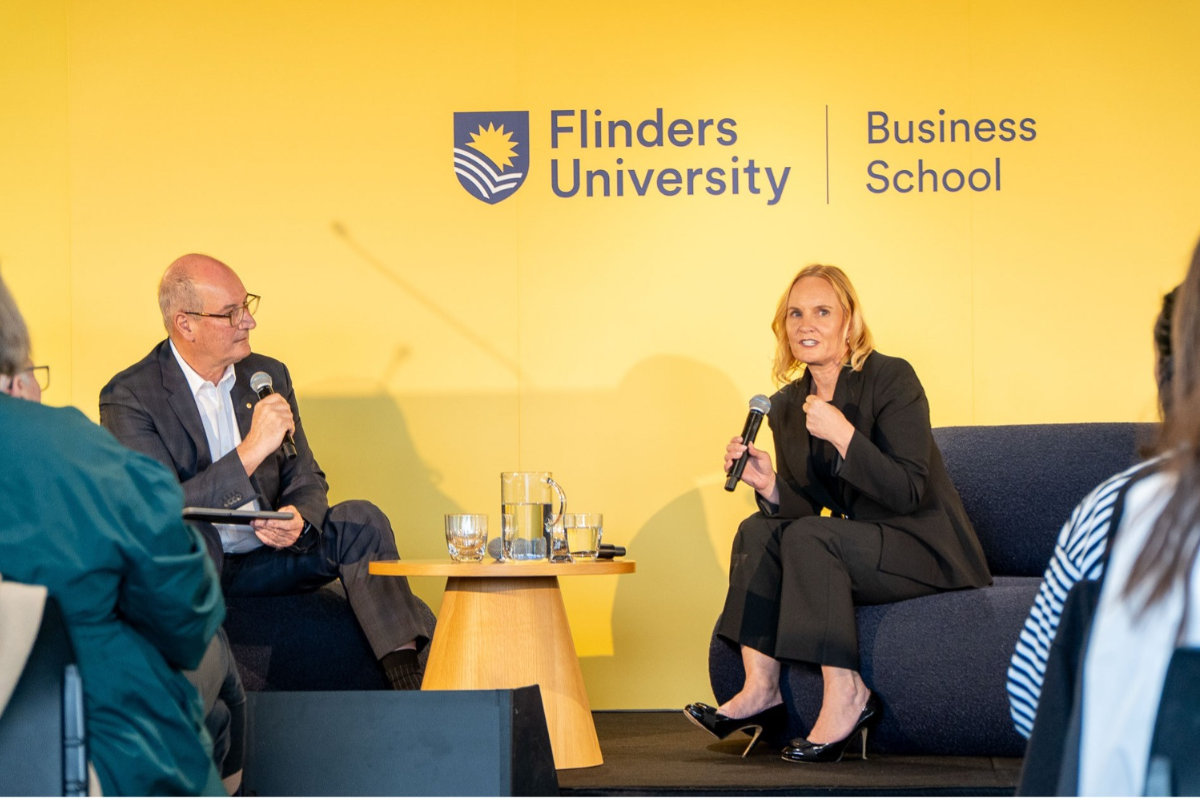
One of her most practical insights was that responsibility for AI shouldn’t sit solely with IT departments. Rather, it belongs with the people shaping strategy, workforce capability and organisational direction – strategic planners, HR departments and those deciding where the business is headed and what capabilities it will need. After all, managing the technology is one thing. Imagining what it can make possible is something else entirely.
The panel discussion brought together Peter Meere, director of South Australia’s Office for AI, Dr Shikha Sharma from the Department of Human Services, Ben Owen from RAA and associate professor Dirk Van Rooy from the Flinders Factory of the Future.
Three key themes stood out.
First, AI is no longer just for early adopters. It’s rapidly becoming an expected part of everyday business.
Second, using AI isn’t the same as using it well. Regardless of how information is generated, responsibility for decisions always rests with the human making them.
Finally, many people remain uncertain about what AI means for their careers, businesses and future generations. Those concerns deserve thoughtful discussion rather than fear.
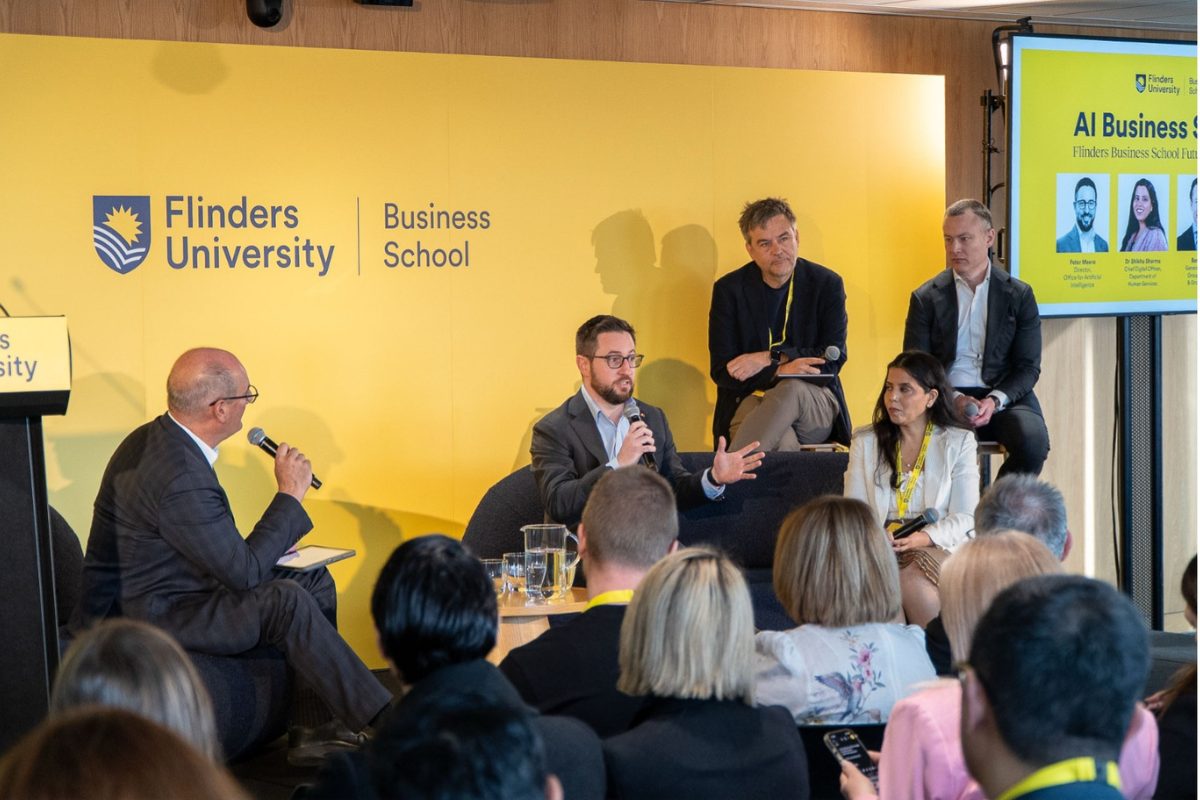
Like many, I miss a version of the internet (and even advertising) that felt more human. Before algorithms dominated our feeds and AI-generated content became commonplace, online interactions felt a little more authentic. But dwelling on that won’t change where technology is heading. The more important question is how we choose to use these tools to create better outcomes for people, organisations and society.
One takeaway for business leaders would be to ask themselves whether their competitive advantage can be replicated with a single AI prompt. If it can, their business model may need to evolve. If their business offers something rooted in human judgement, creativity, relationships or expertise, AI is far more likely to amplify their value than replace it.
The challenge isn’t simply adopting AI. It’s using it strategically, responsibly and effectively.
The summit raised one final question: if AI allowed you to complete your work in half the time, what would you do with the hours you gained? Invest more in your people? Innovate? Work differently?
The technology itself won’t answer that question. We will.
Gabrielle Agnew is a Master of Business Administration (Marketing) student at Flinders University.
Want to see more stories from InDaily SA in your Google search results?
- Click here to set InDaily SA as a preferred source.
- Tick the box next to "InDaily SA". That's it.