Music review: Adelaide Baroque – Old Worlds and New 2
A collaborative concert matching Baroque performers with Iranian classical musicians, contemporary percussionists, and multi-instrumental folk performers avoids cheap exoticism for something more intriguing.
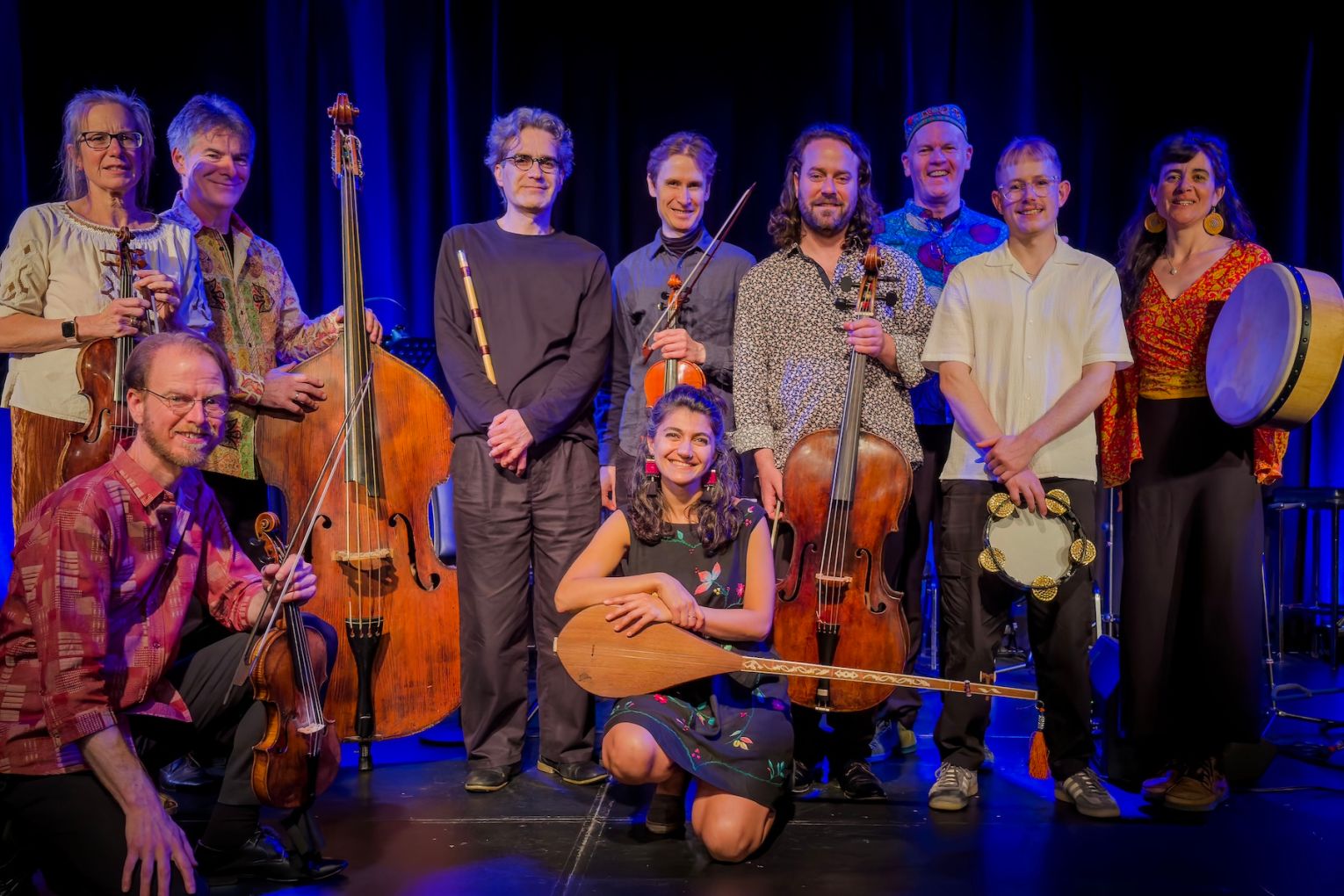
Classical music has long suffered from the perception that it is “elitist” – a term with a constantly shifting definition, but which does strike at the root of many real issues. On the one hand, the pomp and circumstance traditionally afforded to the music are so deeply ingrained in practice, performance and the atmosphere of the concert hall that the musicians themselves do cherish them and seek to preserve them, out of a place of genuine passion rather than reactionary indignation. On the other hand, a lay audience, to whom these things are completely alien, are often not afforded the chance to learn and instead scolded by overzealous fans for not already knowing ‘how things are done around here’, as it were. Disgruntled, they simply choose to not engage, and classical music trundles along on life support, living in academia and paying musicians’ wages with teaching salaries, donor and grant money.
Adelaide Baroque, however, are an excellent example of a genuine attempt to grow past the awkwardness that surrounds classical music in the present day through very tasteful cross-pollination, something that was achieved most effectively at their recent concert entitled Old Worlds and New 2.
Many diehard fans of classical music would be quite alarmed to hear of this term ‘cross-pollination’, and indeed, even as I dislike the overly stuffy nature of the concert hall at present, I share much of the same skepticism when it comes to moving the music itself out of the tradition.
This is because the classical tradition is one of ultra-refined and highly specific expertise. An ensemble like Adelaide Baroque exists specifically to be an ensemble that adds to a 400-ish-year-old tradition, not to be like a band that does gigs in order to experiment and push boundaries. Specialised period ensembles, I would argue, are incredibly important parts of the musical landscape, especially in a city with a conservatorium, and a devotion to academic excellence that includes the arts.
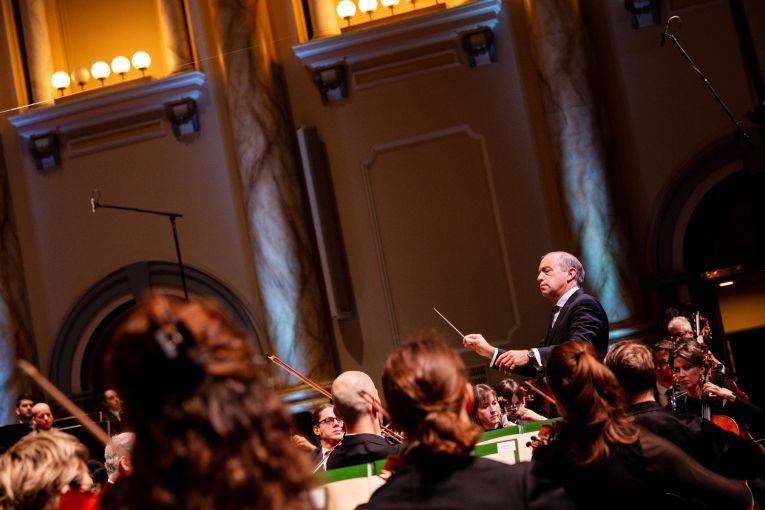

Of course, experimentation is a part of the classical tradition as well, as even today it is not a static one, but Baroque specialists joining Iranian classical musicians, contemporary percussionists, and multi-instrumental folk performers for a four-day course of rehearsals and then immediately going out on stage to present the fruits of the collaboration runs the risk of cheap exoticism rather than genuine interdisciplinary exchange and creativity.
All that said – this risk was highly successfully avoided at Old Worlds and New 2. What was presented was a wonderful selection of repertoire, mostly original compositions and arrangements, that stretched all the performance practices involved without cheapening any of them.
In particular, the ways in which the classically trained musicians dealt with the strong focus on melody with only the sparest of harmonisation, usually against a drone or a few simple chords, rather than the polyphony and counterpoint that makes up so much of Baroque music, was highly impressive. The performative chemistry amongst the ensemble was charming; seeing musicians of such diverse backgrounds move to the music in perfect synchronisation was fascinating. At no point did the differences in rhythmic embodiment, or temperament and tuning of the instruments, feel strained or uncomfortable.
The works by Iranian musicians Maryam Rahmani and Yahya Hoseinkhani were particularly remarkable, with the baroque accompaniment never feeling tacked-on or superfluous. The tonal purity of Rahmani’s singing in particular was highly impressive, and the connection between violinist Aaron Brown and Hoseinkhani’s melodies on the ney (a traditional Persian wind instrument somewhat akin to the recorder) was razor-sharp.
At several points, the timbre of the ney alongside multi-instrumentalist Philip Griffin’s oud playing bore a pleasant similarity to the sound of a Baroque ensemble with recorder and theorbo (or lute, or some similar instrument). The similarity, however, did not feel dutiful.
Subscribe for updates
At the core of the performance was Alexander Flood, whose work across a range of percussion instruments held each composition together seamlessly. A drum-beat, something which is almost entirely alien to the Baroque tradition, was in fact the perfect link between the various traditions. Although the time-feel was always stable, it never felt obtrusive, and never got in the way of the rhythmic ebb and flow of the presentation of each composition’s melody.
In short, Adelaide Baroque are to be commended for this concert, which was a highly thoughtful, intriguing, and enjoyable glimpse into what keeping up with the times can (and perhaps should) look like for Western classical music.
Old Worlds and New 2 was performed at Nexus Arts on Friday September 11
Want to see more stories from InDaily SA in your Google search results?
- Click here to set InDaily SA as a preferred source.
- Tick the box next to "InDaily SA". That's it.
Free to share
This article may be shared online or in print under a Creative Commons licence