Music review: The Gesualdo Six
Unsurpassed at getting right into the heart of the music, The Gesualdo Six showed that they are at the pinnacle of chamber singing.
Thanks to UKARIA, a steady stream of truly outstanding overseas chamber groups comes out here, and that includes some of the most highly esteemed vocal ensembles. Last year it was a most ethereal female sextet from Germany called Sjaella, and in 2024 it was the celebrated English group, VOCES8. Both were models of polished discipline.
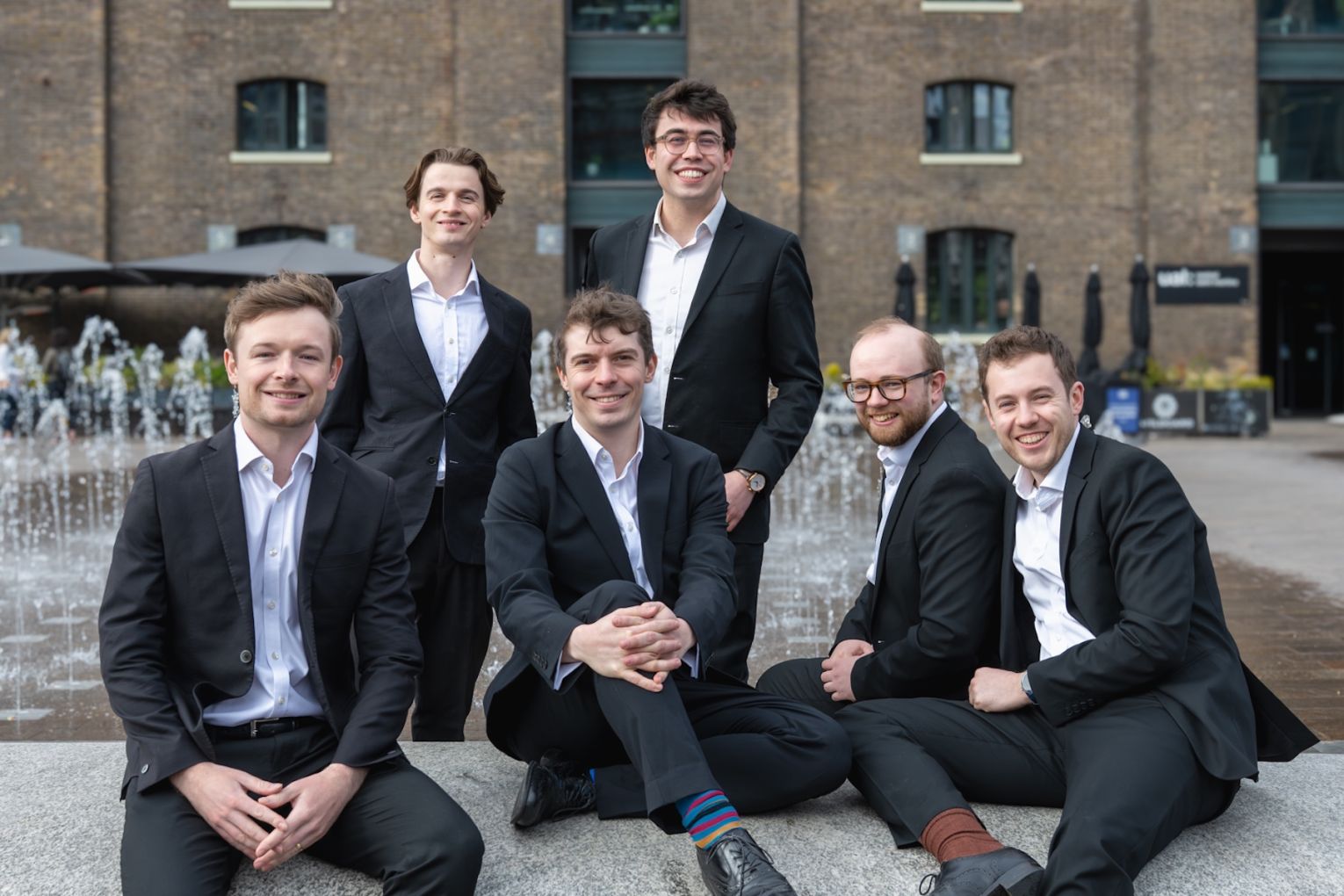
This time it was The Gesualdo Six, an equally highly regarded vocal outfit from England, who have made their name primarily in early music. Indeed, it was with Carlo Gesualdo’s ‘Tenebrae Responsories for Maundy Thursday’ that they made their debut in 2014.
Every choir has a personality and sound, which only become more pronounced with ascending quality. With The Gesualdo Six, we are clearly witnessing what is possible at the very apex of choral performance. The Gesualdo Six certainly looked the part as they strode out on stage. They are smartly dressed gentlemen who radiate an air of quiet confidence even before they sing.
In William Byrd’s ‘This sweet and merry month of May’, they immediately impressed with effortless clarity and the crispest diction. This is a contrapuntally packed little madrigal that can present real challenges in terms of cleanly resolving all its swiftly moving layers, especially in its six-part version (Byrd composed an easier version in four parts, though it’s not as much fun). Here it was most elegantly delivered, with voices darting around in spasms of delight before joining together in sweetly tuned consonance.

This ‘Wishing Tree’ program, depicting journeys through life and nature, was more varied than one might have imagined from a choir that in the first place has made its name in early music. Having debuted in 2014 in Cambridge with Carlo Gesualdo’s ‘Tenebrae Responsories for Maundy Thursday’, sacred and secular music of the Renaissance is Gesualdo Six’s home turf. Clearly though, versatility is their equal strength – as many newer works in this concert attested.
David Bednall is a well-known UK organist and composer whose vocal music consistently attracts admiration. ‘Put out into the deep’ is a biblical work from 2008 that simultaneously sounds modern in its enriched while reaching back through the centuries through its use of plainsong-based melody.
This piece’s introspective mood afforded a closer picture of what makes Gesualdo Six distinctive. Their performance, of quietest reflection, reached deep inside the music. Finely graded fluctuating dynamics and a particularly beautiful decrescendo at the end was part of it. But in addition to their technical refinement was a heightened responsiveness to word: each line of text – from St. Luke’s account of fishermen being rewarded by a miraculous catch – carried meaning and brought this parable forward.
Folk song arrangements were palpably alive for the same reason. Vaughan Williams’s ‘Bushes and Briars’ saw storytelling through music at its best. Tonally, Gesualdo Six sing with a fine clarity in the countertenors and warmth in the lower voices, but it was again their diction that stood out. Gordon Langford’s ‘The Oak and the Ash’ and Simon Carrington’s arrangement of the Scottish folk song ‘O my love is like a red, red rose’ (with words by Robert Burns) were truly gorgeous and just as outstanding.
Another UK composer, Alison Willis, came up with a winner when she wrote ‘The Wind’s Warning’ for Gesualdo Six in 2019. Ushered in with whistling sounds, it showcased one of Gesualdo Six’s finest voices, the young countertenor Alasdair Austin, who joined the group three years ago. He has a divine voice. Another successful and highly enjoyable new piece was Joby Talbot’s ‘The Wishing Tree’, in which text cleverly alternates between upper and lower registers within the ensemble.
Subscribe for updates
All six singers have deliciously coloured voices that melt together as an ensemble but stand out when they each carry a solo. Tenor Joseph Wicks is a remarkably fine singer who excelled in Stanford’s ‘The Bluebird’: his control and range of expression are on another level for choral tenors. Also wonderful in tone and delivery in ‘Red, red rose’ was baritone Simon Grant, who joined the group just last year.
Their diction is remarkable and adds a whole dimension of its own to their performances. Two pieces especially bore this out, Josquin des Prez’s ‘El Grillo’ and Poulenc’s ‘Les Petites Voix’. Respectively in Italian and French, their singers sounded brilliantly authentic in accent.
The Josquin piece probably summed up their singing best of all. Choosing a much slower tempo than usual for this Renaissance frottola about the intelligence and wisdom of crickets, they found so much more expression in its poetry than one ever knew existed.
Under their charismatic leader Owain Park – himself an impressively deep and resonant bass – this group distinguished themselves with special insight into the music and understated grace. One hopes they can come again.
The Gesualdo Six performed ‘Wishing Tree’ at UKARIA on June 18.
Want to see more stories from InDaily SA in your Google search results?
- Click here to set InDaily SA as a preferred source.
- Tick the box next to "InDaily SA". That's it.
Free to share
This article may be shared online or in print under a Creative Commons licence