Music Review: Adelaide Symphony Orchestra – In the Quiet
Orchestral programming rarely comes together as well as it did on this occasion. A terrific premiere of another concerto by Joe Chindamo led the way.
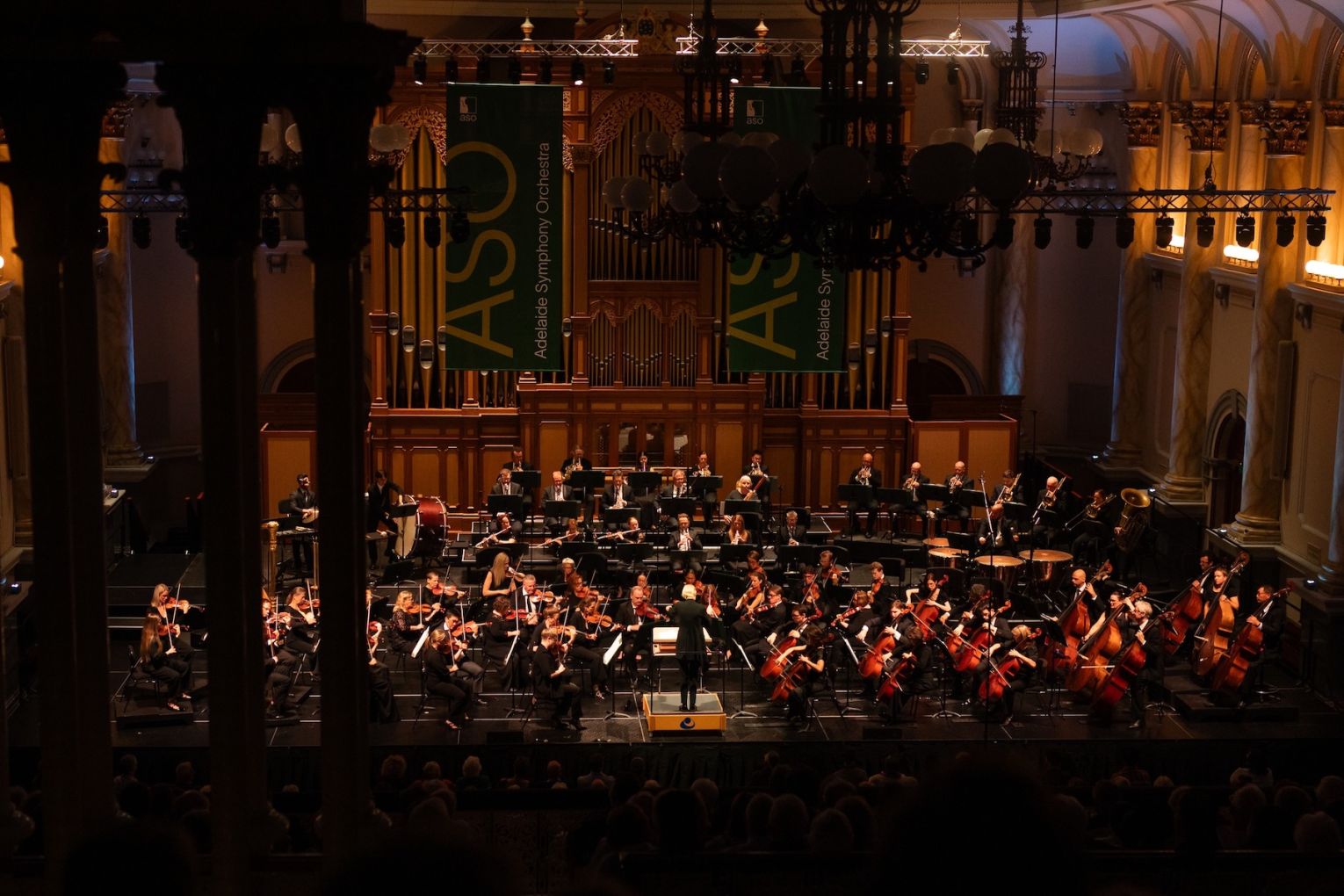
Not always does a new work leap to such prominence as happens with Joe Chindamo. This Melbourne composer and jazz pianist has scored back-to-back winners now with the ASO. In 2022 came the premiere of his Trombone Concerto, ‘Ligeia’, with Colin Prichard taking the lead solo, and this was a thrilling, skilfully written composition.
This time it was his new Clarinet Concerto, another ASO commission, with one of the orchestra’s star players, clarinettist Dean Newcomb at the helm. Clearly, the ASO had done its homework because here was another unqualified success. And with Newcomb taking on high stakes solo role as never before, this turned out to be an event to remember.
Simultaneously though, this was one of the best programmed ASO concerts in a long while. Sandwiched between Copland and Rachmaninov, this new concerto found itself in the happiest place, and all three works felt that they actually belonged together.
In Quiet City, Copland paints a lonely urban nightscape using thin strands of solo trumpet and cor anglais against an atmospheric backdrop of string. Positioning the soloists matters a lot in this piece, and a sensible decision was to situate them behind the orchestra, and set far apart from each other, rather than forward on stage as if it was a concerto – which it plainly is not.
Clean precision from trumpeter David Khafagi and contrastingly soothing contributions from Peter Duggan on cor anglais made this performance of Quiet City intelligently insightful and evocative.
You might like
Whether intentionally or not, Chindamo’s new clarinet concerto possesses shades of Copland that made it a natural response to Quiet City. Or perhaps it was just a good pairing of these works that suggested this. Whatever the case, Concerto del Motore (literally ‘Engine Concerto’) is a truly brilliant new piece.
With a name like that one might have expected a high-octane jazz concerto, but it was definitely not that. As with his Trombone Concerto, this new work ranged across various styles and did so with absolutely fluent skill.
Jazz gets an occasional look in by way of ‘blue notes’, flutter tonguing and slides along the way. A very dramatic glissando at the end serves amusingly as an nod to Gershwin’s Rhapsody in Blue. But beyond that, Chindamo is interested in the vocal character of the clarinet. He writes most exquisitely for the instrument.
Serving as the engine room in this concerto is the orchestra. With committed playing under conductor Stephanie Childress, it supplied punchy rhythms and dazzling climaxes across the work’s three movements. The composer gives them intriguing names: ‘The First Revolution’, ‘Quiet in the Noise’ and ‘Asphalt Cathedral’.
Subscribe for updates
Against an energetically full-on orchestral canvas, the soloist proceeds along its own independent path of melodic thoughtfulness and elegance, supported by spacious string harmonies that recall Vaughan Williams.
Chindamo has written another winner of a concerto, one that is readily comprehensible and falls easily on the ear. The particular delight was witnessing Dean Newcomb’s musicianship. Those who have admired this clarinettist’s playing know that he is one of the best ASO players of recent times, and Chindamo’s concerto fitted him like a glove. It seemed like this work was written especially for him – perhaps it was.
Newcomb is quite the soloist, too. Looking debonaire and totally in command, his playing was exemplary. The way he expressively fills a phrase and controls tone production with the deftest care are constantly impressive. Plus, he has a special way with timing: judging this flexibly like a jazz musician, he understood the full fabric of this music. It was one earful of joy after another.
Rachmaninov’s Symphony No.2 of course belongs in its own universe, but here again the programmatic links in this concert were readily apparent. The clarinet’s role in the third movement is just as haunting as it is in the Symphonic Dances. When that moment came around, the ASO’s second-in-command clarinettist, Mitchell Berick, played it beautifully.
All felt right about this performance of Rachmaninov’s great ‘comeback’ symphony. Focus now turned to Childress and her approach in this long, mountainous work.
Conductors take it so very differently. Two years ago, Andrew Litton gave it writhing, tensile strength when he led the ASO in its Rachmaninov series. Childress, by comparison, gave it a highly nuanced and personal reading – unusually but convincingly so, to the point where one’s picture of this symphony materially changed.
It was like gazing right into this music, rather than looking at it from the outside.
This young Franco-British conductor has a highly developed conducting technique of great expressive range. It is copybook. Along with that, she has a special way with rhythm, not rigidly tied to beat but flowing. This gave a gracefulness to Rachmaninov’s continuously evolving melodic line, again reminding one of the Symphonic Dances.
What a conducting talent Childress is. A return visit seems a must.
Adelaide Symphony Orchestra performed In the Quiet at Adelaide Town Hall on April 17
Want to see more stories from InDaily SA in your Google search results?
- Click here to set InDaily SA as a preferred source.
- Tick the box next to "InDaily SA". That's it.
Free to share
This article may be shared online or in print under a Creative Commons licence