‘Everything was an obstacle’: Scott Hicks celebrates 30 years of Shine
Three decades after the release of his locally-filmed international breakthrough Shine, director Scott Hicks has penned a new memoir taking readers behind the scenes of the 10 year battle he fought to get his ‘Helfgott project’ made.
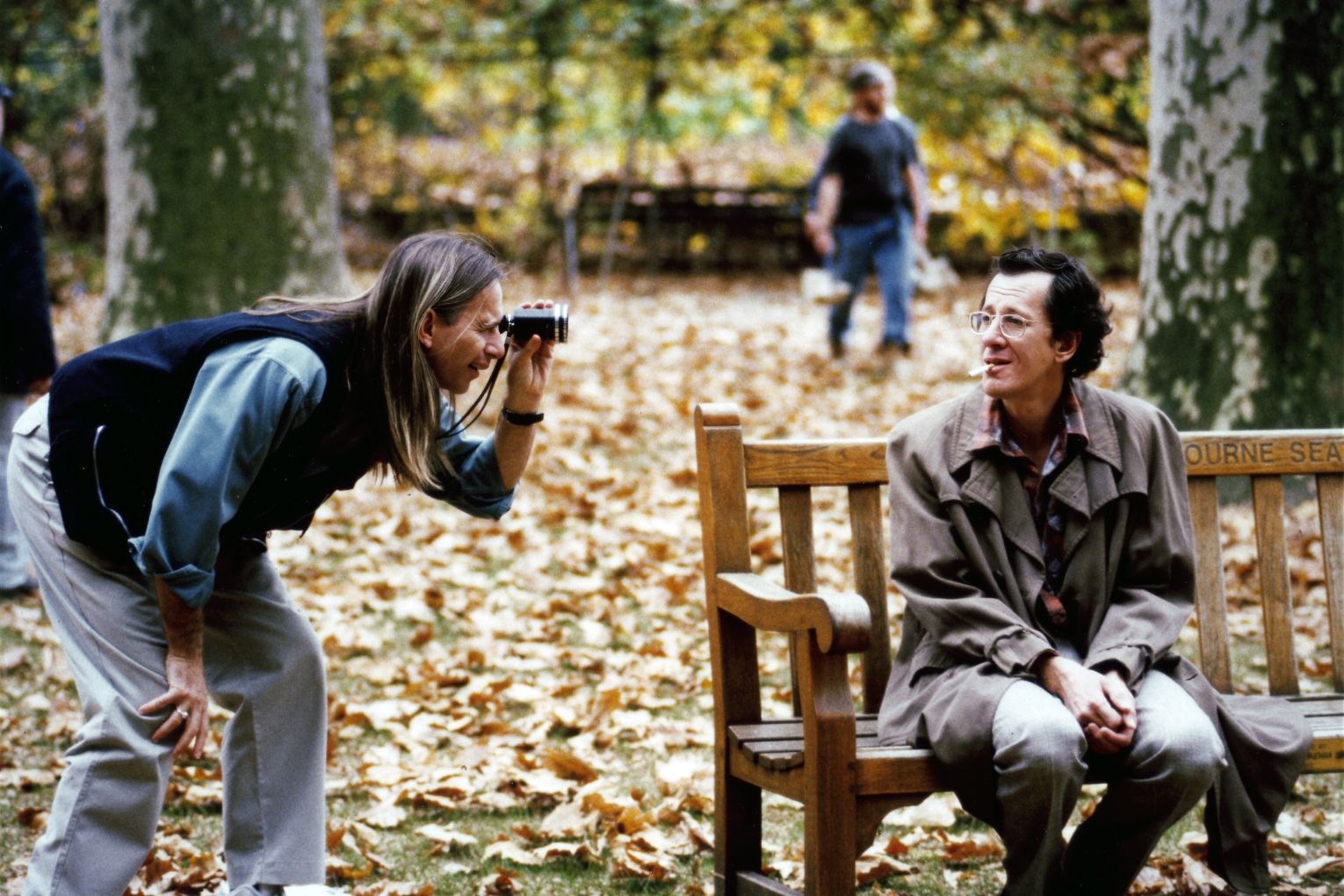
It’s easy to see why Adelaide film director Scott Hicks divides his life into two parts – before Shine and after Shine.
Shine is, of course, Hicks’ breakthrough feature film which caused a sensation and a studio bidding war after it first screened at the Sundance Film Festival in 1996.
But that success had been a long time coming.
Hicks had spent the previous decade struggling to get backing for the film, which chronicles the life of eccentric pianist David Helfgott, but no one was interested, until Sundance.
“It was one of those things where people would say, ‘Oh, it’ a great story but who’s interested in someone who can’t control their own destiny?’, and all of this sort of thing,” Hicks says.
“There were a lot of negatives along the way. Then it was, ‘Well, it’s a really good script but who could possibly play that part?’. So, then it was about finding the right actor, so I did that. Then it was, ‘Well, Geoffrey Rush has never done a movie so what are you thinking? He’s just a theatre actor’, and on and on and on.
“Everything was an obstacle until finally you convince enough people that it is worth doing.”
History shows that not only did Hicks get Shine made, but it catapulted those involved into dream-like levels of Hollywood success.
The film that nobody believed in and was made around the streets of Adelaide for $6 million, soared into profit 24 hours after screening at Sundance, Hicks says, and went on to gross $46 million globally.
You might like
“A major bidding war erupted between Miramax and Fine Line,” Hicks says of the Sundance success. “Harvey Weinstein was thwarted in his efforts to get the film and it was then held over by Fine Line to be released toward the end of the year so that it could be in Oscar contention.
“I thought they were joking when they talked about Oscars. I literally laughed and said, ‘Listen, I like you guys already. You don’t have to say nice things’. And they said, ‘we’re serious. This is our Oscar movie’.”
Rush went on to win the 1997 Academy Award for best actor in a leading role for his portray of Helfgott, sweet vindication after the long fought battle by Hicks to keep his lesser-known leading man.
Shine was nominated in seven categories that year, including best picture for producer Jane Scott, best director for Hicks, best screenplay for Jan Sardi (screenplay) and Hicks (story), best editing for Pip Karmel, best actor in a supporting role for Armin Mueller-Stahl (playing Peter Helfgott) and best original dramatic score for David Hirschfelder.
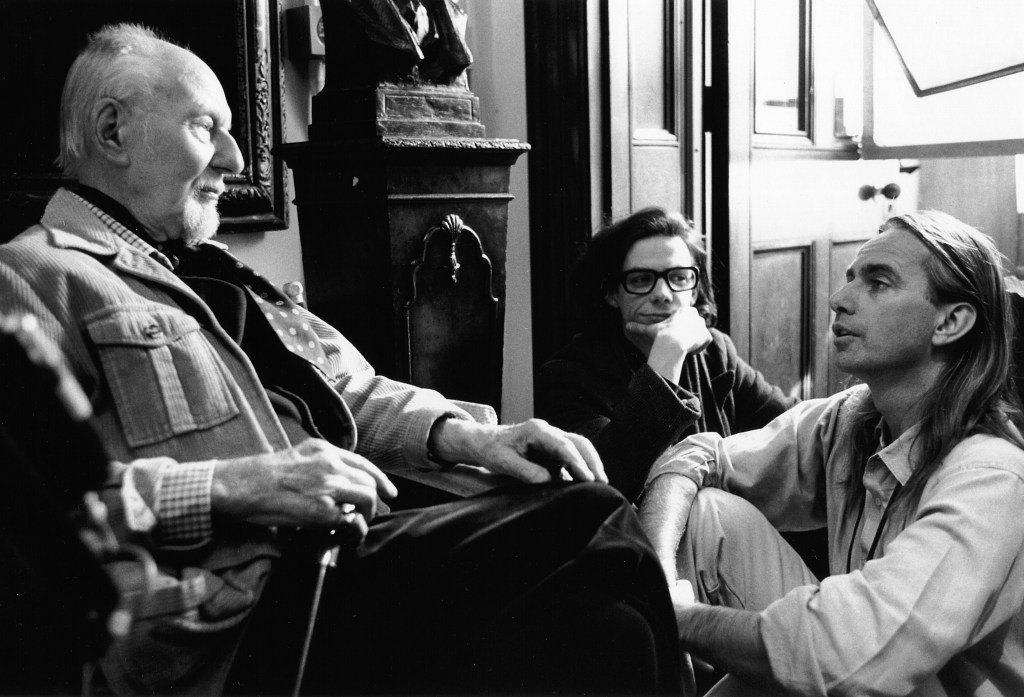
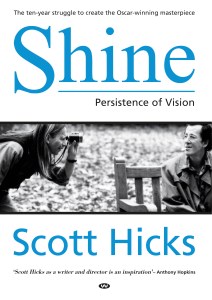
Now, to mark 30 years since the release of his life-changing feature film, Hicks has penned a new memoir, Shine: Persistence of Vision, taking readers behind the scenes of the 10 year journey to bring it to life.
“A lot of people have heard that it took 10 years to make but they don’t know why,” Hicks says. “Why did it take 10 years and what was the journey? That’s what I’ve tried to capture.”
Hicks also gives insights into attending the Academy Awards with his family, including wife and co-creative Kerry Heysen and being seated “in the centre ring of the holiest of holies of the film world”.
“That sense of celebration having achieved multiple nominations for the film, and with all my collaborators, too, who had been nominated, it was just a spectacular feeling,” he says. “When Geoffrey won it sort of represented the entire film.”
Shine also took out multiple awards at the Toronto Film Festival, the Venice Film Festival, the Golden Globes and Australian Film Institute awards,
Looking back, the Adelaide-based director says the years of battling to get the film made were tough, but he never doubted his belief in Shine and the story of dark and light that was Helfgott’s life.
“It was extremely difficult for me and for Kerry who was so much a part of the process, supporting me and co-financing the development process, and I was doing all sorts of other work at this time,” Hicks says. “It was like every other year was just spent entirely on getting what we called ‘The Helfgott Project’ underway.
Subscribe for updates
“I’d think this year it’s definitely going to happen. One year I was under a year’s contract directing children’s television in Melbourne and I turned it down because I thought, no, this is the year, it’s definitely the year it’s going to happen, and it didn’t.
“I did stake a lot on it, with no thought… I just wanted to make it. I didn’t imagine I was going to make something that would set the world on fire, which in its own way it did.”
Hicks’ life changed overnight post Sundance. Within days he found himself in meetings with director Steven Spielberg, who sought his advice on movie-making techniques.
“I said, ‘You’re asking me?’,” he says. “He said ‘this is the real magic, that you made a film that within five minutes I did not know where it was going but I wanted to be on the journey’. Because when he saw the film he just announced, ‘At last, a great movie’.
“In fact, he added, ‘And this is one I wish I’d made myself’. Then he ended up offering me a deal with DreamWorks which was the first time he’d offered another director a deal, so this was all life changing as you’d imagine.
“So, he was paying for my office here in Adelaide as well as one in Los Angeles, and it sort of just set me off on the train of directing movies in Hollywood.”
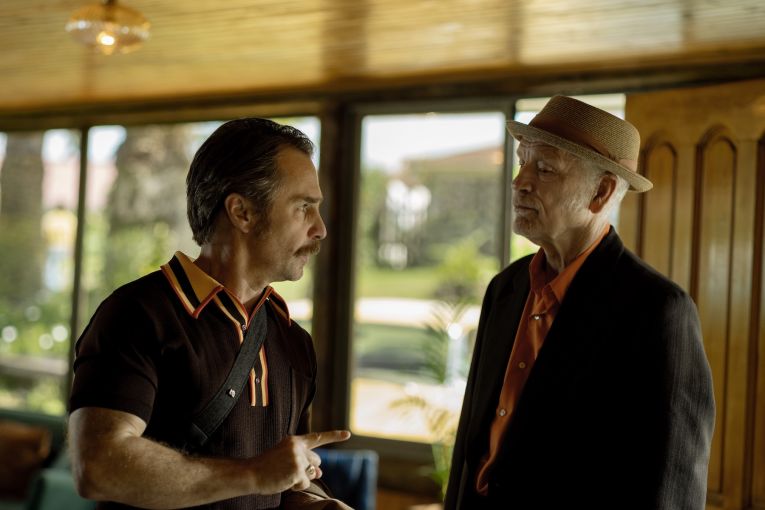
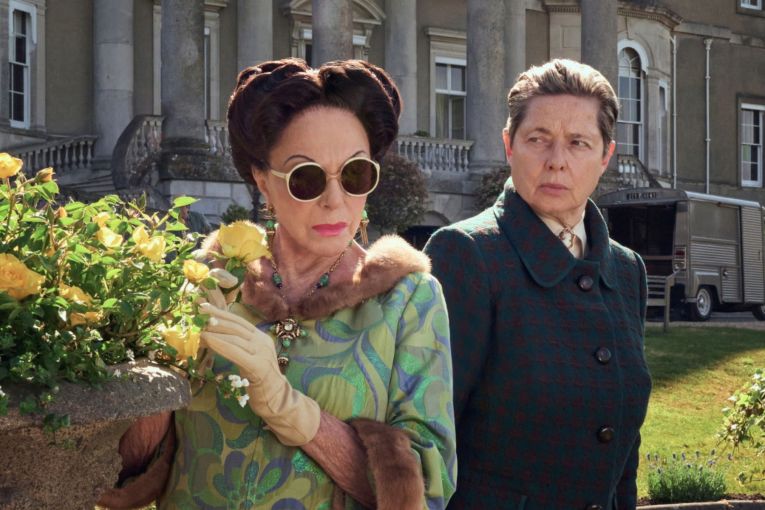
Financially, too, the success of Shine was “transformative”, says Hicks, who could pick and choose the projects and actors he worked with. He directed stars such as Sam Shepard in Snow Falling on Cedars, and Anthony Hopkins in drama Hearts in Atlantis.
It was not unusual for Hicks to have a message on his answering machine in Adelaide from the likes of actor Dustin Hoffman, or to be driving home in the Adelaide Hills one week, and in meetings poolside in Beverley Hills the next.
Hicks admits it took a while to accept that he was now “in the magic circle”, where all doors were open.
“It’s hard to quantify it in a way but everything changed, but at the same time it was about being able to rise to the challenges and not be overawed by what was happening, but to own it because you’d earned it,” he says.
“It was living two lives in a way. I’d come back to Adelaide and people would say ‘I suppose everything has died down for you now’. Well, you know, it just hadn’t, but you had to be a little bit careful not to end up like a tall poppy thing. You just had to be a little bit careful with a few spoonfuls of humility.
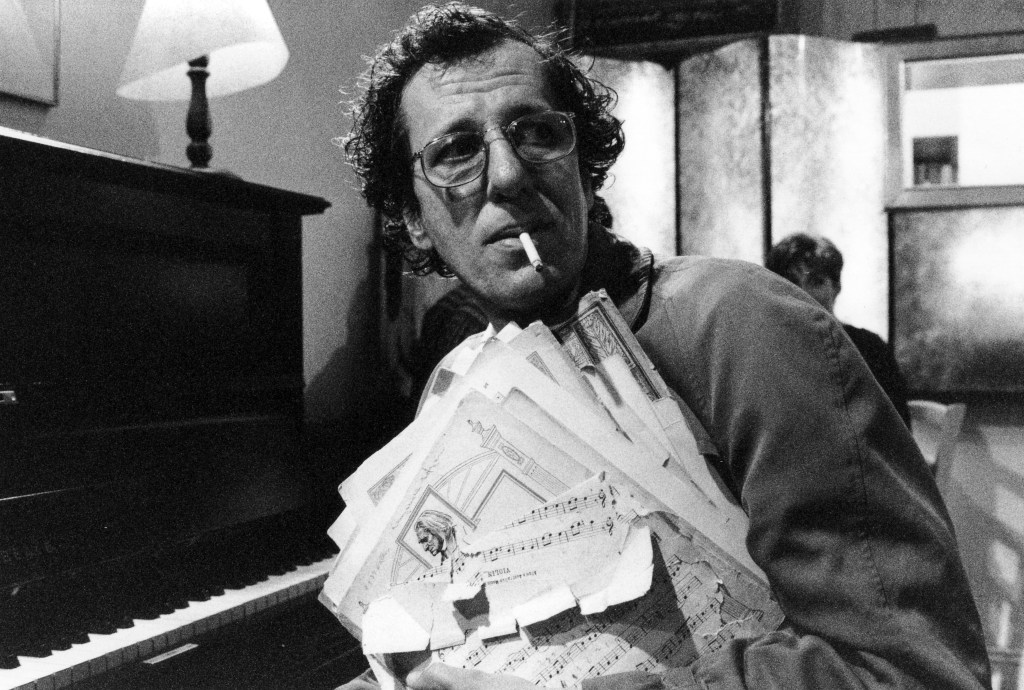
“But then at some point it becomes, not mundane, but you don’t have to feel astonished by it. That was the world you were living in now.
“I liken it to pushing your nose up against a window and looking in at things happening in another room and then suddenly the glass is gone, and you are in the room and then you have to be part of it.”
A special 30th anniversary screening of Shine will be presented by Adelaide Film Festival on Saturday October 24 at 6pm at The Regal Theatre, including a brief piano recital by Simon Tedeschi AM, followed by a live Q&A session with Hicks. Shine: Persistence of Vision will also be launched on Wednesday October 21 at 4pm Mercury Cinema.
Want to see more stories from InDaily SA in your Google search results?
- Click here to set InDaily SA as a preferred source.
- Tick the box next to "InDaily SA". That's it.
Free to share
This article may be shared online or in print under a Creative Commons licence