Huppert in focus: From the gilded cage of scandals and family greed to nosey neighbour
It’s official. French film icon Isabelle Huppert is the toast of Cannes with two lauded films, The Richest Woman in the World and new premiere Parallel Tales.

Isabelle Huppert is queen of Cannes — again. After premiering her leading role last year in Thierry Klifa’s The Richest Woman in the World – the most attended film at the 2026 French Film Festival in Australia – she is the star of Parallel Tales, the first French-language film directed by Iran’s Asghar Farhadi (About Elly, A Hero, The Salesman, The Past, A Separation).
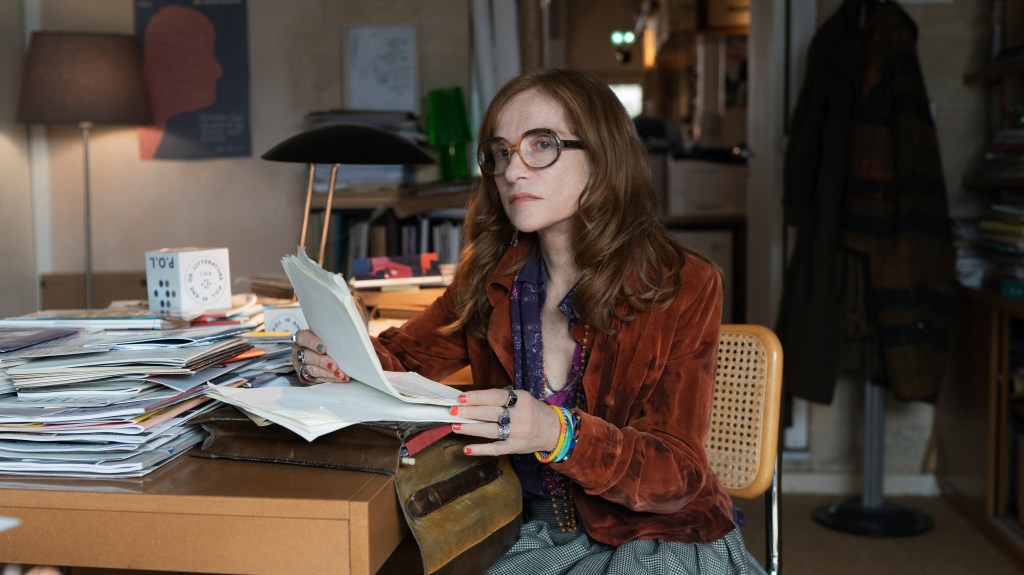
“I’m playing a writer in a movie about fiction and reality,” Huppert told me earlier this year about her role in Parallel Tales.
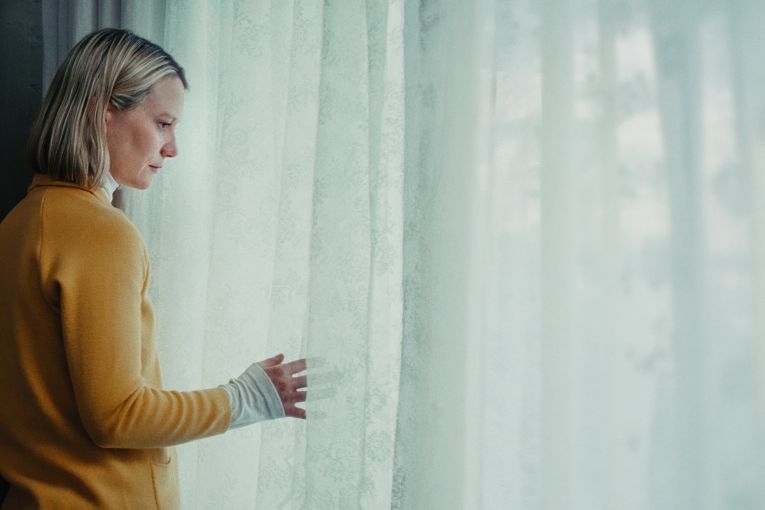
As it turns out, her eccentric and sometimes hilarious Sylvie character has passed her prime. She lives in a decaying apartment and is hoping to gain inspiration by watching her neighbours in the opposite apartment through a telescope.
She is far less glamourous than in The Richest Woman in the World, though in both films Huppert was keen to have some fun.
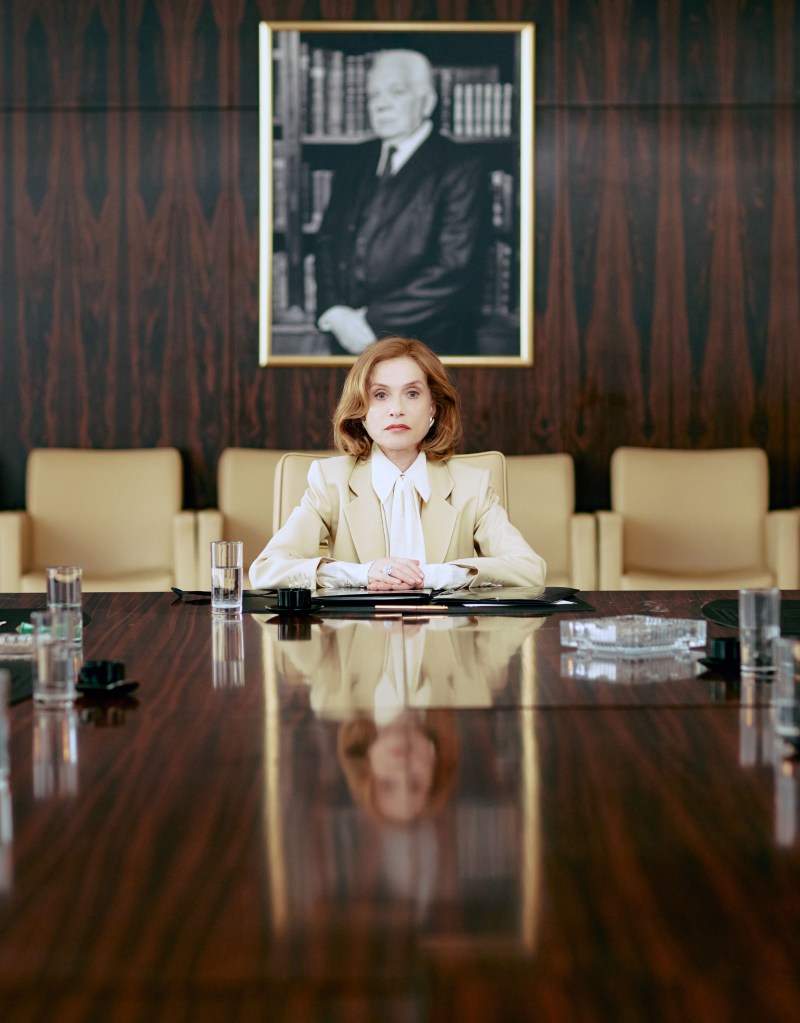
The Richest Woman in the World is loosely based on the story of L’Oreal heiress Liliane Bettencourt and her close friendship with gay celebrity photographer Francois-Marie Banier, who she met at a magazine shoot in 1987.
Bettencourt once told Paris Match that she gave Banier almost one billion euros to watch him “run with it”. Forbes magazine listed her as the world’s richest woman in 1999, with a fortune valued at US$30 billion.
You might like
Huppert is an actress who symbolizes the soul of filmmaking
Huppert is delicious in the film as a fictionalised version of Bettencourt, Marianne Farrere, the head of the influential Windler cosmetic company. Director Thierry Klifa says that Huppert is an actress who symbolizes the soul of filmmaking and compares her to Catherine Deneuve and Meryl Streep.
“When I offered her the role, I said the character is very similar to what Leonardo DiCaprio played in The Wolf of Wall Street,” Klifa explains. “And she said, ‘Okay, I’m game’.”
The film not only follows the heiress’s relationship with Pierre-Alain Fantin (Laurent Lafitte playing a fictionalised version of Banier), but her strained relationship with her daughter, Frederique Spielman (Marina Fois playing a fictionalised version of Francoise Bettencourt Meyers), who ultimately launches an investigation into her mother’s complicity with the younger man and files claims of abuse against him.
In reality, the ongoing case, which began in 2010 and became known as The Bettencourt affair, also included allegations of illegal payments Bettencourt made to members of the French government associated with Nicolas Sarkozy.
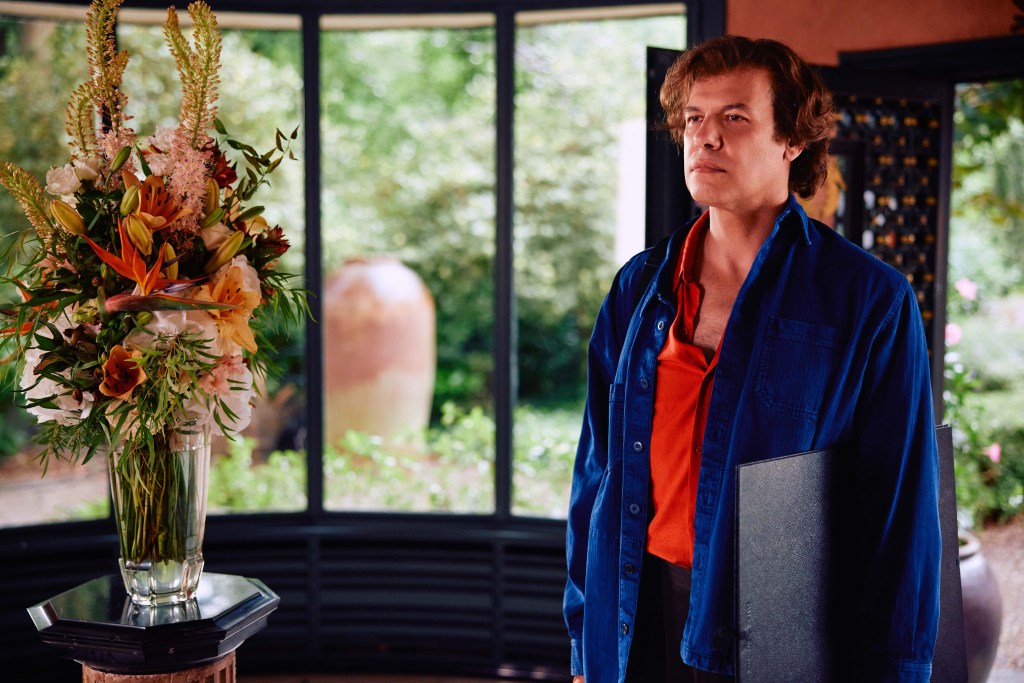
“When the story was all over the media I got really interested, because I thought there was something Shakespearean in that tragic event,” Klifa recalls the family’s turmoil. “The truth that was conveyed by the media was a judicial truth, about the accountability of money, but I was most interested in the intimacy that was never published before.”
He wanted to present an expose of the French upper class, their wealth and how they operate.
Subscribe for updates
“The film takes all the elements, the luxury, the money and this man, but essentially shows how the mechanisms operated to make it happen,” Huppert says. “The film was never going to be psychological or sentimental. It’s a rough treatment of the story, which is why I agreed to do it. I never cared about being gentle at all. I just cared about the setting, her appearance, the hair, the costumes, and that was enough to give me the cue to the character and the situations.
“Marianne is never a victim. She’s a very wealthy woman and she’s a woman of power who rules the company. But, of course, the meeting with this man takes her somewhere. All of a sudden she has a type of luxury she never thought she could have, she’s laughing, being joyful and having fun. And she’s not afraid.
“She’s very daring in a way. She doesn’t give a shit about the rules, about what her class implies. The scene I like best is when she hears this woman singing in the dance club. It’s very unconscious, but she can think that there is something more to life than just being rich and having power.”
Huppert brings an icy, wry humour to the role.
“We never really intended to be funny,” she says. “We never played the situation saying, ‘let’s be funny’. It turns out to be funny, from what I heard in the room last night, because people were laughing.”
Huppert is known for donning outlandish designs by Demna Balenciaga and has been one of the brand’s ambassadors since 2023. She has also been known to wear Dior, Armani and Louis Vuitton. So how does she feel about supporting L’Oreal? L’Oreal has a bad name because of the Nazi collaboration, I note.
“Yes, but that’s what the movie brings into the light, you know? And even that is very interesting because it’s not as if the movie is about that family, it’s more general. All families, not only rich families, sometimes have secrets and lies, things that are swept under the carpet. But in France it took a long time to reveal these kinds of situations with rich families.”
Bettencourt was married to French politician Andre Bettencourt, who like her father the L’Oreal founder Eugene Schueller had been a member of the pro-Nazi group La Cagoule, which her father had supported and funded in the 1930s. After the war, her husband was given refuge at L’Oréal.
“In the film Marianne keeps on comparing Fantin to her father, saying that he had that grain of madness and stroke of genius that she finds again in Fantin,” Klifa notes. “Her father was able to build an empire.”
Marianne’s husband, Guy Farrere, is played by Andre Marcon, and the marriage is dull. So it’s no wonder she becomes enamoured by the out-going, fun-loving dandy.
“There’s a moment when they’re sitting on the couch and I tried to get as close as I could to Laurent’s face,” Huppert recalls. “The way I did it was like everything I do in the film – it was my own responsibility. Maybe I would have kissed him!” She claps her hands and adds, “Maybe, who knows?”
Loosely based on Krzysztof Kieslowski’s Dekalog: Six, the film Parallel Tales stars Huppert as Sylvie, who is seeking inspiration for her new novel. She secretly spies on her neighbours but when she hires Adam (Adam Bessa) to help with chores, her observations bring unexpected calamity to everyone’s lives, as well as her writing.
The Richest Woman in the World opens in cinemas on May 21. Parallel Tales premieres at the Sydney Film Festival on June 10.
Want to see more stories from InDaily SA in your Google search results?
- Click here to set InDaily SA as a preferred source.
- Tick the box next to "InDaily SA". That's it.
Free to share
This article may be shared online or in print under a Creative Commons licence