Dangerous liaisons: Crime fiction with a literary twist
Veteran Australian author Michael Wilding’s Detective Plant series is the gift that keeps on giving.
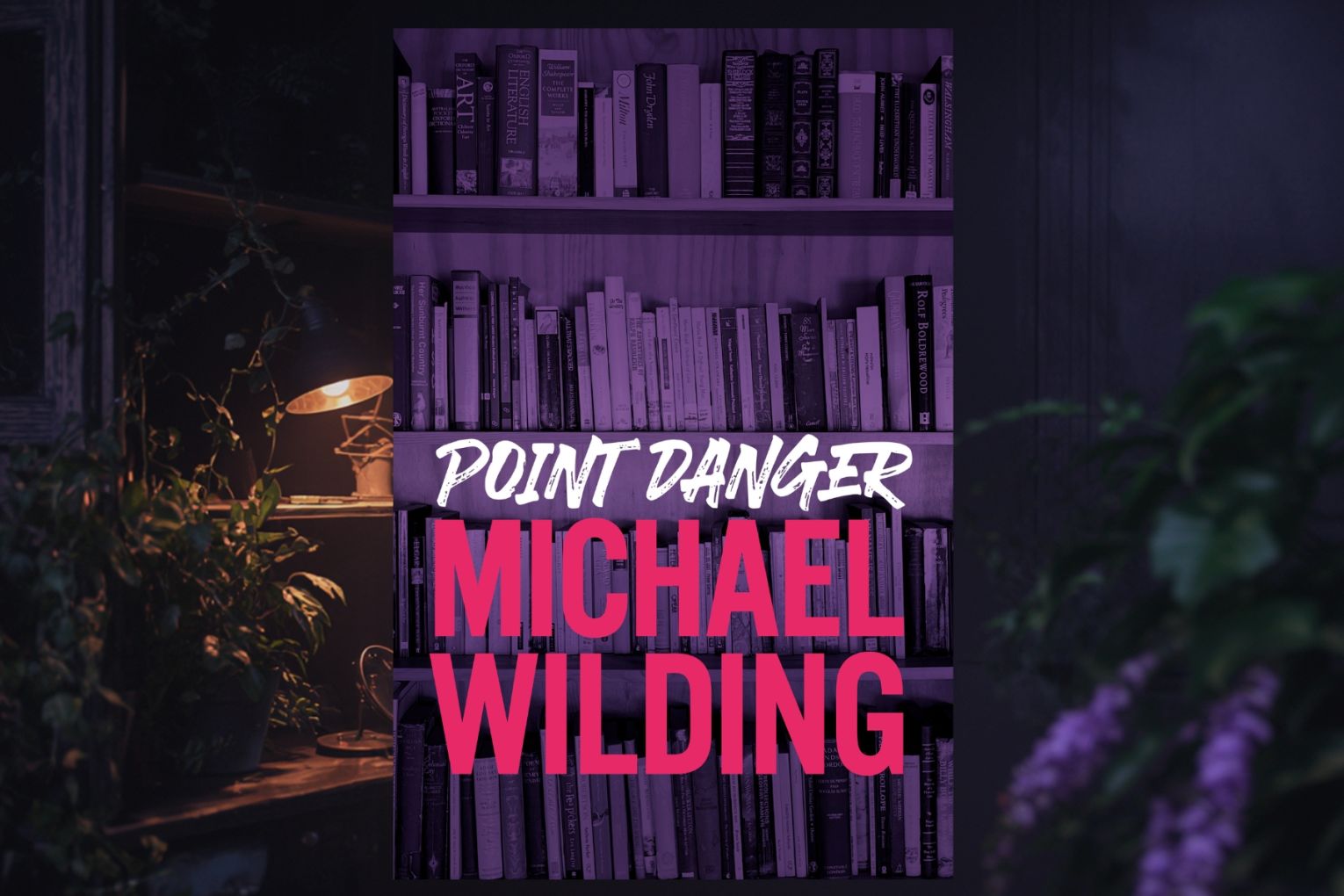
There is something reassuring about the arrival of a detective in a crime novel. Regardless of how strange the circumstances, or chaotic the world, the detective represents a level of certainty and the possibility that things can be worked out. Clues will be followed, suspects questioned, evidence assembled and, eventually, the truth will emerge.
However, Michael Wilding’s Point Danger has other ideas.
In this latest addition to the Detective Plant series, our protagonist, a former postgraduate academic who has become a reluctant and somewhat successful private investigator, is barely working. In fact, he is bored. Living in semi-retirement in the Gold Coast hinterland, he has no clients, no cases and little inclination to manufacture either. He is surrounded by birds, bush, anxiety – and the persistent possibility that nothing at all will happen.
It is an unlikely situation for a private investigator, and counterintuitive for a crime novel, but Wilding has never been particularly interested in writing the kind of crime fiction that behaves itself or fits neatly in a box.

Wilding’s style has been described as a hybrid of satire and crime. As a reader of traditional genre fiction, I admit to spending the first half of the novel waiting for something to happen: a dead body, missing person or overtly obvious wrongdoing.

Once I accepted that Wilding’s version was much more subtle, even subversive, I was able to lean into the story and appreciate that he is less interested in bodies and procedural investigation than in the stories people tell themselves about the world.
Plant’s old friend Fullalove, an eccentric former radical Watson-like character to Plant’s Sherlock, is the conduit between Plant and the mystery. A walking catalogue of conspiracy theories, he suspects surveillance is everywhere: in recycling bins, rainwater tanks, facial-recognition cameras, masks, mobile phones and the internet – they are all watching.
His paranoia is absurd, but Wilding makes it difficult to simply dismiss. After all, contemporary life really is saturated with surveillance and data collection. The tension between absurdity and possibility is central to Point Danger. Fullalove may be paranoid, but the world he inhabits has given him plenty of material.
‘Crime is the thread which takes us on an inside view of how the world operates’
Wilding has long occupied a distinctive place in Australian literature. A novelist, literary critic and academic, his work is marked by intellectual curiosity, sharp social observation and a willingness to challenge the conventions of literary and genre fiction.
In his 2018 essay, The Murky Depths of Crime Fiction, Wilding explores his attraction to crime stories that resist the neat resolution of conventional detective fiction. “Crime is the thread which takes us on an inside view of how the world operates,” he writes.
Subscribe for updates
It is the perfect explanation for the Detective Plant novels, where solving the mystery is only part of the investigation. For Plant, uncertainty is not a flaw to be tidied away at the end of the story, but an essential part of understanding the world he inhabits.
The novel opens with Fullalove lamenting the decline of print culture. He burns newspapers, which he believes have become obsolete, while his rooms are crammed with books he considers are endangered, suppressed or deemed unacceptable.
Plant subsequently wanders into a secondhand bookshop and encounters Lucy, a woman from his past who is now managing the shop. The innocuous meeting introduces the novel’s mystery: why has the shop’s stock been sanitised of anything politically controversial, radical or drug-related? Who owns this shop? What is really going on?
There are suspicions of marijuana cultivation, money laundering, surveillance and covert operations but Plant and Fullalove acknowledge that there is no evidence for their crazy theories. All anyone can do is speculate.
This is what makes Wilding’s crime fiction so distinctive. His Plant novels are not straightforward whodunits. Instead, they are hybrids of crime, satire and social observation. The traditional detective has access to evidence. All Plant has is uncertainty. The traditional detective solves the mystery. However, Plant often cannot even establish that there is a mystery.
The arrival of a classic old olive-green Land Rover at Plant’s property even triggers an association with the police vehicles of British crime television – Vera, Shetland, Death in Paradise and similar. It is a small joke, but also a neat reminder that Wilding knows exactly what readers expect from crime fiction – and he enjoys refusing to give it to them.
In Point Danger, even the danger itself remains ambiguous. The title captures the novel’s central preoccupation that danger is everywhere, but its source and location remain elusive. In a world of surveillance, conspiracy theories and competing versions of reality, Plant’s task is not so much to solve a mystery as to determine whether there is even a mystery to solve at all.
And perhaps that is Wilding’s point. Sometimes the confounding crime is the one we can never quite prove.
Point Danger by Michael Wilding, Australian Scholarly Publishing, $32.95
scholarly.info/book/point-danger
This article was written as part of The Critical Writing Program, run in partnership with Queensland Writers Centre and InReview Queensland, supported by the Queensland Government through Arts Queensland, part of the Department of Education.
Want to see more stories from InDaily SA in your Google search results?
- Click here to set InDaily SA as a preferred source.
- Tick the box next to "InDaily SA". That's it.
Free to share
This article may be shared online or in print under a Creative Commons licence