Wise words: Honouring the courage and fortitude of Aussie women in war
And in the Morning is a novel about war and the ways in which its tragedies, great and small, transform the intimate lives of mothers, wives and lovers.
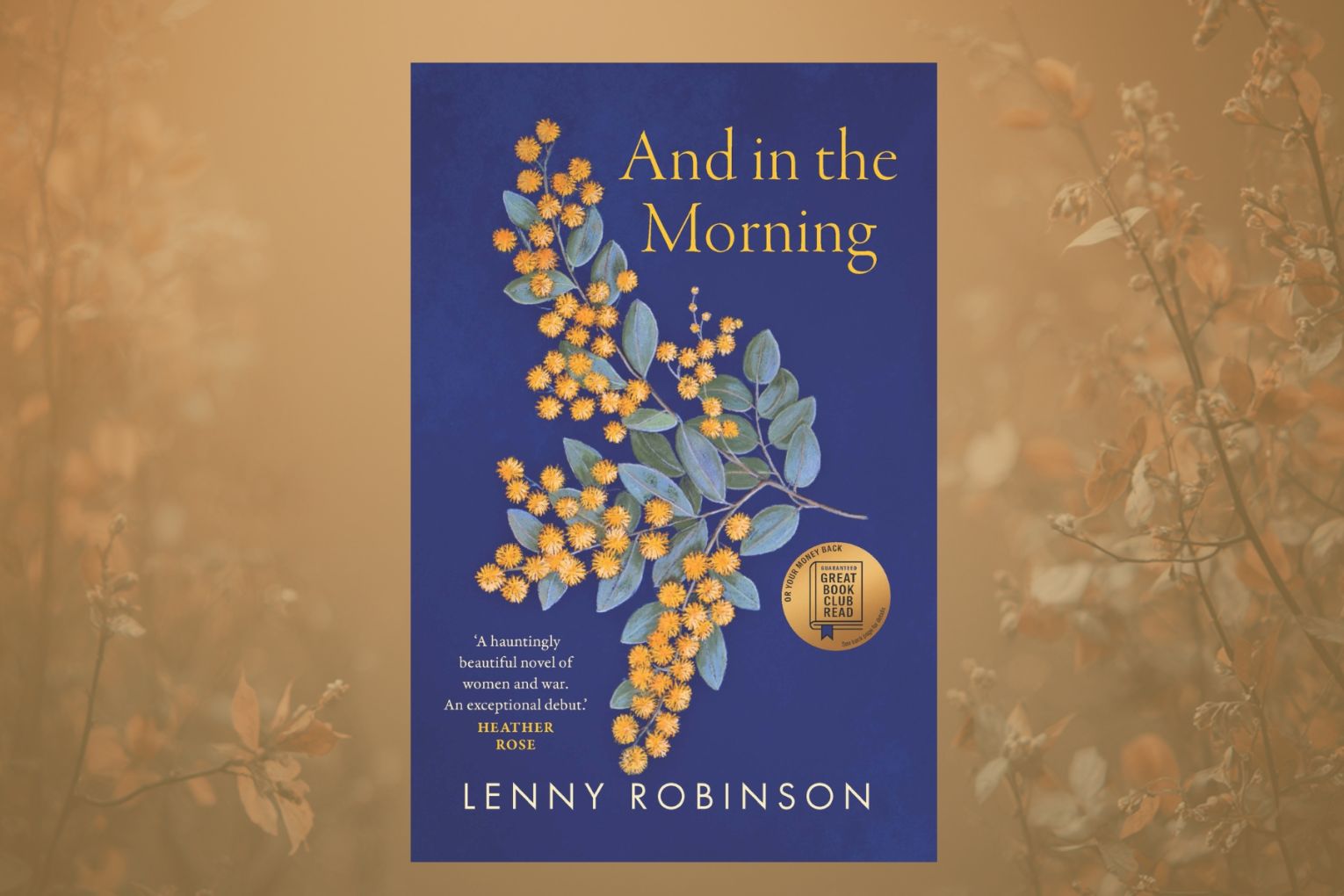
Looking for an easy way to get a handle on history without swotting over dusty textbooks? Debut Australian novelist Lenny Robinson has just the gift you have been waiting for.
My mother once told me that in 1942 she had defied her mum’s order not to go into the City after dark. Only in later years, after learning more about Melbourne’s social history, did it become clear what a risk my mum, then 14, had taken.
In 1942, with thousands of US servicemen descending on the local population, American soldier Eddie Leonsky “terrorised” the town, raping and strangling to death three young women before he was arrested and, late in the year, executed.
There are three books with the name And in the Morning, all deriving from that line in the 11-decades-old poem For the Fallen by Laurence Binyon that’s familiar to millions as the Ode of Remembrance.
Without having read the others, it is safe to say that for her debut novel Robinson has written an elegy in prose so moving that it should stand the test of another 110 years.
The lines of For the Fallen chosen as the book’s epigram misquote “We will remember them” as “We shall remember them” – a pardonable enough offence.
The story’s action takes place over three years – 1919, 1942 and 1969. The first scene opens on a young mother and her three-year-old boy running excitedly through the streets of Melbourne on their way to greet one of the returned servicemen whose achievements in battle forged the Anzac legend. He is Bert, the father of the small boy, and has never laid eyes on his son before.
You might like


Bert’s war was fought as a member of the Light Horse Regiment, whose abiding fame was earned through their exploits in the Holy Land, Gallipoli and North Africa. Today, most older Australians would have been familiarised with those exploits through the classic 1980s film, Gallipoli.
The triple chronology signifies the novel reflects a high degree of craftsmanship, impressive for such a new “voice” in Australian literature.
From the very earliest pages, readers will suspect there are links between the generations bookended by 1919 and 1969 – and indeed there are. The frisson of excitement is recurrent enough to quicken the pace of events for a 21st century readership presumed to have less time on its hands. But the reader who is not in a hurry will find this sampling of three vintages is best sipped rather than quaffed, like a fine wine blending several distinct varietals.
Each era is distinguished by a finely judged application of period vernacular. So, in 1942 we find those too young to join the war effort in carefree mood. One of them, Jock, has a suggestion for how they can escape parental bonds and social control for the evening. He tells them: “Billy Brewer says there’s a shivoo (party) in St Kilda. Couple of sheilas he knows. Few of the boys are going.”
In the same chapter, a tram driver reads the Riot Act to those shivoo-bound passengers, hollering, “No bloody magging …”
Magging, a term that appears archaic in the decades since, meant chattering on in an irritating manner (inspired by magpies, no less). We are right to lament its linguistic loss when unique aspects of our slang disappear without so much as a “Hooroo”! Robinson establishes herself as a word preservationist.
Speaking of vocabulary, hers is admirably broad. Verbal slips are mercifully rare. One that got through the publishing process occurs on page 108 when a term meaning to regard with suspicion or distrust is mistaken for a child’s silent plea … “that little face looking up at her in askance”.
Subscribe for updates
Good historical research is on display when the author cites, in a letter home to one soldier’s family, the news his unit has just received that their next embarkation will be to relieve the besieged Australian force at Gallipoli in August 1915. It’s well known to history buffs that not all the hundreds of troops who stormed the beach remained there for the entire eight months of the campaign – but this reviewer felt a need to check whether reinforcements were sent at the halfway point; and is glad to report they were. While a novelist has all the licence in the world to fashion an impressive narrative, there are certain facts that should not be tampered with. (Memo to the screenwriters behind The Odyssey.)
Robinson assiduously conveys the feel and flavour of the metropolis with flair and a deft mixture of fact and fiction
What a historian would take five times as long as a good novelist to define are the delineations between the returned – and the reception they received – after each of the world wars; and a close historical reminder of how riven the “home front” was in reaction to Australia’s involvement in the anti-communist war in Vietnam.
At every stage of her story, Robinson assiduously conveys the feel and flavour of the metropolis with flair and a deft mixture of fact and fiction. For instance, again in 1942, one locality in the working-class suburb of Richmond is (correctly) provided as Rooney St, while another – Kerr Street – has been dragged in from Fitzroy, which some might argue was always on the wrong side of the tram tracks.
Some of the most affecting scenes are to be found in the chapter where, in 1969, a grief-stricken descendant of Bert and Lily’s is overwhelmed by grief at a funeral service for her sole remaining son, whom she had not been able to prevent from serving in South Vietnam and whose casket now lies in front of her.
Here, again, if one is in captious mood, it’s not realistic for a priest – this was in 1969, after all – to tell mourners, “We come together today to celebrate the life of Robert Henry Gibson”. Despite the new thinking on many subjects emanating from the Second Vatican Council (1962-65), it would be another 10 or 15 years before mourners were invited to celebrate the life of the departed rather than, er, mourn their death.
Photos, archival research and detailed conversations with the close friends and relatives of those who marched off to war enrich the text throughout.
This novel confidently portrays a wide range of humanity’s diversity, and this is to say nothing of racial differences. What differences it highlights are those based on “the content of their character” (to borrow from Martin Luther King). Some are greedy, others generous; some show grace under pressure, others are constitutionally neurotic.
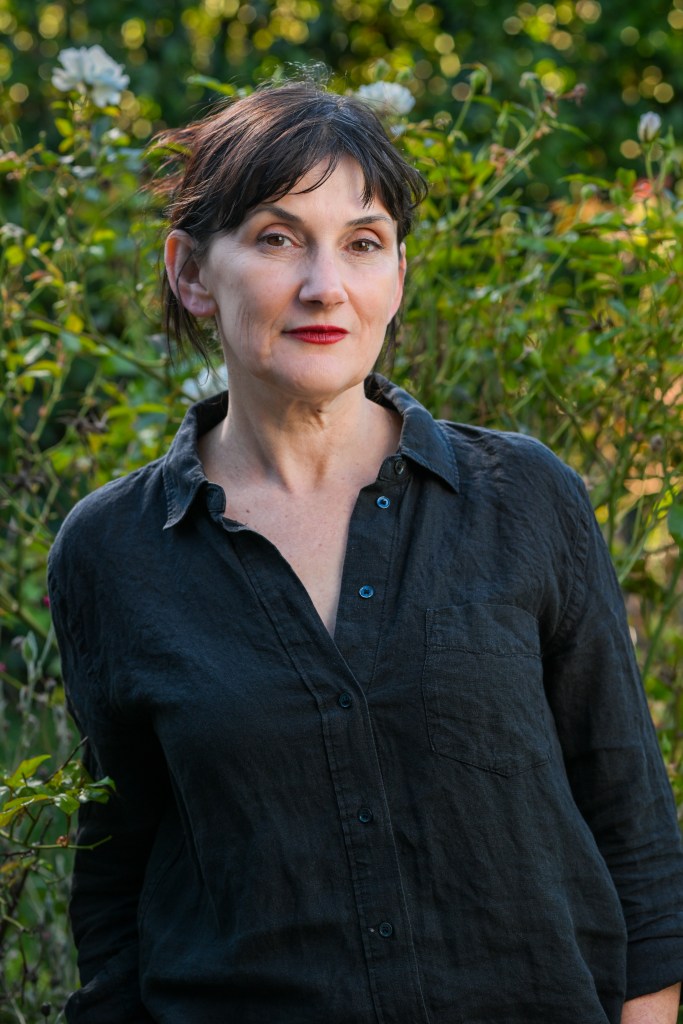
Those who have appreciated her non-fiction output over recent years have recognised her prodigious promise. With this breakthrough novel on a large historical canvas, Robinson has delivered yet again.
And in the Morning by Lenny Robinson, UQP, $34.99.
Want to see more stories from InDaily SA in your Google search results?
- Click here to set InDaily SA as a preferred source.
- Tick the box next to "InDaily SA". That's it.
Free to share
This article may be shared online or in print under a Creative Commons licence