Timeless tales of treachery for a new gen of crime mystery lovers
The British Library Crime Classics series is a rich vein of literature that’s now being rediscovered by lovers of the genre.
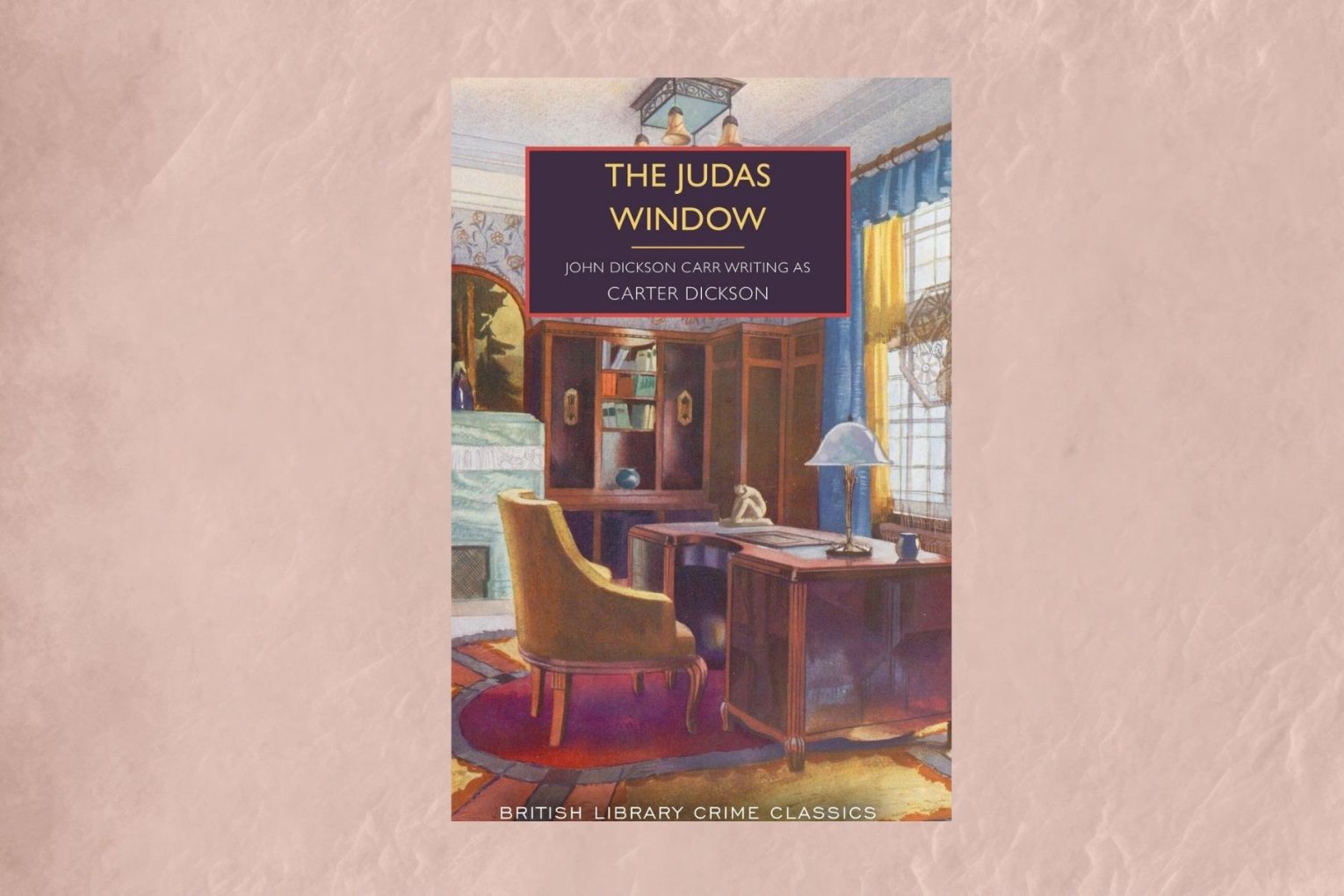
One of the enduring and much-loved genres of crime fiction is the ‘locked room’ mystery. Allegedly initiated by Edgar Allan Poe’s 1841 The Murderers in the Rue Morgue (although the hieroglyphs on the wall of an undisturbed Egyptian tomb may one day reveal an earlier example) this trope has been polished and extended by many writers, including Agatha Christie, Arthur Conan Doyle and, by no means least, John Dickson Carr.
Carr was a well-educated American, the son of a US congressman from Pennsylvania, who settled for a time in Britain, married an Englishwoman and became a writer. He captures London’s landmarks and last century interiors with insightful resonance which is why he was feted as a writer who could effortlessly depict English characters and landscapes.
The action in The Judas Window, now published as part of the British Library Crime Classics series, takes place in inter-war London, mostly at 12 Grosvenor Street of Mayfair, the haunt of the well-to-do, the fictional Milton’s Head Pub in the downtrodden demographic of Cheapside and the Old Bailey near St Paul’s Cathedral.
The world canvassed is charmingly old fashioned.
“In the hall a great grandfather clock looked at you with a no-nonsense air and seemed to rustle rather than tick.”
Even so, the crimes that are painstakingly and gradually revealed, and their motivations – sexual blackmail, a spurned relationship, misguided behaviour by old friends, are contemporary and just as relevant.
You might like


First published in 1938, The Judas Window was one of Carr’s finest novels. Over the decades it has been recognised as one of the most acclaimed ‘locked room’ stories ever published. It is therefore appropriate that this title would be featured in the British Library Crime Classics series (see below), which aims to present curated examples of vintage literary crime fiction.


So, what happens? A man is murdered by bizarre means in a room, locked from the inside, with no apparent exits. When the door is eventually opened, James Answell, a prospective son-in-law, and a corpse are found.
Answell is promptly arrested and charged with murder. Enter, for the defence, the eccentric King’s Counsel Sir Henry Merrivale, the only person convinced of the young man’s innocence.
There’s a tradition here: the police are in a hurry. There’s a superficial investigation; forensics are botched and the first and most obvious suspect is arrested. GK Chesterton’s Father Brown short stories were one of Carr’s inspirations, and Carr influenced the Jonathan Creek TV series written by David Renwick.
Subscribe for updates
Nevertheless, The Judas Window is anything but a superficial pot boiler. The fact that the crime is quickly established and easy to comprehend means that the author could quickly move on to superb characterisation, focussing a microscope on human behaviour and the intriguing and riveting dissection of a devious modus operandi. Things at which Carr excelled.
“The witness did not chew gum; but the continual restless movement of his jaws, the occasional sharp clicking sound he made with his tongue to emphasise a point, gave the impression that he was occupied with an exhaustless wad of it. He had a narrow, suspicious face, which alternately expressed good nature and defiance; a very thin neck; and hair which seemed to be the colour and consistency of liquorice.”
Humour is ever present. What would you expect to find in the suitcase of a gentleman going to the countryside for a weekend? Obviously, a tweed golfing suit!
If people have time to fill while awaiting the arrival of police at a murder scene what would be more logical than reaching for an ink pad and checking people’s fingerprints?
Carr’s writing is sophisticated. Court scenes are impressively extended and authentic and the unfolding mystery is more intricately woven than is now fashionable. The mischievous Sir Henry Merrivale character is a triumph.
“He rose majestically – an effect which was somewhat marred by the fact that his gown caught on something, probably himself. It tore with a ripping noise so exactly like a raspberry that for one terrible second, I thought he had given one…After one malevolent glance over his shoulder at the torn gown, showing the glasses pulled down over his broad nose, he…”
John Mortimer, the creator of Rumpole of the Bailey apparently cited his barrister father as inspiration for Rumpole, and yet, Carr’s Sir Merrivale is a most convincing precursor. If I ever find myself in the dock charged with murder, I’d be more than happy to be defended by him.
A must read for the connoisseur of the crime genre.
The Judas Window by John Dickson Carr (writing as Carter Dickson), British Library Publishing, $22.99.
Want to see more stories from InDaily SA in your Google search results?
- Click here to set InDaily SA as a preferred source.
- Tick the box next to "InDaily SA". That's it.
Free to share
This article may be shared online or in print under a Creative Commons licence