Maintaining the rage: The truth-telling of Melissa Lucashenko
Across seven novels Melissa Lucashenko has established herself as one of the most important voices of our time – and her non-fiction crystallises everything she wants us to know.
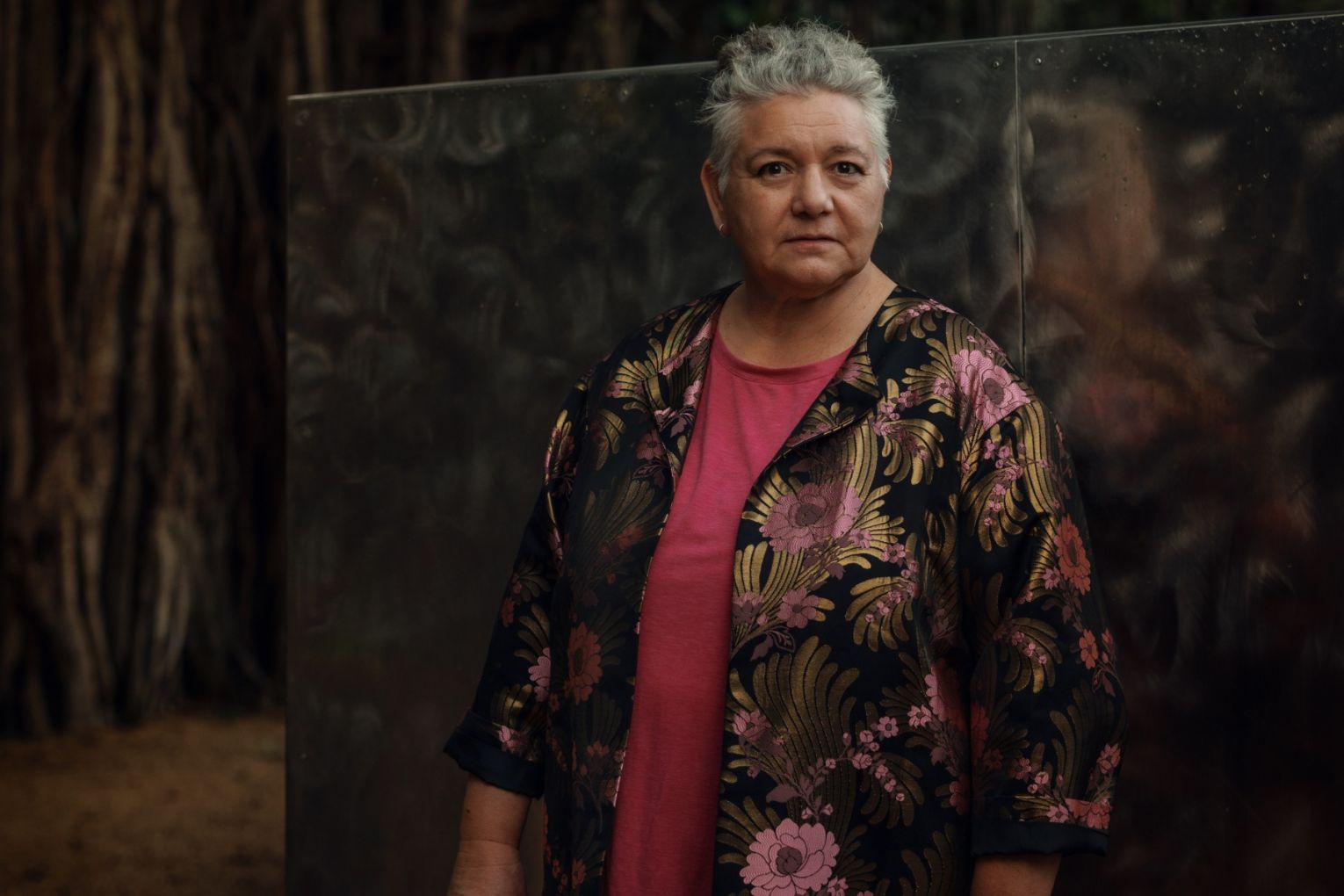
Acclaimed Bundjalung writer Melissa Lucashenko has established herself as a wordsmith whose work dives deeply and unapologetically into themes of reciprocity, entanglement, trust, betrayal, resilience and connectedness in Indigenous culture and history.
She has done this across seven novels – Steam Pigs (1997), Killing Darcy (1998), Hard Yards (1999), Sinking Below Sight (2013), Mullumbimby (2014), Too Much Lip (2019) and Edenglassie (2024).
It is perhaps unsurprising, then, that her first collection of non-fiction, Not Quite White in the Head: Personal Essays, takes these same themes and explores them even further in a real-life context. Collated here are 20 distinct pieces that include essays about her own writing, speeches, interviews, a literary love letter to one of her favourite writers and a tribute to another much-admired literary contemporary.
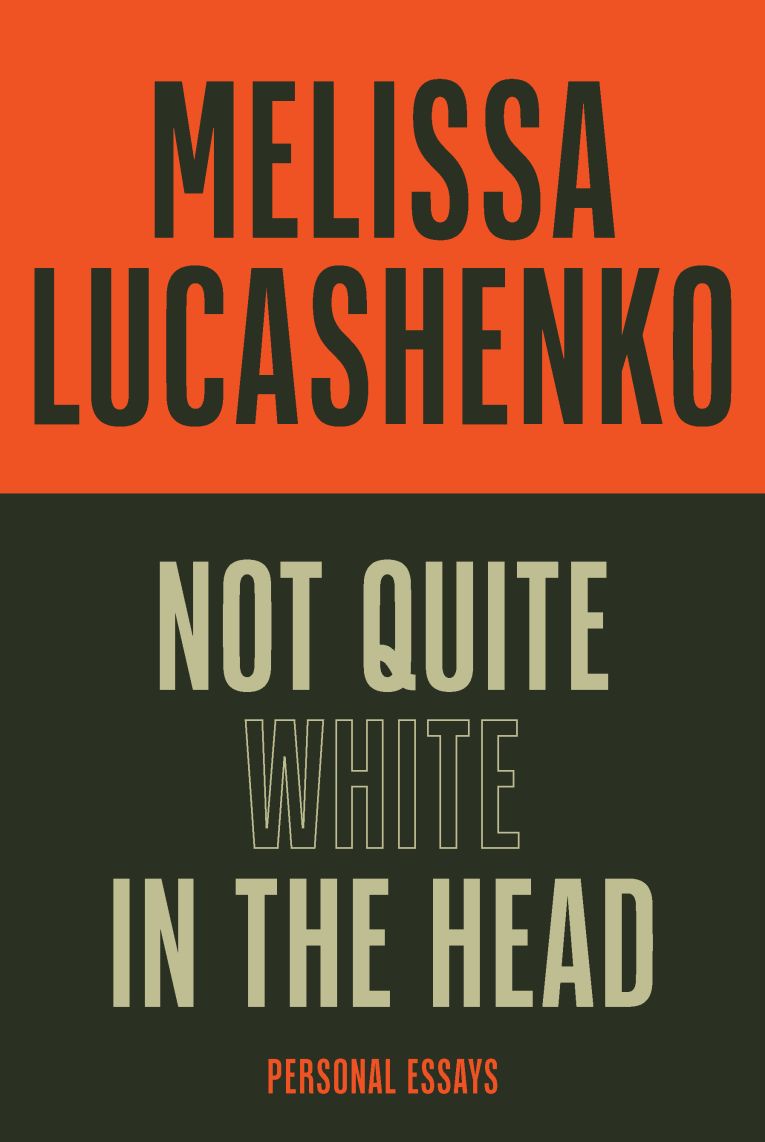 Produced across decades, these are pieces that can be read comfortably as a collection in one dedicated reading or dipped in and out of at will, their strength and clarity a testimony to Lucashenko’s considerable skill with words.
Lucashenko is both activist and author and it is through her writing that she offers all Australians, Blak (her preferred spelling) and White, to engage with one another. Though hers is often misrepresented as an adversarial voice loaded with animosity, she challenges us all to genuinely engage in a truth-telling project that confronts the brutal truths of Indigenous history in Australia and contemporary Indigenous social and political issues.
Indeed, as Lucashenko herself writes: “Australia can join us in a better future. You do not need to be Indigenous to engage with First Nations mobs and our ancient, sustainable law in the 21st century. You simply need to be a decent, mindful human who cares about your neighbours and the earth and acts accordingly.”
To be a “decent, mindful human”, then, surely requires engaging with some sobering, sickening and heartbreaking facts. Such as that of colonial history and frontier genocide, such as that of Indigenous people being incarcerated at alarming rates and often dying while in police custody.
You might like
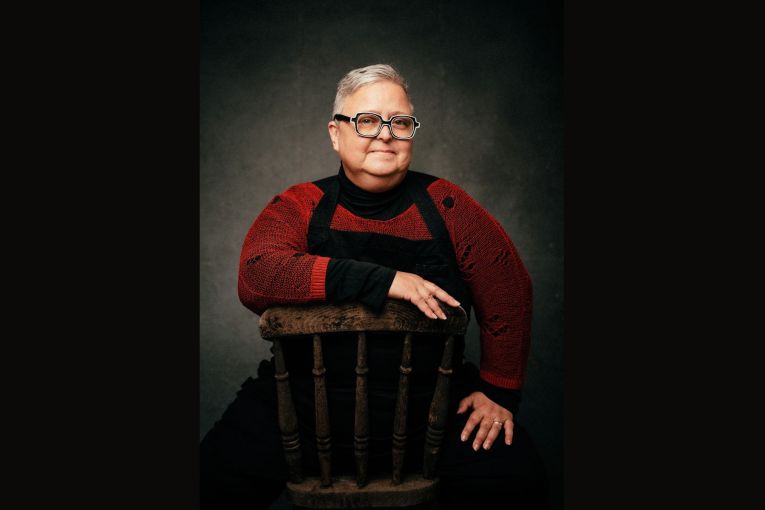
Lucashenko equally powerfully turns her gaze towards her own work as a writer and that of contemporaries
In essays such as Who Let the Dogs Out and A Voice From the Rooftop of Boggo Road Prison, Lucashenko writes with obvious anger, sadness and profound frustration and regret that, in Australia, Aboriginal bodies have been the inexplicable target of often fatal beatings and abuse.
As powerfully as she writes about issues of social and historical justice, Lucashenko equally powerfully turns her gaze towards her own work as a writer and that of contemporaries such as New Zealand novelist and poet Keri Hulme and Kamilaroi writer Vivienne Cleven.
In On Keri Hulme, originally delivered as an address at the 2022 Sydney Writers’ Festival, she reflects with candour and beauty on the profound impact that Hulme’s writing has had on her, as both a human being and a writer, observing that her Booker Prize-winning novel, The Bone People: “will always be regarded as an important book, influential, a classic. It demonstrated that there was a large and diverse audience at home [in New Zealand] for unapologetically Māori stories with no concession to a non-Māori audience, and the possibility of international success as well.”
One gets the feeling that Hulme’s success – hard-fought for and hard-won as it was, given the intense controversy that surrounded her Booker win – has been both instructional and inspiring for Lucashenko, herself an Indigenous writer whose own oeuvre explores Indigenous Australian history and issues with the same lack of apology or concession to non-Indigenous writers as Hulme’s.
Both are, as Lucashenko muses, “outsiders, disoriented souls”, both devoted to family and community and the Country they worship, which Hulme writes of with grace and beauty: “Oh land, you’re the heart of me; oh sea, you’re the blood of me.”
In 2000 an unknown, unpublished Indigenous writer named Vivienne Cleven entered and won the David Unaipon Award for Unpublished Indigenous Writer. Titled Just Call Me Jean, her quietly brilliant and transgressive novel wowed the judges and was published the following year by the University of Queensland Press as Bitin’ Back. I first encountered the novel the following year, as a women’s studies undergraduate at the University of Queensland, where it was set on the syllabus for a course in contemporary women’s writing. It was quite unlike anything else I had ever read.
The novel’s protagonist, Aboriginal single parent Mavis Dooley, is beset by many problems. Her Kamilaroi son Nevil instantly becomes the central one when he declares himself not a Blak football star but a White woman writer and asks to borrow one of his mother’s dresses and be addressed from now on as Miss Jean Rhys. Nevil has been smoking drugs, yes, but it is his sexuality that really has Mavis most worried. In a redneck town like theirs, appearing queer, let alone cross-dressing, is an invitation for serious trouble.
Subscribe for updates
For all of its transgressive and comic energy, Lucashenko notes that violence is omnipresent in Bitin’ Back. This is most obvious in the ongoing threats to Nevil’s life if his alter-ego is publicly exposed. Also, Nevil’s Aboriginal girlfriend Gracie does get seriously bashed by local police while attending a land rights rally. The Aboriginal men’s lives revolve around pig-hunting, illegal bare-knuckle boxing and football. And Mavis herself flies into a rage and physically attacks a man who is about to kick her best friend during a pub brawl.
Of course, reading Bitin’ Back in 2025 is very different to reading it in 2002. Many years have passed and culture has, thankfully, evolved and shifted. Lucashenko notes in her essay – which was published as an introduction to the 2024 edition of Bitin’ Back printed as part of UQ’s ongoing First Nations Classics series – that: “Today this might be given a very different exploration.
“However, we come to understand by the end of the novel that Bitin’ Back is only superficially about gender or sexuality. Cleven has penned a raw and honest portrait of rural Queensland at the turn of the century. On one level it can be read as being about the perils of being queer, yes. On another it can be read as being about anyone visibly different in a stiflingly conformist town determined to enforce its conformity with violence.”
As anybody who has read Lucashenko’s novels will tell you, the Miles Franklin Prize-winner is a writer as capable of conjuring tenderness as she is of capturing a maelstrom of ferocity. These same qualities infuse her non-fiction and are as evident in her essays as they are in the texts of the speeches she has given and the interviews for which she has sat.
Not Quite White in the Head is akin to stepping inside Lucashenko’s bustling, brilliant brain and partaking in a long-form, wide-ranging discussion
Hers is a voice that is essential and distinct, as capable of writing affectingly about the violence of colonialism, Indigenous land rights, Indigenous deaths in custody and domestic violence in Indigenous communities as she is exploring the work of writers she admires and is moved by, and distilling the struggle for abortion rights in Queensland down to a powerful, deeply resonant short, gutting reflection on women’s experiences living under political and medical patriarchy.
Not Quite White in the Head is akin to stepping inside Lucashenko’s bustling, brilliant brain and partaking in a long-form, wide-ranging discussion that leaves you intellectually slightly spent but infinitely enriched and educated.
She once told an interviewer that she hoped her work invited readers to “reflect, listen and learn” and that is something that this wide-ranging, engrossing volume does, in spades.
Not Quite White in the Head: Personal Essays by Melissa Lucashenko, University of Queensland Press, $39.99 (hardback).
Want to see more stories from InDaily SA in your Google search results?
- Click here to set InDaily SA as a preferred source.
- Tick the box next to "InDaily SA". That's it.
Free to share
This article may be shared online or in print under a Creative Commons licence