Lunch with top Adelaide hospo family
Arriving in Australia as refugees after the Vietnam War, the Nguyens started a thriving hospitality legacy in Adelaide. SALIFE takes a seat at the family table as they announce their biggest project yet.
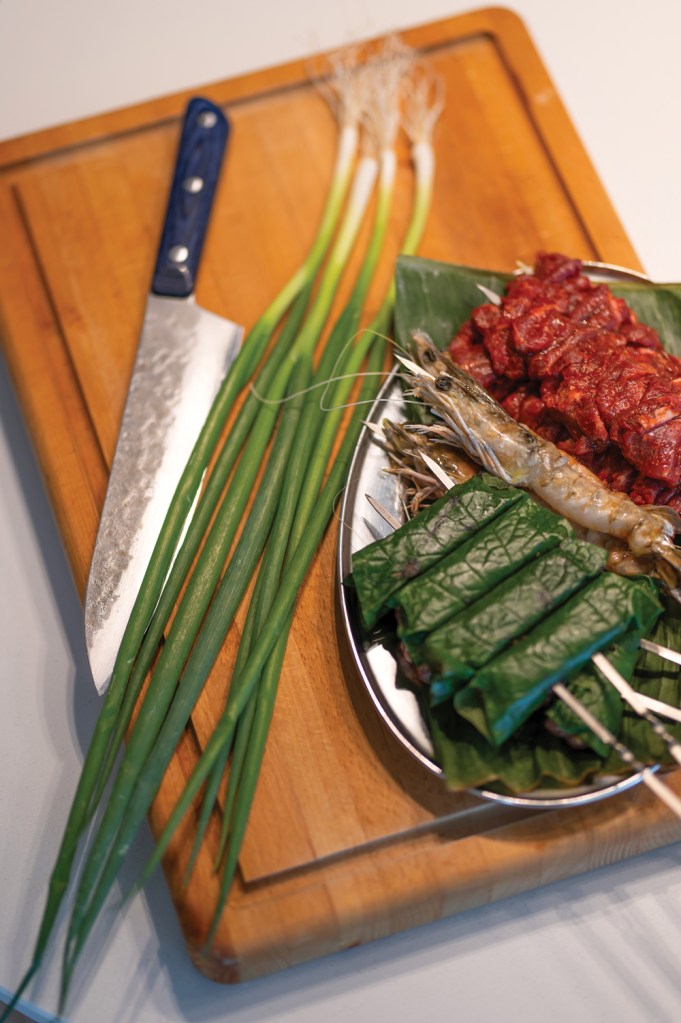
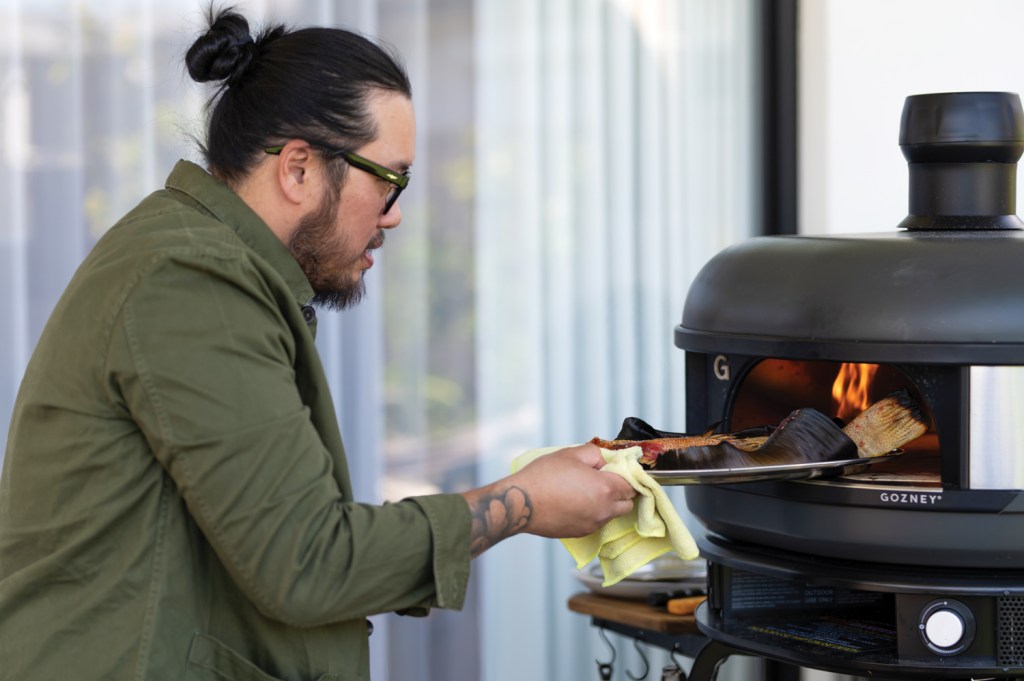
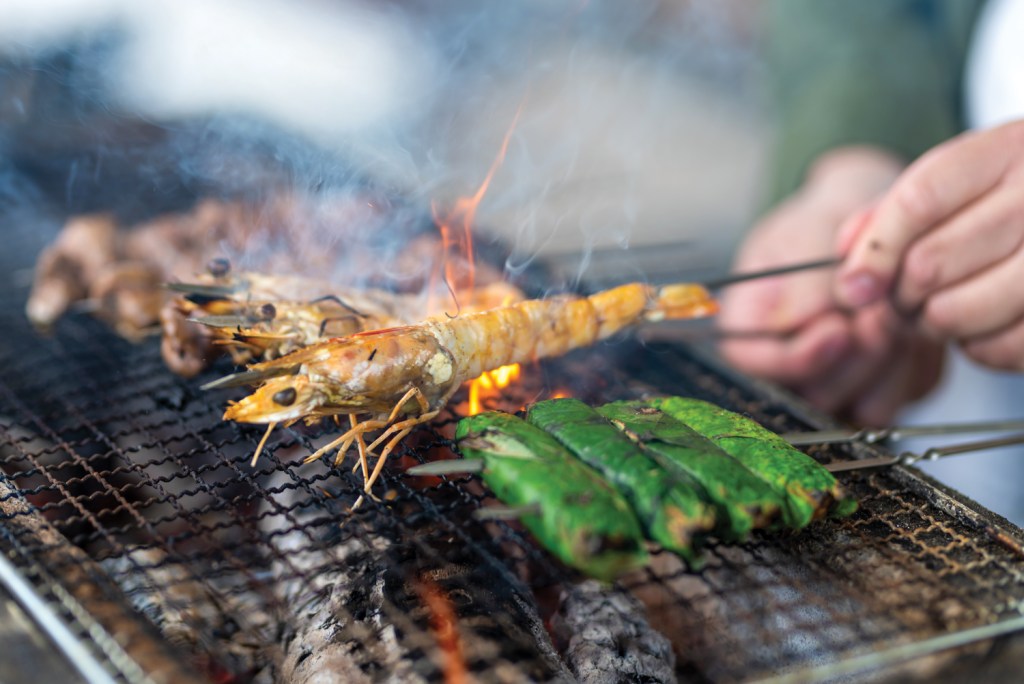
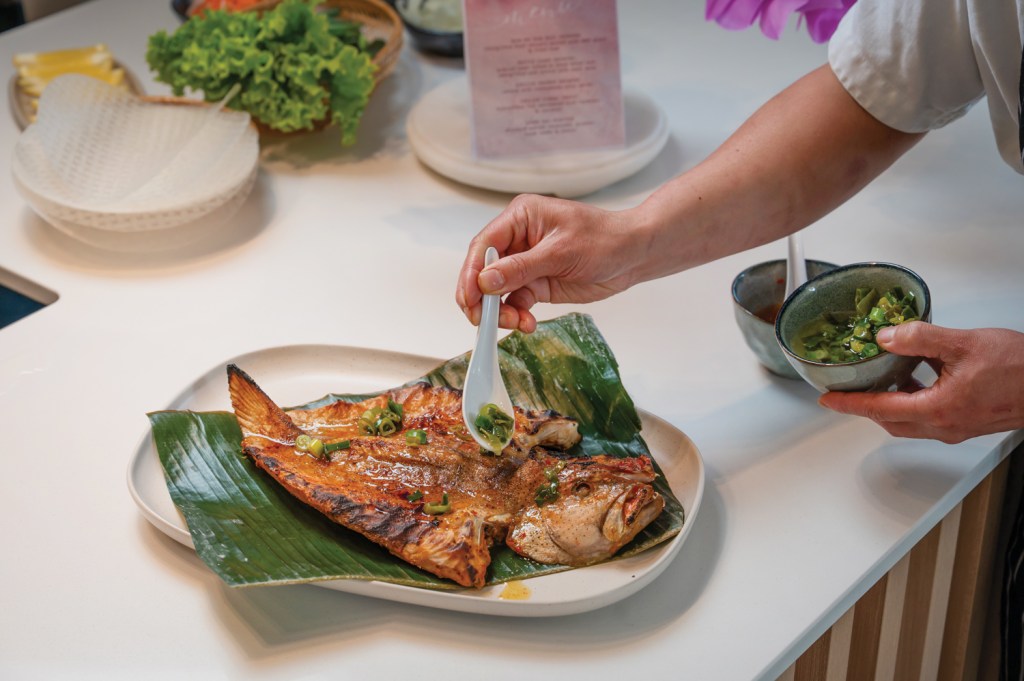
Quang Nguyen grills skewers of betel leaf-wrapped lamb on a sizzling hibachi grill, while a Gozney Dome Gen 2 oven – his new toy – fires up beside him. That’s where he’ll cook a whole butterflied coral trout – the showpiece of today’s family lunch.
Such gatherings are regular for the Nguyen siblings – Phong, 44, Toan, 36, and Thy, 33 –though it’s a little quieter today, without the quick feet of their busy children. Quang, 38, is Thy’s husband and, by coincidence, also a Nguyen (a common Vietnamese surname). He’s the executive chef across the Nguyen restaurants and, prior to marrying into the family, was already running cult-loved Devour Cafe Patisserie.
Also here is Toan’s wife Nhi, 33 – the calm in Quang’s creative storm. While Quang, Thy and Phong dream up ideas, Nhi and Toan bring logic and the numbers. It’s a tango between vision and practicality – Adelaide’s dining landscape is their dance floor.
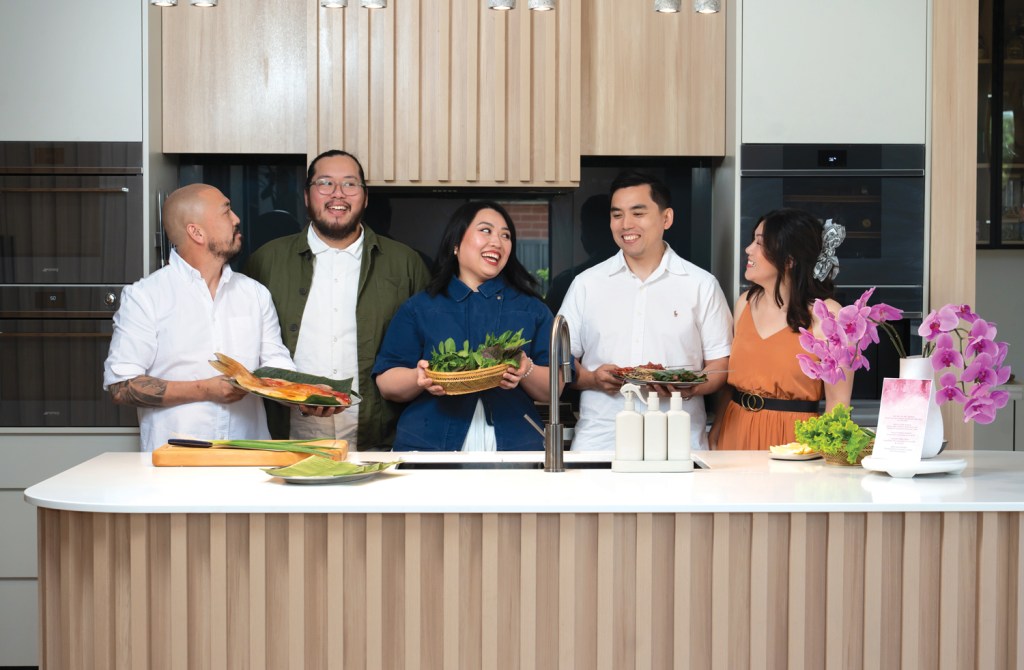
Collectively, the family run popular restaurants and pop-ups including Noi Vietnamese Eatery, Ong Vietnamese Kitchen and Shmochi by Shibui. In April 2027 they’ll open the doors to their first collaborative, multi-million-dollar project – a two-storey restaurant called Modachau on Churchill Road, Prospect.
But “hospo life” was never the plan.
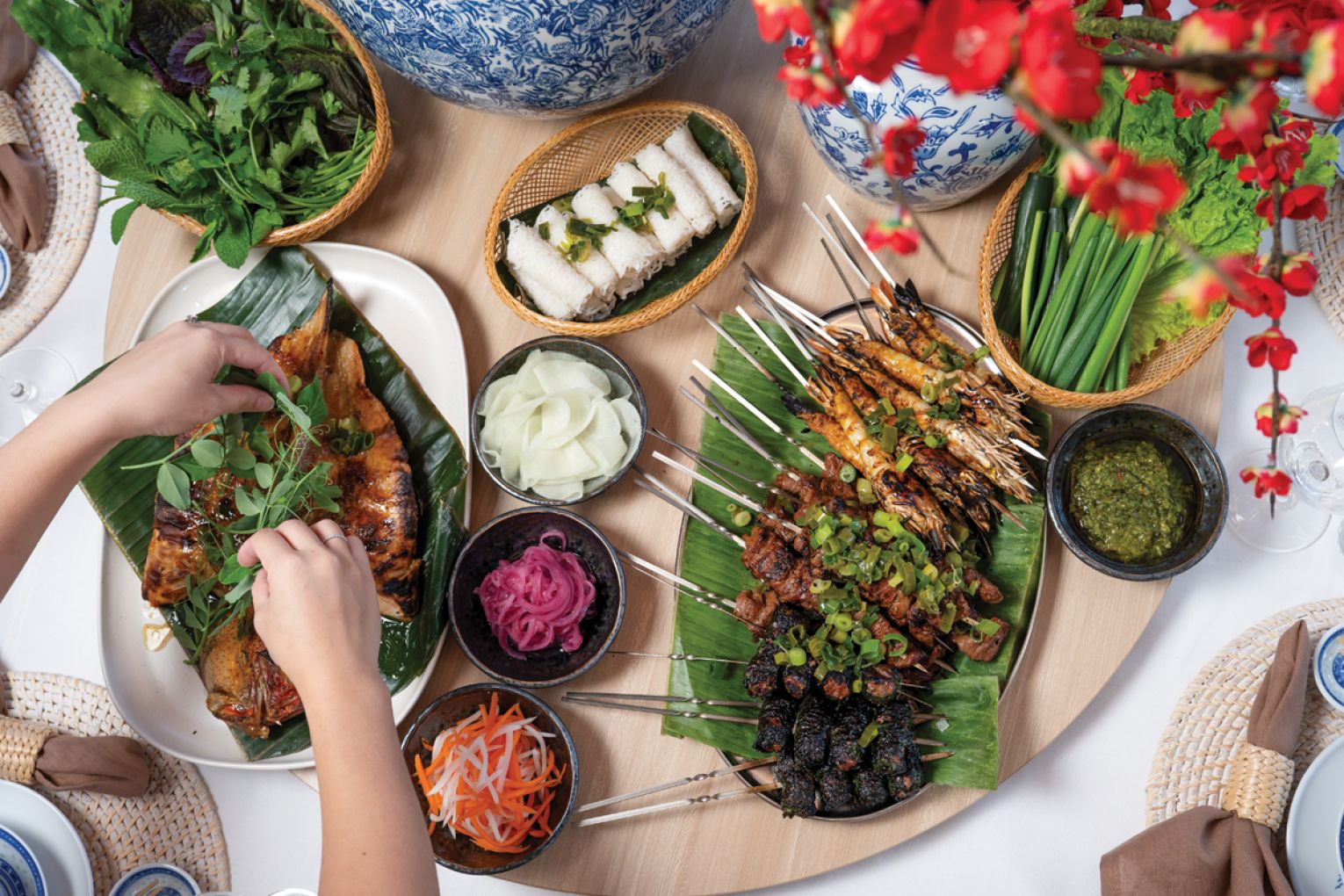
As the siblings set the table for today’s shared Vietnamese-inspired feast – a variety of chargrilled skewers, DIY cold rolls and that whole butterflied fish – they share tales of their parents’ humble beginnings in Australia as refugees.
“In the Vietnam War, my dad was in the military, then he escaped,” Thy explains.
“My parents (mother Tam Tram and father Thich) met each other at a refugee camp in Singapore, and then they decided to come to Australia together. At that point, it was whoever would take them – my mum’s family ended up in Europe, and Mum and Dad came here.”
Settling in Melbourne in 1980, Thich got a job on Holden’s factory floor, while Tam Tram worked “on the licorice line” at Allen’s confectionery company.
They followed friends to South Australia and were among a growing number of Vietnamese immigrants who took to farming in Virginia. They still own the farm they bought back in 1987.
“That was a bit of a shock to the system – our main road was still dirt, our nearest neighbour was probably a kilometre away,” Phong says. “It was very remote.”
You might like
The siblings spent their youth plucking produce, packing tomatoes and taking it all to market, until the physical demands of farm life nudged their parents towards not-so-green pastures.
In 2004, they bought their first restaurant: Rundle Noodle Bar, later renamed Chopstix, in the city.
And they began learning the ropes of hospitality – fast.
“We had a lot of older male chefs who didn’t like having females in the kitchen – my mum – and they all had a coup and left at once,” Thy says.
“That forced our hand in upskilling, and it taught us a lesson that as an owner-operator, you need to know all the facets of the business and be able to do all things. We will wash the dishes, we will clean the toilets.
“By the time I was 16, I was able to cook – use the wok, everything,” he says.
Hours were demanding. Tam Tram and Thich encouraged their kids to pursue more traditional, professional careers – medical, engineering, anything but restaurants.
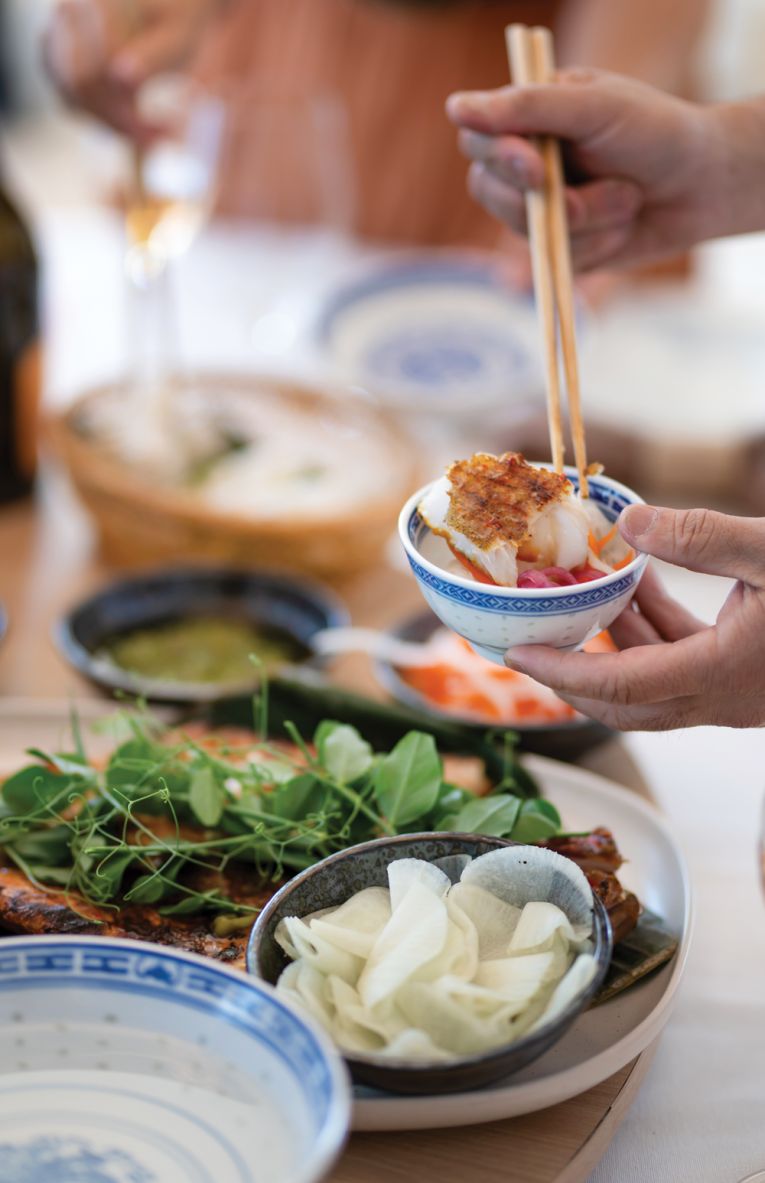
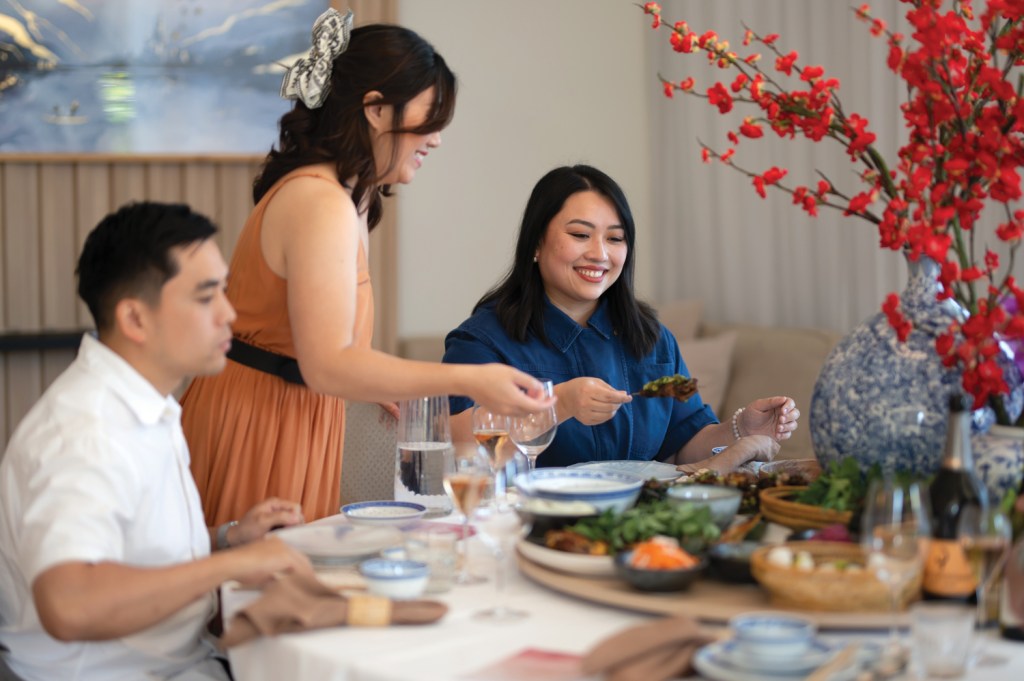
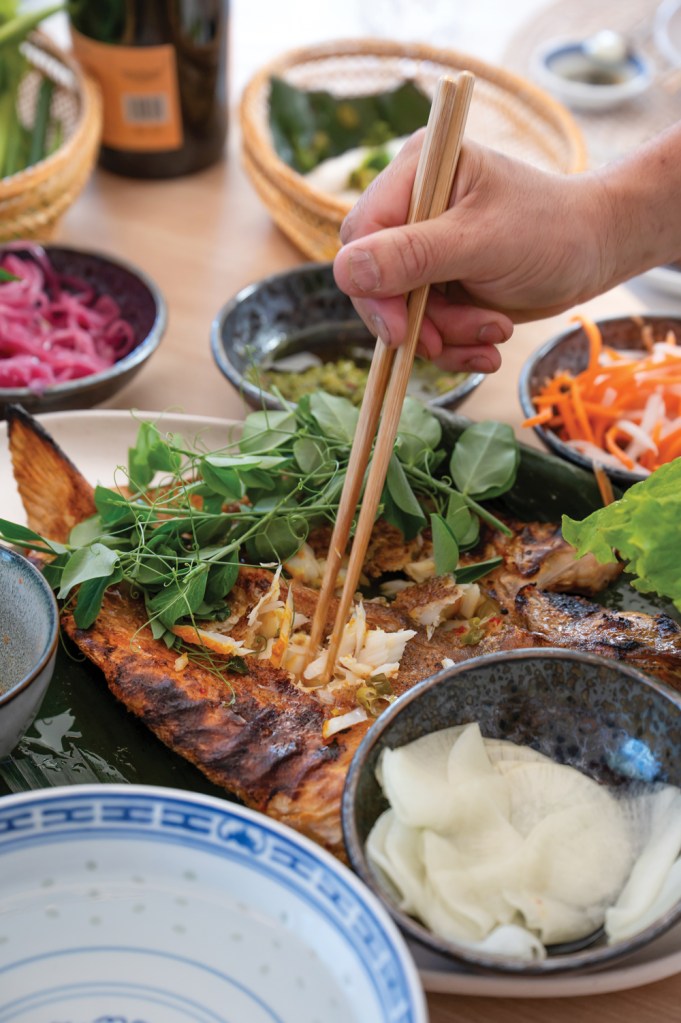
Back in Phong and Nhi’s contemporary home kitchen in Prospect, Quang dresses his burnished fish with spring onion “salsa verde”. Nhi places it atop a giant lazy Susan on the table, along with a platter of three types of skewers – bun bo hue beef, beetle lamb and prawn – baskets of banh hoi (steamed netted vermicelli), leafy greens and herbs, and dipping bowls of pickles and sauces. It’s cooking that’s equally authentic and enticing, the zesty aromas beginning to weave through conversation.
Such gatherings must have been important growing up, I assume. To that, they chuckle.
“We probably ate more in the shed, next to packing tomatoes, than we did at the dinner table,” says Toan. “We didn’t really celebrate birthdays.”
“There was no such thing as a day off – from the farm to the restaurant, after school you’re working, weekends you’re working, holidays you’re working,” Thy adds.
“My parents were able to build the foundation that they had, because they made sacrifices – whether that’s right or wrong, it is what it is. So, gatherings were nearly non-existent.”
Today’s table is set with classic blue and white Chinese-style plates and bowls, and chopsticks.
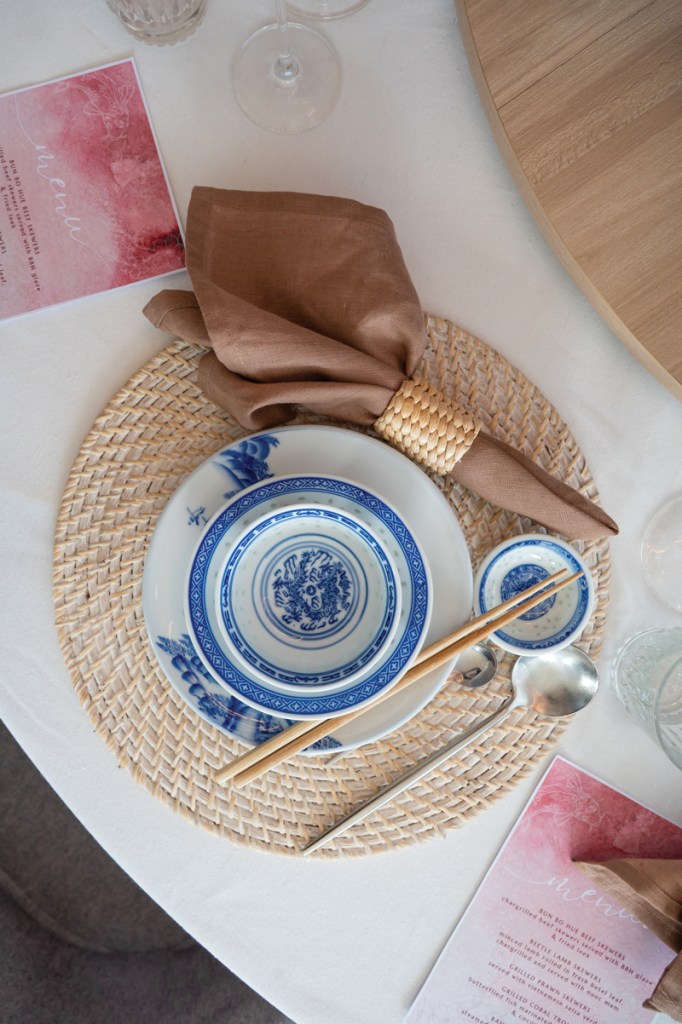
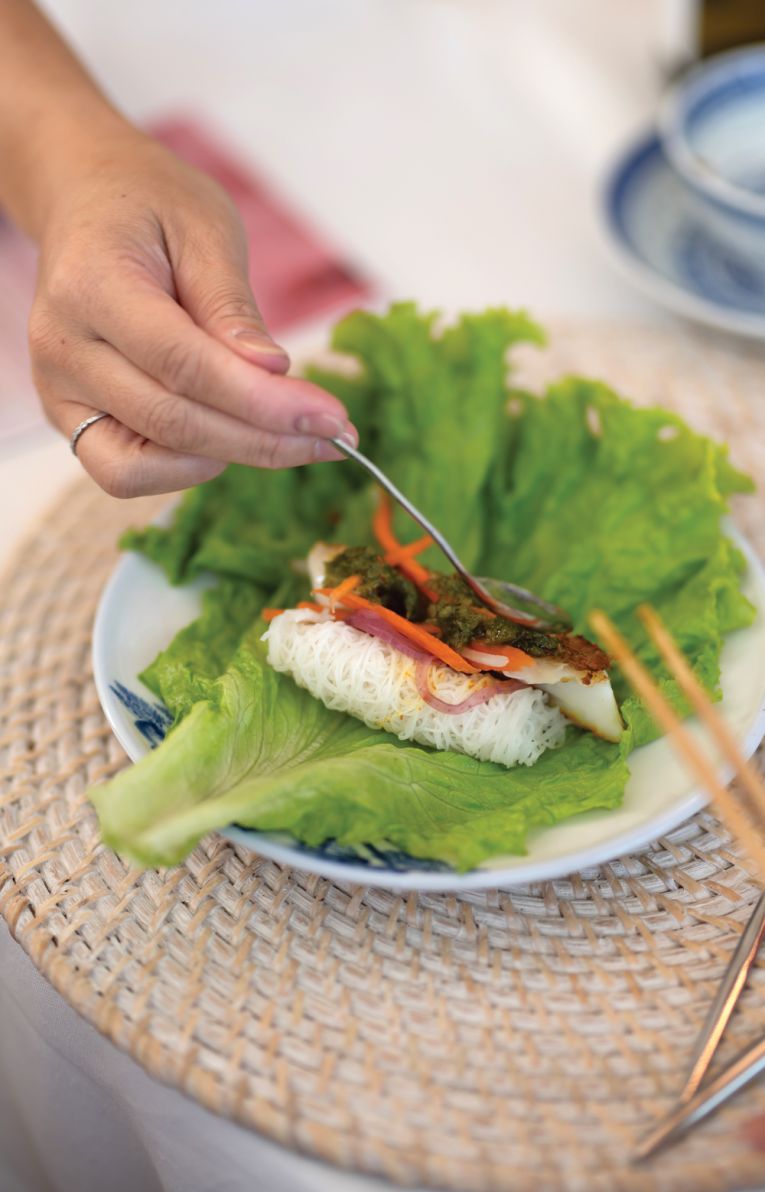
“With the bowls, the little one is for sauces or saucing, and often the bigger plate is for the rice paper, and you put everything on top,” Nhi explains. “Carbs, pickles, fresh herbs – then you add the protein on top.” The “green sauce”, she says, is for seafood, while the chilli-laced nuoc mam is for “everything else”.
“There’s always lots of fresh herbs, lots of chilli,” she continues.
Subscribe for updates
“We love grilling. On fancy occasions we’ll have seafood and things like that, but we’ll always set it like this.”
In-laws Quang and Nhi, and – later – the grandkids, encouraged the family to eat together more frequently.
“We really had to teach ourselves as adults that, actually, a birthday is worth celebration,” Thy says. “The grandkids softened my parents a lot. It’s just an indication that as we grow, they grow. It’s a gift.”
So close are the siblings, brother Toan’s family lives just a gate door away.
“I thought we’d be neighbours and that if I want to see you (Phong) I’d walk around, but big Phong had other ideas,” Toan says with infectious dry wit. “He’s friendly with that neighbour, so he traded three boxes of wine to have a half square metre and put the gate in … now stuff goes missing from my house.”
While Tam Tram and Thich encouraged their kids to pursue degrees, the siblings found themselves gravitating towards food. Thy – who had been studying to become a vet – says Quang showed her the “vibrant, fun” side of hospitality.
The success of Noi Vietnamese Eatery was a turning point in getting their parents on board. It showed what was possible, and pulled into focus a new, shared vision.
Modachau is their biggest, most ambitious project yet.
Loosely translating to “modern Asian”, the restaurant will blend the Nguyens’ Vietnamese heritage with cuisine-bending influences and trends.
“It’s kind of like us and this generation now – we are, like, fully broken English,” Nhi laughs.
“Our aim is to be the best new restaurant to open when it opens,” Quang adds.
“But also, to skip the pretentiousness and be approachable.”
Once today’s table is cleared, the siblings gather around a bowl of Vietnamese coffee tiramisu – a favourite at Noi Vietnamese Eatery.
It’s a toast to their success.
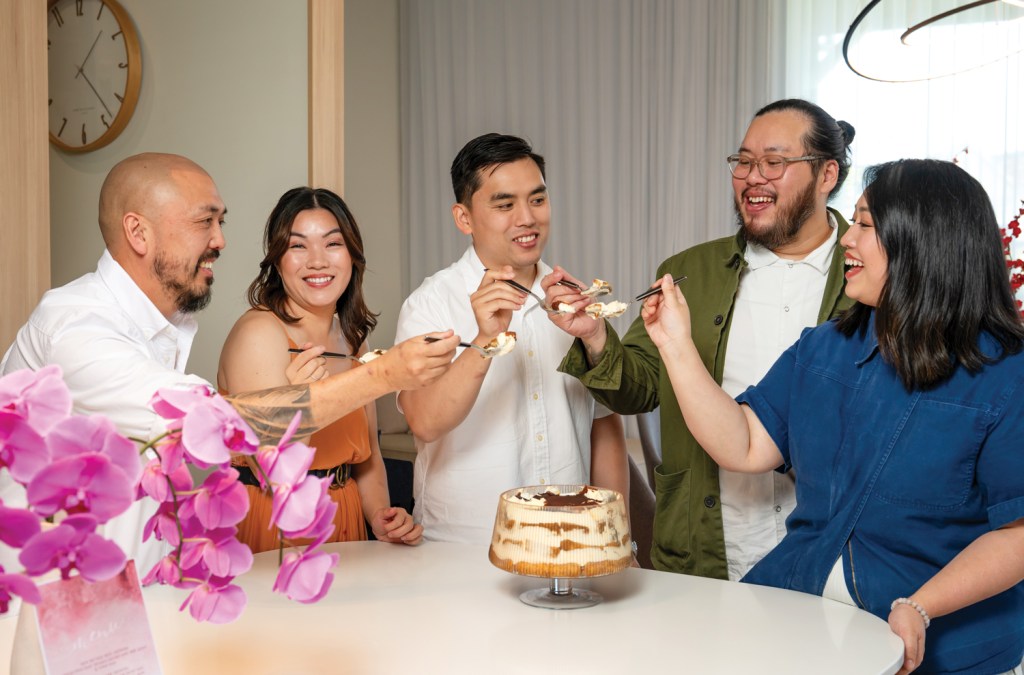
“We feel so proud,” Thy says. “Our parents taught us a good work ethic. You need grit to persevere, because it’s not easy.
“But what we pride ourselves in, is we still remember the beginnings. We’re stronger together, and at the end of the day, the family is what drives us forward.”
This article first appeared in the January 2026 issue of SALIFE magazine.
Want to see more stories from InDaily SA in your Google search results?
- Click here to set InDaily SA as a preferred source.
- Tick the box next to "InDaily SA". That's it.