Fashion’s hidden treasure
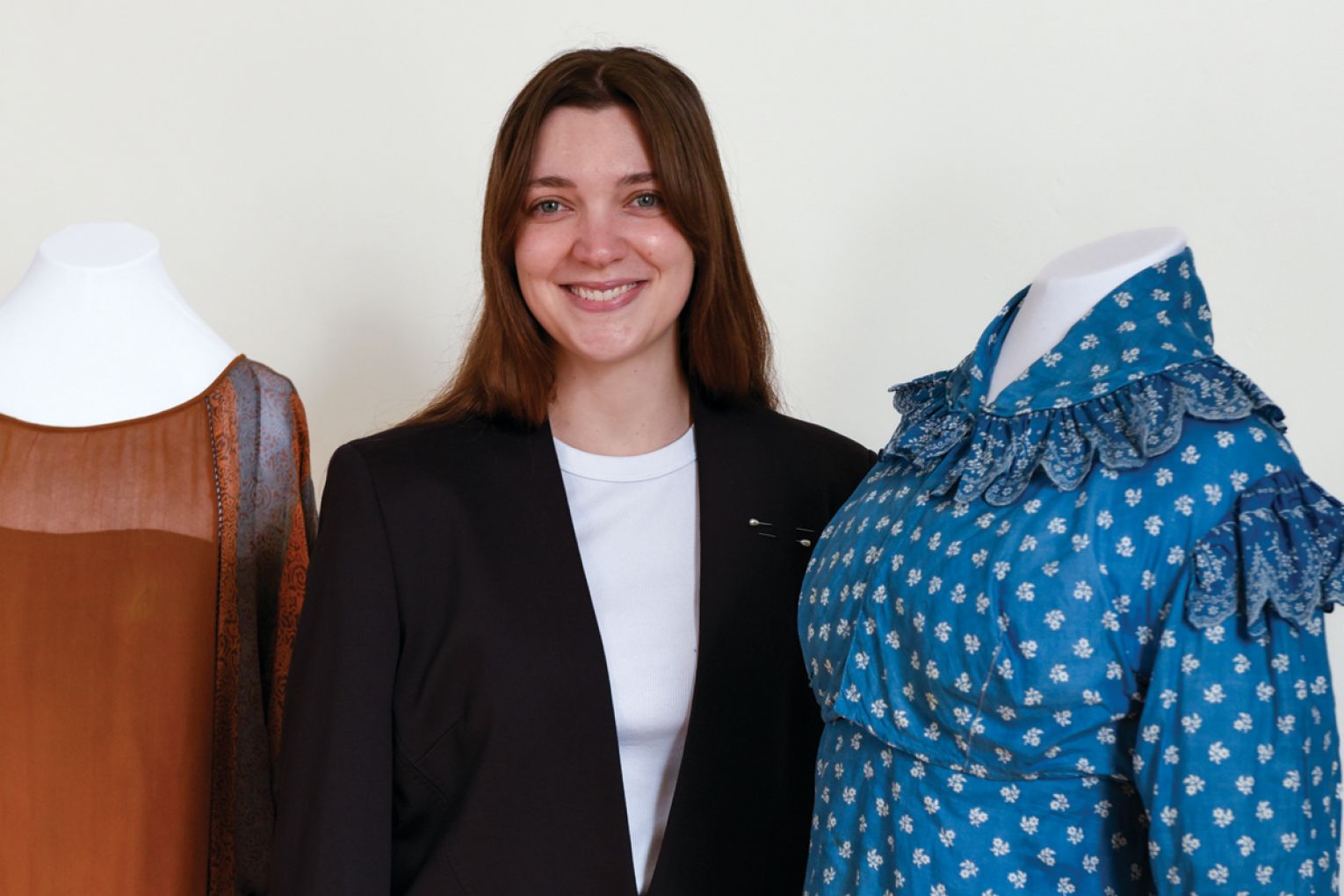
Kirby Moore had heard rumours about the historic dresses stashed away in the old Burra Courthouse, but details were scarce. What she uncovered was remarkable.
When Kirby Moore first heard about the historic dresses supposedly stored in the old Burra Courthouse building, she was intrigued.
The 28-year-old had studied costume design and honours in history in Adelaide and Armidale, NSW, ending up in Burra in 2022, where her mother lived.
Kirby was working in a coffee shop and volunteering with both the Burra National Trust and the Burra History Group when talk of the old dresses, said to date back to the 1800s, first came up.
“Some of the older locals knew there were boxes of clothes, but they weren’t sure if they were historical or costumes,” Kirby says.
If anyone had the background and knowledge to understand the significance of such an archaeological fashion find, it was Kirby, and she was on a mission to discover more. Her older History Group colleagues were thrilled someone so young was showing an interest.
“Geraldine Smedley, who is the loveliest lady from the National Trust, said she was going into the courthouse to do some dusting one day, and I asked if I could come and look for the dresses and she agreed to help me,” Kirby says. “That’s how it all started.”
Once inside the courthouse, Kirby spotted some large boxes in the far corner, but her path was obstructed by piles of old furniture and other dusty items stored haphazardly.
Kirby edged her way around the furniture towards the mysterious plastic boxes, shaking with anticipation as she lifted the lid on the closest one.
You might like
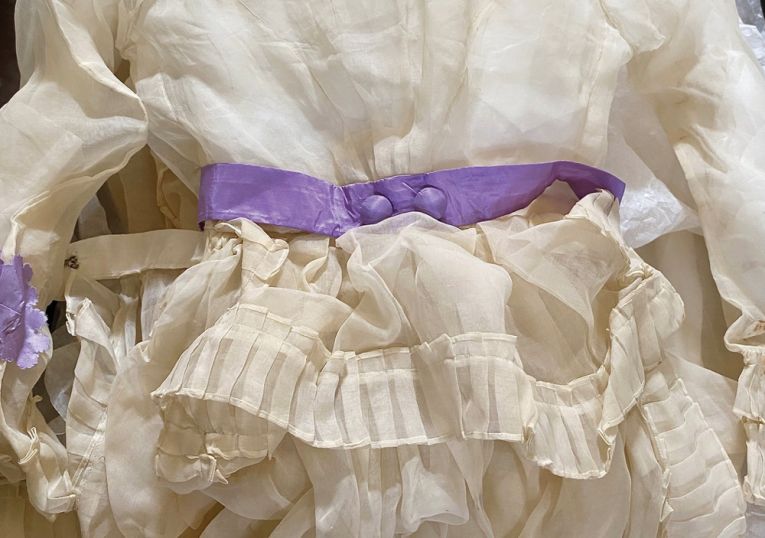
“I remember opening it, pulling back the tissue paper to see an 1860s or 1870s dress,” she says. “It was made from the most sheer cream silk organza, and it had these purple bows and ruffled details. It was absolutely incredible, with little pleats along the hems. It was so exciting.
“I didn’t take it right out, because at that point I was kind of sandwiched between what looked like old theatre seats behind me, and an old bed frame in front of me, and I had the archive box balanced on two little wicker tables.”
Kirby estimates there were around 10 boxes, some a metre long while others were smaller cardboard boxes, and each contained various dresses and other clothing items. It was a fashion moment frozen in time and for Kirby – it was akin to striking gold.
“When I opened that first box, it was shock and disbelief that these incredible pieces of history were hidden away for so long,” she says.
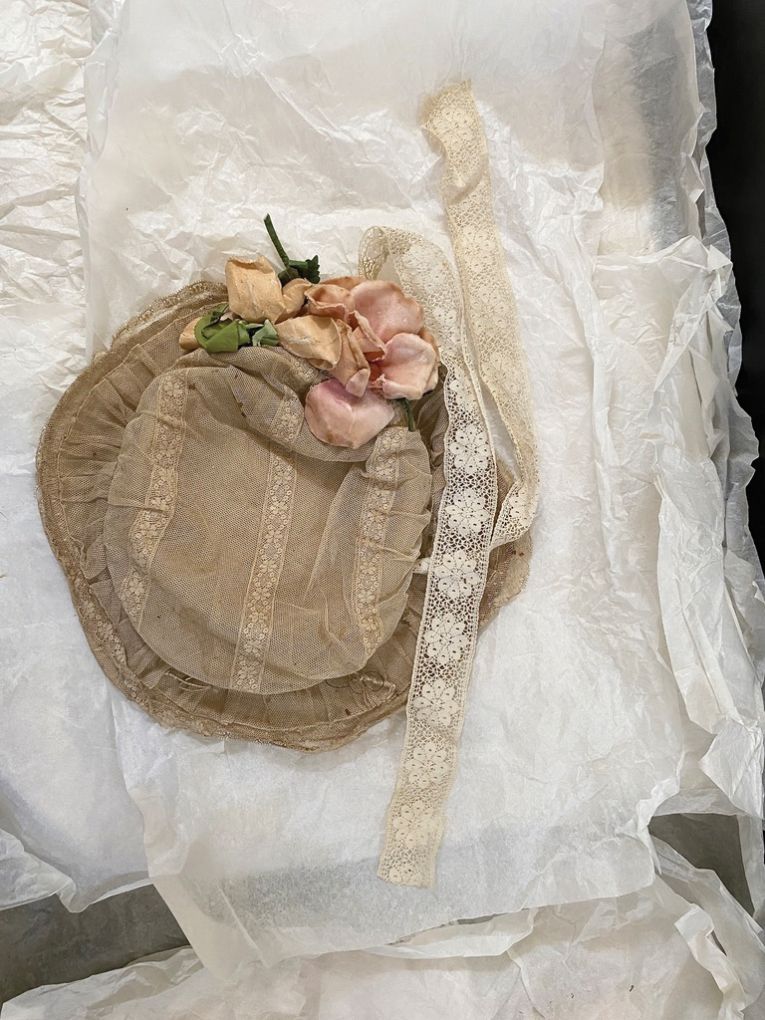
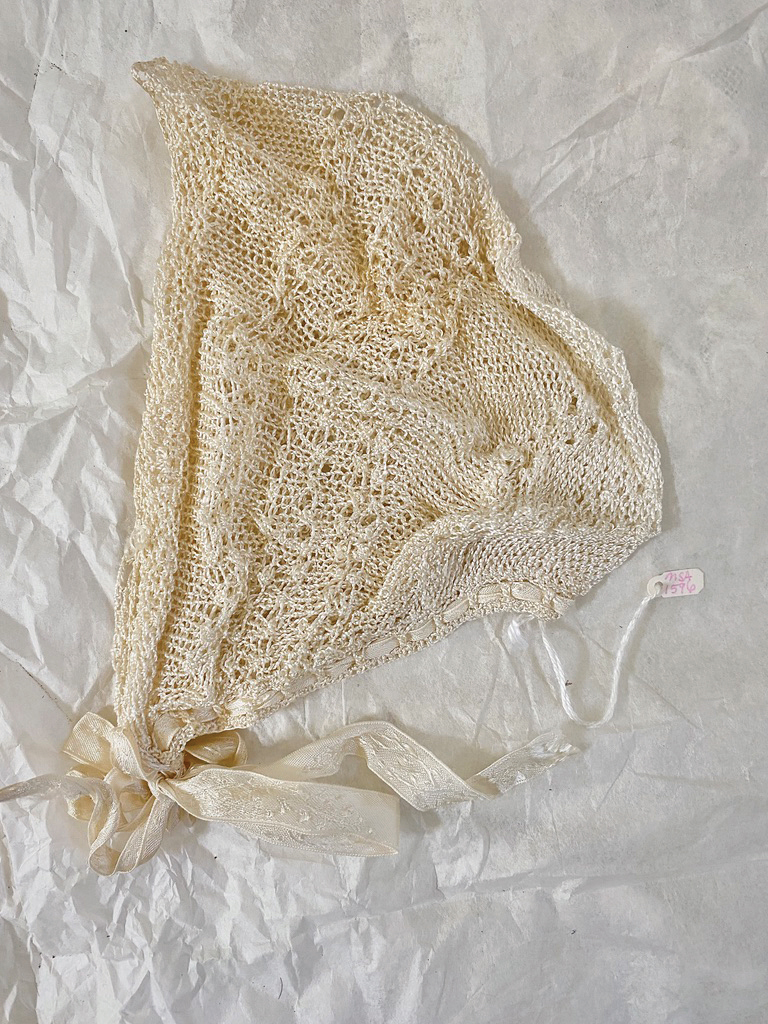
“I had no idea how many there were, but it was quite a few garments and pieces, like hats, stockings, handmade lace. It is an incredible collection that I don’t think anyone was really aware of.
“Unfortunately, a lot of the history of these dresses has been lost to time so we can’t be sure of exact details, but it was still an extraordinary find of historical significance.”
Such was Kirby’s dismay and excitement that she initially questioned whether some of the dresses were authentically old.
“I remember one of the boxes had just one dress and I opened it and there was this beautiful blue cotton dress with a floral print on it. And I thought, ‘Oh, this must be someone’s sewing project’. There’s no way this is a genuine, authentic dress, because it looked like it dated between 1810 and 1815 if it was real.
“It was a kind of Jane Austen-style dress with a high empire waist, and I thought it was someone’s reconstruction that had ended up in here. I was looking for all the signs that it was a reconstruction, but it was authentic.
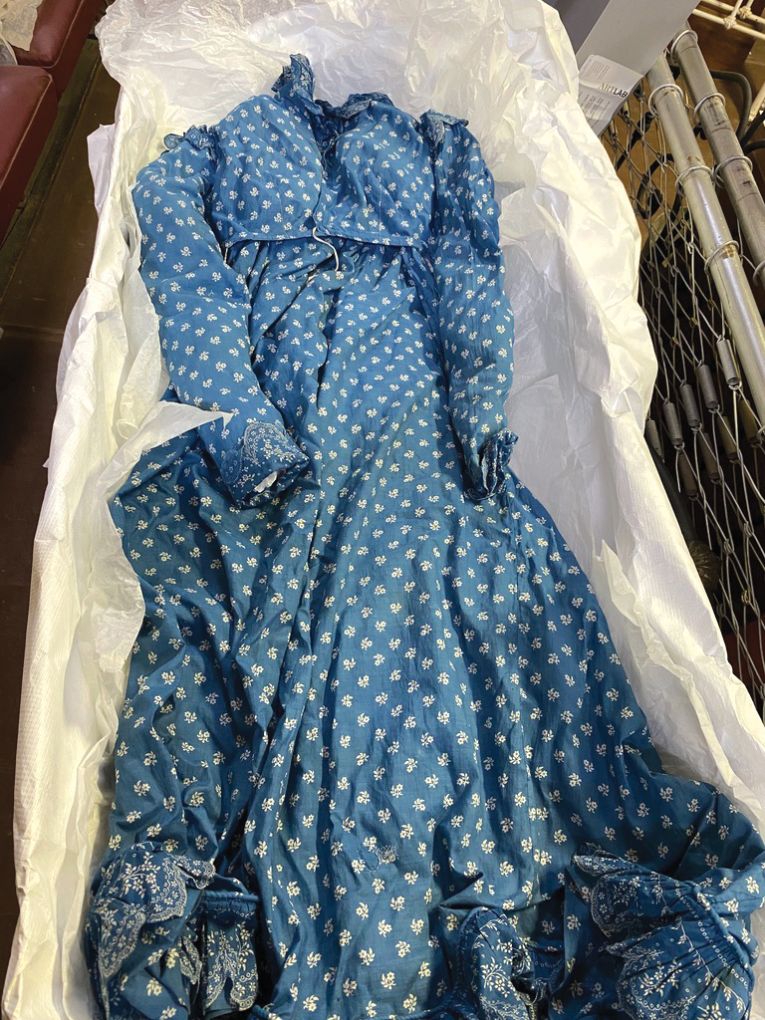
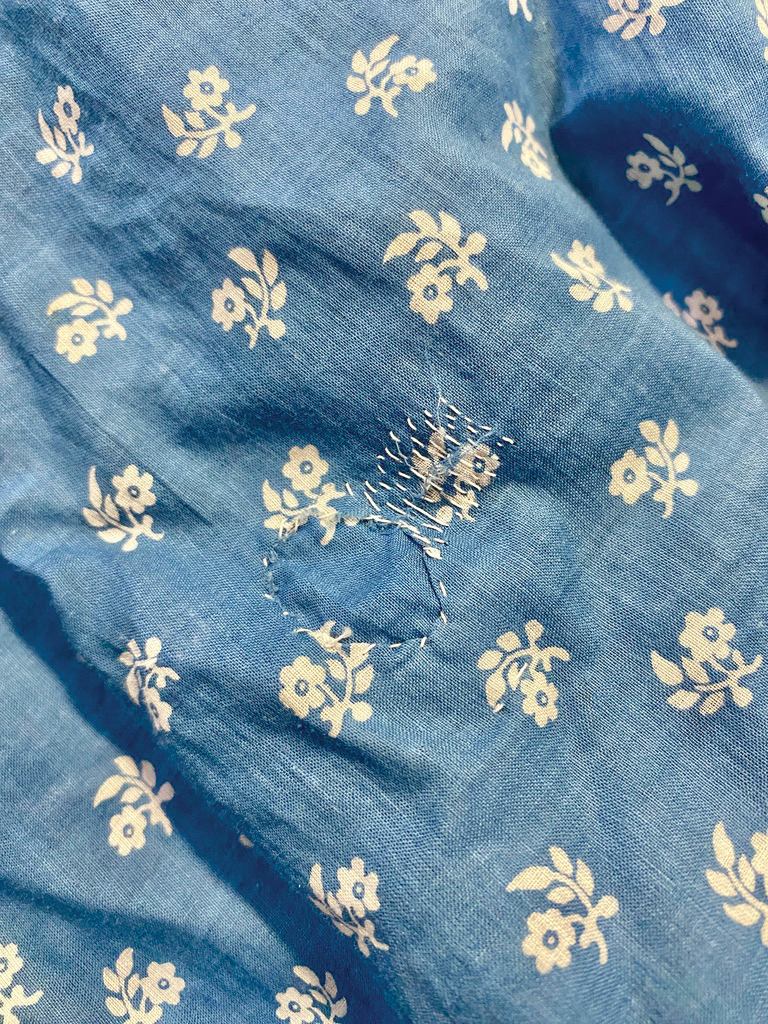
“Every single stitch was hand stitched. There was even a little hole in the skirt that had been repaired and patched using a little section of the hem that had been turned up, so they had cut a little section away from the inside of the hem and patched that hole. It was incredible.”
Kirby and the other members of the Burra History Group were astounded at the condition of the clothing.
“Keeping dresses like this in such great shape is a lot to do with protection from the sun and making sure there are no insects or dampness,” she says. “So, these archive boxes are very breathable, but they are not bug proof, or mouse proof. So, when I had gotten into the room and saw them all stacked up in the back of what was a very dusty place, I was thinking, ‘Oh, if I open this, and they are absolutely destroyed by moths or something I will be devastated’. But everything was in fantastic condition and somehow the insects had not gotten in.”
Subscribe for updates
Such was the excitement around this time capsule of fabric, design and artistry that Kirby and her history group members knew they had to bring the collection to life.
It took months to go through each box, photographing every item and cataloguing the collection. By the time they’d gone through it all, there were 87 items ranging from dresses to stockings, babies’ bonnets, pieces of handmade lace, bodices, skirts and undergarments, estimated to be from the early-1800s to the 1960s.
“I’ve ascertained the dates based largely on my own knowledge of fashion styles and silhouettes which changed rapidly and are often quite recognisable, particularly when you have the complete dress or ensemble,” Kirby says.
“There are some more qualitative things that help date clothing, for example anything that is machine sewn can’t pre-date the sewing machine.”
A selection of the items was put on display in the renovated Burra Courthouse as part of an exhibition coinciding with the “Back to Burra – 180 Year Celebration”, and the SA History Festival in May, 2025.
Kirby and her colleagues were thrilled when the Governor of South Australia, Her Excellency the Honourable Frances Adamson AC, attended the exhibition and marvelled at their extraordinary collection.
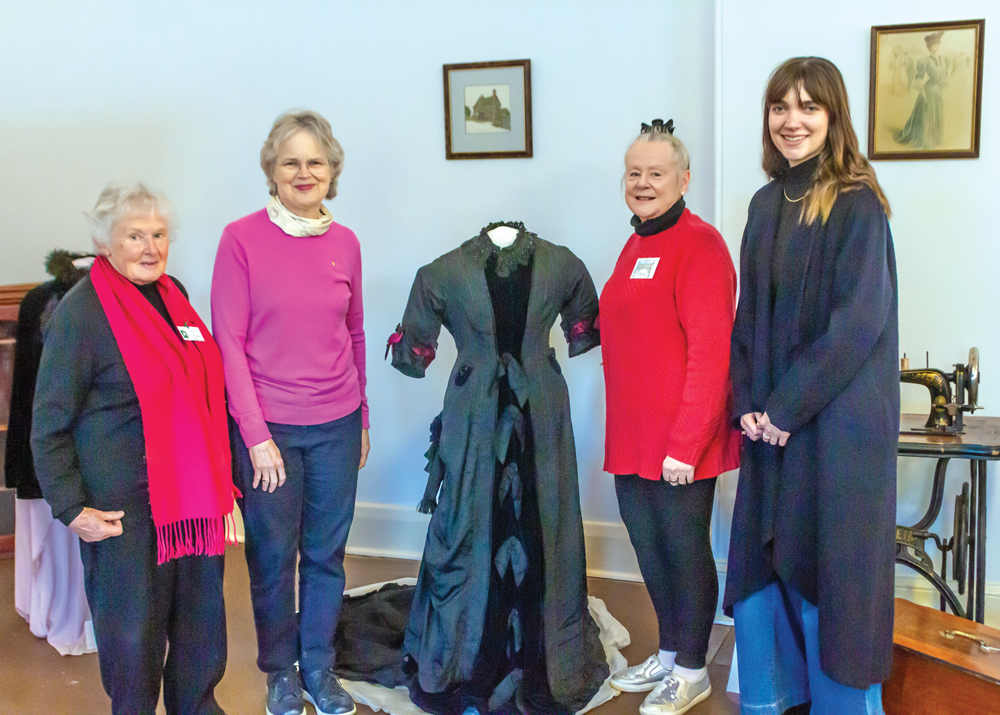
For Kirby, who has always been interested in history and fashion, it felt as if all her studies and knowhow had culminated in this Burra fashion find. Her honours project, for example, involved reconstructing an 1884 wedding dress which is now on display at the historic Martindale Hall in Mintaro.
“I was just blown away by the discovery of these historic dresses which give us such a glimpse into life all those years ago,” she says. “These are not costumes, they are authentic items, clothing that people wore.
“We actually had to get small mannequins for the exhibition because the garments were all so small. They had really cinched waists and would have been worn with corsets.
“I love the way that they provide these insights and give you information about who was wearing these garments, as well as who was making them, and those two people were not necessarily the same person.
“And as someone who is a maker, I am a practitioner, that’s just really important to me to see how things were made back then. It’s interesting to see the kind of sewing techniques that are still used today, that have just carried over, while also seeing the things that have changed.”
Several of the dresses from the exhibition are now on display at the Bon Accord Museum in Burra, while the rest have been safely packed away in the vault of the old bank building.
“They are packed in archival acid-free tissue paper,” Kirby says. “We use this both to layer between garments that share a box and to fill out bodices and sleeves to provide internal support.
“It’s also important that larger items, such as dresses with full skirts, aren’t folded along the same lines each time they’re packed, as repeated folding on the same lines can place stress on the fabric. I also ensure garments are packed from heaviest at the bottom to lightest at the top; for example, a silk chiffon blouse would be placed on top of heavier pieces like a velvet cloak.”
For Kirby, this once-in-a-lifetime discovery has been an exciting personal chapter, motivating her to begin a PhD in dress history.
“We only displayed a fraction of the collection at the exhibition, so I hope to be able to display more over time,” she says. “I would also love to study the garments more closely and take better photographs for documentation.
“You hold these dresses and think about all the hands each of these items have gone through. That’s a whole lot of history there and I just find it so fascinating. For me, this whole discovery has just been a little reminder that I’m on the right track.”
This article first appeared in the January 2026 issue of SALIFE magazine.
Want to see more stories from InDaily SA in your Google search results?
- Click here to set InDaily SA as a preferred source.
- Tick the box next to "InDaily SA". That's it.