Heritage meets innovation
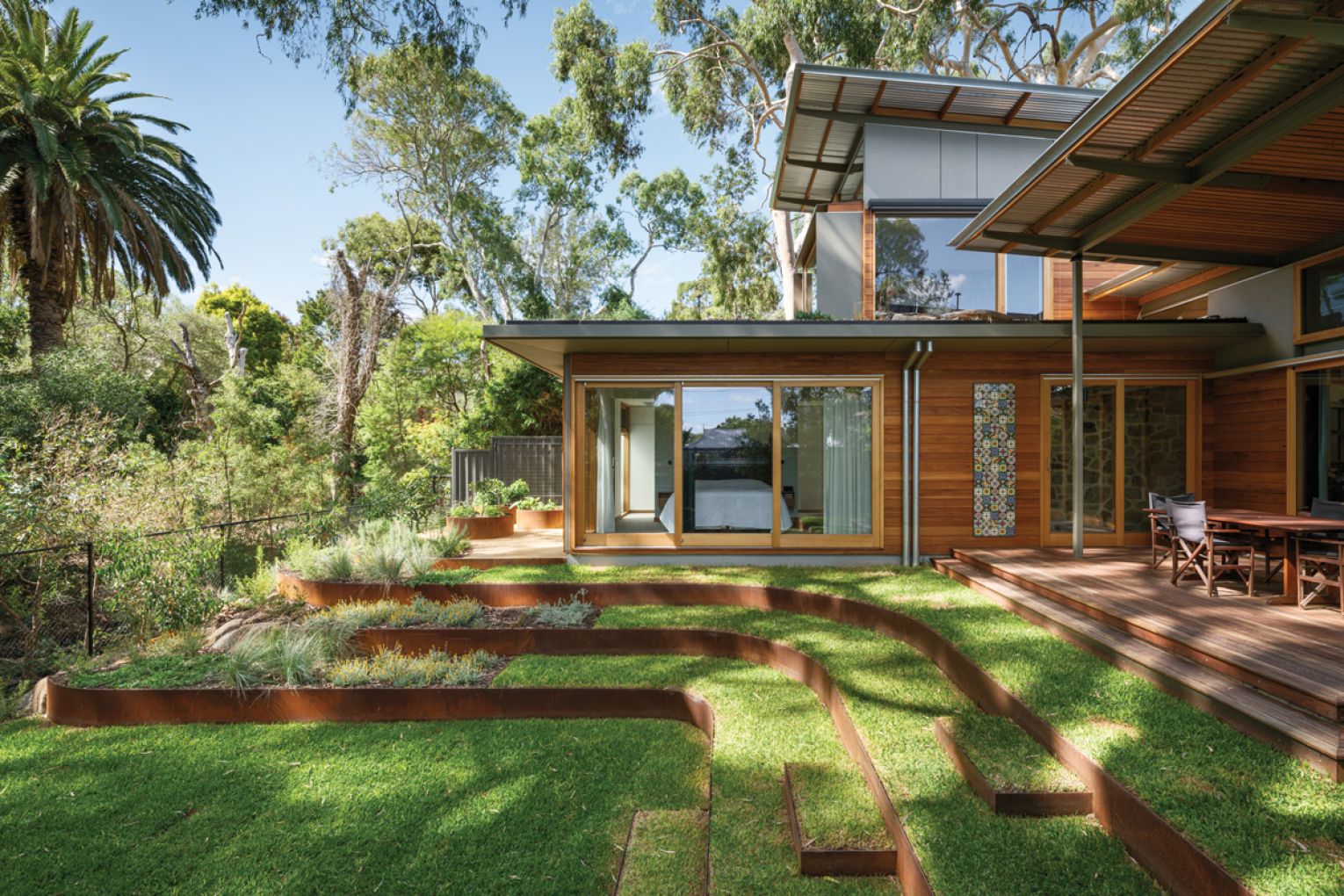
Stone, timber and glass are the heroes of this eastern suburbs creekside home, which brings botanicals to the fore with clever design.
Wandering past a plot of land for sale while walking the dog near her eastern suburbs home in 2021, Sue spied a beautiful, old stone wall running along the front boundary.
She and husband Graeme were living about a kilometre away and were looking to sell the 100-year-old Federation-style home they’d lived in for three decades in order to build.
The wall piqued Sue’s attention, while another drawcard was the chance to live right on Second Creek, which extends along the rear boundary.
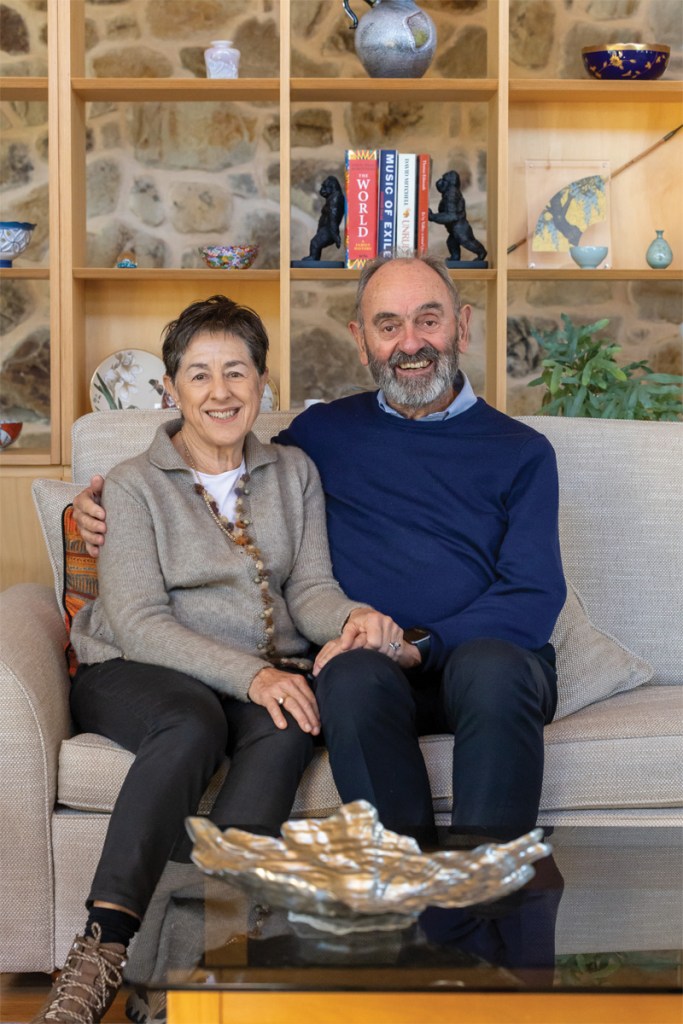
The couple had always lived in older homes and this spot was the perfect patch to create a sanctuary made just for them.
On a friend’s recommendation, Graeme and Sue enlisted Troppo Architects and worked with them to design a space that would take full advantage of the grand surrounding gum trees, including one that straddles the boundary between their property and the neighbour’s land.
The regulated gum tree restricted the footprint, with about a quarter of the block they couldn’t build on – not even building materials could be left too close to the giant gum’s trunk.
Despite that, the tree is almost a design feature in itself, providing a living backdrop to relish just outside the expanse
of windows.
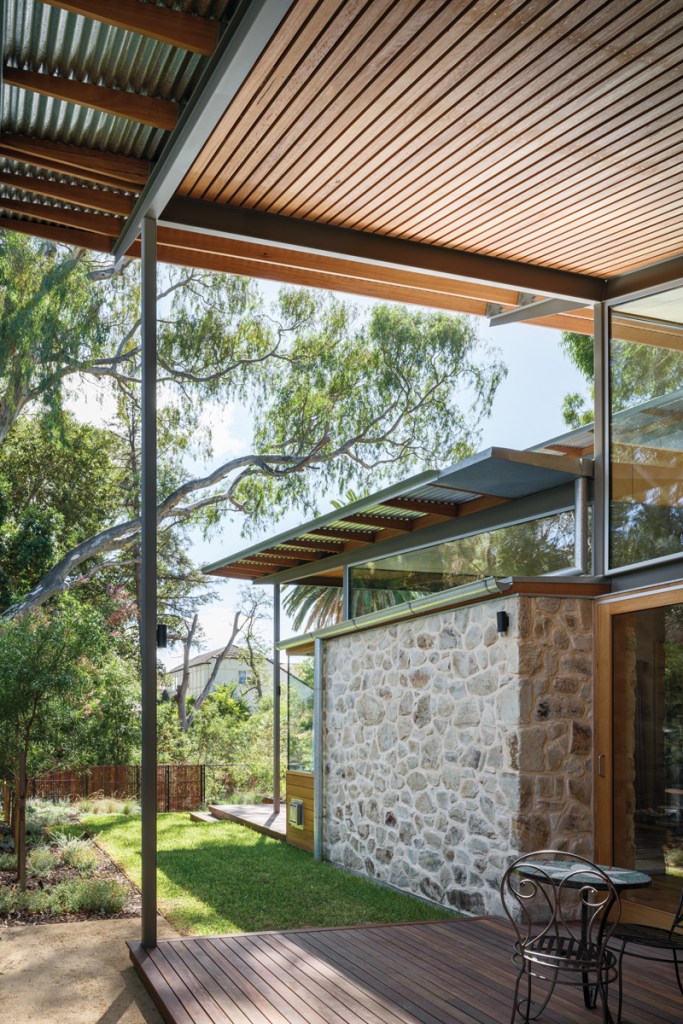
The brief was to incorporate timber, glass and stone, all of which Troppo has used in abundance to create a warm interior that champions nature.
The use of Carey Gully stone is a nod to the historic wall, which used to belong to Moorcroft House, a home built in 1854 and later extended.
When the house was demolished years later, the land was subdivided, but the heritage-listed wall remained.
“We couldn’t knock it down – and we wouldn’t want to anyway,” Graeme says.
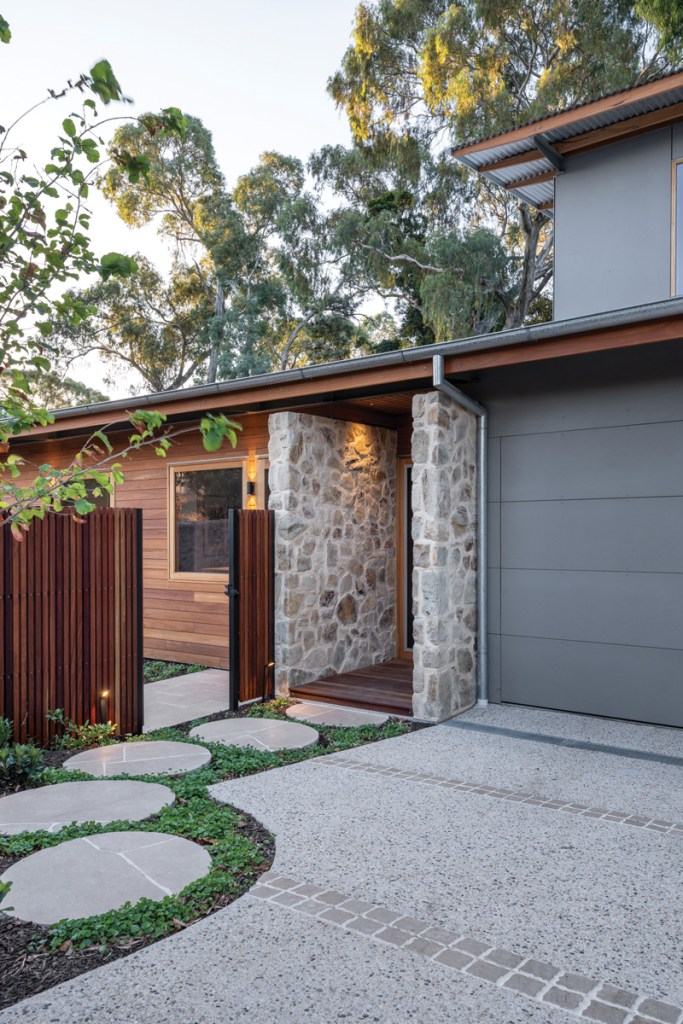
The wall creates a little courtyard at the front of the home, with a veggie patch that Sue maintains, striking lavender planted against the stone and lots of bench space to sit in the morning sun that finds its way in.
While the wall is a much-loved sturdy reminder of the area’s history, Graeme and Sue were looking to modernise.
You might like
“We’d always lived in old houses and our previous one was more than 100 years old with lovely old period furniture,” Sue says.
“We thought, there’s no point replicating that; we want something different.”
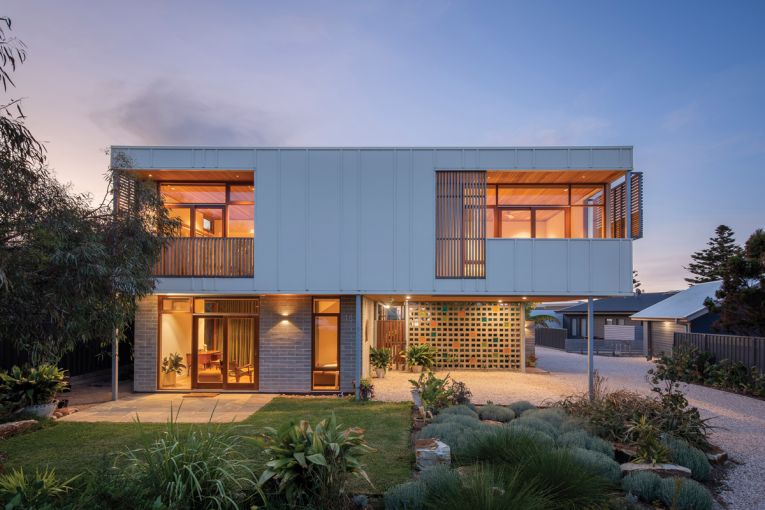
There’s a subtle mid-century modern feel to the home, notably in the tone of the blackbutt timber that dominates the living space, and creates hoop pine shelving that separates the sitting area from the hallway, while also leaving it open.
“We’d seen some Frank Lloyd Wright houses in the U.S., which we really liked, so there’s a bit of inspiration there,” Graeme says.

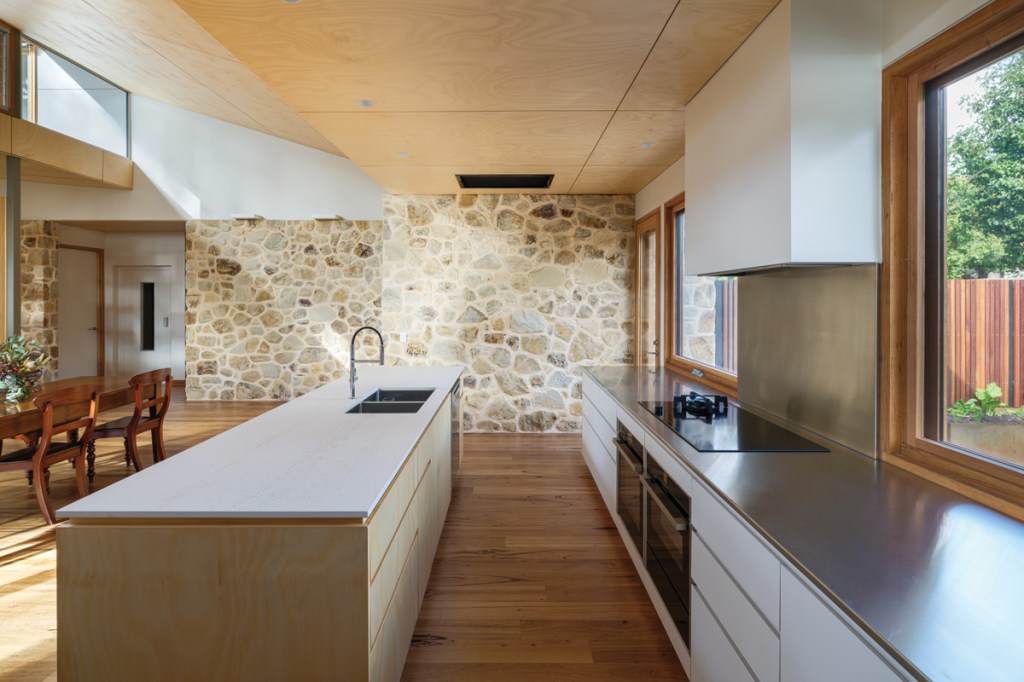
The house sits on a 660 square-metre block and the entire footprint has been used wisely.
“We scrapped rooms we didn’t need,” Sue says.
“In our previous home, we had a little room we didn’t know what to do with; a bedroom, a study, dining room that we only used occasionally, an enormous sitting room and a family room.
“For two of us, we don’t really need all of those rooms. We scrapped all of those extra rooms in favour of one really big one.”
The current home has three bedrooms, two of which are being used as offices, but can easily convert if their children visit from interstate or overseas.
Senior architect at Troppo Architects, Tain Patterson, worked on the project and says immediately, their starting point was the two elements that featured on the site – the wall and the gum tree.
Tain says his challenge was to help the house and the wall interact with each other seamlessly.
“The owners still wanted to be able to see the wall from the house and be connected to it,” Tain says.
“Even though it’s a bit gnarly and not the best example of stonemasonry, it’s still got that interesting character about it and so when the afternoon light hits it, it looks really nice and golden and it’s a fairly gorgeous feature.”
Then, there was the question of the mammoth tree.
“You walk on the site, see the gum tree and think, how are we going to deal with this?”
Tain’s initial test was designing a home that would receive natural light and ventilation, despite the blockade created by the tree.
“It was quite a challenging site actually, and as an architect, that’s what makes projects interesting.”
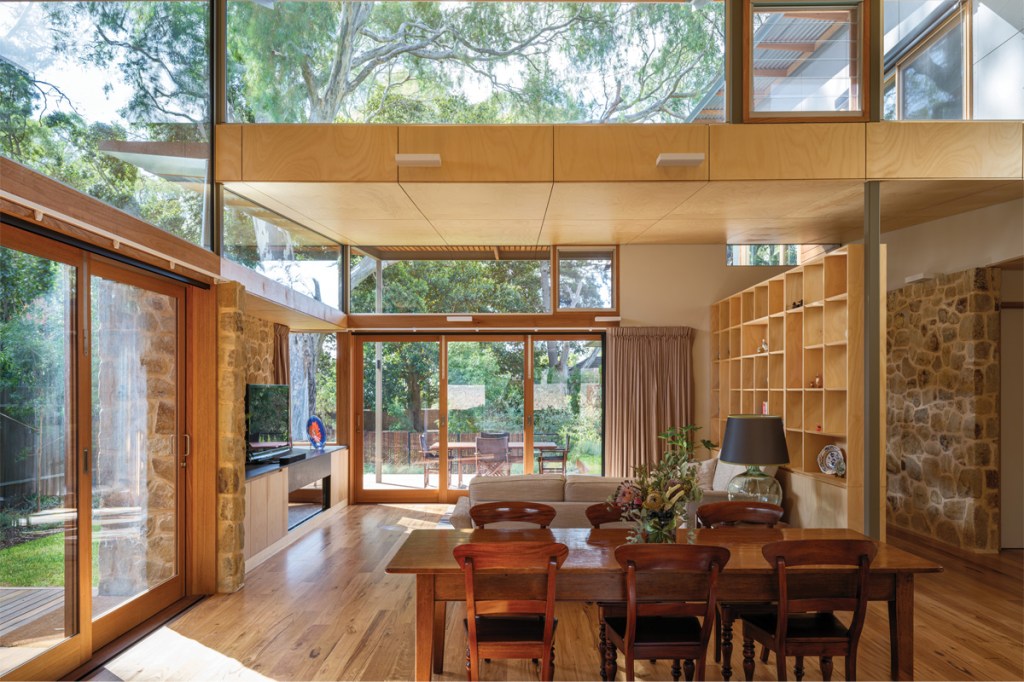
Tain says the key to the design was keeping the second storey off to one side to create a light and airy feel.
“The second storey is positioned on the eastern boundary because the neighbours have got three significant trees along that boundary too, and they’d be overshadowing the house anyway,” he says.
“This way, it maximised the northern light coming into the downstairs living area.
“The thing we wanted to avoid in a house so close to a tree was just seeing the trunk – you want to look up and appreciate this beautiful river red gum that’s in front of you, and take in the canopy as well.”
The expanse of glass allows the greenery to shine and openable louvres mean hot air can be easily expelled.
Subscribe for updates
Tain says the idea was to keep the roof above the second storey bedroom low to enable the morning sun to stream into the ground level living space.
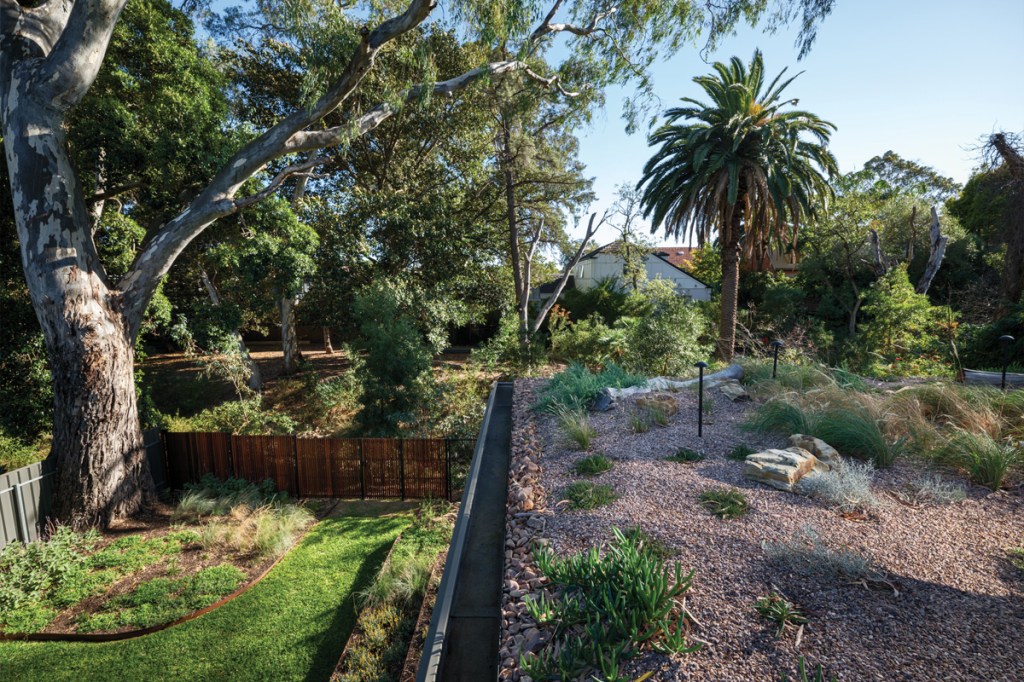
“But you don’t want to look out to a bright, shiny metal roof from upstairs, so we came up with the idea of a roof garden.”
Because the top storey doesn’t sit perfectly on top of the ground level and leaves an edge of exposed roof, it has been peppered with hardy plantings.
From the upstairs bedroom/office, there’s a seamless transition in the view from greenery on the roof to the creek area, and the roof’s plantings have been chosen for this very purpose.
“The garden brings the greenery to the forefront – it feels like an extension of the reserve.”
Tain says that a lot of rooftop gardens have deeper soil and to carry the weight, they need more structural elements to hold the weight.
This roof, however, has a thin soil bed and plants that don’t require a lot of water and maintenance.
Tain says when plans first lay in front of a client, nine times out of 10, so many aspects don’t make it to completion because of budget, but this project was different.
“To Graeme and Sue’s credit, their priority was having something that was well-crafted and a pleasure to live in and to look at.”
The design garnered Troppo the 2025 South Australian Architecture Award for Residential Architecture – Houses (new).
Sue says she and Graeme were set on keeping the home very minimalist in the beginning – which they achieved through the neutral colour palette – but little additions kept creeping in.
A butler’s pantry and outdoor kitchen were both added to the plans and it’s resulted in a perfect house for entertaining.
The deck extends out to two sides of the home and when the couple has people over, all the windows can slide open to create space for everyone, inside and out.
The home has been future-proofed for Sue and Graeme; they’ve had a lift installed, and the ground level has been designed to live on exclusively, with a master bedroom downstairs – another reason to keep the footprint of the second storey compact.
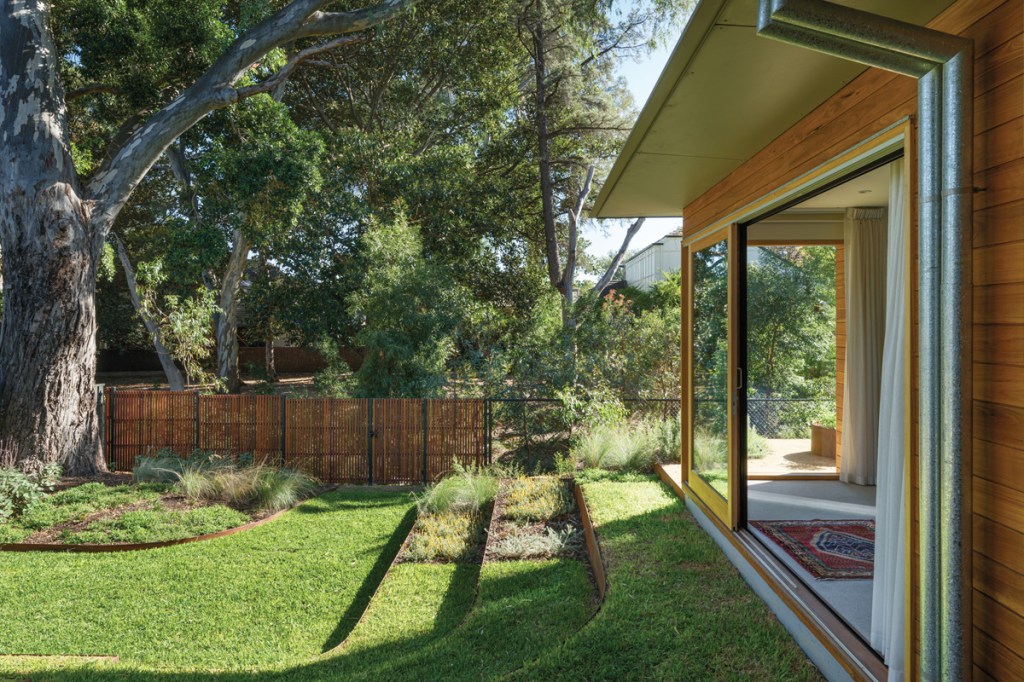
When it came to decorating, the pair had planned on hanging some pieces, but ultimately decided not to do anything to distract from the character of the stone walls.
Living just a walk away during construction, Graeme and Sue would wander down daily with their dog to meet builder Fergus Milne from Milne Projects – whom Tain says is one of the best builders he’s worked with – and he was happy to update them about what was happening that day.
Rounding out the team was WAX Design, who have created something very special with the landscaping.
WAX took out the 2024 Master Landscapers South Australia Residential Landscape Design Award for the four-tier terraced design, which incorporates lush lawn and a bounty of natives.
A host of edibles sit within the garden, including limes, kumquats, lemons and a herb garden.
Graeme and Sue say the architect, builder and landscaper worked collaboratively to bring the project to fruition.
“Everybody worked close together – it was real teamwork,” Graeme says.
“Our main focus was on the house. I thought with landscaping, all you’ve got to do is dig a few holes and put plants in them, so I imagined we’d scrap the landscaping if it all got too expensive.
“I had been completely ignorant; I didn’t realise how big a job it was. There was a lot of work with steel and concrete.
“The landscapers (Adelaide Landscape Construct) worked really hard, even throughout the Christmas break.”
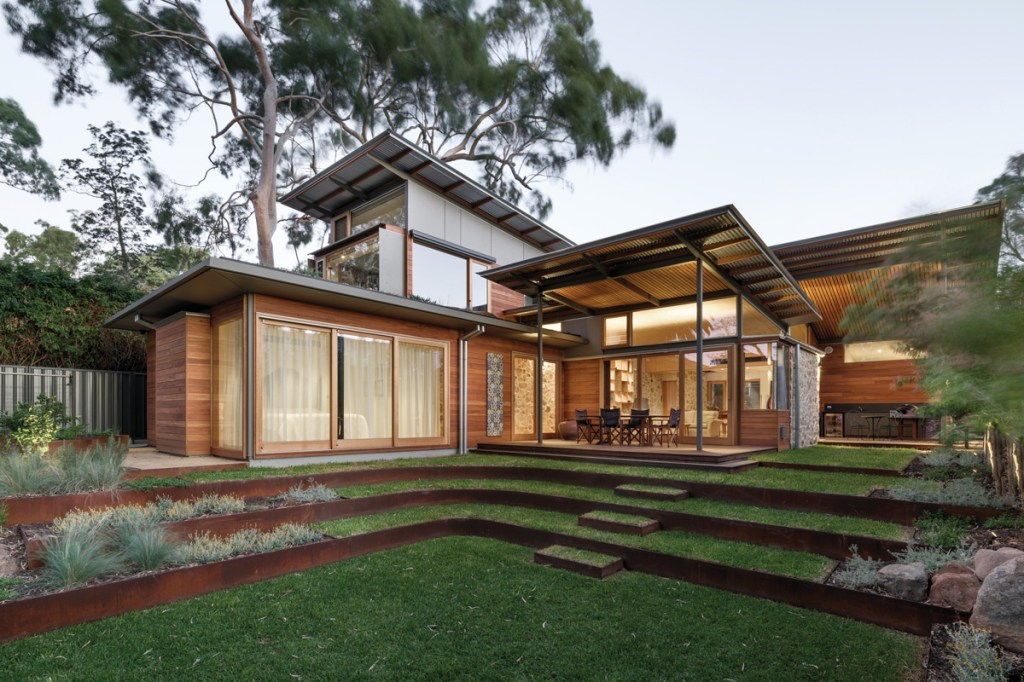
ALC also won an award in the 2024 Master Landscapers South Australia Residential Landscape Awards for their construction work.
The result of the combined work is something Graeme and Sue relish in every day – their peaceful spot amongst the trees.
“It’s our little oasis,” Sue says. “We don’t really see anybody, other than a few people walking along the creek with their dogs on the other side.”
This article first appeared in the October 2025 issue of SALIFE magazine.
Want to see more stories from InDaily SA in your Google search results?
- Click here to set InDaily SA as a preferred source.
- Tick the box next to "InDaily SA". That's it.