Timeless beauty
With their timeless beauty, hydrangea – those deciduous perennial shrubs – can decorate both indoor and outdoor spaces.
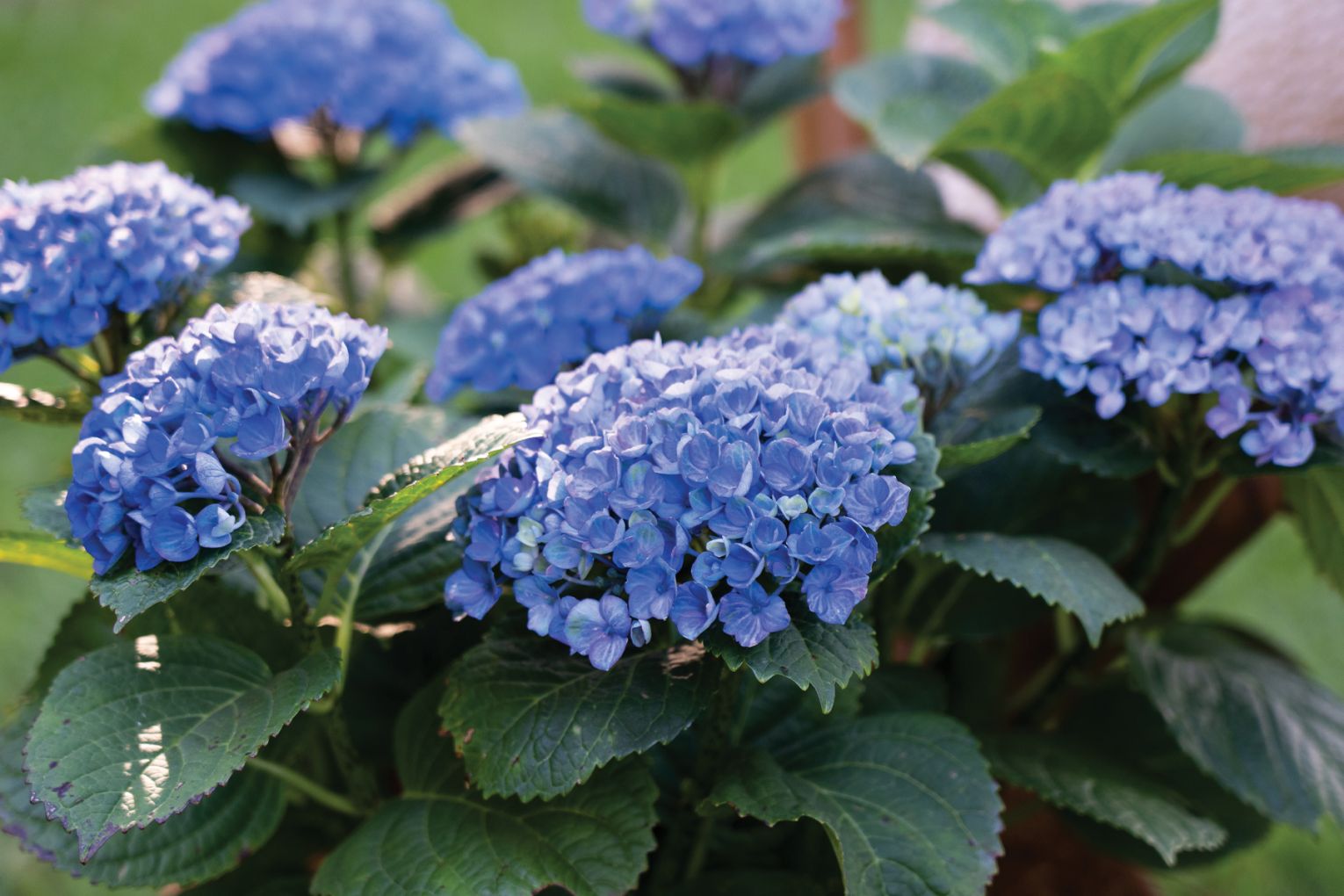
Hydrangeas macrophylla have distinct flower styles.
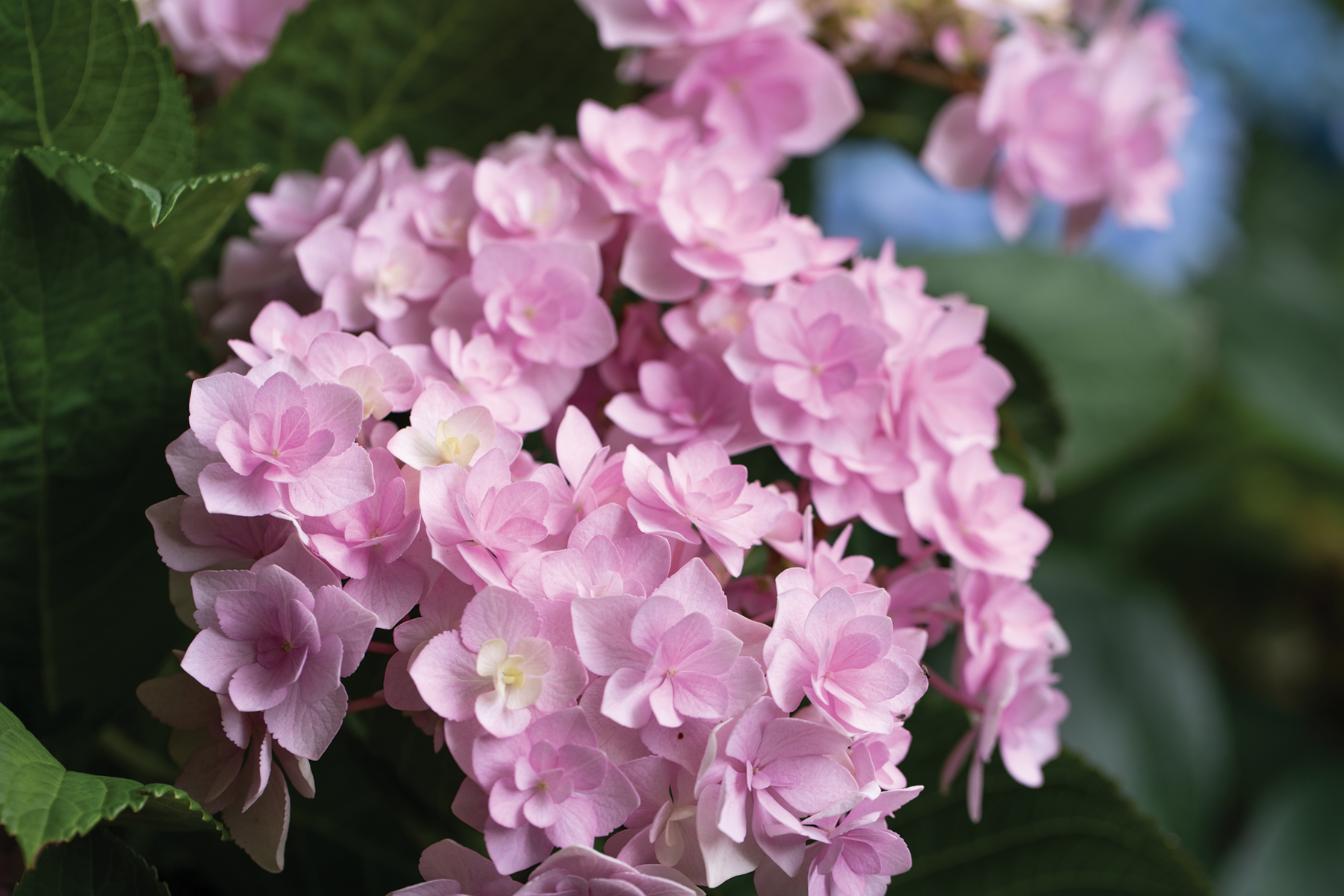
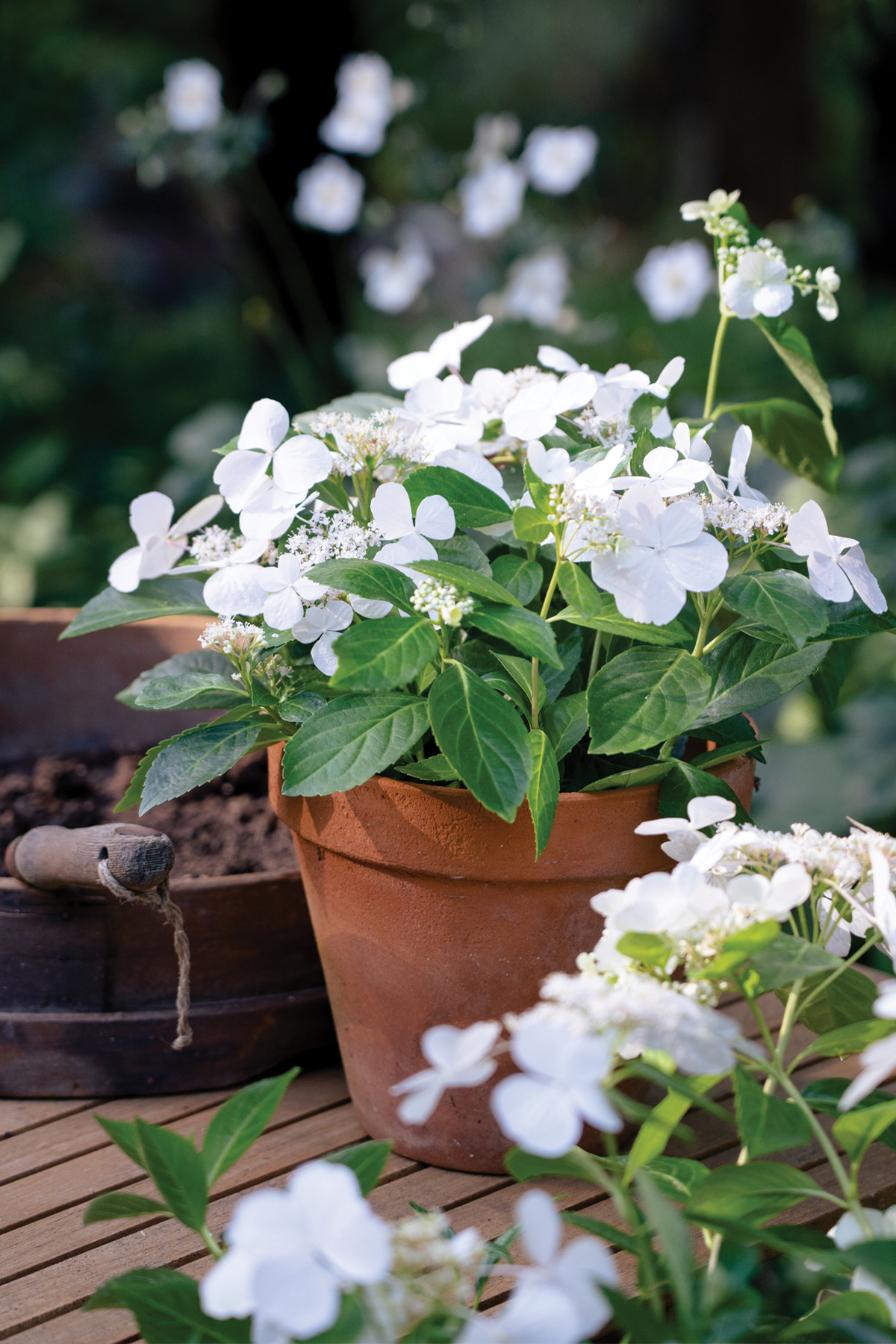
The traditional flowers of the hydrangea are known as “ball-type” and are often referred to as mopheads. But another style is “lace cap”, referred to as “hen and chicken”. Lace cap heads have a centre cluster of petal-less flowers surrounded by traditional hydrangea florets. Hydrangeas with florets bearing two layers of petals are referred to as doubles. A less traditional style has popcorn-like florets.
Other species are H. paniculata, arborescens, quercifolia (oak leaf) and petiolaris,which is the climbing hydrangea, and all have delightful flower styles.
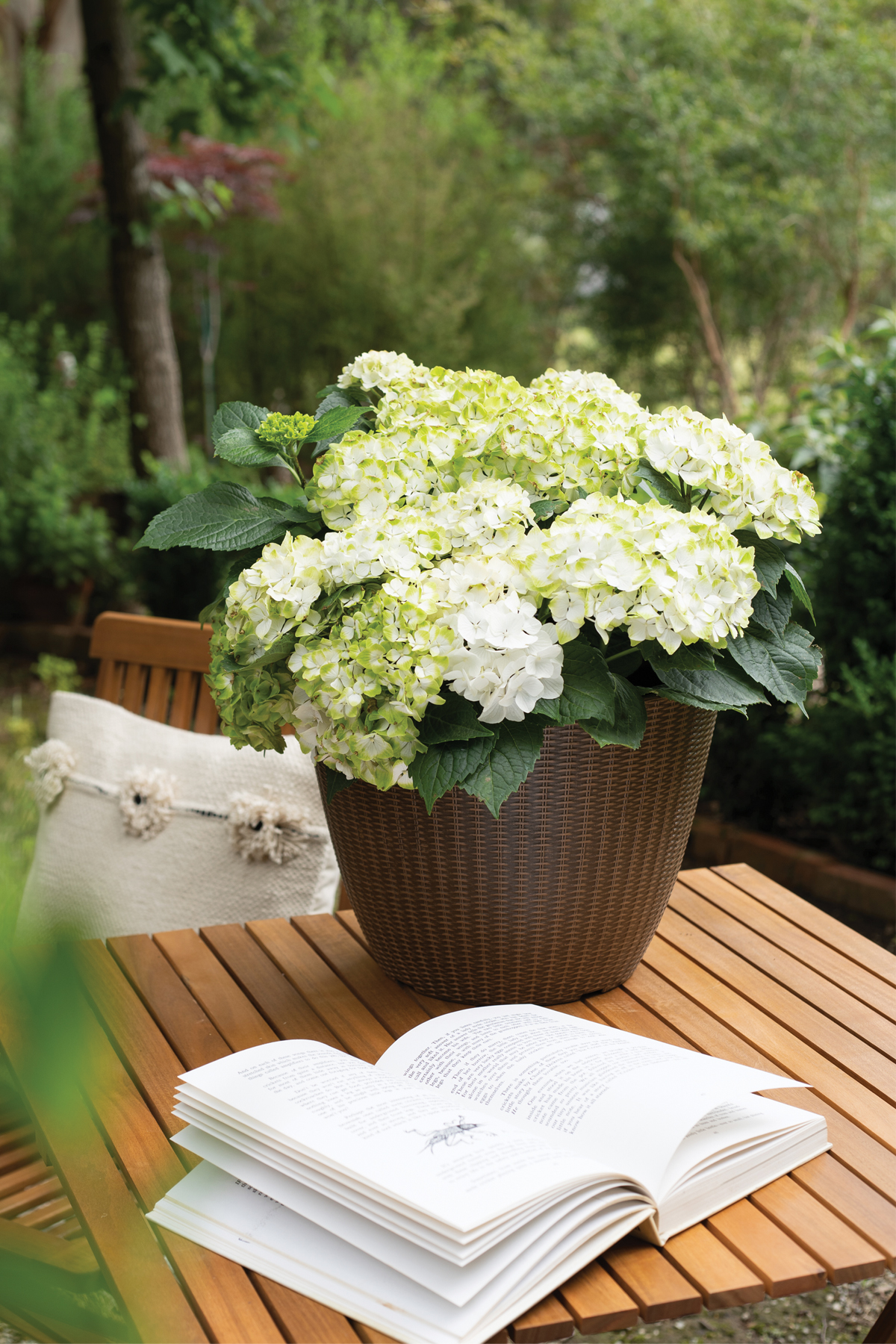
What colour do you prefer: pink, blue, red or white?
An interesting feature of hydrangeas is that their colours can vary depending on the soil type. Pinks and blues change with soil pH, alkalinity or acidity, so if you prefer blue hydrangeas in Adelaide, it is easy to adjust the pH of your soil, simply apply Blueing Mix regularly from May through to when flowering starts. White hydrangeas usually remain white regardless of the pH of the soil, as will most reds.
Watering
As hydrangeas are the first to wilt, you will easily notice when yours needs water – and hence they are also a good indicator of the level of moisture in your garden as a whole.
You might like
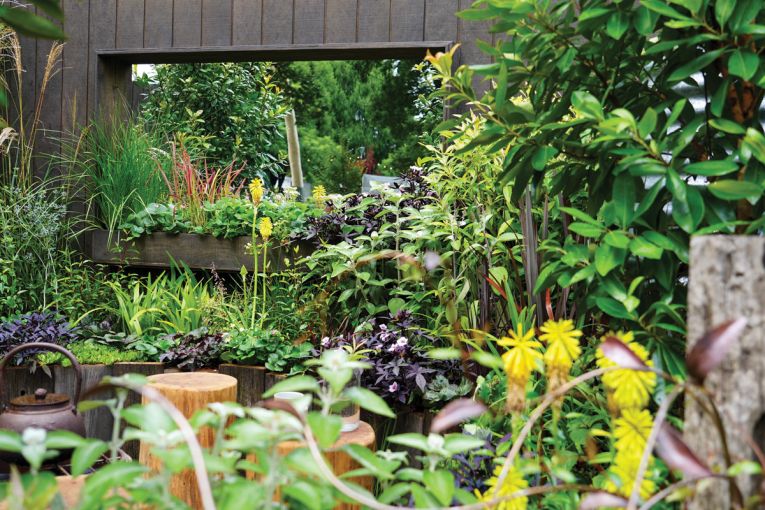
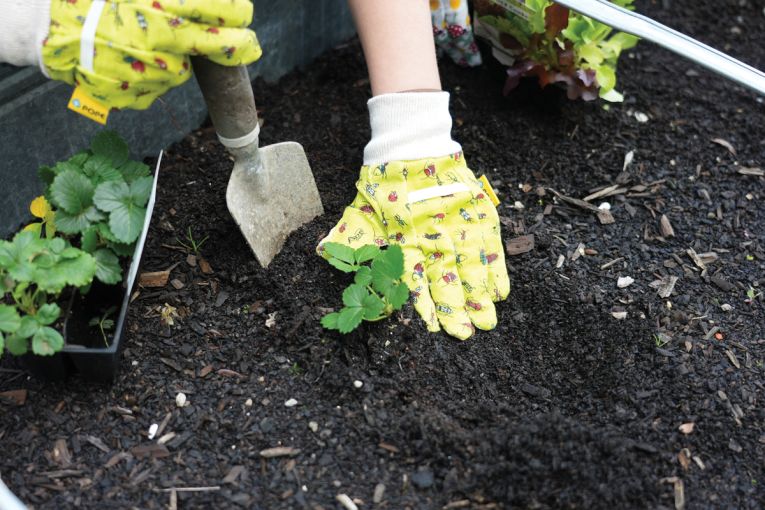
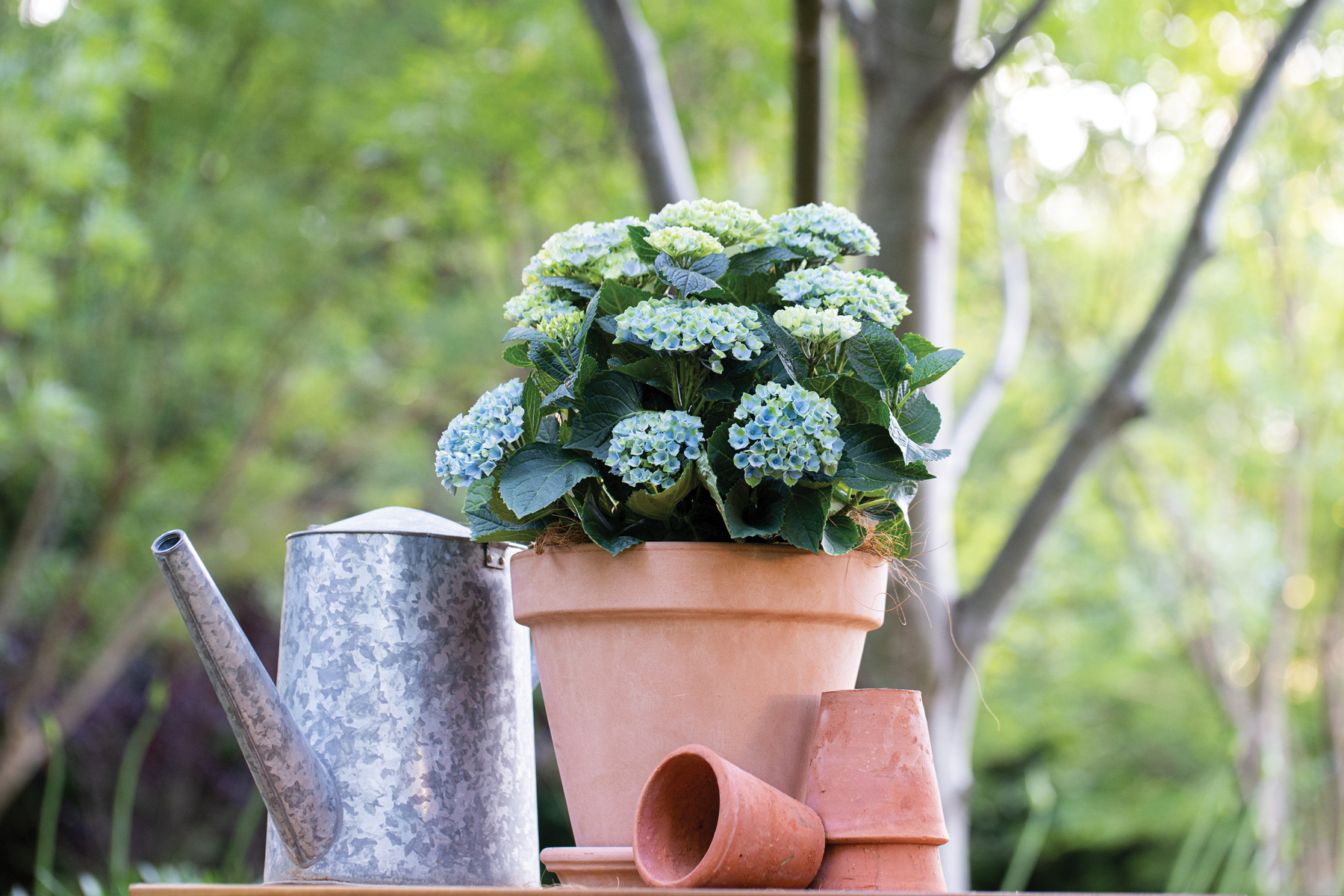
If planted in containers, they may require watering every day, particularly over hot periods. It can also be helpful to leave a saucer of water under the pot. Your hydrangeas in the garden will benefit from regular deep soaks and generous applications of mulch.
Position in the garden
Hydrangeas prefer a bright, moist, sheltered position, protected from direct sunlight and hot winds. A position facing south or east is ideal. Hydrangeas prefer moisture-rich soil; a generous addition of organic compost will assist the plant in retaining a good moisture level. Due to our alkaline soils, hydrangea leaves may become yellow with green veins; indicating iron deficiency (iron chlorosis). This is easily rectified with applications of sulphur and chelated iron.
Pruning
Prune hydrangeas any time after flowering and this will keep the plant compact and improve its flowering. The best rule for pruning is to only prune the canes that have flowered; cutting the stems that didn’t flower that year often removes next year’s flowers. Old canes carrying only weak or spindly growth should absolutely be removed, cut back the remaining to just above a pair of plump double buds, because these are the ones that will produce next year’s flowers.
When to fertilise
When growing your hydrangeas in pots apply slow-release fertiliser twice a year in spring and autumn. If they are growing in the ground, it’s best to apply a fertiliser that is suitable for acid-loving plants.
Picking flowers
Subscribe for updates
Don’t be too quick in picking all the flowers from your bush because one of the characteristics of hydrangeas is the aged colours they turn at the end of summer. However, if you do decide to pick the blooms you can keep them in vases for many weeks or they can be dried to make spectacular arrangements.
We now welcome an abundance of new varieties
We are fortunate to have growers coming up with brighter colours with improved forms. Growers have been trialling and growing a new collection of named varieties, these are exciting developments and the future will look quite different with newly named varieties.
Hydrangea paniculata
Sundae Fraise covers istelf with conical-shaped, pale green blooms, turning to white and then to a dreamy shade of delicate pink. This variety is set to enjoy popularity as it is fast growing and far more sun tolerant. There is also Candlelight with conical-shaped creamy white flowers on deep red stems. Offering an impressive visual display, as the flowers age they gently change to shades of pale and deeper pinks.
Hydrangea macrophylla
Forever offers outstanding double blooms on a neat compact plant. In colours from pastel pink, lilac and blue to deeper, brighter shades, Forever is easy to grow with minimal maintenance.
Meanwhile, Magical Ruby Red is one of the deepest burgundy flowers of any hydrangea, with a rousing red display starting in spring and ageing to an exotic dusky mulberry.
Desire is a new hydrangea and a breakthrough in modern breeding with outstanding double flowers that are large, rounded and prolific. Available in colours from pastel pink, lilac and blue to deeper, brighter shades. There is also the Magical Pearl, which has stunning clear white flowers. After a few weeks from the peak of flowering, that white ages to a chartreuse green that looks great in bouquets or as dried flowers. Flowers are formed on both old and new wood, so pruning shouldn’t be done unless necessary.
The Runaway Bride has unique garland-like stems and large crisp white blooms. The flowers get better each year, with buds forming all along the branches at each leaf pair. There is no need to prune the plant each year, as the new season growth will form the future blooms.
Magical Revolution is akin to a living bunch of flowers and is perfect inside. It flowers continuously for up to 150 days, displaying a magical colour transformation from pastel pink or blue, through to deep burgundy. Equally happy outside, Magical Revolution has improved resistance to all the elements sun, frost and rain. And look out for the Obsidian Collection, which includes stunning compact varieties of hydrangeas with beautiful dark stems.
This article first appeared in the Summer 2024 issue of SALIFE Gardens & Outdoor Living magazine.
Want to see more stories from InDaily SA in your Google search results?
- Click here to set InDaily SA as a preferred source.
- Tick the box next to "InDaily SA". That's it.