Raising healthy, happy kids: The questions every parent wants answered
From fussy eating and bedtime battles to brushing teeth and protecting little eyes, navigating children’s health can feel like a full-time job. Three local health experts share their advice on getting the basics right – without the overwhelm.

It’s 2am. Your child has woken with an unusual rash, a nagging cough or yet another complaint about a sore tummy, and you’re reaching for your phone. A quick Google search later and you’re knee-deep in conflicting advice, worst-case scenarios and parenting forums, wondering whether you should be worried – or simply get some sleep.
There is no handbook for raising healthy, happy children, and knowing where to turn for reliable advice isn’t always easy. From wondering whether they’re eating enough vegetables to worrying about screen time, dental visits and developmental milestones, parents are constantly making decisions about their children’s wellbeing.
So, rather than another late-night internet deep dive, we asked three local health experts to answer the questions parents really want to know.
Building healthy little smiles
Establishing good dental habits early can make a lasting difference, says Jaimie Deverell, clinical lead hygienist at Health Partners.
She recommends arranging a child’s first dental visit as soon as their first tooth appears, and no later than their first birthday.
“I always encourage parents to bring their child in early so they can become familiar with the dental environment,” she says.
“Early visits allow dental professionals to monitor development, identify potential concerns and help prevent tooth decay, while helping children feel comfortable in the dental chair.”
At home, establishing a consistent brushing routine is just as important. For reluctant brushers, Jaimie suggests making the experience enjoyable with songs, games or interactive videos.
For younger children, brushing doesn’t always have to happen standing up. “Parents can lay their child across their lap or sit them comfortably on their lap to make brushing easier and allow better access to their teeth.”


Diet also plays an important role. Fruit juices, sports drinks and flavoured beverages can contain high levels of sugar and acids that contribute to tooth decay and enamel erosion. Frequent snacking increases exposure, reducing the time teeth have to recover between eating occasions.
And while baby teeth are temporary, they are far from unimportant. “Baby teeth help with eating, speaking and maintaining the space needed for adult teeth. If decay is left untreated, it can lead to pain, infection and sometimes premature tooth loss.”
Parents should watch for tooth discolouration, red or swollen gums, changes in chewing habits or children avoiding certain foods and drinks.
Feeding little bodies (and navigating fussy eating)
Few things cause quite as much mealtime anxiety as a child who suddenly decides their favourite food is no longer acceptable.
Themis Chryssidis, managing director of Sprout Food Group and an Accredited Practising Dietitian, says one of the biggest questions he hears is: “Is my child eating enough, and are they getting everything they need?”
His advice is to look at the bigger picture rather than worrying about individual meals.
“A child’s nutrition isn’t determined by what they ate at dinner tonight, or even on one particular day,” he says. “Look at the variety and balance they’re getting over time.”
But parents shouldn’t get caught up chasing perfection.
“The first thing I’d tell every parent is: there is no such thing as the perfect diet, for you or your child!”
For fussy eaters, Themis recommends keeping mealtimes relaxed, introducing unfamiliar foods alongside familiar favourites and avoiding turning food refusals into a battle.

“Keep exposing, don’t keep pressuring,” he advises, noting it can take up to 12 exposures to a food for a child to finally accept it.
Getting children involved in shopping and preparing meals can also build curiosity around food. And for busy families, nutritious eating doesn’t need to mean hours in the kitchen.
“Nutritious doesn’t have to mean complicated,” Themis says. “Keep useful staples in the house. Eggs, frozen vegetables, wholegrain bread, yoghurt, fruit, canned beans or lentils, tinned fish, pasta and rice mean you’ve almost always got the beginnings of a meal.
Keeping little eyes healthy
Children don’t always realise their vision is different from everyone else’s, making eyesight problems difficult for parents to identify.
Sam Loughlin, optometrist at Health Partners, says regular eye health checks are important throughout childhood, particularly during infancy, the preschool years, starting school and between seven and nine, when short-sightedness (myopia) typically starts. After an initial check, children should generally be reviewed every one to two years.
“Parents should look out for signs such as squinting, frowning or tilting the head, frequent eye rubbing, headaches, tired eyes after reading, avoiding schoolwork or poor concentration,” he says.
One common misconception is that children who can read or use a tablet without difficulty must have healthy vision. However, children can compensate for eyesight problems without their parents realising.
“Children have a remarkable ability to compensate for potential visual problems,” Sam says. “For example, a child may move or hold things closer. They can even over-focus to help maintain clear vision.”
Screens are another source of concern. Extended periods of close-up activity can contribute to digital eye strain, including tired, dry or sore eyes and headaches, and may be associated with a higher risk of myopia.
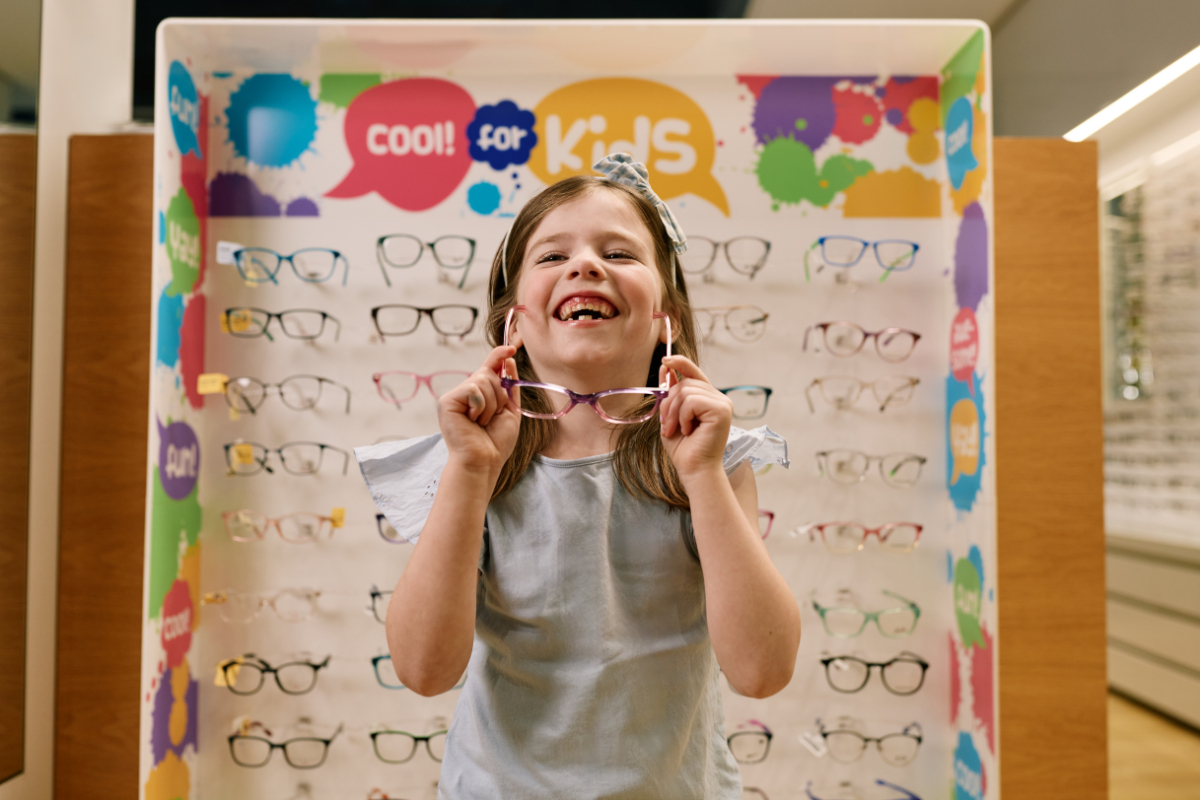
Sam’s advice? “Regular breaks – every 20 minutes take a break for 20 seconds – keeping devices at least an elbow’s length away and limiting recreational screen time to less than two hours a day are important,” he says.
Getting outdoors is equally important. “There is strong evidence that spending more time outside reduces the likelihood of children developing myopia. Spend at least 90 minutes outdoors each day, while remaining sun safe.”
The key thing is not to wait for an obvious problem. “Eye tests are a health check as well as a vision check,” Sam says. “Many problems have no obvious symptoms, so regular tests are the safest approach.
“In Australia, eye tests for children are generally covered by Medicare, so cost shouldn’t be a barrier. If you are ever unsure about anything as a parent, book your child in for an eye check.”
With six Health Partners Optical locations across Adelaide, families can easily access a local optometrist for regular eye checks and advice.
A little reassurance goes a long way
Healthy childhood habits aren’t built overnight, and parents don’t need to get everything right every day. Often, it’s the small, consistent steps that make the biggest difference.
Just as importantly, parents don’t have to navigate every question alone. Through its team of health professionals, Health Partners offers families access to advice and care across different stages of childhood, helping identify potential concerns early and providing reassurance along the way.
Because sometimes the best alternative to a 2am Google search is simply knowing who to ask.
Want to see more stories from InDaily SA in your Google search results?
- Click here to set InDaily SA as a preferred source.
- Tick the box next to "InDaily SA". That's it.