Long-awaited SA festival boss named, but will stay interstate
An arts festival leader recruited more than a year after its founder left the top job will also continue in her role at a WA gallery. A second senior role remains vacant.
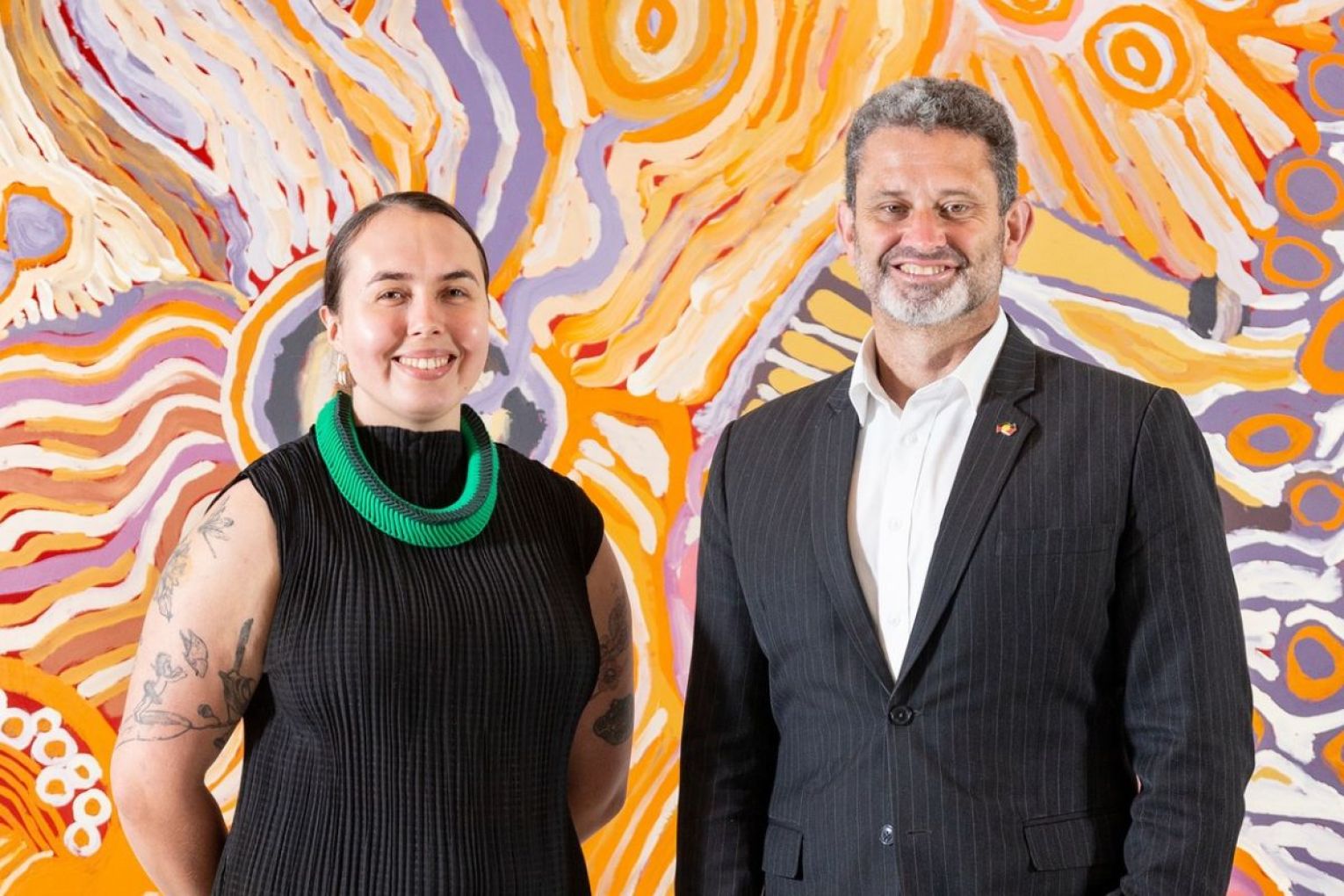
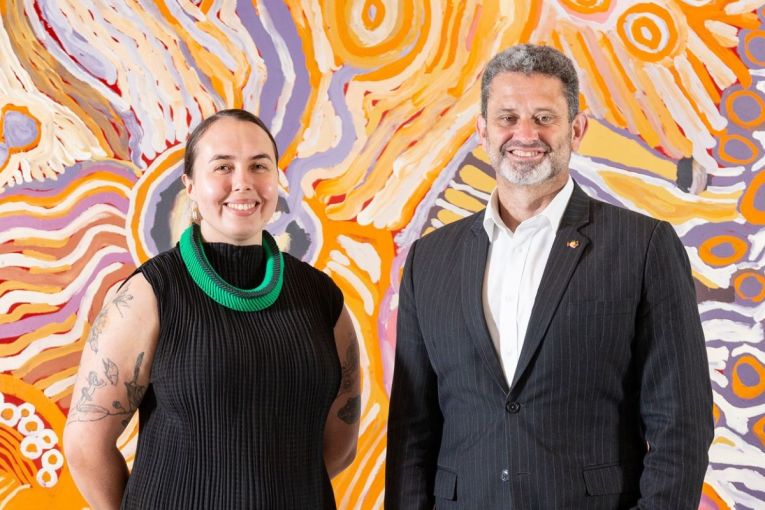
Noongar curator and artist Zali Morgan is the new artistic director for First Nations festival Tarnanthi, the Art Gallery announced today, more than a year after her predecessor and festival founder Nici Cumpston OAM stepped down.
The appointment follows a lengthy six-month search for the new director. The Art Gallery of South Australia extended the search after applications for the part-time role initially closed in May, with a spokesperson saying this “allowed for greater national reach”.
Morgan is currently curator of the Carrolup Collection at Western Australia’s John Curtin Gallery, and has curated notable exhibitions in Perth and overseas, including All That Country Holds – Art from the Kimberley shown at Washington DC’s Australian Embassy.
An AGSA spokesperson told InDaily that at this stage, Morgan would remain in Western Australia “with regular travel to Adelaide and more broadly across Australia to work with First Nations artists and communities” and that the role was “supported by an active team at AGSA”.
Morgan will stay on in a part-time capacity as curator of the gallery in WA.
It is not unusual for Adelaide festival directors to remain living interstate; former Adelaide Writers’ Week director Louise Adler lives in Melbourne and the new Writer’s Week director Rosemarie Milsom lives in Newcastle. Adelaide Cabaret Festival artistic director Reuben Kaye lives in Melbourne and London.
You might like
The former Tarnanthi director Cumpston moved to the United States and while she was at the helm, served as both Tarnanthi festival director and the gallery’s curator of Aboriginal and Torres Strait Islander Art. InDaily understands those duties were now divided into separate roles.
The gallery has yet to announce who will take over the curator role, which was also advertised in March. A gallery spokesperson confirmed the recruitment was ongoing and “remains a priority”.
“We have prioritised the engagement of the Artistic Director, Tarnanthi, and the role of Curator of Aboriginal and Torres Strait Islander Art remains a priority,” the spokesperson said.
“During this interim period, in-depth curatorial and project work has continued.”
Asked if this was a typical recruitment timeframe, the spokesperson said, “all recruitments are unique and take the time they take. We will always prioritise finding the right person for the role.”
Morgan will programme the upcoming Tarnanthi festivals in 2027 and 2029, which the state government also announced today would receive $4 million in funding.
Stay informed, daily
Morgan said she looked forward to “growing stronger connections with Kaurna Yarta artists and communities” in the role.
“I want to approach Tarnanthi with an open heart, listening to artists and communities, following where their ideas lead, and making space for the many different ways culture and contemporary practice can be expressed,” Morgan said.
“I’m interested in what happens when artists are empowered to speak on their own terms, and when a festival is less about a single vision and more about a gathering of many voices, stories and ways of seeing.”
Since Tarnanthi began in 2015, about 2.5 million people have attended Tarnanthi exhibitions and events which featured works by over 10,000 Aboriginal and Torres Strait Islander artists.
The Tarnanthi Art Fair generated more than $9.5 million in sales, with every dollar going to artists and communities, while the festival as a whole has generated $126.5 million in economic expenditure for the state, according to the Art Gallery.
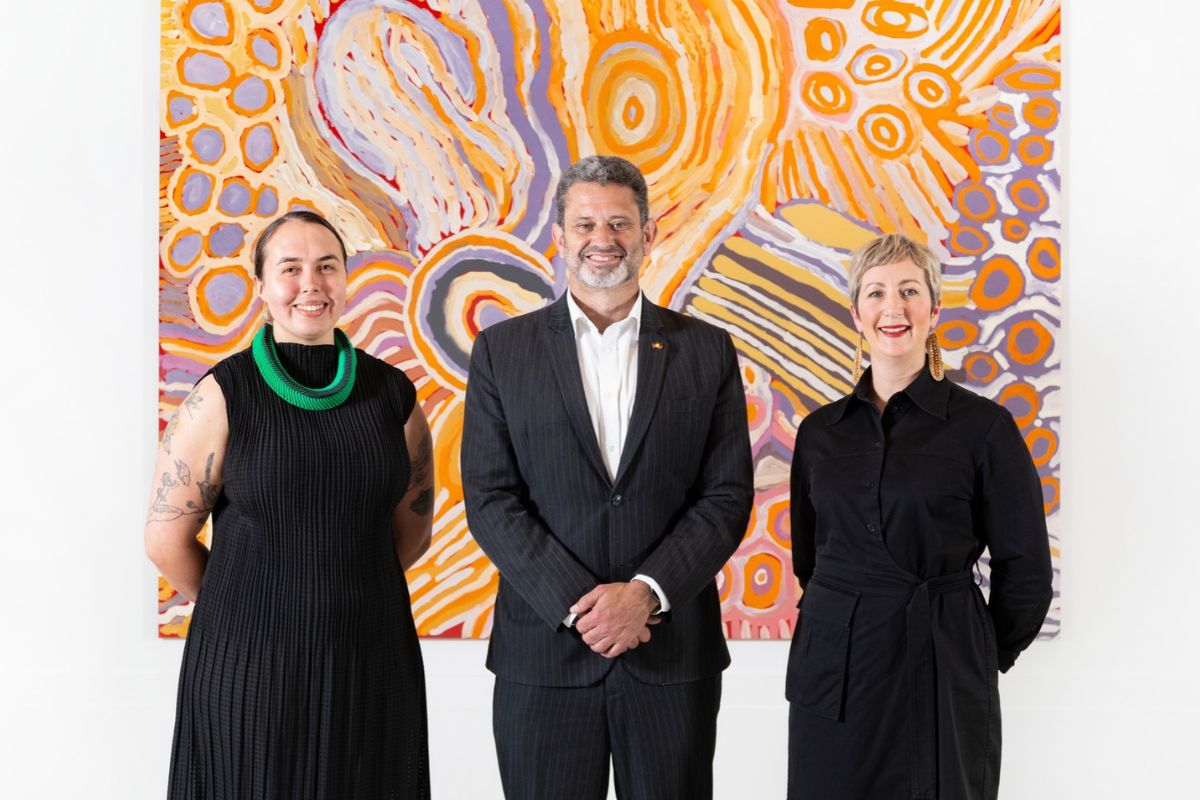
Alongside Morgan’s appointment today, Arts Minister and Aboriginal Affairs Minister Kyam Maher announced renewed $4 million funding for the festival and to programme First Nations Art through the Art Gallery of South Australia from 2026 to 2030.
BHP, which has sponsored the festival since it began in 2015, has also signed on to renew its partnership with Tarnanthi for an additional five-year “social investment agreement” until 2031.
Maher said he was “fortunate enough to attend every Tarnanthi Festival since its inception and have seen firsthand the enormous impact it has on First Nations artists and their communities”.
The Art Gallery also revealed the first programme highlight for the 2027 festival today, which will feature a major exhibition Yunupiŋu: Seven Sisters, developed with Buku-Larrŋgay Mulka Centre and the Yunupiŋu family.
Seven Sisters assembles paintings, sculpture, works on paper and moving image from public and private collections, selected by the sisters’ father, a Gumatj cultural leader, referencing the ancestral stories he shared with his daughters.
The 2027 Tarnanthi Festival will run from October 22, 2027, until January 16, 2028.
Want to see more stories from InDaily SA in your Google search results?
- Click here to set InDaily SA as a preferred source.
- Tick the box next to "InDaily SA". That's it.