Polling reveals SA fed seat One Nation tipped to win
An SA seat risks a One Nation takeover as a new mega poll reveals the impact of voters swinging to orange. Another surprise Lib seat is also looking wobbly.
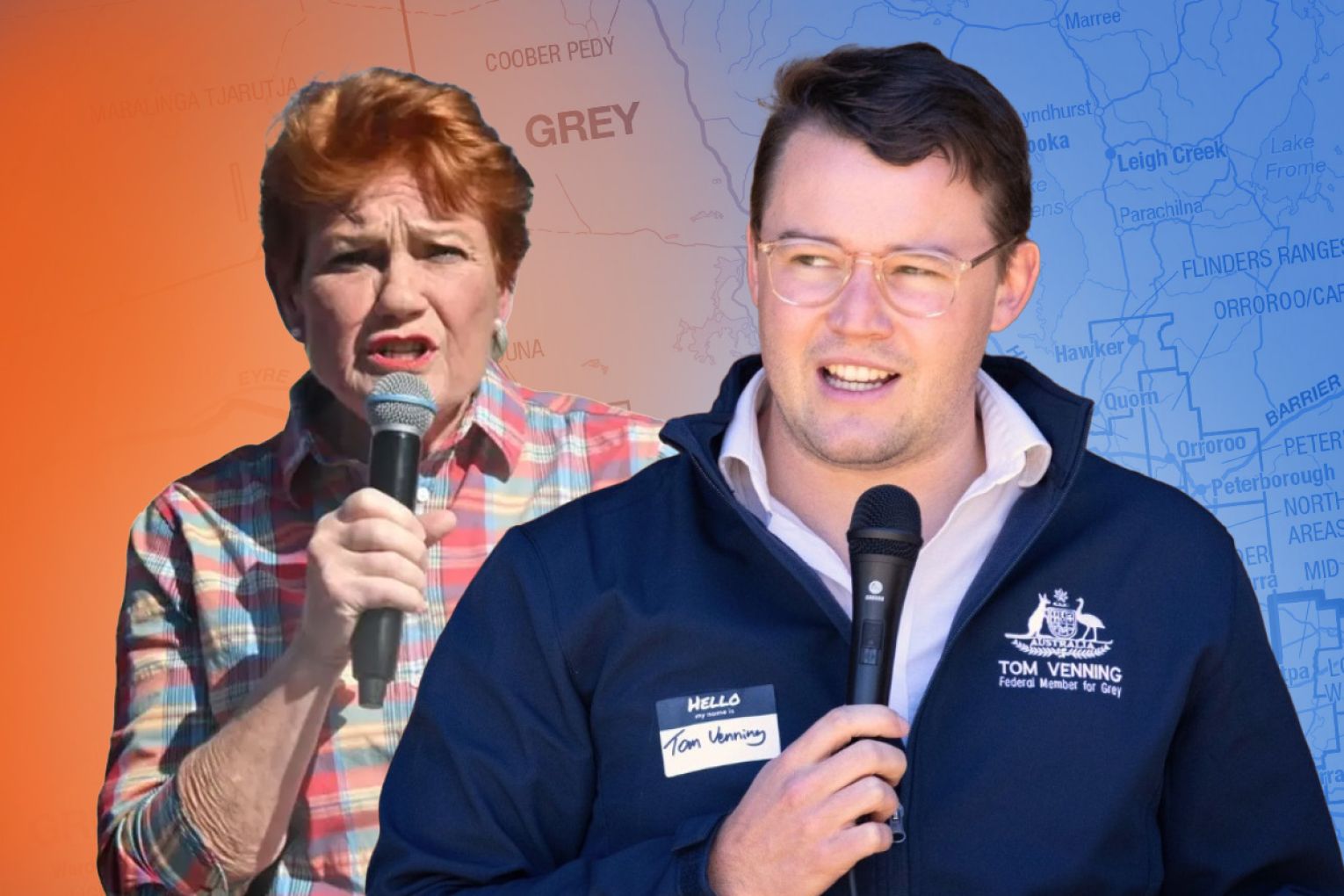
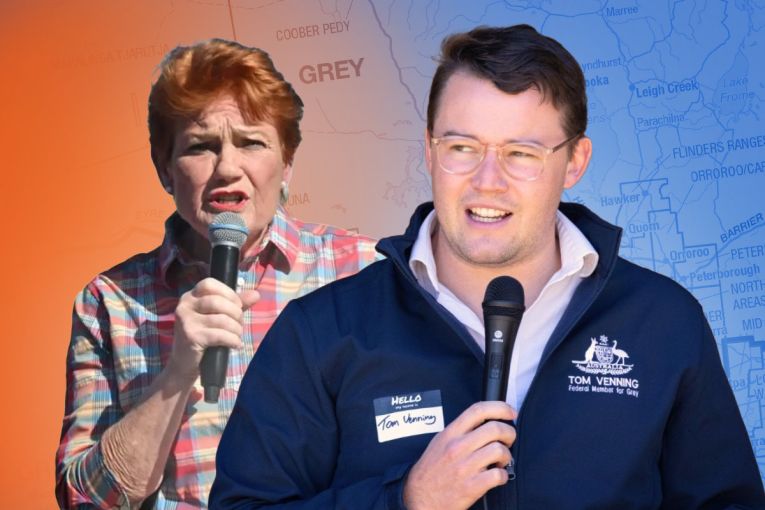
The long-term regional Liberal federal stronghold of Grey is under intense pressure, with new DemosAU polling showing a surge in popularity for the far-right party in South Australia’s largest electorate.
A mega poll of almost 10,000 Australian voters found One Nation had a 92.8 per cent chance of winning the seat of Grey if an election was held today.
And the seat of Barker held by Alex Antic-aligned Liberal Tony Pasin is another at risk from the swelling One Nation vote, seeing a growing swing despite the Liberals still holding a 77.7 per cent chance in winning the seat.
Grey – soon to be called O’Donoghue – is currently held by Liberal MP Tom Venning and has been a Liberal seat since 1993, and was previously occupied by Rowan Ramsey and also Barry Wakelin. It is the largest seat in South Australia and covers 92 per cent of the state.
It is the one SA seat that would be likely to change hands if a federal election were held today.
The DemosAU polling, One Nation would receive 34 per cent of primary votes in Grey, trailed by the Liberals at 23 per cent and Labor at 21 per cent.
“There is a 93 per cent chance that Grey is won by One Nation, and a seven per cent chance that it is won by the Liberals; they would win the larger share of Labor, Greens and others’ preferences,” DemosAU head of research George Hasanakos told InDaily.
“To say that One Nation has Grey locked up… I don’t say that for sure. Grey still has some industrial voters left, and that’s good for both One Nation and Labor, and those are both circumstances which will help One Nation in the final count.”
You might like


One Nation commands the top first preference vote in Barker, which is currently held by Pasin, who in July urged the Liberal Party to work with One Nation to defeat Anthony Albanese’s Labor at the next federal election.
Of primary vote intentions in Barker, 33 per cent said they would vote One Nation compared to 29 per cent voting Liberal and 21 per cent voting Labor.
The remainder of the federal SA seats would go to Labor, the polling shows, except for Mayo – currently held by Centre Alliance MP Rebekha Sharkie.
Hasanakos singled Sturt out as the Liberals’ “first port of call”. Last week, InDaily revealed the SA Liberals saw the eastern suburbs seat currently held by Labor’s Clare Clutterham as “one to win”, with former SA Liberal Opposition Leader Vincent Tarzia courted to run for preselection.
Nationally, however, support for One Nation is falling, per the new polling results which captured voter intention from August and September 2026.
One Nation is down four per cent since the last DemosAU May-July poll, while Labor is up one per cent, the Liberal National Party is up 1 per cent, and the Greens are unchanged.
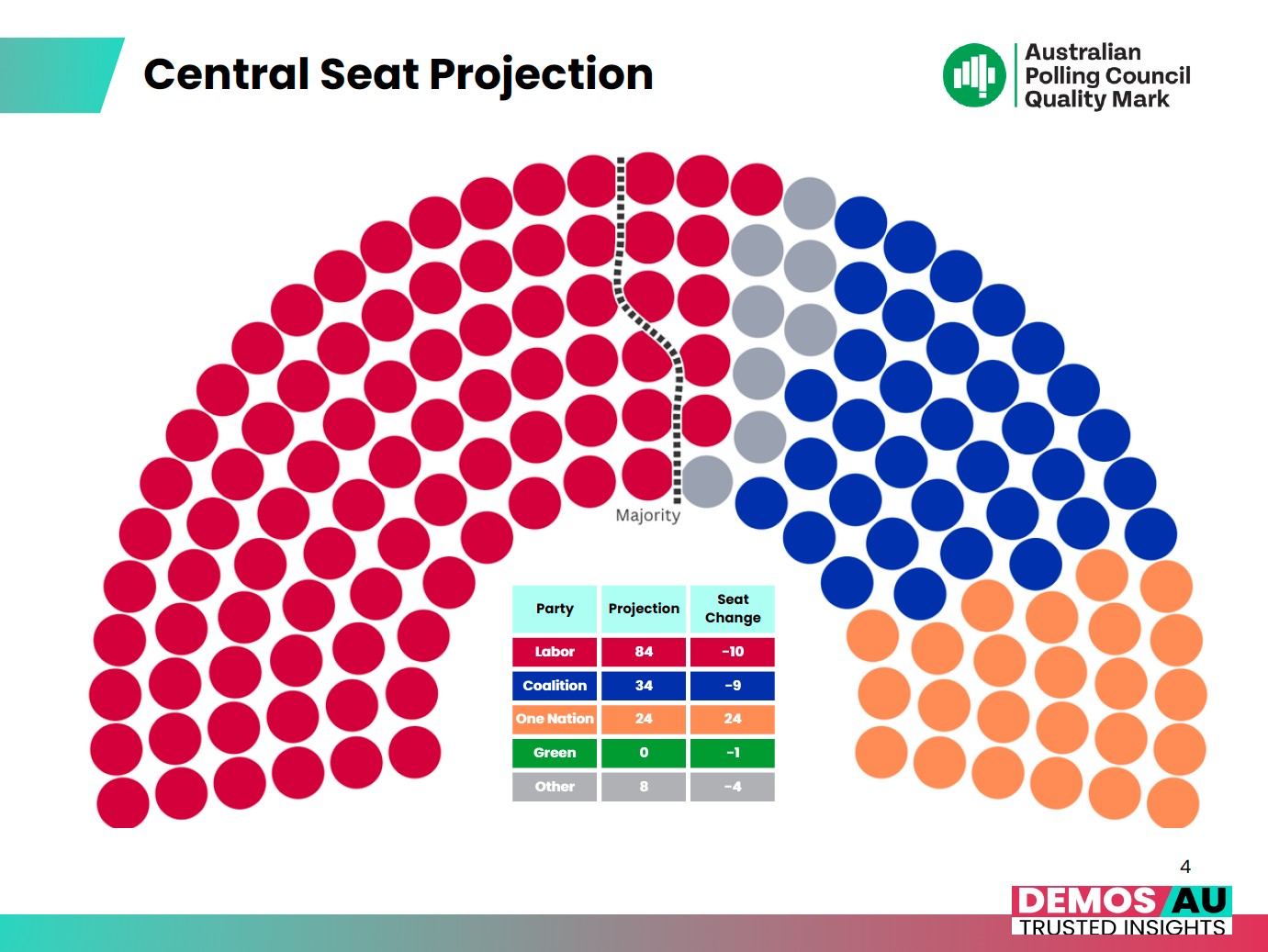
Labor would claim majority government if an election were held today, polling found, while the Coalition would finish in second despite trailing One Nation on primaries.
One Nation would still likely win between 22 and 35 Lower House seats, DemosAU modelling found. The party currently holds two lower house seats, Barnaby Joyce has New England and David Farley has Farrer. This compares to the Coalition’s projected 25-44 seats and Labor’s 73-85 seats.
But Labor “polls best in South Australia,” Hasanakos said.
Stay informed, daily
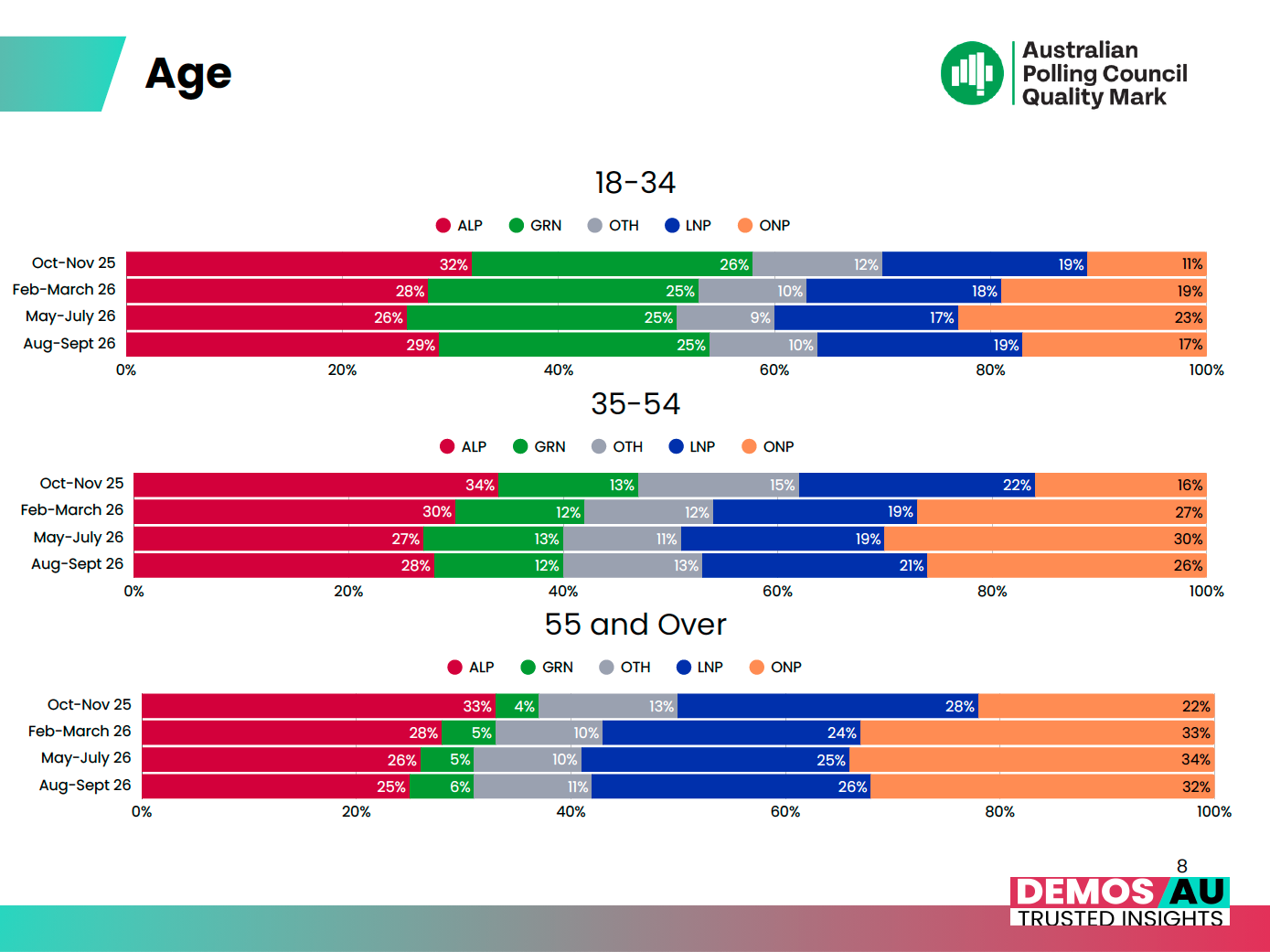
Men were more likely to vote One Nation than women according to the new results, while the age demographic most in support of the far-right party was those aged 55 and over (32 per cent).
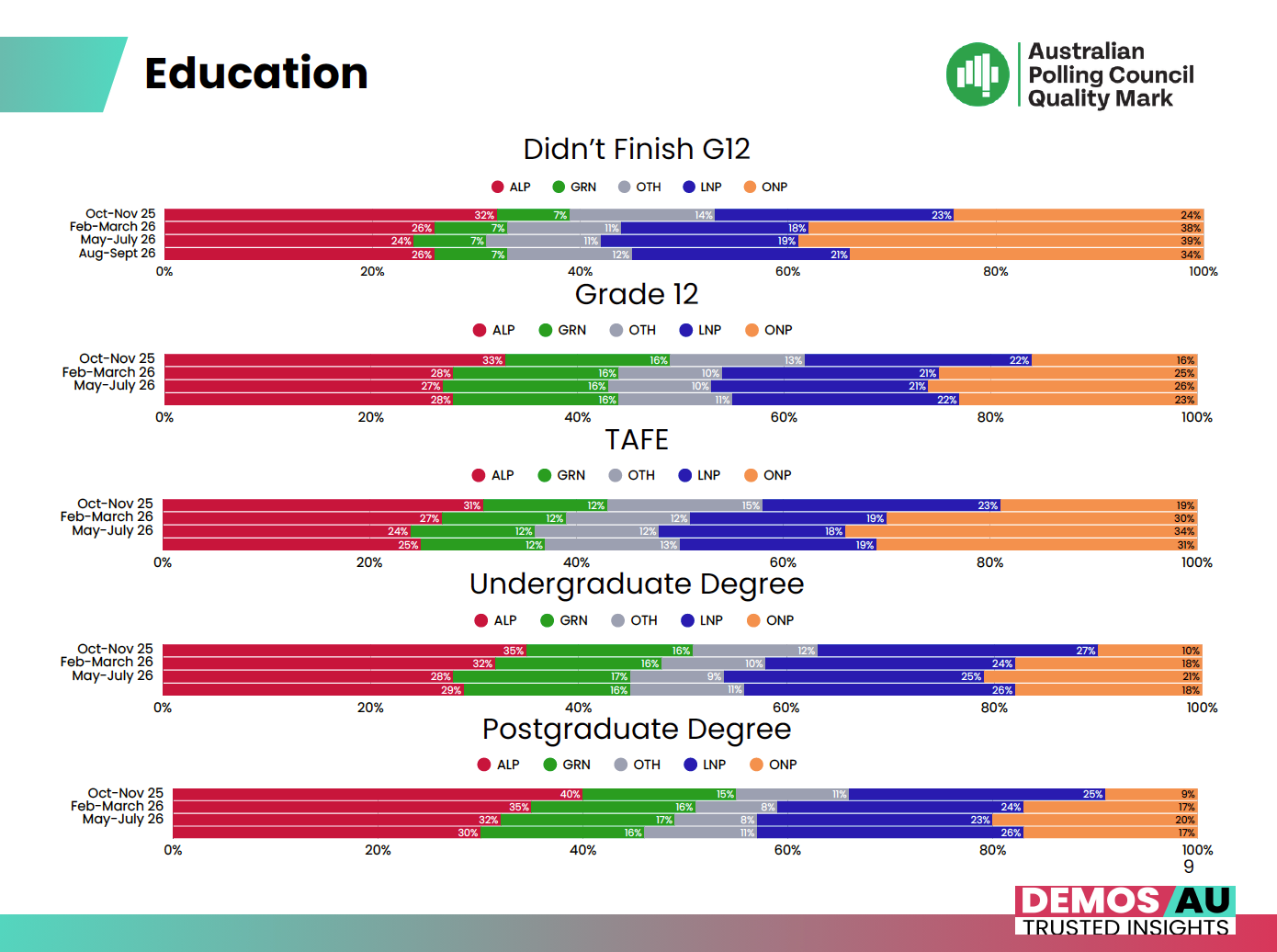
Support for One Nation also falls off the more educated one is. Those who did not finish high school were more likely to vote for One Nation (34 per cent) than those who completed a postgraduate degree (17 per cent).
However, support for the Pauline Hanson-led party remains relatively stable across income brackets, topping out at low-income voters earning under $45,000 per year (27 per cent).
Regionally, One Nation is going backwards, Hasanakos said.
“The last MRP showed One Nation winning 39 of the 41 seats in rural and regional Australia; that’s dropped to just 17 in this model,” he said.
“While One Nation is currently more popular than the Coalition, it’s also more unpopular,” he said.
“In electorates where Labor finishes third behind One Nation and the Liberals or Nationals, and there are many of these in regional and rural Australia, its preferences flow strongly to the Coalition parties.”
Hasanakos said there were 15 rural and regional electorates where One Nation leads on primary votes but finished behind the Coalition on the two-candidate preferred count due to preference flows.
That includes Barnaby Joyce’s electorate of New England, where One Nation trails the Nationals 53 per cent to 47 per cent and Farrer, which One Nation secured in a by-election earlier this year but currently trails the Coalition 54 per cent to 46 per cent, according to the model.
“It shows the obituaries that have been written for the Nationals, and indeed for the Coalition, have been premature.”

Want to see more stories from InDaily SA in your Google search results?
- Click here to set InDaily SA as a preferred source.
- Tick the box next to "InDaily SA". That's it.