Minister announces city no-go zones for strip clubs and sex shops
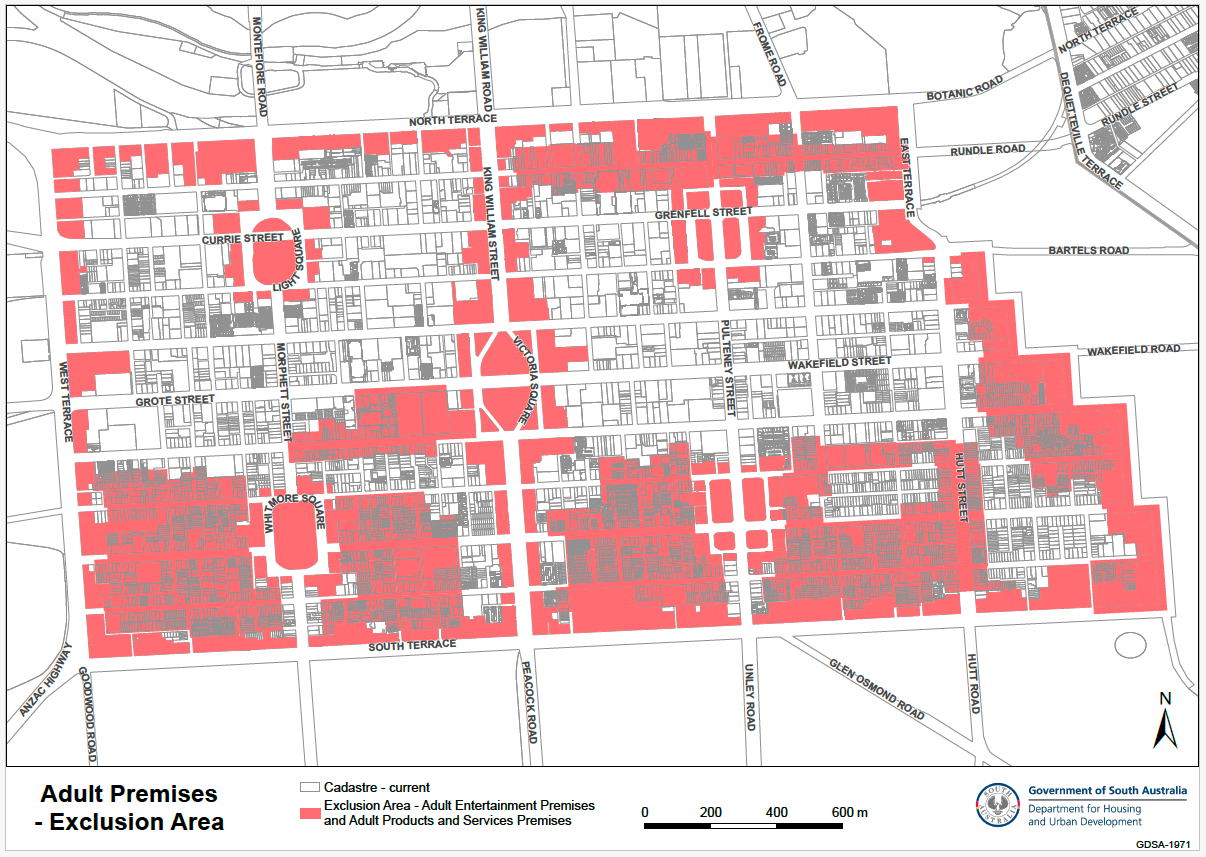
A map blocking strip clubs and sex shops from most of the city is now law, two years after a new business bid triggered a government crackdown. See the map.

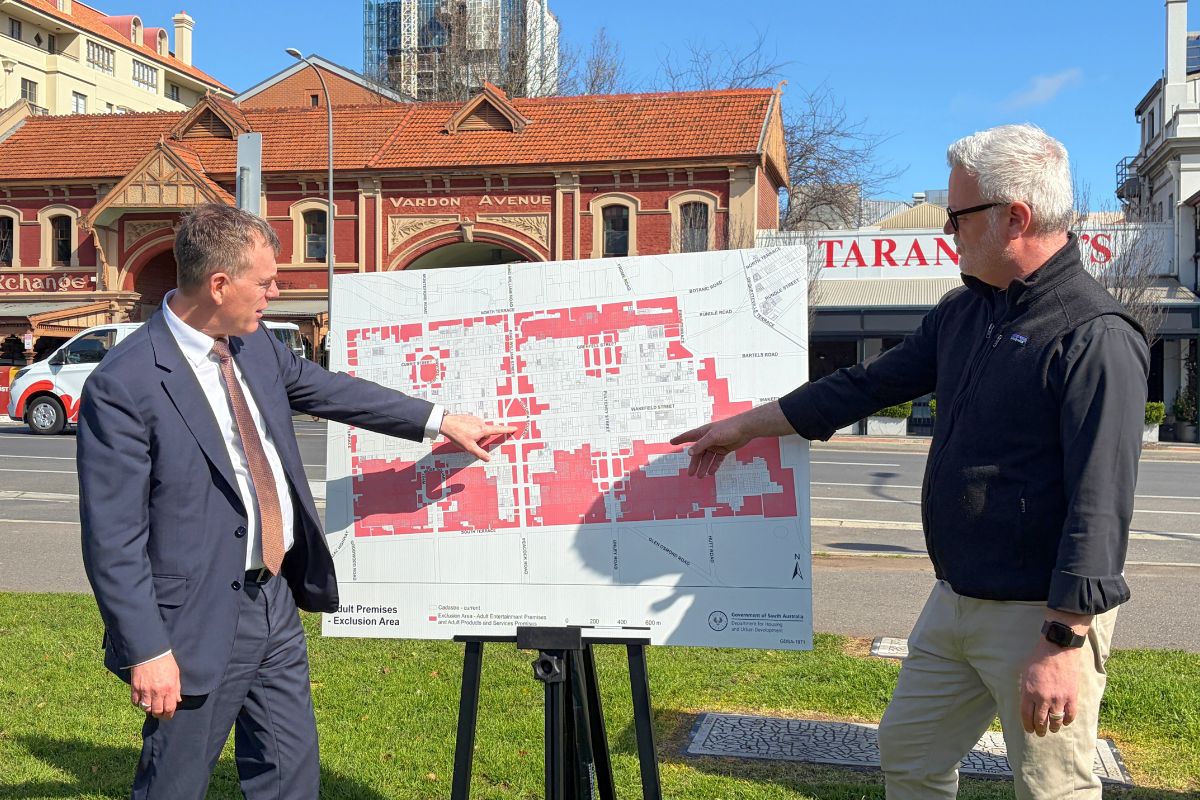
No new strip clubs or sex shops can open and operate in the city’s east end, its city squares, Rundle Mall, and parts of city high streets, Planning Minister Nick Champion announced today.
Adult entertainment premises are also banned from all of North Adelaide.
The ban has been in the works since 2024, after the City of Adelaide received one development application for a new strip club opening in the East End.
“What it highlighted was is that there was a risk here, and we didn’t want to risk all of the work that had been done in the East End by literally generations of South Australians, so that could all be wrecked by one bad application or one bad proposal,” Champion said today.
Existing venues – like Pole Position, the Firm and Club X – may continue operating, with the updated planning code only addressing new development applications.
Champion was joined by Frome Street Amalfi restaurant owner Frank Hammond-Tan for the announcement today.
You might like


“This is about giving clear, sensible planning controls to manage adult venues in a way that reflects the character of our city’s key streets and squares,” Champion said.
“This isn’t about shutting these businesses down. It is about giving them and CBD residents clarity on where they can and can’t operate.”
Today’s announcement comes after five Sydney Swans players were linked to a police investigation into sexual assault allegations at East Melbourne’s Pullman Hotel on Monday morning.
Alleged details included that topless waitresses were booked to visit a room with the Swans players for two hours. The Swans players have since apologised after being banned from playing the rest of the AFL season.
Asked today if the new planning rules would push more sex workers to hotels, or unregulated private spaces, Champion said: “I don’t think you can actually say that because we haven’t banned it in its entirety”.
“What is here is a sensible set of planning laws that allows it. It’s allowed just like you would regulate industry to or employment to a particular zone, we’re free to do that in this case too,” he said.
Stay informed, daily
“It just sensibly manages the provision of these services to particular areas and makes and manages their public interface with those areas.
“And I don’t think that’s any different to anything else we do in the planning law in terms of the interfaces with residential areas or places of worship and the like.”
South Australia’s Sex Industry Network (SIN) and two West End traders organisations previously raised concerns that the planning changes would sanction a red-light district on Hindley Street.
SIN peer support worker and stripper Moisty told InDaily last year that concentrating strip clubs to Hindley Street would also pose safety concerns for workers.
“Getting, say Ubers or taxis to and from Hindley Street if that’s known as the red light zone, you’re directly outed or indirectly outed because they know that you’re working in the vicinity of these things,” she said.
Asked about creating a potential “red light district”, Champion said “for my entire lifetime, Hindley Street has had that element to it”.
He said the planning code changes would also mean that when applications for new strip clubs are proposed for Hindley Street, there’s considerations like appropriate lighting and signage, to make the area safer.
“It needs to be carefully managed…No one’s making moral judgements here about these things, they exist in every city, pretty much every city across the Western world,” Champion said.
Want to see more stories from InDaily SA in your Google search results?
- Click here to set InDaily SA as a preferred source.
- Tick the box next to "InDaily SA". That's it.