Trump announces agreement to disarm Hamas in Gaza
Donald Trump says a deal has been reached for the complete disarmament of Hamas, as an Israeli official says the proposed terms aren’t satisfactory.
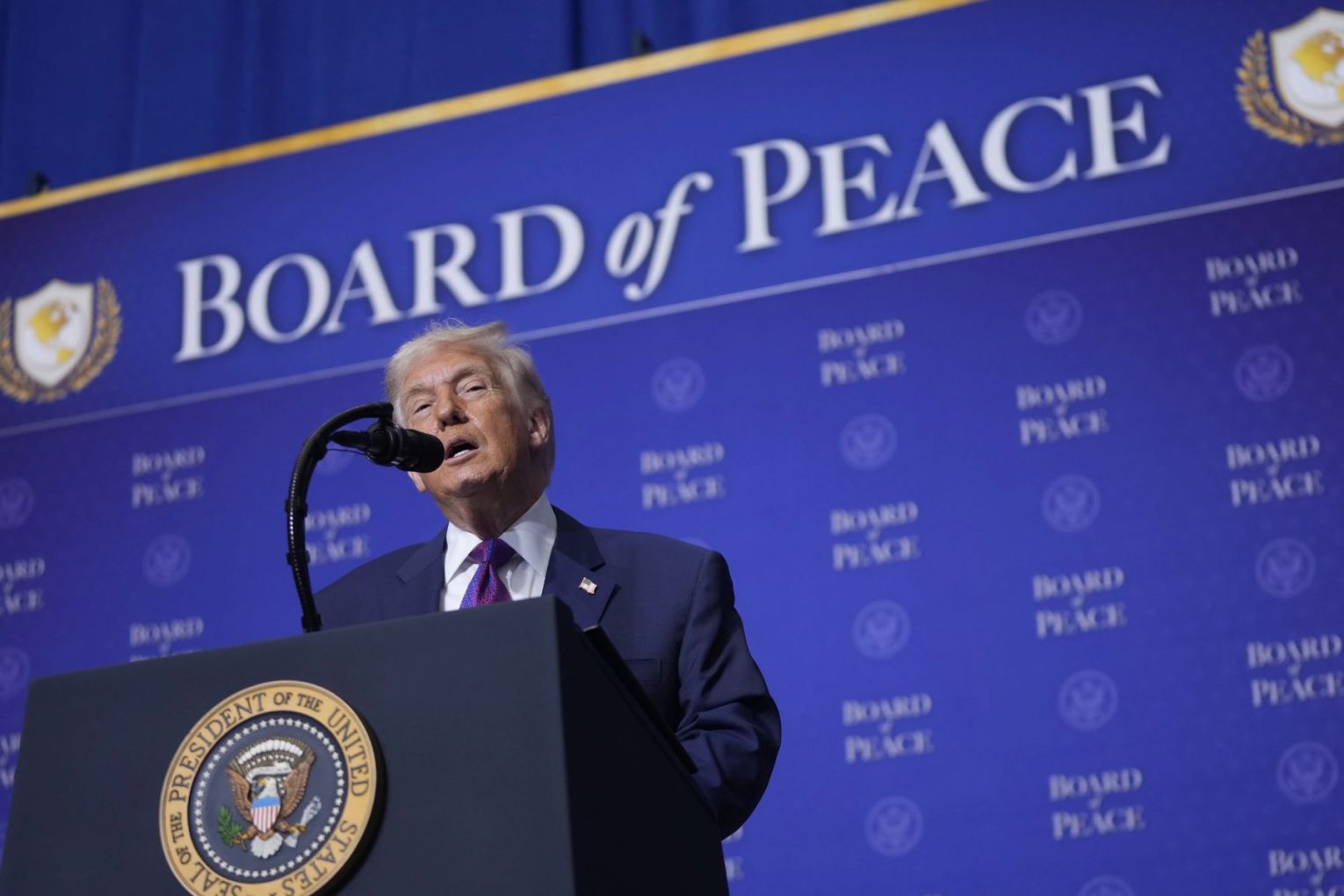
US President Donald Trump says talks in Cairo between mediators and Hamas leaders have led to a “historic agreement for the complete disarmament of Hamas” in what he described as structured phases.
Sources close to the talks told Reuters earlier on Thursday that progress was made but it is uncertain if the agreement will hold, as an Israeli official had said the proposed terms were not satisfactory.
“This agreement is a critical step towards Gaza finally being governed by a new Palestinian government that will work closely with the Board of Peace to help the Palestinian people,” Trump said in a social media post.
“At the same time, Israel will have the security it deserves, with Gaza no longer used as a base for terror attacks.”
The Israeli embassy in Washington and Hamas did not immediately respond to requests for comment about Trump’s post.
Earlier, Israeli strikes killed at least six Palestinians in Gaza on Thursday, including two children, medics said.
A Hamas official and a diplomat close to the Cairo talks said the progress would be tested by Israel’s response and whether this allowed a broad accord to be reached.
However, the Israeli official earlier on Thursday, who declined to be identified, said Israel had rejected a proposal.
Hamas leaders are holding talks with mediators from Egypt, Qatar and Turkey on the second phase of President Donald Trump’s Gaza plan, as presented to them by his Board of Peace, which oversees its implementation.
Russian Deputy Ambassador to the United Nations Anna Evstigneeva told the Security Council on Tuesday that a roadmap prepared by Trump’s Board of Peace envoy for Gaza, Nickolay Mladenov, had so far failed to gain the support of Israel and Hamas, with the demilitarisation of Gaza remaining the main stumbling block.
The Board of Peace declined comment on the Cairo talks earlier on Thursday.
The diplomat close to the talks said the negotiations were making progress toward a roadmap that would see all heavy and light weapons in Gaza decommissioned.
The plan calls for a surge in humanitarian aid, governance by a civilian Palestinian administration, the disarmament of Hamas, the withdrawal of Israeli forces from Gaza and the deployment of an international force to help maintain security.
You might like

But progress has stalled in previous months.
On Thursday, a Hamas official said the group was coming with a “positive and good” response, but did not say whether the group had agreed to fully disarm — a key sticking point in the talks over the past four months.
Hamas wants Israel to commit to ending attacks on Gaza and withdrawing its forces.
Sources close to Hamas said the group was willing to “confine and store” heavy weapons under a Palestinian body, not hand them over to Israel. Hamas did not comment on the matter.
It is not yet clear what will happen regarding light or personal weapons or whether the new Hamas stance will be accepted by Israel or the Board of Peace.
The plan includes the elimination of tunnels, arms stockpiles and weapons production facilities, the diplomat said, adding that by the end of the process there would be no remaining militant infrastructure in Gaza.
The diplomat described the roadmap as being based on reciprocal steps rather than trust.
So far, the reality on the ground in Gaza remains far from this roadmap. The Israeli military has continued to expand its military occupation of Gaza, with Prime Minister Benjamin Netanyahu saying that Israel intends to expand the area under its control to 70 per cent of the enclave.
In Cairo, two Egyptian sources said Hamas had agreed to several contentious points, including the handover of weapons, but had requested changes regarding the definition of the infrastructure to be dismantled, adding more talks were under way.
The truce halted full-scale fighting but has not ended near-daily Israeli strikes.
More than 1200 Palestinians, mostly civilians, have been killed by Israeli attacks since the ceasefire took effect, according to Gaza health officials.
Four Israeli soldiers have been killed by militants in Gaza since the ceasefire.
Hamas does not usually disclose its losses.
–with Reuters
Egypt struck for first time as more countries drawn into war
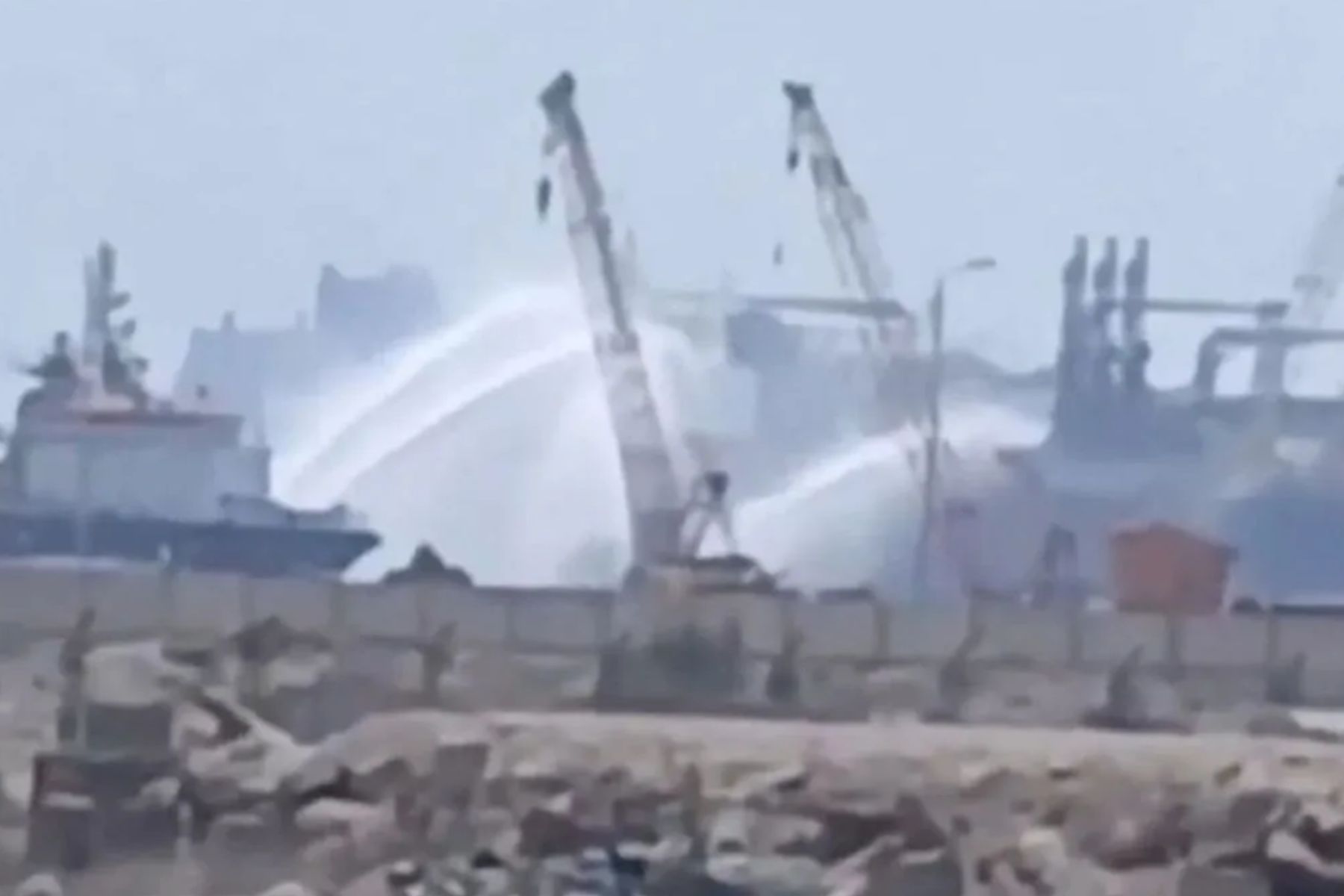
The strike reportedly hit two gas storage vessels at Egypt’s Mediterranean port of Damietta, one of which was owned by a US company.
CNN reports that no one has claimed responsibility, but if confirmed as a deliberate strike, it would mark the first time Egypt has been directly drawn into the regional conflict.
The Egyptian government said there was an ongoing investigation into the incident.
Earlier, Iran’s Islamic Revolutionary Guard Corps (IRGC) warned “countries that intervene in support of the aggressor” would receive a “harsh response”.
Stay informed, daily
It came as Trump said he would hit Iran hard for firing missiles at US forces, but that Washington was also still seeking a peace deal to end a conflict that has roiled global energy and finance markets with the choking of the Strait of Hormuz.
The US military struck dozens of Islamic Revolutionary Guard targets in Iran in a “heavy wave of strikes” launched after Tehran fired ballistic missiles at US forces in the Middle East.
The two-hour operation “aimed to further diminish threats posed by Iran and its proxies to American forces, commercial shipping, and neighbouring Gulf countries”, US Central Command said on Thursday.
Iran’s state media reported that three people were killed in US strikes on Qeshm Island.
Jordan’s armed forces said on Thursday that they had thwarted an Iranian attempt to target the kingdom, intercepting five missiles.
The US strikes came after Iran confirmed on Wednesday that it had fired ballistic missiles at US troops in Jordan.
CENTCOM said all of the missiles were intercepted.
US bases in Jordan have lately become primary Iranian targets.
Earlier on Wednesday, US and Saudi forces launched strikes against Iran-aligned groups in eastern Iraq, in retaliation for drone attacks on Saudi oil targets launched from Iraq.
The joint attack marked the first time Riyadh has publicly joined strikes alongside Washington.
Trump said he would hit Iran hard for firing missiles at US forces, but that Washington was also still seeking a peace deal to end a conflict that has roiled global energy and finance markets with the choking of the Strait of Hormuz.
The waterway — which carried a fifth of global oil and liquefied natural gas before the war on Iran — lies between Oman and Iran, linking the Gulf north of it with the Gulf of Oman to the south and the Arabian Sea beyond.
Iran said on Wednesday that it struck three tankers attempting to transit through the strait along an unauthorised route and that it controls the strait.
Oman has presented Iran with a plan backed by Gulf states to manage the Strait of Hormuz, including collecting voluntary fees for using it, but Iran rejected the proposal.
Iraq’s Popular Mobilisation Forces, powerful Iran-backed paramilitary groups incorporated into the Iraqi security forces, said at least 20 members were killed and 32 wounded in US-Saudi strikes targeting several bases across Iraq.
The Iraqi presidency denounced the strikes on the paramilitaries as “an unacceptable attack and a flagrant violation of Iraq’s sovereignty”, while also calling for a halt to attacks by armed groups against Iraq’s neighbours.
Though Iran denies its forces have directed strikes from Iraqi territory, Iranian newspaper Hamshahri reported that four of Iran’s Revolutionary Guards advisers had been killed in the strikes on Iraq.
After the joint attacks, Saudi Arabia’s defence minister met Vice-President JD Vance in Washington to urge the Trump administration not to escalate the conflict further by attacking Yemen’s Houthis and carrying out more strikes against Iran-aligned militias in Iraq, two sources told Reuters.
Such escalation would open the door to “major unknown risks”, one of the sources said.
-with AAP
Want to see more stories from InDaily SA in your Google search results?
- Click here to set InDaily SA as a preferred source.
- Tick the box next to "InDaily SA". That's it.