South Australia’s new climate festival is an invitation to show up
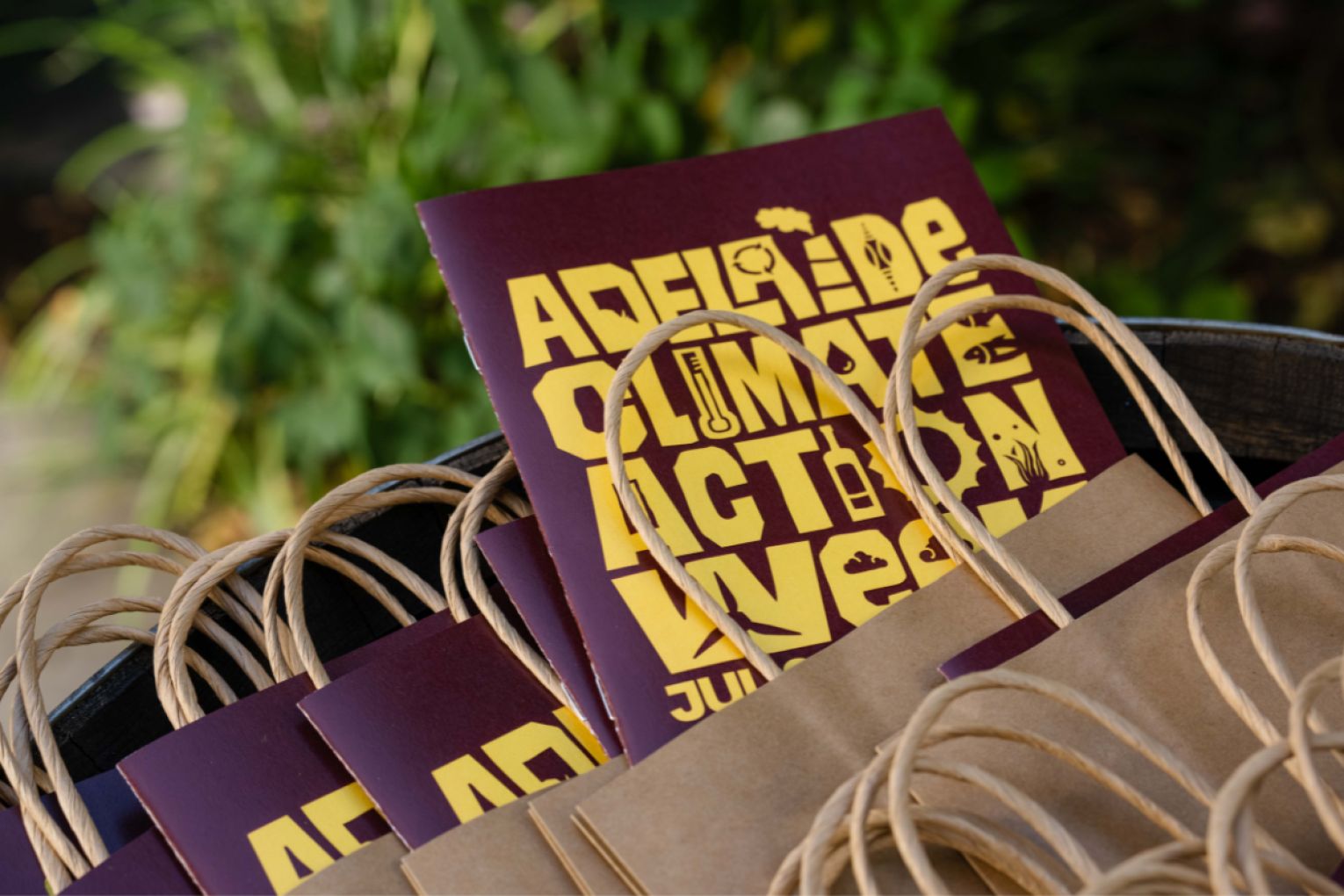
Adelaide Climate Action Week is bringing together businesses, researchers, artists, investors and communities for a week of practical conversations and hands-on events designed to make climate action accessible to everyone.
Climate action can sometimes feel like it belongs in government policy, scientific research or corporate boardrooms.
Adelaide Climate Action Week wants to change that.
From July 27 to August 2, South Australia’s first community-led climate festival will transform venues across Adelaide and regional South Australia into spaces where residents, businesses, researchers, investors, artists, councils and community groups can connect over a shared challenge – and, more importantly, a shared opportunity.
More than 80 mostly free events will take place during the inaugural festival, spanning everything from policy forums and climate finance discussions to live music, community tree planting and practical workshops.
Executive producer Adelaide Xerri says the festival is about making climate action visible, practical and shared.
“This festival is South Australia building a different future in public,” she says.
Rather than positioning climate action as something led solely by governments or experts, the festival is designed to create entry points for people from every walk of life.
You might like
“This is what it looks like when a city decides climate action belongs to everyone,” Xerri says. “Scientists and artists. Investors and communities. Farmers and founders. All in the same week.”
The idea grew out of South Australia’s unsuccessful bid to host the global COP31 climate summit. Instead of letting that momentum disappear, organisers decided to create something uniquely South Australian – a festival built by the community, rather than for it.
“When we didn’t get COP31, that ecosystem and that ambition did not go away,” says co-founder Jen St Jack says. “People showed up, not because they had to but because they wanted to be part of something.”
That collaborative spirit has shaped every aspect of the program, with more than 60 organisations independently hosting events throughout the week.
St Jack believes South Australia is well placed to lead the next phase of climate action.
“South Australia is already a world climate superstar for its leadership in renewables,” she says. “The question now is what we do with that opportunity.”
The state’s credentials are significant. Renewable energy now accounts for around 74 per cent of South Australia’s electricity generation, with a target of reaching 100 per cent net renewable electricity generation by the end of 2027.
But organisers say the conversation now needs to move beyond electricity generation and into every corner of society and the economy.
“Climate action doesn’t belong to any one sector, organisation or level of government. It belongs to everyone,” co-founder Mark Rowland says.
“This festival creates a space where people can learn, challenge assumptions, find collaborators, celebrate success and discover practical ways to contribute.”
That breadth is reflected in the program.
Business leaders can attend sessions exploring Australia’s new sustainability reporting requirements, climate finance and the decarbonisation of industry. Investors and entrepreneurs can connect through climate technology showcases, while households can learn about home electrification and reducing energy bills at community events such as SwitchFest.
Elsewhere, visitors can join biodiversity restoration projects, experience art and music inspired by climate themes, hear Pacific perspectives on climate resilience, or simply meet others over coffee at the festival’s social hub.
The opening day sets the tone with a COP31 Roundtable at the Adelaide Convention Centre, bringing together leaders from government, business, academia, First Nations organisations and Pacific communities to help shape South Australia’s contribution to this year’s global climate summit. Internationally renowned climate scientist Professor Tim Lenton will headline the event alongside Minister for Climate, Environment and Water Emily Bourke and other Australian climate leaders.
Bourke says meaningful progress comes through many small actions rather than one defining moment.
“This isn’t about one big decision,” she says. “It is thousands of decisions across every single portfolio.”
The same philosophy underpins the festival’s “Connect. Reflect. Commit.” framework, which encourages participants to leave having committed to one practical action, whether that’s changing something at home, making a business decision or supporting a local initiative. The collective goal is to inspire 1000 individual commitments over the week.
For St Jack, that’s ultimately what Adelaide Climate Action Week is about.
“Climate action starts with people,” she says. “When we connect with new perspectives, reflect on what matters and commit to one meaningful action, those individual moments create collective momentum. And that’s what Adelaide Climate Action Week is designed to create.”
It is an invitation not simply to talk about climate action, but to become part of it.
To find out more about Adelaide Climate Action Week, click here.
Want to see more stories from InDaily SA in your Google search results?
- Click here to set InDaily SA as a preferred source.
- Tick the box next to "InDaily SA". That's it.