Crucial component failed in Parafield Airport tragedy
A key aircraft component failed in a tragic crash that killed two men at Parafield Airport, a preliminary report reveals.
Part of the nose landing gear in a four-seat, twin-engine plane failed during the Parafield Airport crash, which could have caused the incident that killed two and injured several people earlier this year.
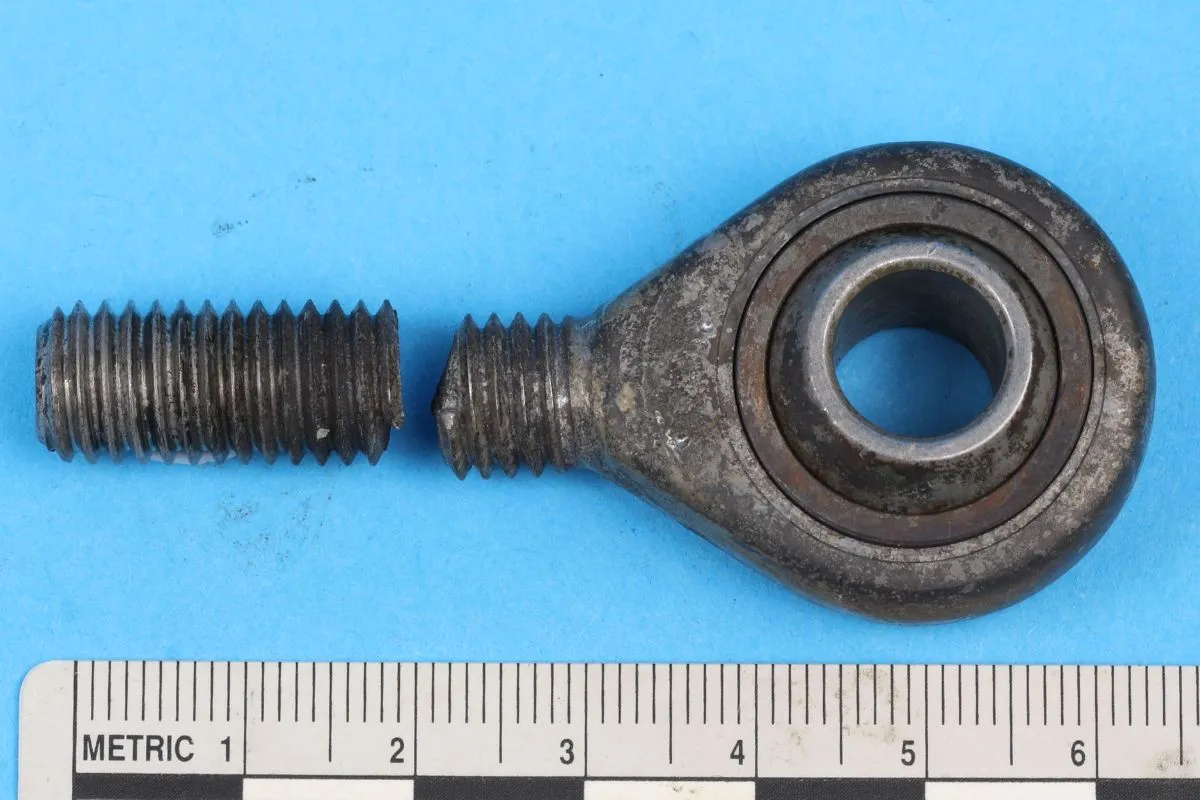
The investigation is ongoing, but the Diamond DA42 aircraft’s actuator rod, a component of the landing gear, had fractured, according to a preliminary report released by the Australian Transport Safety Bureau (ATSB) today.
Investigators found progressive fatigue cracking in the crucial component caused steering problems. The ATSB today issued a safety notice to the aircraft’s manufacturer, Diamond Aircraft Industries.
Other occurrences of fractures were known to the aircraft manufacturer, which published mandatory safety notices addressing this in 2013 and 2019, the report found.
You might like


ATSB chief commissioner Angus Mitchell said the failure was “one of a number of scenarios”, including a power loss in the left aircraft engine, that would continue to be investigated.
“The failure of a nose landing gear actuator rod, as was found in this accident, is known to have caused in-flight controllability issues with this aircraft type in the past,” Mitchell said.
The plane was in the air for a short time before crashing into the hangar at Parafield Airport, north of Adelaide, on April 29.
A flight instructor and their student pilot were killed, while ten people inside the hangar were injured. Nine people were hospitalised.
Stay informed, daily
“About 27 seconds after take-off and at 115 ft above ground level, the instructor made a radio call stating ‘engine failure’,” Mitchell said.
“No further radio calls were heard from either pilot.”
The aircraft then pitched up, banked left and continued to turn with the left wing down. The aircraft began a steep descent and collided with the hangar and a flying school classroom.
The preliminary report found “the left engine was not showing signs of producing power on impact, and that the left propeller was in the ‘feathered’ position” – meaning the blades were rotated parallel to oncoming airflow to make the plane easier to control.
“While the left engine post-impact observation may be consistent with an actual engine failure, it may equally be indicative of an assumed or simulated engine failure,” Mitchell said.
Simulated engine failures after take-off were not supposed to be attempted until the aircraft had reached 400ft above ground, according to operating procedures. The Parafield flight’s maximum height above ground during the accident was 161 feet.
The report also found that while the main landing gear was retracted, the nose landing gear was extended – a move that Mitchell said was unusual.
“In the DA42, re‑extending the landing gear after take-off may not be a usual action considered by pilots, but as noted in the manufacturer’s service bulletin explanation of a previous incident, this action allowed the pilot to regain aircraft control,” Mitchell said.
The investigation is ongoing, and a final report will be published by the ATSB when the investigation concludes.
Want to see more stories from InDaily SA in your Google search results?
- Click here to set InDaily SA as a preferred source.
- Tick the box next to "InDaily SA". That's it.