Magpies top of pecking order in record-breaking SA bird count
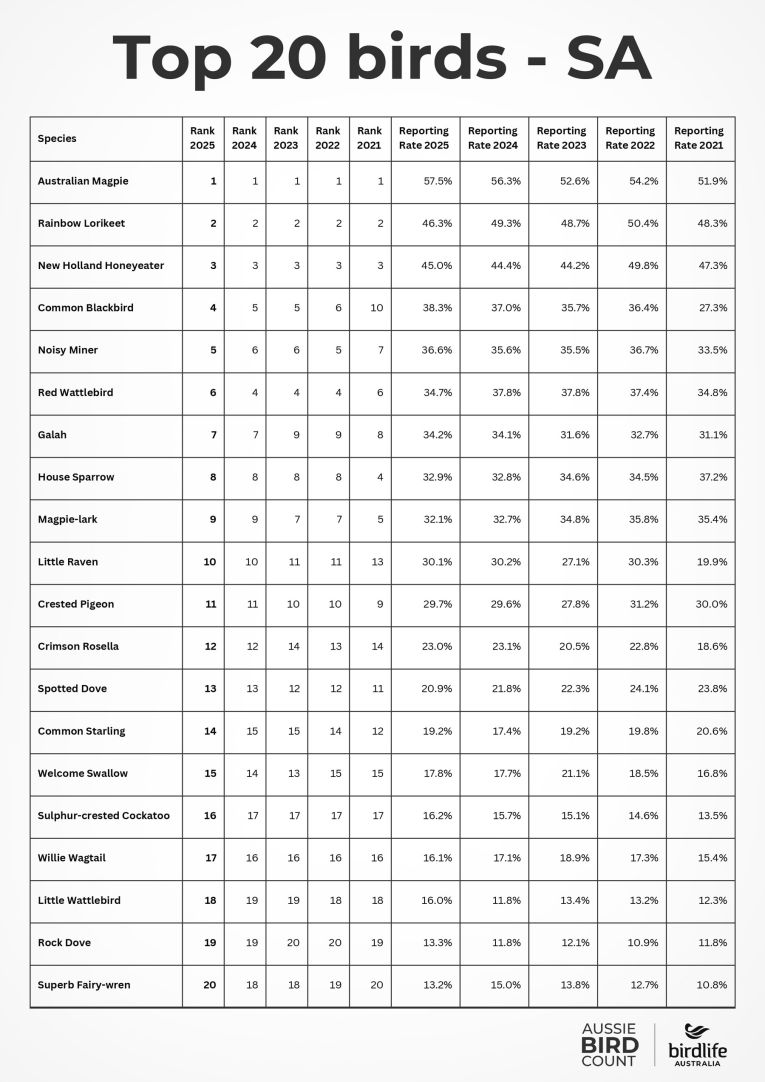
The Australian Magpie emerged as SA’s most prevalent bird species in a national count that also saw some of the state’s most endangered feathery creatures spotted. See the top 20 list.
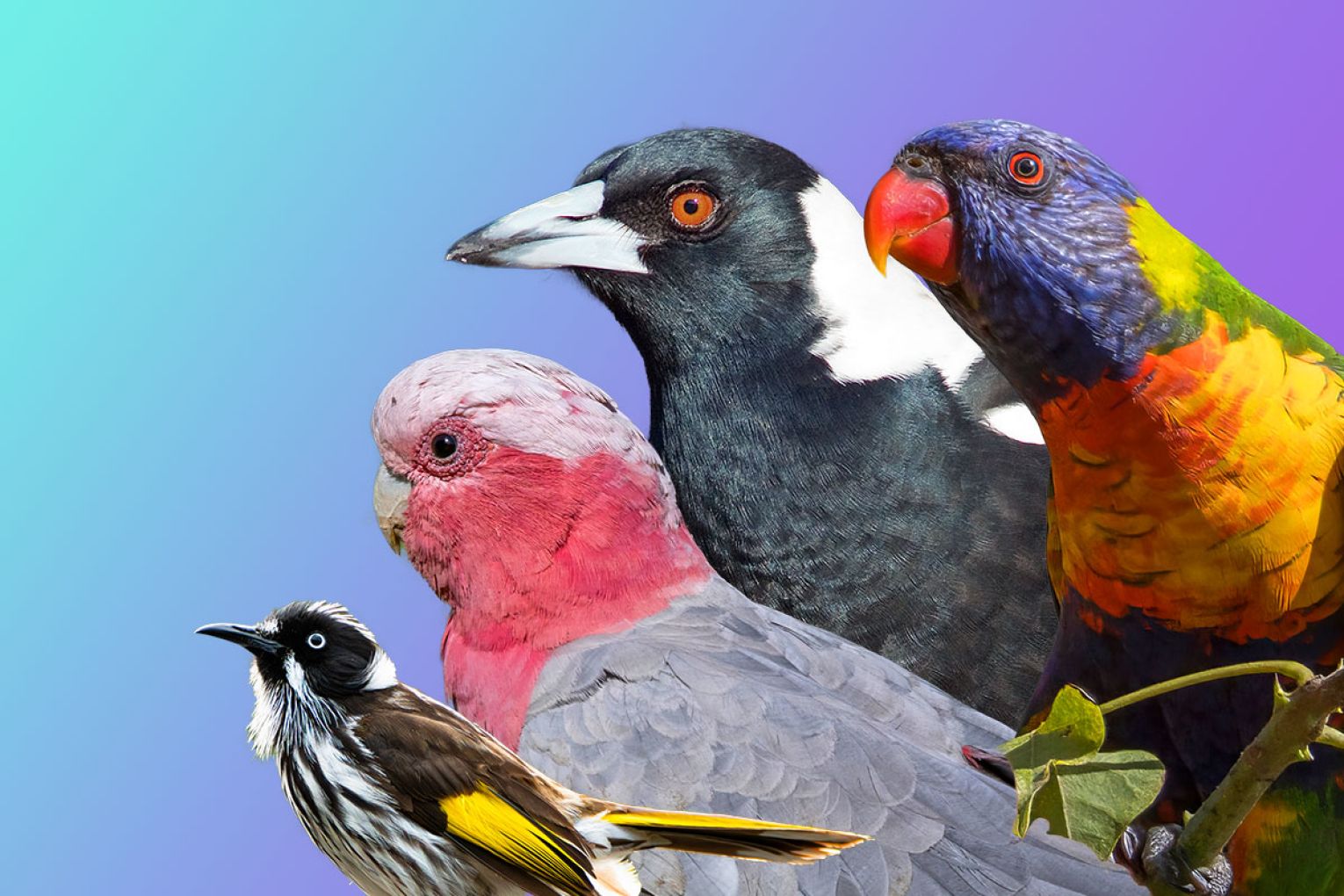
The Australian Magpie has topped the list in BirdLife Australia’s Aussie Bird Count – a national species count held annually for one week in October to create a snapshot of the nation’s bird populations and the environment.
Results from the 2025 count showed a record-breaking number of birds being tracked, with more than five million sighted across the country by some 64,000 bird watchers.
BirdLife Australia’s manager of priority sites Dr Holly Parsons told InDaily the citizen scientist efforts had provided a “really good gauge of how the environment is faring”.
“Birds are often literally the canary in the coal mine. They give us an idea of the health of our ecosystems, and birds are the nature that we can see easily,” Parsons said.
Once again, the Australian Magpie was the state’s top bird with more than 50 per cent of surveys sighting the black-and-white creature.
“It was really nice to see them take out the top spot I have to say, because there’s something really iconically Australian about them,” Parsons said.
You might like


The common blackbird, a species introduced to SA by European settlers in the 1850s, has risen from the tenth most prevalent species in 2021 to fourth, while the smaller magpie-lark dropped four spots since 2021 and now sits ninth.
| Sponsored |
The rainbow lorikeet landed in second place for the fourth year in a row, while the New Holland Honeyeater rounded out the top three.
“I love seeing the fact that New Holland Honeyeaters were in the top three for South Australia,” Parsons said.
“A little honeyeater species can sometimes struggle against things like noisy miners, or other bigger bossy birds which are commonly seen across the state.”
Parsons said the Aussie Bird Count now goes back 12 years “so we can start to see some good trends in things like blackbirds on the increase and magpies doing really well, or fairy wrens in decline”.
Stay informed, daily
“There’s a whole host of ways that we can use the data, and getting all those eyes out there really helps us get a really good picture of what’s going on.”
Currently, almost one in six Australian bird species and subspecies are at risk of extinction as climate change, habitat loss and invasive predators pose the biggest threat.
However, there were positive signs for some threatened species in the state, with one survey sighting 21 critically endangered curlew sandpipers which have an estimated population fewer than 40,000 nationally.
The endangered beautiful firetail was also spotted in Kangaroo Island, with the KI subspecies facing a high risk of extinction due to population decline.
Record-breaking sightings were delivered despite ongoing drought conditions, with 2025 the driest year since 2019 and parts of the state hitting record-low rainfall.
But Parsons said most of the results were coming in from urban areas including towns and cities where residents have “more control over their local space”.
“Urban areas can be a really nice refuge for wildlife and for birds in particular, because there are simple things that people can do around this space, such as putting plants in or getting that bird bath filled that really make it a nice place for birds to visit and use,” Parsons said.
“This is just a snapshot across a weeklong period, so it forms part of the puzzle that we at BirdLife look at to see how birds are faring.”
Want to see more stories from InDaily SA in your Google search results?
- Click here to set InDaily SA as a preferred source.
- Tick the box next to "InDaily SA". That's it.