32 nations back record oil release amid Iran war panic
The International Energy Agency says 400 million barrels of oil will be released from emergency reserves to keep prices in check amid the conflict with Iran.
The International Energy Agency has agreed to release 400 million barrels of oil, the largest such move in its history, to try to rein in soaring crude prices.
The IEA said the release had been backed unanimously by 32 member countries, including Australia, in its sixth such move since it was created in the 1970s.
It is aimed at preventing a further rise in oil prices on fears that Iranian attacks will continue to block Middle East oil exports from reaching markets.
“The oil market challenges we are facing are unprecedented in scale. Therefore I am very glad that IEA member countries have responded with an emergency collective action of unprecedented size,” IEA executive director Fatih Birol said.
The Paris-based IEA made its comments as French President Emmanuel Macron chaired a meeting of G7 leaders to discuss the issue.
“The emergency stocks will be made available to the market over a time frame that is appropriate to the national circumstances of each member country,” the IEA said, adding this would be “supplemented by additional emergency measures by some countries”.
US President Donald Trump, who launched attacks on Iran alongside Israel on February 28, was shown at the end of a video of the G7 meeting chaired by Macron saying: “I think we are having a tremendous impact on the world”.
Yet oil prices rebounded on Wednesday (US time) as markets doubted whether the IEA’s plan could offset the volumes of oil blocked by the conflict.
You might like

Analysts have said the pace of daily IEA stock releases would matter as much as, if not more, than the overall size.
If 100 million barrels were released over the next month, that would be about 3.3 million barrels a day – a fraction of the current disruption of about 20 million barrels a day, with the Strait of Hormuz between Iran and Oman effectively blocked.
In 2022, IEA member countries released 182.7 million barrels of oil and oil products in two stages, then the largest in IEA history, when Russia launched its full-scale invasion of Ukraine.
“Pressure came mainly from the US government, which wants this release,” a European Union diplomat had said ahead of the IEA statement.
In the G7 video, Trump said he agreed with the IEA decision.
US Interior Secretary Doug Burgum had welcomed initial reports of the planned release of oil reserves, while telling Fox News that he did not believe the world faced an energy shortage.
“We’ve got a transit problem, which is temporary,” he said.
“You have a temporary transit problem that we’re resolving militarily and diplomatically, which we can resolve and will resolve.”
G7 member Japan said it planned to release about 80 million barrels from its private and state oil reserves as its contribution.
“Rather than wait for formal IEA approval of a coo-rdinated international reserve release, Japan will act first to ease global energy market supply and demand, releasing reserves as early as the 16th of this month,” Prime Minister Sanae Takaichi said.
Stay informed, daily
Several countries co-ordinate their strategic oil stockpiles through the IEA, which was formed in 1974 after the oil crisis.
IEA members hold emergency stockpiles of more than 1.2 billion barrels, with another 600 million in industry stocks held under government obligation.
Ships hit
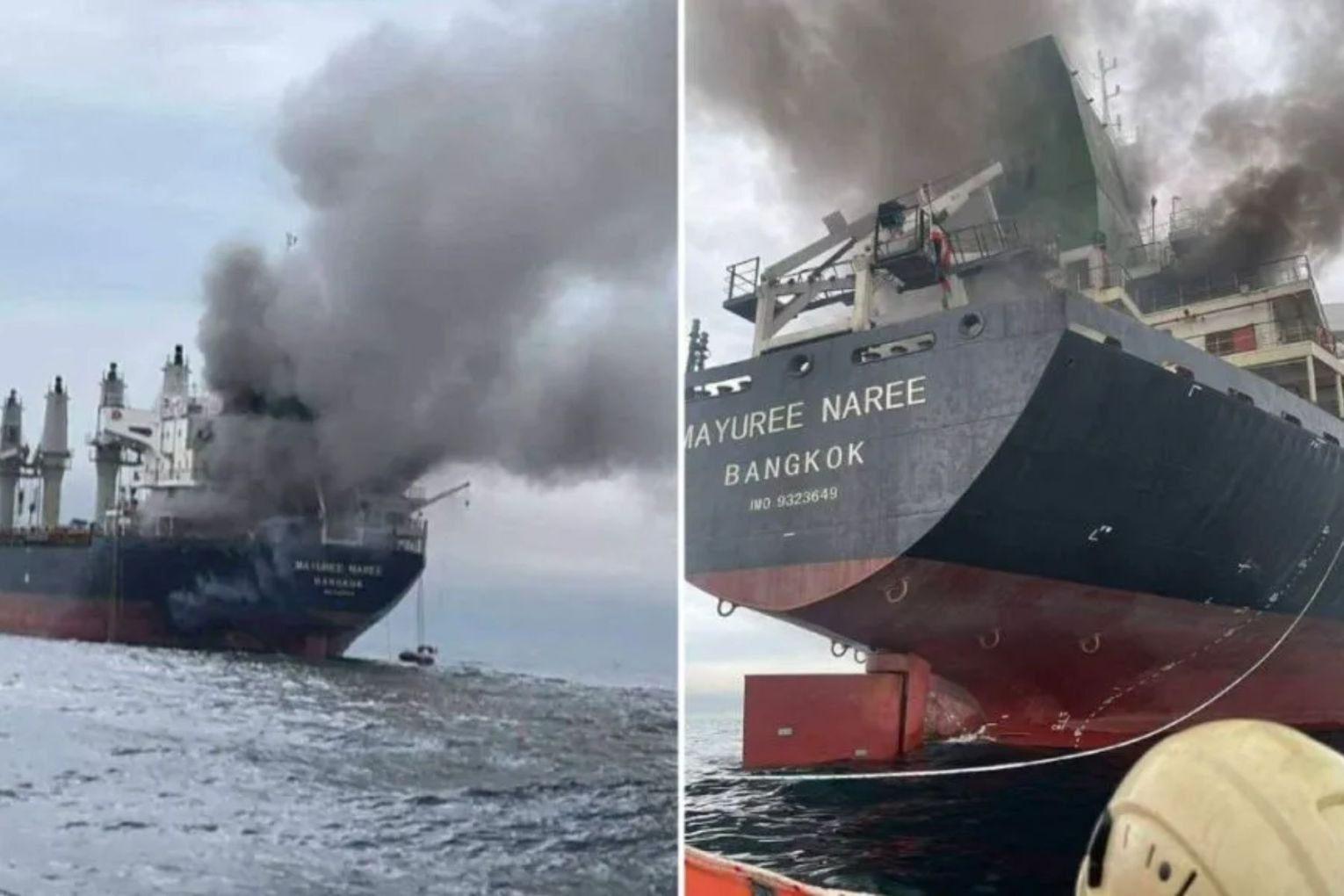
Three vessels have been hit by unknown projectiles in the Strait of Hormuz, maritime security agencies and sources say, as one of the strikes led to a fire onboard a ship and forced most of its crew to evacuate it.
The Thailand-flagged bulk carrier Mayuree Naree was targeted on Wednesday and damaged about 20 kilometres north of Oman, two maritime security sources said.
The United Kingdom Maritime Trade Operations said later that the fire had been extinguished and there was no environmental impact.
Necessary crew remained on the vessel.
Earlier, the Japan-flagged container ship One Majesty had sustained minor damage from an unknown projectile 46 kilometres north-west of Ras Al Khaimah in the United Arab Emirates, two maritime security sources said.
Its crew members were safe and the vessel was sailing towards a safe anchorage, the sources said.
A third vessel, a bulk carrier, was also hit by an unknown projectile about 80 kilometres north-west of Dubai, maritime security firms said.
The projectile had damaged the hull of the Marshall Islands-flagged Star Gwyneth, maritime risk management company Vanguard said, adding that the vessel’s crew were safe.
Traffic through the Strait of Hormuz, a key artery accounting for about 20 per cent of global oil and gas supply, has dropped rapidly since the Iran conflict began on February 28.
The latest incidents increase the number of ships that have been attacked since the conflict began to at least 14.
-with AAP
Want to see more stories from InDaily SA in your Google search results?
- Click here to set InDaily SA as a preferred source.
- Tick the box next to "InDaily SA". That's it.