Iran crisis sparks fresh warnings on govt’s pursuit of Whyalla gas use
A new report warns SA risks turning into “a laggard” if the state government continues to push its ‘gas is king’ line for future of steelmaking at Whyalla. A deal with Santos was locked in before the state election.
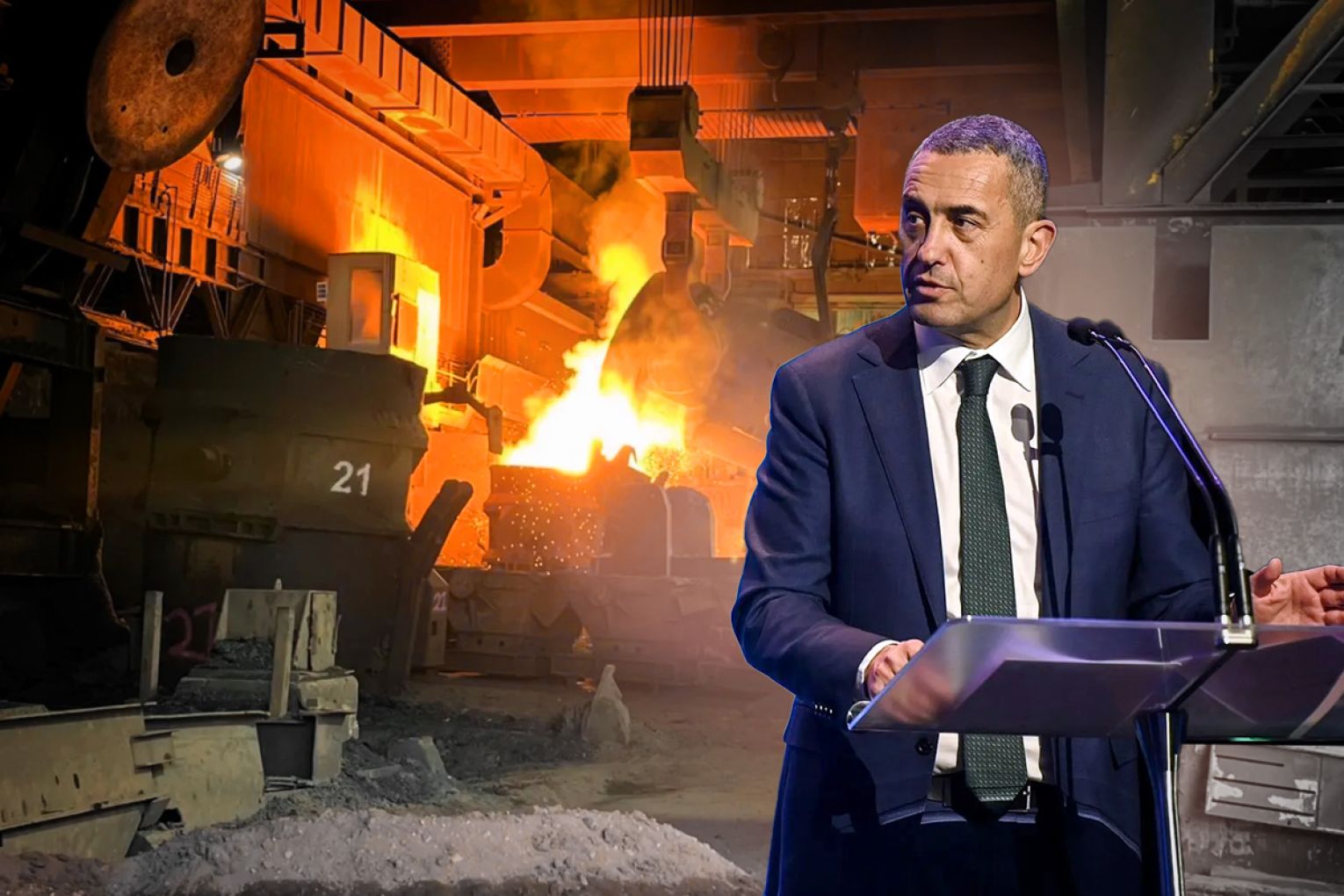
A report from the US-based Institute for Energy Economics and Financial Analysis released today, warns South Australia risks “being left behind by global steel transition developments” if the state government continues to insist on gas powering the Whyalla steelworks into the future.
Instead, the report penned by global steel lead analyst Simon Nicholas suggested steel made using green hydrogen was the way forward for the plant, pushed into administration by the state government in early 2025 and taken out of the hands of mogul Sanjeev Gupta.
The Malinauskas Labor government had long spruiked building a flagship green hydrogen plant to support the Whyalla Steelworks with a $590 million price tag but the plan faltered and eventually failed when the government instead re-directed cash to rescue the steelworks.
Administrators KordaMentha are currently courting potential buyers of the industrial facility, and the state government has comprehensively ruled out purchasing it, Treasurer Tom Koutsantonis telling InDaily in February: “You can’t ask 1.6 million taxpayers to underwrite 30 million taxpayers – it’s not fair”.
Koutsantonis also told InDaily in February that “gas is going to be king” for the steelworks moving forward saying “We want every buyer to know that if they move towards direct iron reduction, they’re going to need gas”.
But the IEEFA report claimed a gas-led steelworks could make the plant uncompetitive globally: “If Australia stakes the future of its steel industry and a major iron export opportunity on gas-based DRI, there are obvious questions as to how it will compete with countries where gas is significantly cheaper than in eastern Australia”.
“The high cost of gas in eastern Australia is a problem for any steelmaker wanting to transition from coal-based steelmaking to gas,” the report reads.
“BlueScope Steel has made clear it needs gas in eastern Australia to be below AU$10 per gigajoule. BlueScope is part of a consortium leading the bidding for the Whyalla steelworks.
You might like

“A gas-based Whyalla steel plant is unlikely to be competitive in a global sector undergoing a transition away from fossil fuels.”
Ahead of the March state election, the state government announced it had struck an agreement with Santos where the SA-headquartered energy giant would supply 200 petajoules of gas over 10 years from 2030.
The company said the deal was “for the long-term supply of gas to support the transformation of the Whyalla Steelworks into a low-emissions green iron facility”, the steelworks is the only one in the country that can produce long steel products for large construction projects and rail lines.
The deal between Santos and the state government was struck before the Iran war and before gas prices skyrocketed globally.
In a statement, Mining and Energy Minister Tom Koutsantonis today told InDaily that the report “appears to be based on a number of incorrect assumptions”.
“Contrary to the suggestions, the South Australian strategic gas reserve establishes a low cost source of locally produced gas at a highly competitive price. Importantly, this arrangement was entered into prior to the Iran War,” he said.
“Gas in steelmaking uses significantly less carbon than coal.
“While hydrogen absolutely will play a role in Whyalla’s future, the South Australian Government’s first and foremost obligation is to retain our sovereign steelmaking industry.
“This cannot be assured unless there is a new buyer willing to expend significant capital transforming the steelworks, and as such, government support has been sensibly directed to achieving this aim.”
Asked by InDaily in February whether the state government was interested in pursuing a green hydrogen project again, South Australian Treasurer Tom Koutsantonis said: “We don’t have plans for it now”, but believed business would eventually take the lead.
Stay informed, daily
“The world is moving towards these technologies. Someone is going to build hydrogen electrolysers in Whyalla, ultimately to process iron oxide to iron. It’s not a matter of ‘if’, it’s a matter of ‘when’,” he said at the time.
| Sponsored |
The latest report claimed the current Iran conflict highlighted the risk of locking in long-term gas use at Whyalla, saying “South Australia lacks a competitive advantage in gas”.
“A gas-based Whyalla steelworks looks unlikely to remain viable in a sector undergoing a global transition away from fossil fuels,” Nicholas’ report reads.
But Nicholas said SA was moving in the wrong direction: “As the world’s biggest steel industry prepares to make more of the energy security benefit of green hydrogen, South Australia continues to shift away from it in favour of gas”.
“With early green hydrogen use in low-carbon iron and steel becoming the global benchmark, the state risks turning from a global green iron and steel leader to a laggard,” the report reads.
IEEFA pointed to a number of projects in Europe that are making progress with green hydrogen-based steel production. This includes Stegra’s brand-new steelmaking facility in Sweden, which will run entirely on green hydrogen at launch. The report claimed the company will be able to enjoy a 20 to 30 per cent premium from sectors including automakers.
The report also cited one recent German case study in which the world’s largest steelmaker outside of China attempted to transition its German steel operations from blast furnace technology to gas-powered direct iron reduction.
In 2024, ArcelorMittal received a EUR1.3 billion German government grant to transition its Bremen site to gas-powered DRI. Despite the government subsidy, the company last year announced it would not proceed with the investment, highlighting “natural gas-based DRI production not being competitive as an interim solution”.
Up to half of a federal government $1 billion Green Iron Investment Fund has been earmarked to transition technology at Whyalla and perform upgrades and install new infrastructure.
“However, a gas-DRI-based steel plant will have high operating expenses driven by energy costs,” the report reads.
“As a result, a grant supporting the transition from blast furnace-based steelmaking to DRI looks unlikely to deliver a sustainable plant if it runs on expensive gas and is therefore unable to secure a premium for its products.
“After years of uncertainty, Whyalla needs a plan for a viable steel plant that will remain competitive in a sector undergoing transition away from fossil fuels globally.”
Want to see more stories from InDaily SA in your Google search results?
- Click here to set InDaily SA as a preferred source.
- Tick the box next to "InDaily SA". That's it.